Published : 23 Jul 2025, 04:01 AM
Updated : 21 Aug 2026, 01:33 PM


After a deadly school crash involving an F-7 BGI, Bangladesh Air Force chief has brushed aside safety concerns, calling online speculation “rumours” and defending the jet’s performance record.
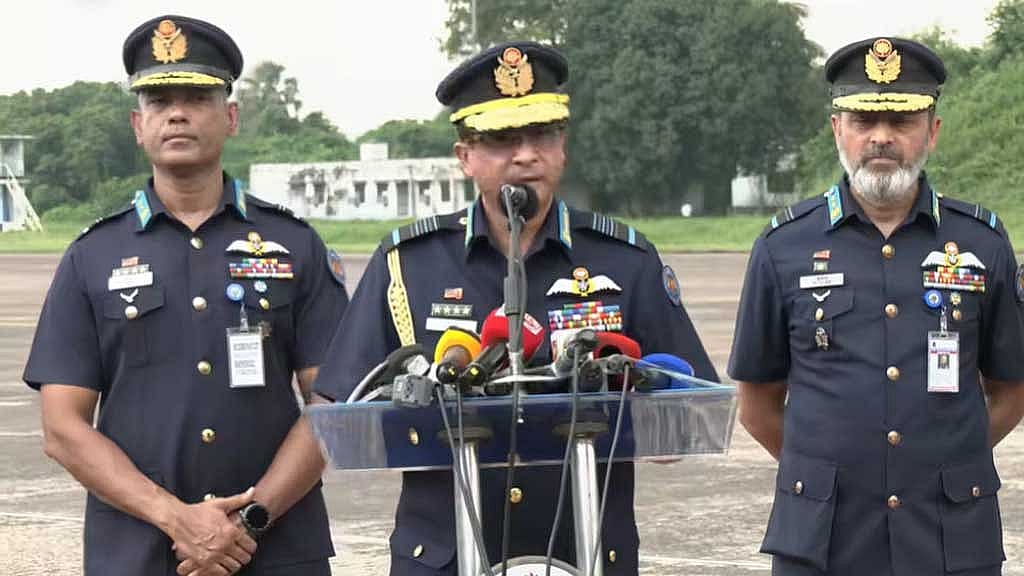
Air Chief Marshal Hasan Mahmood Khan said the jets in service may be old, but none have exceeded their operational lifetime, and maintenance is carried out “without compromise”.
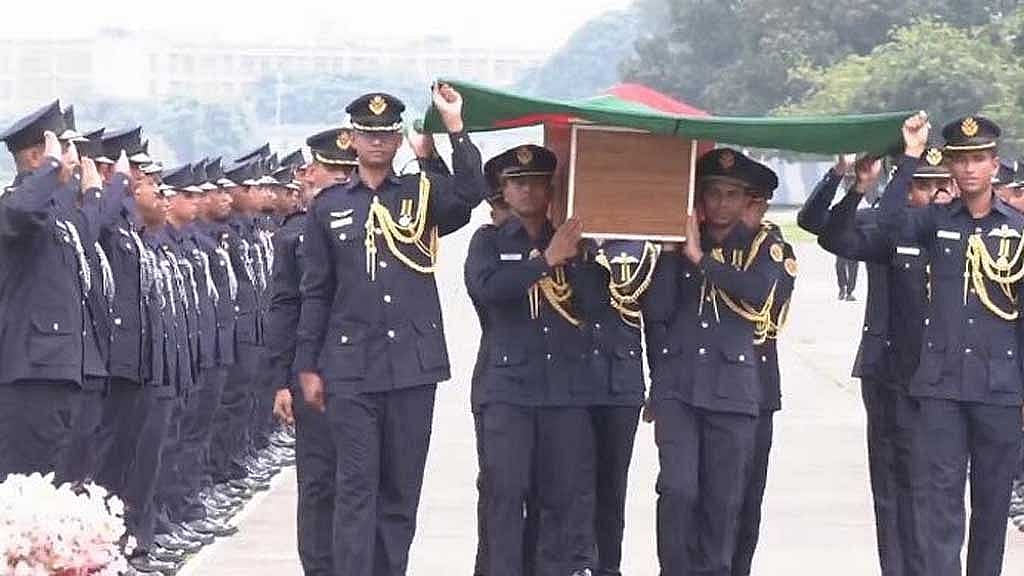
“Aircraft don’t age that easily. Each has a defined lifespan, which in the case of these jets is around 30 years,” he said at BAF Base Bashar in Kurmitola, following the funeral parade of Flight Lieutenant Towkir Islam, the pilot killed in the crash.
“One decade or two doesn’t make much difference -- the key question is whether we’re maintaining them properly. And I want to assure you, we do not compromise on that,” he added.
He said Bangladesh sources full maintenance technology, equipment and parts through formal agreements with the manufacturing country.
“We obtain everything required for upkeep, including the airframe and engine, directly and maintain them accordingly,” he added. “The process involves no shortcuts.”
While acknowledging that the aircraft are technologically outdated, he argued that they remain airworthy. “Technologically, these jets are old, yes. But that doesn’t make the aircraft themselves unsafe.
“Everyone knows we’re working on acquiring newer-generation fighter jets for the future.
“That doesn’t mean accidents won’t happen with new aircraft either. Crashes are part of aviation. But we are doing everything possible, both at home and abroad, to ensure these jets are properly maintained.”
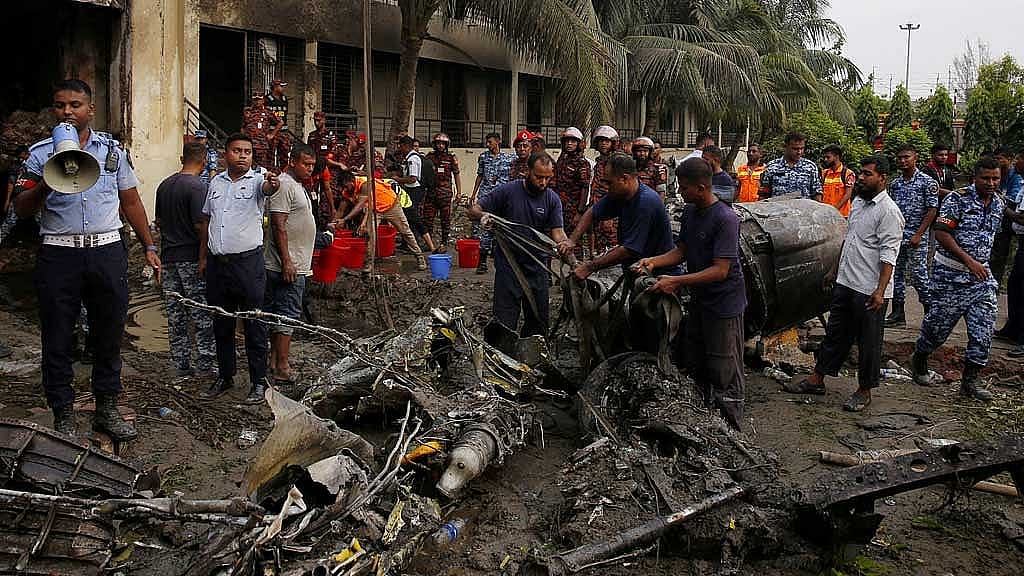
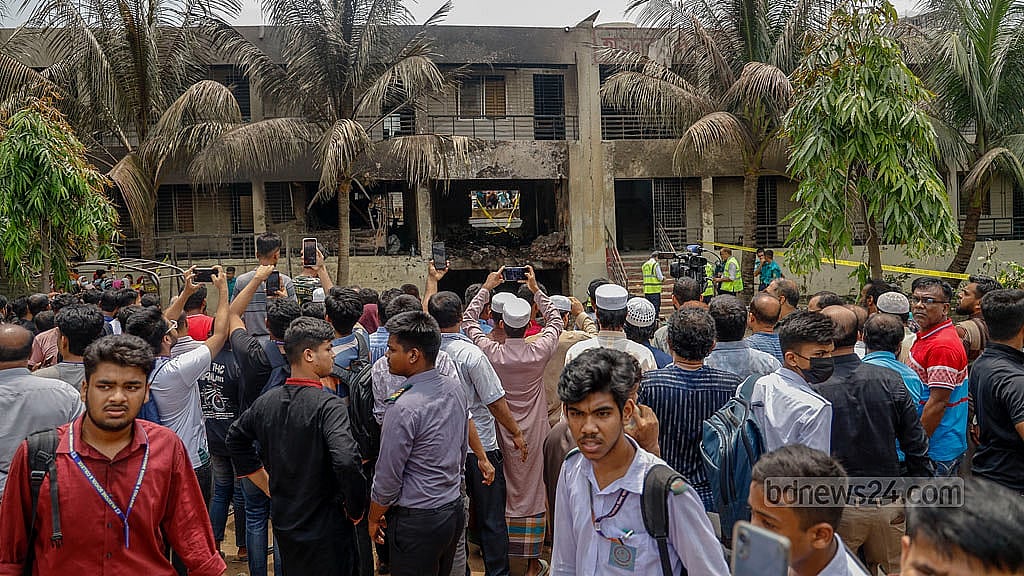
The F-7 BGI jet came down during a training flight on Monday, crashing into Milestone School and College in Dhaka’s Diabari.
Witnesses said the jet struck the school’s field and then slammed into a two-storey academic building before erupting into flames.
The death toll from the incident has climbed to 28, with 68 others still undergoing treatment in hospital.
Most of the victims are children, many of whom suffered severe burns and remain in critical condition.
The incident has prompted widespread criticism over why training flights are conducted above densely populated areas.
The safety record of the F-7 BGI has also come under renewed scrutiny.
The jet, produced by China’s Chengdu Aircraft Corporation, is the most advanced version of the J-7 -- a derivative of the Soviet MiG-21, once one of the most widely used fighter aircraft in the world.
Bangladesh currently operates 36 F-7s, most of them BGI variants, along with FT-7MB and F-7BG models.
The country signed a deal in 2011 to buy 16 F-7 BGIs from China, which were added to the Air Force fleet in 2013.
Chengdu ended production of the model that same year.
Previous accidents involving F-7 jets have raised safety concerns in the past.
In November 2018, an F-7BG crashed in Tangail’s Madhupur.
In November 2021, an F-7MB went down in the Bay of Bengal after take-off from BAF BASE Zahurul Haque in Chattogram.
Mahmood said the Air Force “routinely” takes preventive measures to avoid such tragedies. “We have different plans in place for preventing accidents.
“We’re aligned with how it’s done worldwide. Still, accidents happen -- even with top-tier jets.
“You’ve seen it yourself. Just recently, an F-35 crashed. No one can offer a full guarantee. But we will learn from this accident and take steps to ensure it doesn’t happen again.”
On claims that the engine may have failed, he cautioned the public against trusting social media “chatter”.
He said, “Don’t believe the rumours. That’s my request to everyone. We are extremely careful with the engines -- because for a pilot, there is only one engine.
“So we never compromise on engines. Yes, the technology is old, but we never exceed the engine’s flight hours. We repair everything thoroughly. There is no doubt in our minds about this.
“But failures can happen,” he added. “They don’t come with warnings. We don’t know when it’ll happen. But I have no reason to believe we made any compromise.”
The Air Force chief urged the public to be patient while investigators work to determine the cause of the crash.
“I am currently the most senior airman in uniform in the country. Even then, I believe it would not be appropriate for me to share any personal assumptions at this stage,” he said.
Mahmood added, “This was a single-engine jet. It could have faced technical issues with the engine, a bird strike, or something else. Had the aircraft remained intact or the pilot survived, we could have known more. But we have neither.”
Stressing that the investigation would require “some time”, he called for patience until then.
He believes Flight Lieutenant Tawkir Islam was unable to eject safely “because he attempted to land the jet in the school’s open field”.
“When the jet went out of the pilot’s control, he tried everything to land it in an empty area -- he aimed for the field in particular. But I would say his attempt was unsuccessful.
“Because it ultimately crashed onto the building. In trying to guide the jet, he sacrificed valuable seconds needed to eject. That delay cost him his life. He gave everything in an effort to prevent more deaths,” he added.