Published : 04 Oct 2025, 09:18 AM
Updated : 28 Aug 2026, 01:27 AM


In a quiet village of Rajshahi, Minarul Islam eked out a living, sometimes as a day labourer, sometimes as a bus driver’s assistant, sometimes in the crop fields. Yet whatever he earned could not sustain his family in the face of soaring prices.
Buckling under the burden of NGO loans and daily hardship, Minarul “killed his wife and two children before taking his own life” on Aug 14, according to locals.
In a note found at the scene, he wrote: “We died because of debt and hunger. We could not endure such suffering anymore.”
Just a day earlier, the bodies of a mother and daughter were recovered from their home in Burichang, Cumilla. Police believe the mother took poison along with her daughter, driven by “poverty, debt and long illness”.
Within barely a month of these two tragedies, bdnews24.com has tracked at least six similar incidents across the country. Police investigations suggest financial stress and loan burdens are major factors, alongside domestic conflict.
After several such cases of killing loved ones before suicide, two themes are emerging: the breakdown of “social bonds” and the pressure of NGO debt.
Prof Helal Uddin Ahmed, a psychiatrist, explained: “These are what we call ‘packed suicides’. In some cases, family members decide to die together. In others it is ‘suicide followed by homicide’, meaning some did not take their own lives but were killed, such as a wife or other family members killed before the perpetrator died by suicide.”
Prof MMA Salahuddin Qusar, head of psychiatry at Bangabandhu Sheikh Mujib Medical University, said this falls under “extended suicide”, noting that nearly 90 percent of suicides are linked to “mental illness”.
He argued that if people killed themselves purely for socio-economic or family reasons, then “all people” in poor countries or “many in Bangladesh” would have done so. Instead, he stressed, suicide stems from mental disorders triggered by those conditions.
Sociologists point to “economic, social and emotional inequality” driving abnormal behaviour. Criminologists say people in crisis, when denied support by family, community or the state, sometimes choose to kill loved ones before themselves.
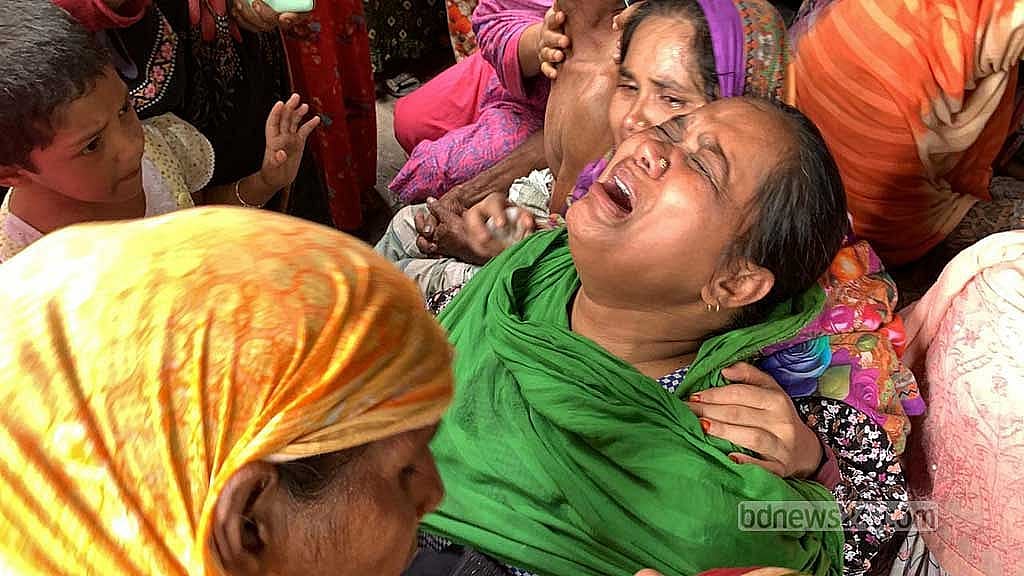
ONE TRAGEDY AFTER ANOTHER
The most recent case came on Sept 20 in Sylhet’s Gowainghat, where police detained a young man, 35-year-old Ali Ahmed who was accused of hacking his 30-year-old wife Rubena Begum to death with a machete before turning the blade on himself in an attempted suicide that left him critically injured.
On Sept 15, police recovered three bodies from a flat in Narayanganj. The homeowner’s corpse was hanging from the ceiling fan, with his wife and child’s bodies lying on the bed, suffocated with pillows.
Police suspect Md Habibullah Shiplu, 35, strangled his wife Mohini Akter Mim, 24, and 4-year-old son "Afran", identified with a single name, before hanging himself.
Locals said Shiplu was manager of a cooperative fund known as “Samannito Sanchoy Tohobil”, or Joint Savings Fund. The cooperative collapsed during the COVID pandemic after its director absconded with depositors’ money, leaving Shiplu under intense pressure from savers demanding repayment.
A day earlier, on Sept 14, police recovered the bodies of three family members in Dhaka's Ashulia. Investigators believe Rubel Ahmed, 35, strangled his wife Sonia Akter, 28, and 6-year-old daughter "Jamila" before hanging himself amid “family conflict”.
On Sept 7, police in Barguna Sadar Upazila found the throat-slit body of a woman identified only as Aklima inside her home, and her husband Swapan Molla hanging nearby. Investigators believe he slit his wife’s throat with a cleaver before killing himself.
On Sept 2 in Chattogram’s Karnafuli Upazila, police discovered the throat-slit body of Reshma Akter, 18, and her husband Ibrahim, 29, hanging. They suspect Ibrahim killed his wife amid “domestic conflict” before attempting suicide.
On Aug 20 in Dhamrai’s Kalamapur bus stand area, a man named Badar Uddin, 28, hacked his ex-wife Pinki Akter, 25, to death before swallowing poison to end his life.
WHY SUCH ‘BRUTALITY’?
According to crime and social expert Tawohidul Haque, incidents of extreme behaviour -- such as family murders followed by suicide -- are largely the result of mounting debt pressure, investing everything and being left with nothing, family disputes, or emotional reactions tied to concerns over social dignity.
He told bdnews24.com, “There are countless individuals or families like this. But each family has its own mechanisms to deal with financial, familial, or social crises. When someone fights but finds no support from their surroundings, they become helpless and may commit such acts.”
In his words, “Here, people only want to hear success stories. But there’s no state mechanism in place to ensure that everyone is helped to succeed legitimately or to guarantee everyone a comfortable or quality life.”
He also pointed out that people who cannot cover their expenses with their income but belong to the “socially accepted” middle class face a relatively “greater” crisis.
Psychiatrist Helal Uddin Ahmed highlighted that such incidents often stem from a combination of social, familial, and personal reasons.
He said, “In most cases, poverty is a major factor. Another can be family conflict. A sudden outburst during internal quarrels can lead someone to decide they won’t let anyone in the family live and then commit murder-suicide.”
Helal, however, added that sometimes mental illness may be involved. Whether the family member who committed the act had a prior mental health issue should also be taken into consideration.
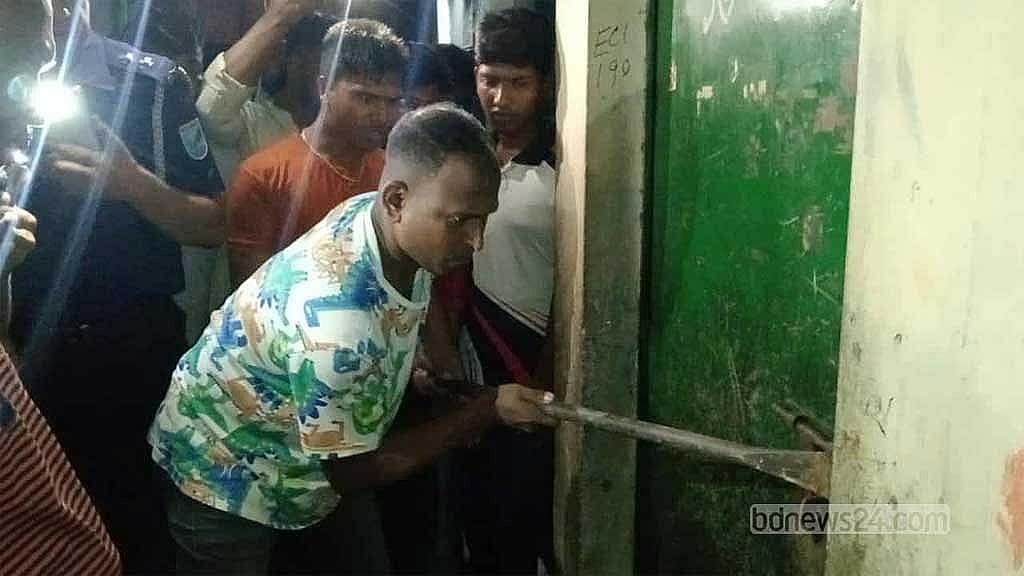
HOW EXPERTS VIEW THE TREND
Aachol Foundation, which works on suicide prevention, has no statistics on family-wide suicides or killings followed by suicide. But its President Tansen Rose said they plan to research the issue.
He noted that over the past 15-20 years, Bangladesh has undergone major socio-economic changes, both positive and negative.
“With rising incomes, family crises have also multiplied. Spending has grown alongside income. In the past, one earner supported 8 to 10 people. Now even multiple earners struggle to manage a household. Self-reliance has not increased. This makes people intolerant,” he said.
He blamed consumerist attitudes. “People’s desires are growing. Financial problems are creating family conflicts.”
Highlighting rural indebtedness, he added: “Farmers once became trapped by moneylenders. Now they are trapped by loans from NGOs. And socially, people are becoming isolated. From this sense of loneliness, they think ‘I should not remain’. At the same time, they fear their family will be disgraced and burdened by debt if they die, so they take their family with them.”
HOW MUCH IS SOCIAL BONDING TO BLAME?
Associate Professor Muhammad Mahbub Quaiser of Department of Sociology at Dhaka University said behaviour and thought are shaped by society and culture, but modern civilisation and technology have deeply altered these structures.
“Technology connects us with global societies, but we lack the psychological and social preparation. We call this a cultural lag. In trying to justify ourselves to that global system, problems arise,” he told bdnews24.com.
Globalisation, he warned, is eroding Bangladesh’s own social values. “Our social bonds are weakening over time.” Strengthening family and community ties is essential, he argued.
Psychiatrist Prof Helal Uddin Ahmed observed, “We are gradually moving from organic solidarity to mechanical solidarity. As social connectedness breaks down, neighbours no longer know a family’s wants, needs or struggles.”
MICROCREDIT UNDER THE SCANNER
Data from the Microcredit Regulatory Authority (MRA) shows around 900 registered organisations run small loan operations, alongside thousands of cooperatives and multipurpose companies under the Department of Social Services.
Criminologist Tawohidul noted, “Many borrow to pay for a daughter’s wedding or build a house. That only deepens their debt. If loan money is not used for income-generating activities, the hardship worsens. NGOs must lend with planning and then monitor outcomes.”
But Prof Mohammad Helal Uddin, MRA executive vice-chairman and economics professor at Dhaka University, rejected sweeping blame.
“In the past six months, only one such incident we found involved debt. But that person also had psychological problems. Nearly 60 million people are under microcredit, and while some are harmed, most succeed,” he said.
He, however, admitted the system has flaws. “We are moving toward digitalising the entire operation, which will allow monitoring and prevent borrowers from taking loans from multiple sources. Interest rates will fall. But digitalisation also carries the risk of fraud.”
HOW WIDE IS THE SOCIAL SAFETY NET?
Sociologist Mahbub said Bangladesh has yet to become a “complete state” even after decades. “Inequality is glaring. Some toil all day and still can’t feed their families, while others become billionaires from home. The state must take responsibility for reducing disparity.”
Criminologist Tawohidul called for expanding protection. “The state must bring this vulnerable class of people under social security,” he said.
But Mosharraf Hossain, director (Social Security) at the Department of Social Services, disagreed. “Each incident has different causes. These are cases of social decay, not failures of the safety net," he said. "Our programmes are already supporting the poor and disadvantaged.”
ARE MENTAL HEALTH SERVICES REACHING THE MARGINS?
Prof Salahuddin Qusar of BSMMU conceded that most suicides stem from mental illness, but treatment access at the grassroots is scarce.
“There are psychiatry departments in 118 medical colleges. Urban services are available, and private specialists visit some rural areas weekly. But awareness is low,” he said.
Raising awareness, even in schools and colleges, is vital, he noted. “Changing socio-economic conditions is a long process. But if people are aware, suicidal tendencies can be identified early and acted upon. That will reduce suicides,” he said.
In Burichang, Cumilla, where the Aug 13 mother-daughter suicide took place, Upazila Health Officer Dr Md Malequl Aftub Bhuiyan said: “People are starting to realise mental health matters. Some come to us, but not many. We provide primary counselling and refer to specialists when needed. But at the Upazila level, there are no psychiatrists.”
He added: “When failed suicide patients come after poisoning or other attempts, we treat them and counsel them. If necessary, we refer them to medical colleges. But there are no clear data on patient numbers, since they are logged as general patients.”