Published : 06 Oct 2025, 10:00 PM
Updated : 28 Aug 2026, 01:27 AM


India will work with whichever government comes to power in Bangladesh after the country's upcoming general election, Indian Foreign Secretary Vikram Misri has said.
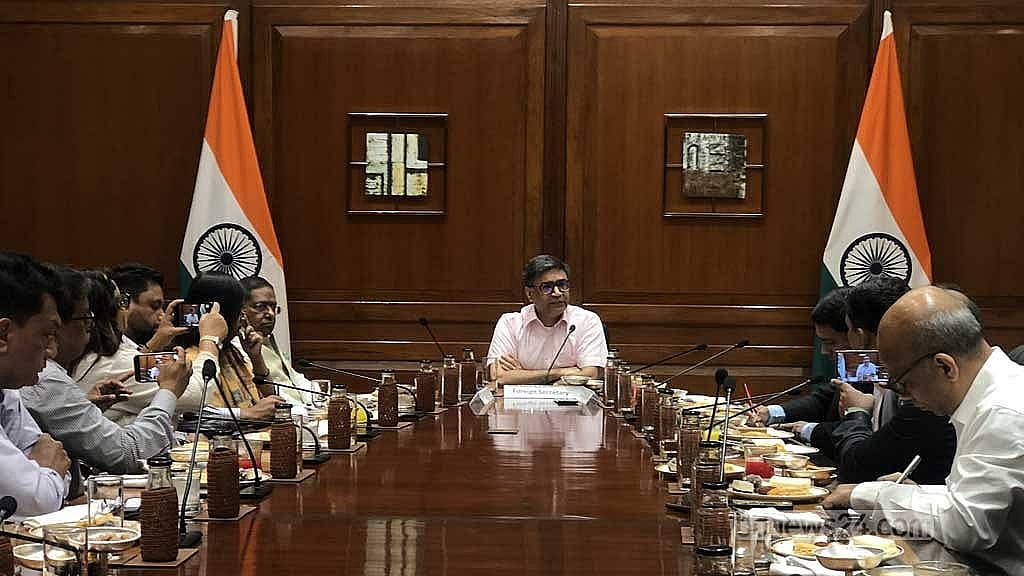
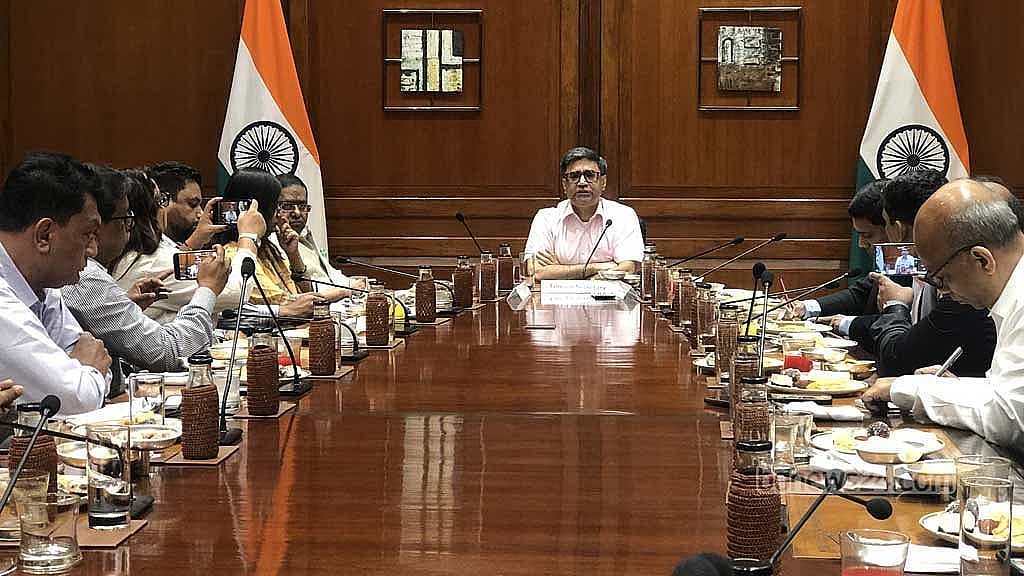
Speaking at a meeting with the Diplomatic Correspondents Association of Bangladesh (DCAB) in New Delhi on Monday, Misri said India supports a “free, fair, inclusive and participatory” election in Bangladesh, scheduled to be held in February.
"I want to be very, very clear on this one matter, if there is any doubt in anybody's mind: India is firmly in favour of free, fair, inclusive, and participatory elections in Bangladesh, and it is in favour of these elections being held at the earliest possible time."
"We are encouraged by the fact that Bangladesh authorities themselves have spoken about a time frame for these elections and we would look forward to these elections taking place."
Bangladesh’s political landscape has undergone a seismic shift since the student-led mass uprising of July 2024, which ended the Awami League’s 15-and-a-half-year rule.
Ousted prime minister Sheikh Hasina has been living in India under the protection of the Indian government since August last year. Meanwhile, many Awami League leaders and activists are believed to have fled to India amid the interim government’s efforts to prosecute those accused of violence during the July uprising.
In May, the interim government banned the activities of the Awami League, citing ongoing trials at the International Crimes Tribunal over alleged crimes including “killings, enforced disappearances, arson, torture, looting, and crimes against humanity” during the uprising. The ban will remain in force until the trials conclude.
Asked whether a participatory election was possible while the Awami League remains banned, Misri said New Delhi would not comment on Dhaka’s internal decisions.
Look, I obviously cannot get into the middle of decisions that are made by authorities in Bangladesh. I think the Bangladesh authorities, the people of Bangladesh, civil society in Bangladesh, have to make that overall assessment as to what is the view of these elections that will be taken outside as well," he said.
"It's not just a question of internal legitimacy, it's also a question of external legitimacy."
Emphasising the medium and long-term implications of elections, he said the people of Bangladesh will ultimately have the final say on the electoral process and its credibility.
When asked if India would recognise and work with a government formed through an election that excludes a major political party such as the Awami League, the Indian foreign secretary reiterated New Delhi’s stance, saying: "We will work with any government that emerges through the mandate of the people of Bangladesh. There is no doubt that a certain mandate will be expressed through these elections. When it comes to the some of the conditions that will shape that mandate, as I said, I will, you know, India will not get into that."
'NOT CONSTRUCTIVE TO COMMENT ON HASINA'S RETURN'
Misri noted that India had maintained communication with the current administration in Dhaka from the outset, pointing out that Prime Minister Narendra Modi was among the first world leaders to welcome Chief Advisor Muhammad Yunus, even though the interim government is not defined under Bangladesh’s Constitution.
Asked whether Hasina’s return remains an obstacle in advancing bilateral relations, Misri said:
"This is a judicial and legal process. It requires engagements and consultations between the two governments. We are examining these issues. We look forward to working together with Bangladesh authorities on these issues. Beyond that I don’t think it would be constructive to say anything further at this moment."
Addressing perceptions that India is seeking to rehabilitate Hasina and the Awami League in Bangladeshi politics, Misri rejected the suggestion.
"We are only in favour of early election in Bangladesh for an opportunity for the people of Bangladesh to express themselves, give their mandate, and popularly elect the government.
"We are prepared to deal with that government. I don't think there is anything else to say with regards to that.