Published : 12 Apr 2025, 11:04 AM
Updated : 28 Aug 2026, 01:20 AM


Despite nightly protests by frightened residents, the Forest Department says it lacks the resources and capacity required to drive away the wild elephants wreaking havoc across villages in Chattogram’s Anwara Upazila.
For the past few years, “conflicts” between humans and elephants have become routine in the Korean Export Processing Zone (KEPZ) area of the Upazila.
What began as occasional crop destruction has escalated in recent years, with villagers regularly confronting not just economic loss, but the threat of death.
Those bearing the brunt of these attacks have taken to the streets, staging demonstrations and calling on authorities to remove the elephants from residential and agricultural areas.
While government officials have offered assurances in response to public outcry, the Forest Department’s limited ability to safely manage or relocate the elephants has emerged as the central obstacle.
Officials from the Forest Department say the wild elephants roaming Anwara and surrounding areas are too strong to be safely subdued.
Attempts to tranquilise them, they warn, would likely drive the animals deep into the forest—terrain where the department lacks the capacity to carry out rescue operations.
The entire process, they admit, is fraught with danger.
Residents, meanwhile, say they live in constant fear.
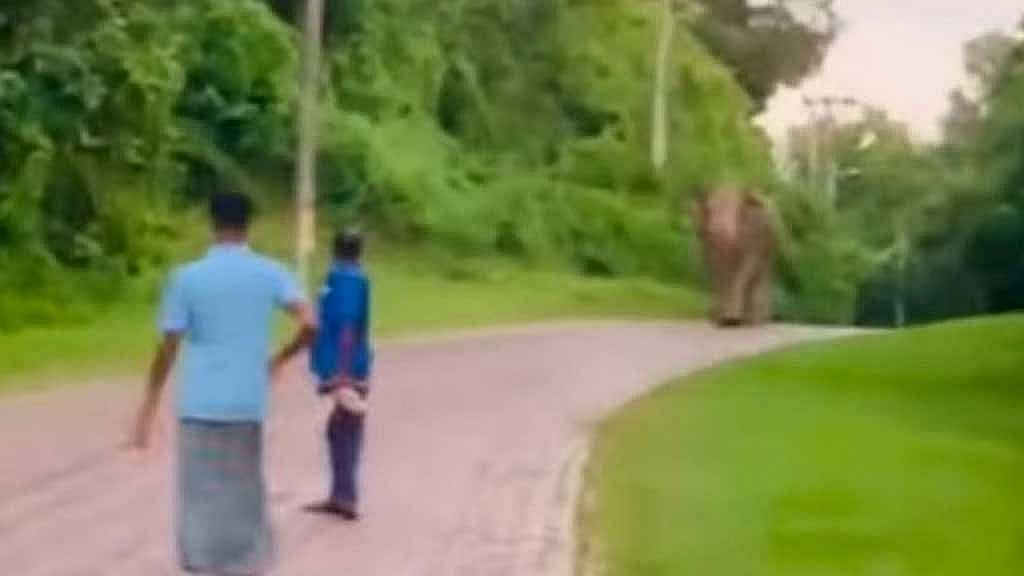
The elephant herd descends almost nightly in search of food, destroying rice paddies, and banana groves.
For years, these nocturnal “rampages” have devastated villages across several unions, including Bara Uthan in Karnafuli Upazila and Boirag, Barkhain, Battali and Barshat in Anwara Upazila.
Beyond agricultural losses, the toll on human life has become a grim reality.
In recent years, multiple residents—including women and children—have been killed.
In the last seven months alone, six people have died from elephant attacks.
One such incident occurred on the night of Mar 21, when a wild elephant entered a home in the Shah Mirpur area of Karnafuli Upazila.
During the attack, the animal knocked down a three-month-old child with its trunk.
Earlier, on Sept 23, 2024, two individuals— Md Kashem, 60, and Rehana Begum, 38 — were killed in attacks in Anwara’s Boirag Union.
The list of tragedies stretches back years.
On Jan 7, 2020, a 70-year-old man was trampled to death in the Battal Nurpara area of Anwara Upazila.
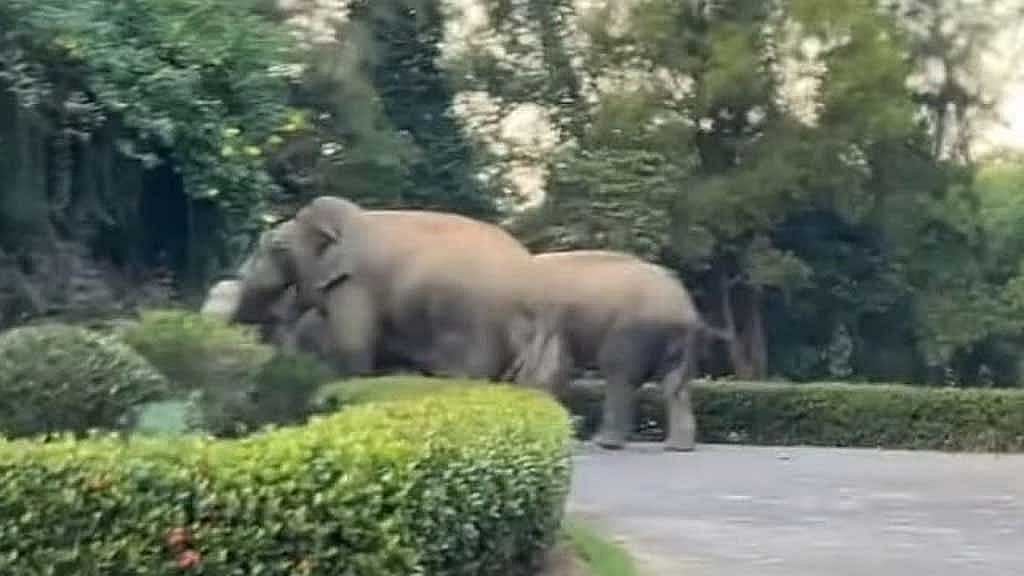
Local outrage has led to a series of protests, including road blockades, human chains, and the submission of formal memorandums demanding action.
On Mar 22 and again on Mar 27, residents shut down traffic at the KEPZ gate on Anwara PAB Road, urging authorities to remove the elephants.
Wasim Akram, a student at Chittagong University and a resident of the area, told bdnews24.com that four elephants have been causing nightly havoc across Shah Mirpur, Boirag, and Bara Uthan — and that repeated appeals to the authorities have gone unanswered.
HOW DID THE ELEPHANTS ARRIVE?
The KEPZ began development in the years 2006 and 2007 on roughly 1011.7 hectares of hilly terrain in the Bara Uthan Union of Karnafuli Upazila and Boirag Union of Anwara Upazila.
Enclosed by the Deyang Hills, the area has witnessed a noticeable surge in elephant activity since around 2012.
Though wild elephants had passed through the region in earlier years, local residents and officials say the frequency of such sightings was far lower in the past.
That changed markedly in late 2018, when a small group of elephants began residing in the KEPZ area, marking a shift from occasional movement to permanent habitation.
Today, the area is believed to be home to four elephants, according to residents who report frequent crop damage and property destruction.
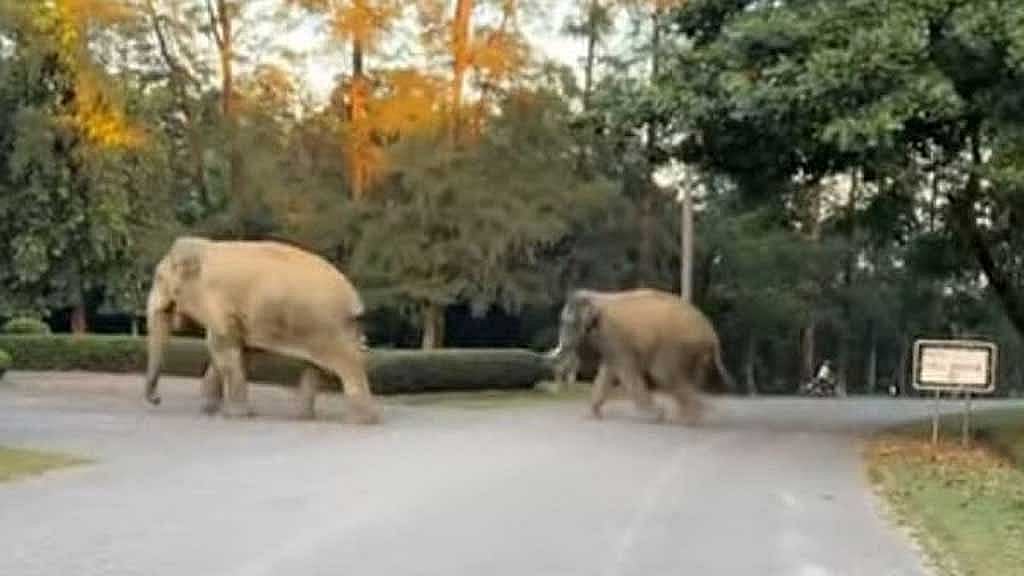
The animals have developed a reputation for rampaging through nearby settlements, especially at night.
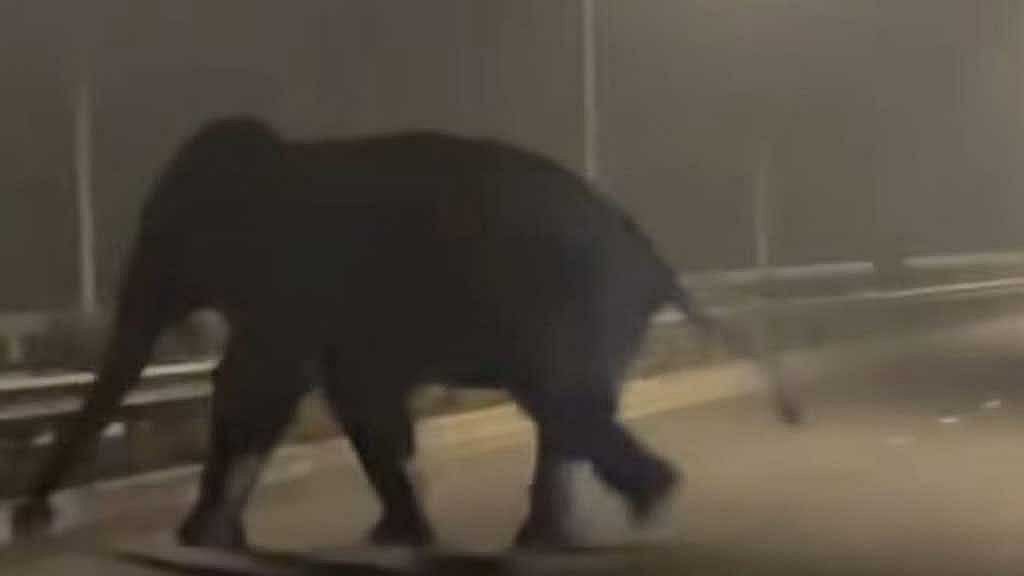
A video clip that spread widely on social media last Saturday captured a lone elephant lumbering across a road near the Karnaphuli Tunnel approach.
Shouts from onlookers and beams from handheld torches punctuated the scene as residents tried to scare the animal away.
A similar incident drew public attention in October 2023, when another video circulated online showing three elephants traversing the same approach road to the tunnel.
Abu Naser Mohammad Yasin Newaz, deputy conservator (Forests) at the Wildlife Management and Nature Conservation Division in Chattogram, said that widespread encroachment has devastated forestlands along the Sangu River.
The affected zones include Pukuria, Jaldi, and Sadhanpur in Banshkhali Upazila.
“The elephants are not getting enough food there,” Newaz told bdnews24.com.
“There are also no functioning water bodies to provide the animals with a source of hydration.”
He emphasised the need to establish a suitable habitat for the elephants.
With adequate food and water, he believes, the elephants might return to their original range.
He said, earlier, elephants used to travel regularly in the area, and after a few days, they would leave again.
But for the last couple of years, the elephants have begun staying there permanently.
“There are several water bodies in KEPZ now,” he said.
“Elephants require water—they bathe in it, they cool their bodies. Although there’s not much food, they’ve settled there. They seem to like the environment.”
WHAT IS THE FOREST DEPARTMENT SAYING?
According to officials from the Forest Department, wild elephants are known to follow ancestral migratory routes passed down through generations.
One such route historically led the elephants across Toilar Dwip, an island in the Sangu River, and into the hilly terrain of Anwara.
The landscape that once consisted of uninterrupted mountains and forest corridors has undergone rapid transformation.
What used to be a vast natural expanse is now fragmented by human settlements and farmland, creating barriers that hinder the elephants’ movement and intensify human-wildlife conflict.
Dipannita Bhattacharya, Wildlife and Biodiversity Conservation officer for Chattogram in the Wildlife Management and Nature Conservation Department, said that the elephants currently reside mostly within the boundaries of the KEPZ.
They typically emerge after 4pm and are often seen in the locality.
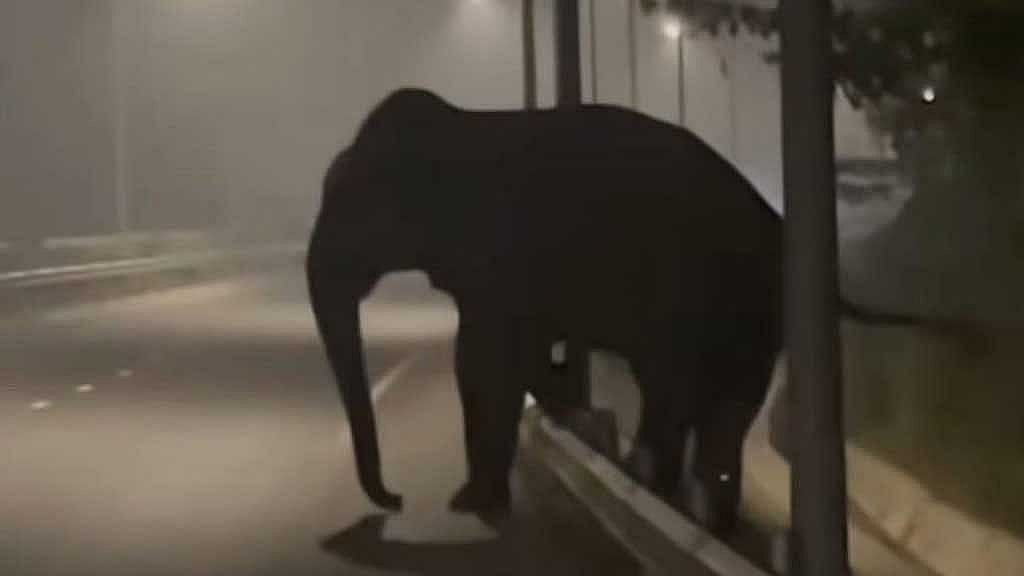
“There are two male and two female elephants there, a total of four adult elephants,” Bhattacharya said.
“One of the female elephants recently moved toward Banshkhali. Now, there are three left in the KEPZ area.”
She noted a shift in local sentiment, shaped by changing patterns of elephant activity.
“Some residents say the elephants have never caused so much damage before. Others say they’ve never seen elephants at all,” she said.
“The truth is, this was once a hilly forest. Now it’s densely populated. So when elephants come through, someone’s crops or someone’s home is affected.”
The expansion of industrial activity in KEPZ has further compounded the issue.
“Mountains are being cut down to make way for new factories,” she said.
“With industrial growth, more people are settling in the area.”
While the Forest Department provides compensation for crops damaged by elephants, Bhattacharya acknowledged that some losses cannot be measured in money.
“We cannot compensate for a lost life,” she said.
“And no amount of compensation can ease that grief. We feel the pain of the people too.”
FOREST DEPARTMENT LACKS CAPACITY TO RESCUE ELEPHANTS
On Jun 26, 2016, heavy floods and landslides pushed a wild elephant across the border from India’s Assam into Bangladesh’s Kurigram district.
For more than six weeks, the disoriented animal then travelled through rivers and farmland, crossing four districts spanning hundreds of kilometres.
On Aug 3, an Indian rescue team arrived in Jamalpur in an effort to recover the elephant and return it to its natural habitat.
But the attempt was unsuccessful, and the team eventually withdrew, leaving the animal to continue its unpredictable path.
Nearly two months later, the elephant was found unconscious in a paddy field in Koyra village, located in the Sarishabari Upazila of Jamalpur.
Officials from the Forest Department have acknowledged that they simply do not have the capacity required to relocate the elephants.
“The task of relocating elephants is very difficult,” said Newaz.
“We do not have that capacity,” he added bluntly.
“There is always fear in the minds of the local people, when elephants come,” Newaz said.
“People say, ‘Move them away.’ From their perspective, they are right; they can say that. But we do not have the technical expertise and capacity to move them. I need the capacity to carry a four- or five-tonne animal.”
Moving a wild elephant, he explained, is a highly complex task.
“We have to catch it. We have to wait. At a convenient place, we tranquilise it. Then it may move five to seven kilometres. We must monitor where it collapses. If it falls into water, we can’t save it,” he said.
“We have no air cargo. We don’t have trained personnel. We have only two vets—one in Dulahazara, the other in Gazipur.”
DECISION TO RELOCATE AT LEAST ONE ELEPHANT
Following growing frustration among local residents, a meeting was held on Mar 27 involving the upazila administration, the Forest Department, and law-enforcing agencies.
Newaz said discussions have taken place with higher authorities regarding the possibility of relocating one of the elephants.
“The elephant that is causing the most damage among the three has been identified for relocation,” he said.
“According to the locals, it’s the younger one. They describe it as a small elephant.”
Newaz acknowledged the limitations of the Forest Department in handling such a task.
“It is not possible for us to relocate this elephant,” he said.
“That is why we are reaching out internationally. We are speaking with experts abroad. They will assess the situation and may even send a team here. We are exploring whether at least one can be tranquilised and moved to a forest. These are the discussions underway.”
RESTORING CORE HABITAT FOR LASTING SOLUTION
Newaz said the elephants' primary habitat is the Bashkhali forest. One of the four elephants has already left on its own, prompting efforts to restore the forest area.
He added, “If we can free the forest from encroachment and create suitable conditions for the elephants to roam, I believe they may return without the need for tranquillisation."
According to Newaz, there is currently no waterbody in the forest, and their habitat has been destroyed, causing a food crisis.
“In some areas, the land has been taken over by acacia trees, guava orchards, lemon groves, or even human settlements."
“If we can re-establish a viable habitat there, I think the elephants will leave on their own.”
The forest officer also noted that if waterbodies are created in certain areas, the elephants will stay there, as they do in the KEPZ zone.
He added that reclaiming occupied land and converting it into elephant habitats could prompt the elephants to relocate.
[Writing in English by Ruhshabah Tabassum Huda]