Published : 24 Apr 2026, 06:53 PM
Updated : 21 Aug 2026, 03:38 PM


Non-communicable diseases (NCDs) now account for around 71 percent of all deaths in Bangladesh, with excessive consumption of ultra-processed foods emerging as a major driver of the growing health burden, according to the World Health Organization (WHO).
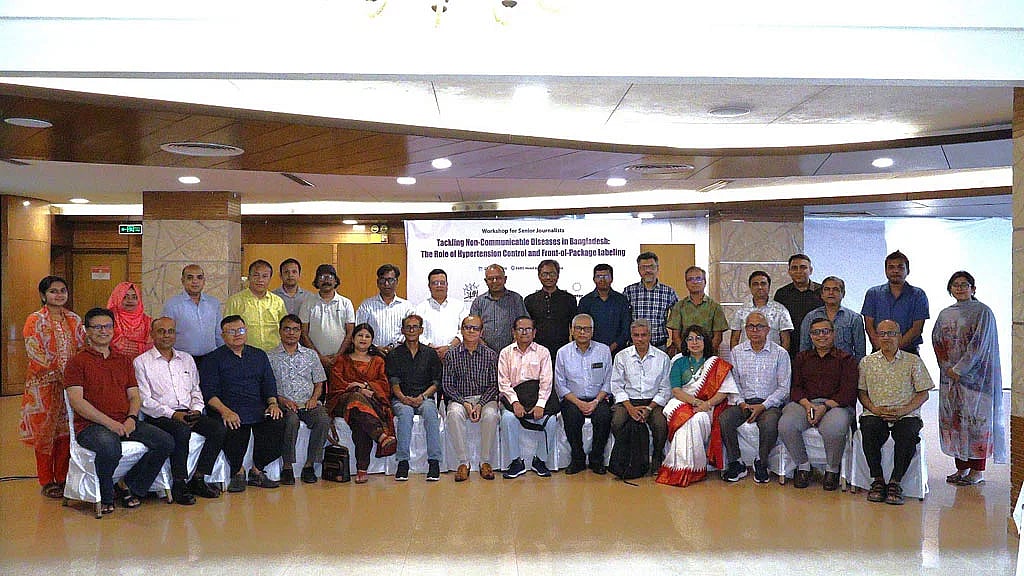
The issue was highlighted at a workshop titled “Tackling Non-Communicable Diseases in Bangladesh: The Role of Hypertension Control and Front-of-Package Labelling” held on Apr 23 in Dhaka.
The workshop was organised by PROGGA (Knowledge for Progress) with support from the Global Health Advocacy Incubator (GHAI). Twenty-eight senior journalists from print, television and online media took part in the event at FARS Hotel & Resorts.
Speakers said the rising risk of NCDs, including hypertension, diabetes and cancer, is being fuelled by the widespread consumption of unhealthy ultra-processed foods high in sugar, salt, saturated fat and trans fat.
They said the introduction of front-of-package labelling (FOPL) on packaged foods has been identified as an effective way to curb diet-related NCDs. Ensuring uninterrupted access to medicines was also described as crucial in dealing with hypertension-related illnesses.
The workshop noted that nearly 97 percent of people in Bangladesh regularly consume packaged foods. However, the nutritional information printed on the back of packets is often difficult to understand, while the exact amounts of salt, sugar, saturated fat and trans fat are not always clearly stated.
As a result, consumers are often unable to make informed decisions about the nutritional value and health risks of the products they buy.
Speakers said mandatory FOPL would allow consumers to identify unhealthy products more easily through clear “Excess in” warning labels on the front of packages, helping them make healthier food choices.
They added that such a system could also encourage manufacturers to improve the nutritional quality of their products.
The workshop was told that 44 countries have already introduced FOPL as a WHO-recommended public health measure, with 10 of them making it mandatory. According to the speakers, those steps have helped improve food choices and reduce the consumption of unhealthy products.
The discussants also said that despite the high prevalence of NCDs, including hypertension, budget allocation for the sector remains inadequate, accounting for just 4.2 percent of the total health budget.
Because of that, a regular supply of anti-hypertensive medicines cannot be ensured at all community clinics, they said.
They said sustainable financing and uninterrupted medicine supplies at community clinics and Upazila health complexes could play a major role in controlling hypertension and other non-communicable diseases.
Among those present as discussants were Prof Dr Sohel Reza Choudhury, head of epidemiology and research at the National Heart Foundation Hospital and Research Institute; Muhammad Ruhul Quddus, Bangladesh country lead at GHAI; Mortuza Haider Liton, convener of the Anti-Tobacco Media Alliance (ATMA); Nadira Kiron and Mizan Chowdhury, co-conveners of ATMA; and ABM Zubair, executive director of PROGGA.