Published : 06 Feb 2026, 09:06 PM
Updated : 28 Aug 2026, 01:32 AM


The Ministry of Liberation War Affairs has cancelled the video interviews of around 15,000 freedom fighters, citing the contracted company’s failure to meet conditions, putting the materials at risk of being lost.
At the same time, the contractor firm’s bills have not been paid. Despite a six-month extension, the project was terminated in an incomplete state after the work went unfinished within the stipulated time frame. The contractor has rejected allegations of breaching contract terms, and the matter has now been taken to the court.
The ministry has decided not to preserve around 14,640 video interviews from the project’s second phase, saying they did not meet the expected standards.
Officials said a review committee found that the interviews were not edited as required and that both audio and video quality were inadequate.
Hence, not only the interviews but the entire project—worth nearly Tk 5 billion—has been scrapped.
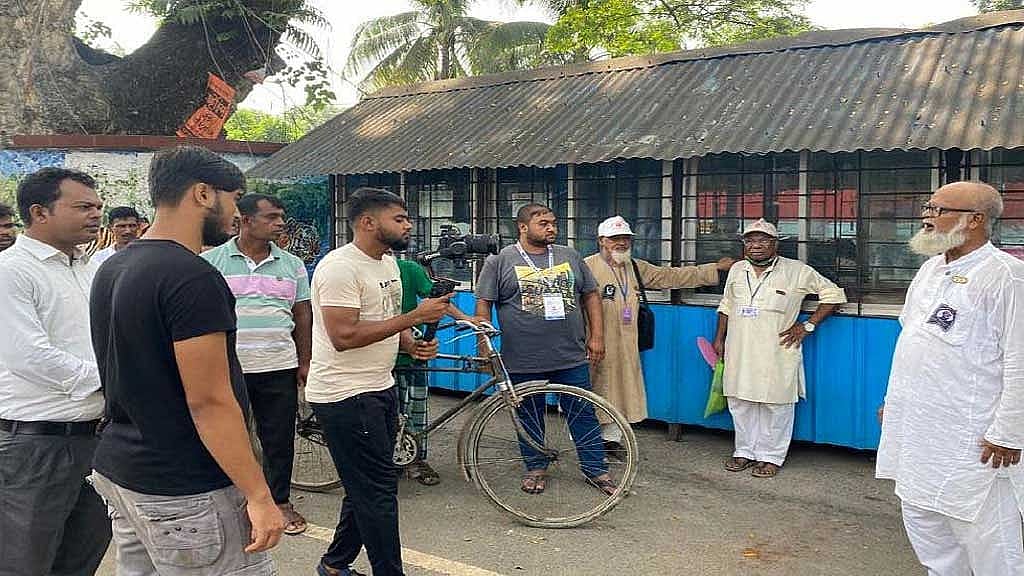
The contracting firm, however, claims it produced and submitted the videos in line with the agreed standards. It said the videos from the second phase were made in the same manner as those from the first phase, which the ministry had accepted.
The firm also said it could not pay project-related staff due to the ministry not paying the bills, forcing many into dire financial hardship. It has filed a writ petition with the High Court, though the case has yet to be heard.
THE PROJECT
The project aimed to preserve and pass on the wartime experiences of living freedom fighters of Bangladesh’s Liberation War to future generations.
Titled “Birer Konthhe Birgatha” or “Heroic Tales in the Voices of Heroes”, the project was launched in 2022 during the tenure of the now-ousted Awami League government, with an estimated cost of Tk 495.7 million.
The plan was to produce interview-based documentaries of 80,000 freedom fighters, 80,000 pieces of YouTube video content, and 16 full-length documentaries.
The project was scheduled to be completed by December 2024. However, the Awami League government was toppled in a mass uprising in August 2024, five months before the deadline.
The Management and Training International Limited (MTI) was awarded the work through a tender process and it signed a contract with the ministry on May 16, 2023.
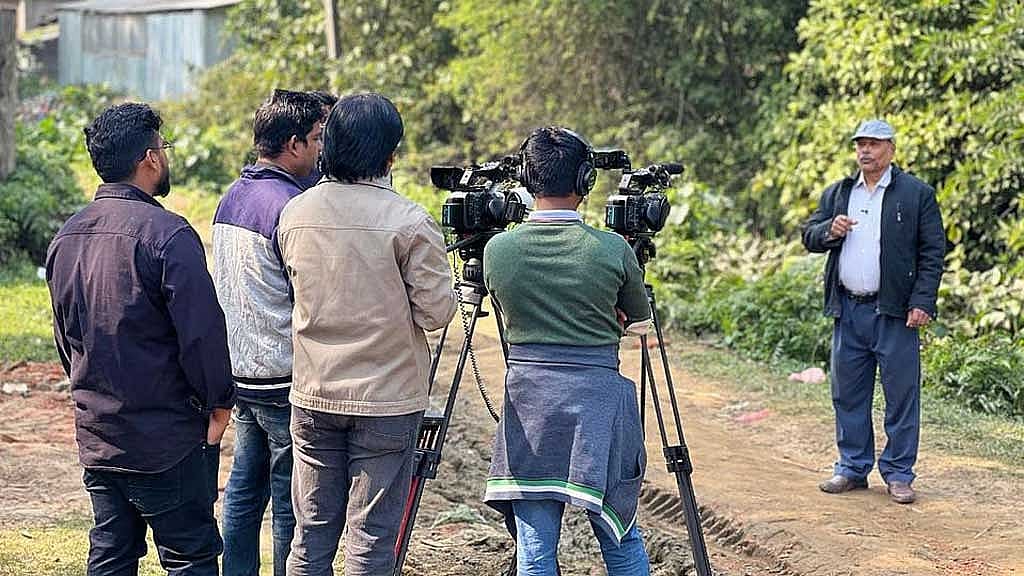
Under the contract, interviewers were required to ask 19 specific questions, including which sector a freedom fighter fought in, under whose directive they joined the war, where and how they lived during the war, whether they participated in frontline combat, received weapons training, were injured, and which sector commander they served under.
According to MTI, before the project was cancelled, it had submitted 27,428 video interviews and four documentaries.
Of these, 12,788 videos from the first phase were submitted during the previous government’s tenure and have been preserved at the Bangladesh Film Archive.
However, 14,640 videos submitted after the interim government took office were rejected and remain stored with the MTI.
WHY THEY WERE REJECTED
Project Director Afrazur Rahman told bdnews24.com on Tuesday that the videos were rejected following proper scrutiny.
Referring to the 19 criteria, he said the videos were supposed to be edited in a format suitable for social media content.
“There was a condition that the videos should be 5 to 10 minutes long and not more than that. But they didn’t follow it.”
He added that every project has a Development Project Proposal (DPP), which specified conditions and review mechanisms. Under the previous government, a committee led by the then minister and including experts reviewed the first batch of videos. It rejected many of the videos and the rest were preserved.
“We later reviewed the remaining videos as well. They were produced in a rush. We asked them to re-edit, but they did not. When they finally submitted them, the project period had already ended,” Afrazur said.
“As the committee found the submissions unworthy, we could not accept half of them. We even paid for the accepted half of the content.”
When asked, he said that despite a six-month extension until June 2025, the contractor failed to complete the remaining work as per conditions and did not edit the remaining videos. Although the deadline was extended to June 2025, the work was not completed, prompting the government to terminate the project.
Following the fall of the Awami League government on Aug 5, 2024, an interim government led by Muhammad Yunus assumed office on Aug 8.
After taking office, Liberation War Affairs Advisor Faruk E Azam ordered the formation of a 10-member committee to review the interviews, headed by Additional Secretary Ziauddin Ahmed.
The committee head also told bdnews24.com that both the committee and expert panels, chaired by the advisor, found the videos had failed to meet the key points in the 19-point criteria. “Hence, those were rejected.”
The review noted that the interview framework was often not followed and that video and, in some cases audio quality, failed to meet the standard.
At a meeting chaired by Faruk E Azam on Sept 11, 2024, the ministry ordered a halt to further interviews under the project.
WHAT THE CONTRACTOR SAYS
According to the contracting firm MTI, it submitted 12,788 interviews in the first phase and received Tk 51.7 million in three instalments.
Ministry officials say that after the changeover of government, the company submitted the remaining videos and sought a payment of Tk 58.5 million, prompting the ministry to form a subcommittee.
MTI Deputy Program Manager Azmal Kabir Rabbi told bdnews24.com that after they signed the contract, nearly 30,000 videos were collected at the field level, of which 14,640 were submitted and all were edited. We have the raw files as well as edited files stored with us.”
He said, “When the project started, the ministry issued an office order to the deputy commissioners of each district. Following the order, the deputy commissioners used to have meetings with the Upazila executive officers and freedom fighter commanders. Then, our admin team would be consulted before taking the interviews.”
Field staff were trained strictly according to the DPP and ministry guidelines before work began, he said.
The staff were trained to follow the questions mentioned in the DPP. Only then, the project work began at the field level, he claimed.
“All activities were carried out under ministry directives. The project director himself supervised fieldwork, guided the production, and approved payments. Now he says the same videos do not meet standards, or the editing was not tight,” Azmal said.
He alleged that after the interim government took office, the ministry cancelled the videos without consulting the contractor.
“After Aug 5, when the new government took over, we were not invited to any meetings or discussions. Decisions were taken unilaterally to declare the videos unacceptable,” he said.
Confirming that the firm was taking legal action, Azmal said a writ petition has been filed, but no hearing has taken place yet.