Home
+
Published : 25 Mar 2021, 09:13 PM
With the ancient 303 rifles, the Bengali police faced an uphill battle against the Pakistani forces, equipped with heavy artilleries, for three and a half hours.
The dark night saw as many as 150 Bengali policemen martyred.
‘INDEPENDENCE’ WAS THE MOTTO
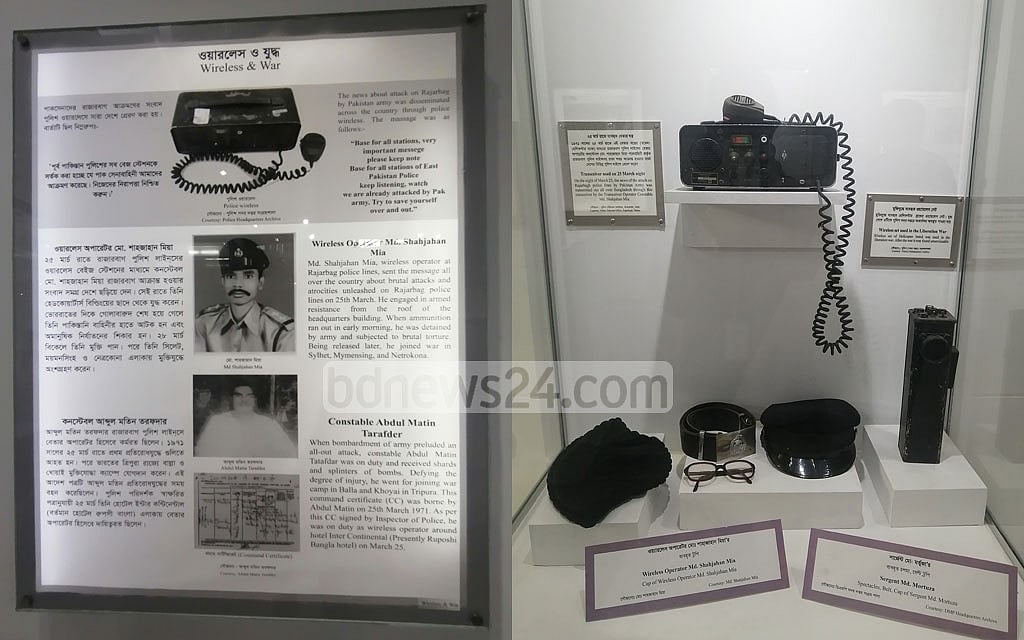
Shahjahan Miah, a wireless operator at the police lines in March 1971, and constable Abu Shama, who was on duty at the armoury, recounted the horrors of that night in interviews with bdnews24.com as Bangladesh is celebrating 50 years of independence that came the next day that year.
On that day, the personnel at the police lines received various types of information from the afternoon through their sources as the Pakistani Army did a recce of the Rajarbagh streets in the evening.
Around 9pm, the members of the police heard that the army could launch a possible attack. The control room immediately dispatched a few patrol teams with wireless sets to several parts of Dhaka to monitor the situation, especially in the civilian sites and the cantonment.
At about 10pm, a patrol in Tejgaon Industrial Area saw a huge military convoy with full artillery on the street. They immediately informed the base station and control room about the military’s movement.
Constable Miah had received the message that night.
The message sent from the mobile wireless station was this: “Charlie seven for base, how do you hear me, over.”
“Base for Charlie seven, send your message, over,” Miah replied.
The moment they received the message, the Bengali police personnel prepared to resist the attack.
GAMBLING WITH THEIR LIVES
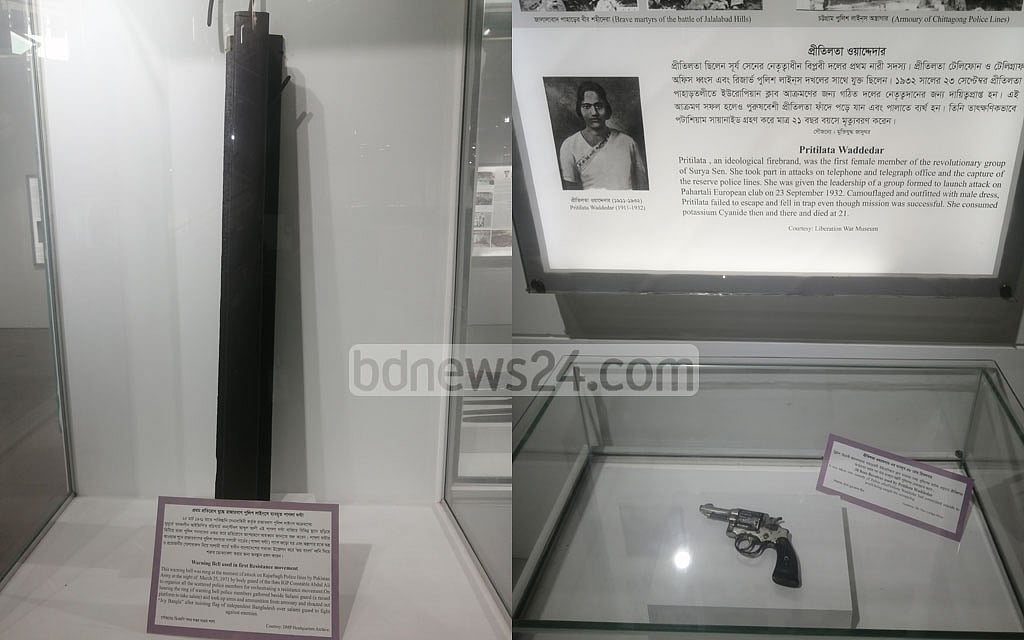
As the alarm rang, all the police personnel at Rajarbagh assembled to collect their weapons from the armoury. A red and green flag of Bangladesh was hoisted after taking down the Pakistani colours.
The Pakistani Army confronted the first police barricade at Chamelibagh around 11:50pm where two Pakistani soldiers were killed, Miah said. Those were most probably the first bullets fired in the Liberation War.
Miah disseminated the news of the attack to 19 districts, 36 sub-divisions and all police lines through a wireless message: “The base for all station East Pakistan Police, keep listening, watch. We are already attacked by the Pak Army. Try to save yourself, over and out.”
He transmitted the message multiple times as the sound of gunshots rang through the police lines.
As the gunshots peaked from around, Bengali members of the police gathered on the rooftop of the police lines.
“We fought just with 303 rifles against tanks and machine guns. Around 100 of us survived until the time for Fajr prayers. The (Pakistan) army captured us at around 5 am. We were kept as captives until Mar 28 at Rajarbagh,” said Constable Miah.
The Pakistanis gave the police derogatory names like Kutta Bahini (dog force) or Dalal Bahini (collaborators).
“It was us who took down the Pakistani flag and hoisted a Bangladeshi flag braving death,” the valiant freedom fighter said in an emotion-choked voice.
“We got the courage from the Almighty and the power was instilled in us through the strong words uttered by Bangabandhu,” he said, referring to Bangabandhu’s historic March 7, 1971 speech in which he proclaimed: “The struggle this time is for our freedom. The struggle this time is for independence.”
On that night, the personnel at the Rajarbagh Police Lines were on their own for decisions as no high official was present there.
Inspector Yasin, who was also on duty at the wireless station, had informed additional inspector general SM Nabab for directives about the army attack, but Nabab hung up the line.
At that time, eight police stations and three patrol teams had wireless sets with them. Sub-inspector Yasin Ali Tarafdar, RS Muslim Ali Sharif, Constable Monir Hossain, Constable Matiur Rahman Matin, Constable Abdul Latif, Constable Sohrab Hossain and others were present at Rajarbagh Wireless Base Station.
Following their own plan, they forced Reserve Inspector RI Mafizuddin to give the keys of the armoury and took the arms and ammunition. Mafizuddin went into hiding.
The members of the police also got on the rooftops of the buildings around the police lines, with one team positioned at Pakmotor, now known as Banglamotor, Miah said.
The police opened fire the moment the army convoy reached near the main entrance. It was an ambush that unnerved the Pakistanis for a moment but they later attacked the police with tanks, mortars and heavy machine guns.
The Pakistani Army entered the Police Lines Parade Ground with tanks early in the morning. Bengali police still continued firing at them from the rooftop of a four-storey barrack.
The Pakistanis, 800 in number, then lit flairs to find out the Bengali policemen and shot them dead.
A GRUESOME TORTURE
Abu Shama, an injured freedom fighter who was a constable in charge of the armoury, gave an account of the gruesome torture by the Pakistan army on that night.
After firing for the entire night, the Pakistani Army entered the police lines at dawn with two tanks. A truck tailed the tanks.
“Some of us who were still on the rooftop saw the Pakistani soldiers loading the truck with the bodies of dead police members,” recalled Shama.
“Once they entered the police lines, the Pakistan soldiers began to hit everyone indiscriminately using batons, rifle butts and metal plates. All of us were bleeding. They were hitting us and swearing at us in Urdu. I thought I would die that day.
"We were more than a hundred policemen arrested in Rajarbagh for three days. They didn't give us a drop of water. On Mar 28, we were sent to Gendaria Mill Barrack. On the way, we saw many corpses floating on the canal at Loharpool, Sutrapur," said Shama.
After Mar 25 in 1971, no Bengali policemen in Kotwali Police Station were sent for patrol. They were brought to the Rajarbagh Police Lines on Apr 5. They witnessed that everything, including the barrack, canteen, furniture and clothes, was burnt to ashes. Bodies of sepoys Jahangir and Abdus Salam were found on the floor in gory condition.
“Bostan Khan, who hated Bengalis, took over Rajarbagh Police Lines on Apr 6 and started tormenting the Bengali policemen there. Khan used to pick up well-built Bengali police constables and send them to the cantonment calling them ‘Muktibahini’ or freedom fighters. Every day, a specific number of Bengali police were picked up and sent to Dhaka Cantonment. They never returned to the Police Lines,” said Shama.
Some Bengali members of the police were, however, loyal to Pakistan. They used to torment the others in many ways, including passing information on to the Pakistani Army. Miah said AIG Nabab, chief of the Wireless Department, was one of them.
“We used code words for wireless communication to puzzle the Pakistanis,” Constable Miah said.
After independence, AIG Nabab was sacked but he was reappointed during the regime of the first military ruler of the country Ziaur Rahman following the assassination of Bangabandhu in 1975, said Miah.
Both Shahjahan Miah and Abu Shama fled to India and took part in the Liberation War defying orders to go back to duty on being freed.
Miah and his two brothers fought at Sector 11, while Shama was injured while fighting under Sector No. 3. Both of them joined their duties in 1972 and then retired.
POLICE LIBERATION WAR MUSEUM
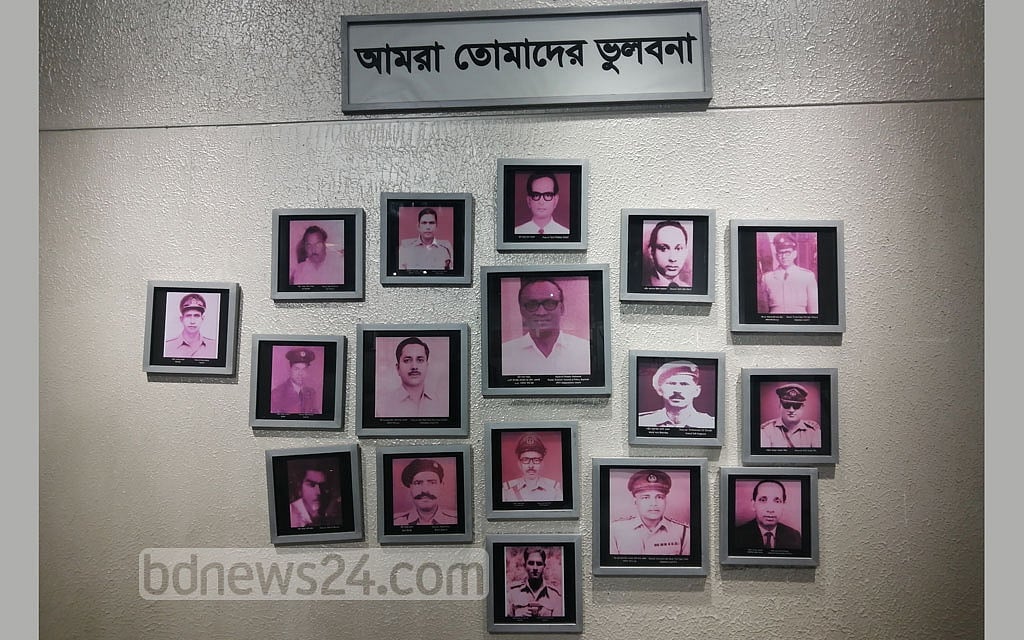
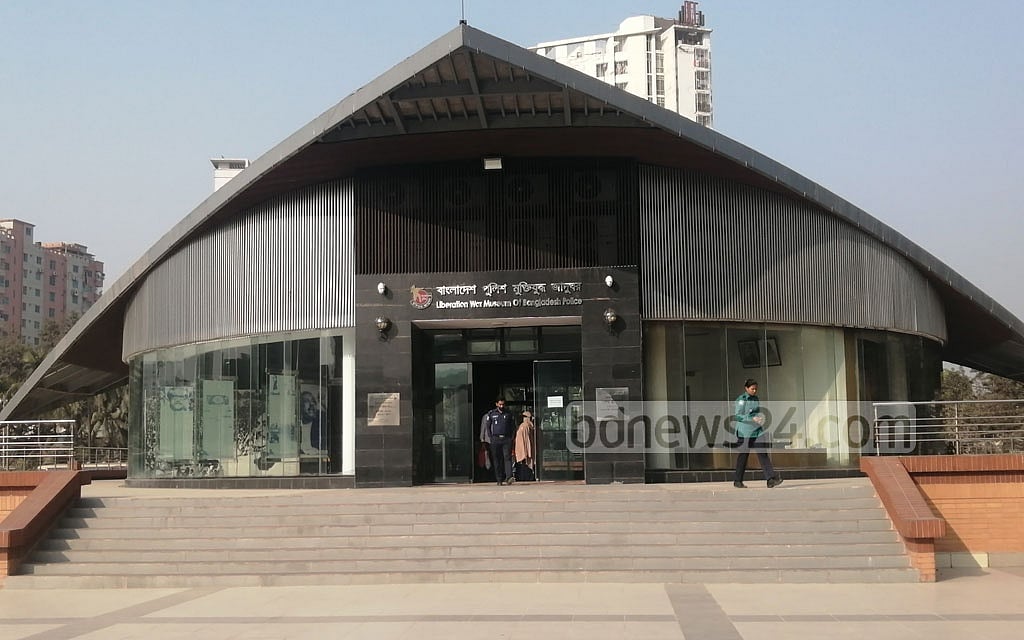
The Police Liberation War Museum next to the Rajarbagh Police Monument highlights the huge role played by Bangladesh Police in the war for the new generation.
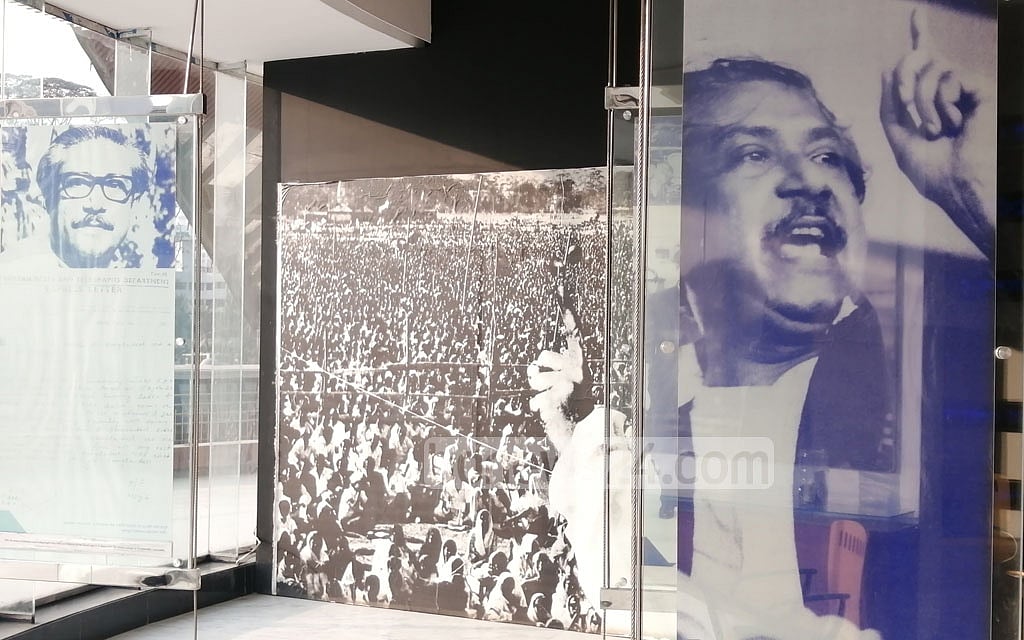
The visitors can see the Bangabandhu Gallery upon entering the museum. It has a rare collection of Bangabandhu’s photographs. A library containing around 2,000 books about the Liberation War is the next attraction. One can purchase the books written on the contribution of the police in the Liberation War.
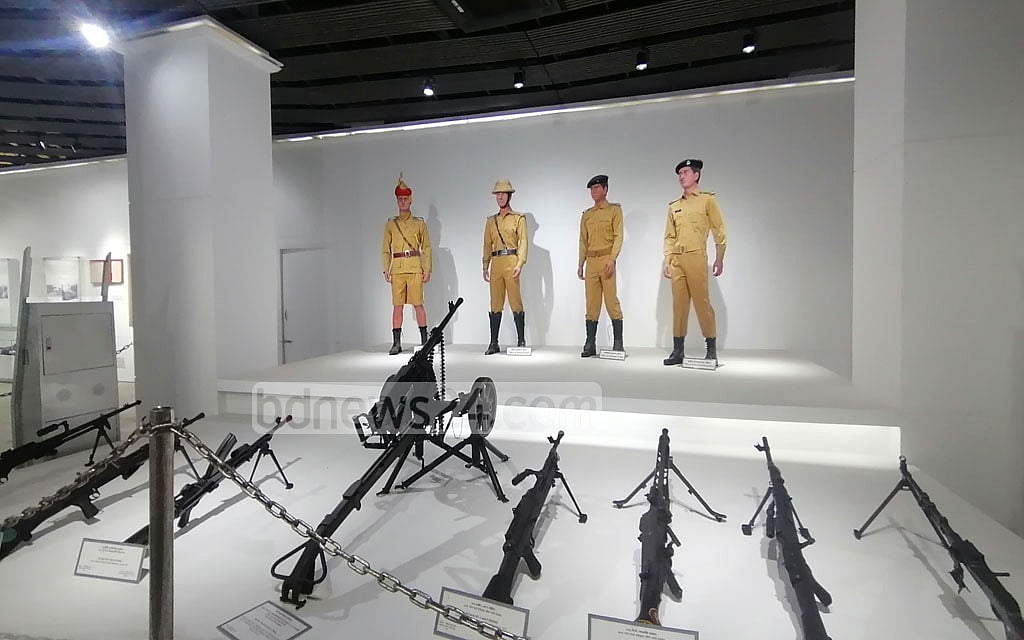
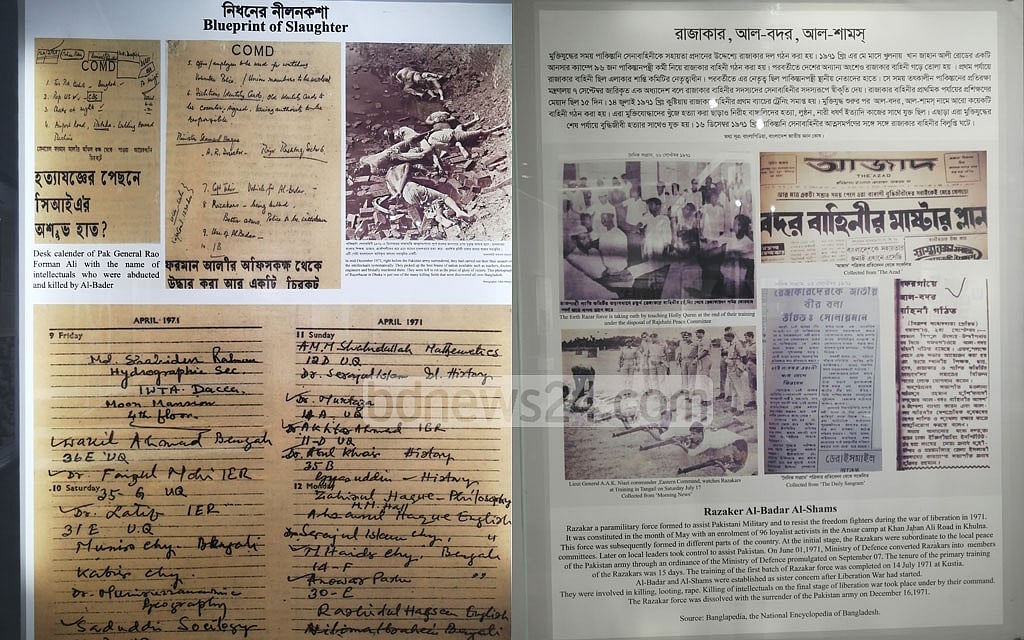
The museum artefacts include 303 rifles used against the Pakistani occupation forces, clothes of the martyred police, their spectacles, caps, the telegram containing the declaration of independence on behalf of Bangabandhu, hand mike and searchlight used in the Liberation War and many other memorabilia.
All records, including the list of the police personnel, were burnt when the Pakistani Army attacked Rajarbagh, said Assistant Inspector General Talibur Rahman, director of the museum.
“Therefore, no specific list of the policemen martyred in the nine months of war could be made. A list of 751 martyrs was prepared based on information drawn from various sources; their names have been engraved in the Rajarbagh Monument,” he said.
The authorities plan to prepare a complete list of the police who participated in the war of independence, said Talibur.
The Police Liberation War Museum is open from Thursday to Tuesday for visitors with the weekly closure on Wednesday. The entry fee is Tk 10 while it is free on national holidays. Also, students visit the museum for free in December.
The Father of the Nation could not work to conserve the history as he was busy rebuilding the war-torn country, said Deputy Inspector General Habibur Rahman, who took the initiative to set up the museum in 2009. It was opened to visitors on Mar 24, 2013.
“Bangladesh was led by the power that opposed its independence for 21 years after Bangabandhu and his family were killed in 1975.
Therefore, it was a big pause. Once the government supporting the spirit of the Liberation War came to power, it began to preserve history. It collected the information and mementoes from different districts.”
The new generation must visit the Police Liberation War Museum to know about the valour and the contribution made by the police force to the Liberation War, said Habibur.