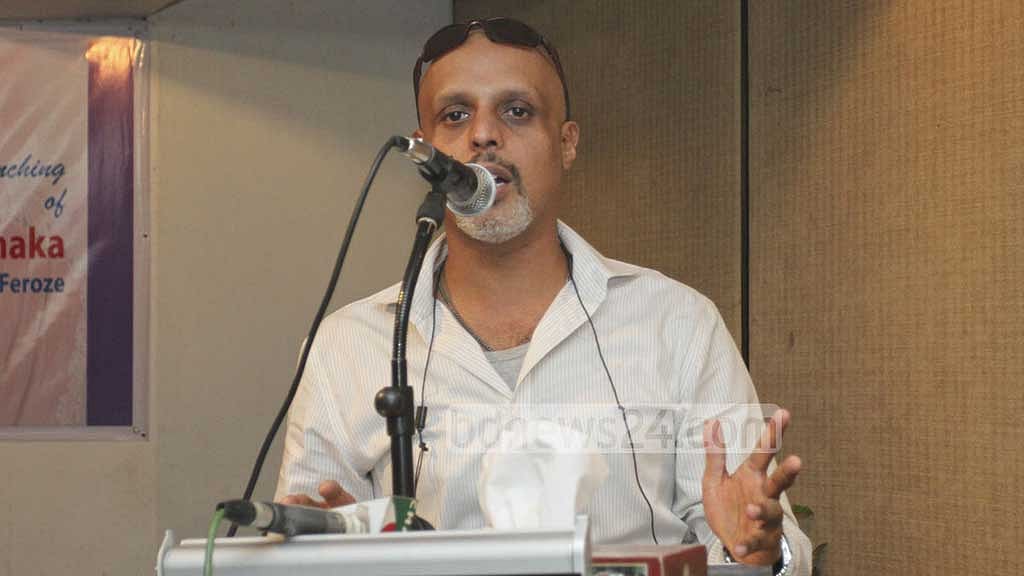
Dhaka, Mar 20 (bdnews24.com) — Bangladesh has decided to ratify the Rome Statute of the International Criminal Court, for prosecution of individuals who commit crimes against humanity, law minister Shafique Ahmed said on Saturday.
"All required steps have been taken to give approval on the matter. The cabinet meeting will finalise it within a few days," he told a meeting in the capital's Spectra Convention Centre.
Human rights organisation Odhikar organised the advocacy meeting on 'Ratification of the Rome Statute of the International Criminal Court by Bangladesh'.
The Rome Statute is the treaty that established the International Criminal Court (ICC). Among other things, the statute establishes the court's functions, jurisdiction and structure.
The Rome Statute entered into force on 1 July 2002. As of October 2009, 110 states are party to the statute, and a further 38 states have signed but not ratified the treaty. The ICC can only prosecute crimes committed on or after the date it came into force.
Asked whether ratification of the Rome Statute by Bangladesh would be of any help in the government's prosecution of 1971 war crimes trials, Shafique said it would help to prosecute future instances of crimes against humanity.
The law minister last week confirmed that Bangladesh's upcoming 1971 war crimes trials would be held under its recently amended International Crimes (Tribunals) Act 1973.
An expert panel of international lawyers, including a former war crimes prosecutor submitted a legal opinion to the government last month, however, advising further amendments to ensure the 1973 Act meets international standards.
Among other recommendations, the lawyers advise that sections of the Rome Statute dealing with rights of suspects during investigations should be included in the Act.
An international criminal court has been called the missing link in the international legal system. The International Court of Justice at The Hague handles only cases between states, not individuals. Without an international criminal court for dealing with individual responsibility, acts of genocide and violations of human rights, in Cambodia, in Bosnia and Rwanda, have gone unpunished even in recent decades.
'INT'L COMMUNITY EXTENDS SUPPORT'
Shafique stressed on Saturday that the international community has extended support to Bangladesh's move to try cases of genocide and crimes against humanity that took place during Bangladesh's 1971 war of independence.
"Pakistan has launched campaigns in many countries to stop the move but the international community considers that this is Bangladesh's internal affair and nobody should intervene," he said.
"We will try only Bangladeshis accused of committing crimes against humanity and war crimes," he said.
"Many countries including the US have already given support for holding the trials," the minister said.
'WAR CRIMINAL IN PARLIAMENT'
Meanwhile, former army chief Harun-ar-Rashid, at a press briefing on Saturday, said: "There is an alleged war criminal in the ninth parliament. His name is Salahudin Qader Chowdhury."
The briefing was organised by the Sector Commanders' Forum in the capital's Liberation War Museum Saturday,
Planning minister AK Khandaker, who was also present at the briefing, said all preparations of the special war crime court were at the final phase and it will start very soon.
Answering another question, sector commander and former army chief KM Shafiullah said: "Every single one, who committed war crimes, will be brought to justice. No symbolic trial will be held. Those who had committed heinous crimes will be tried first."
The Sector Commanders' Forum declared to hold different programmes throughout the country to mark the 'Black Day' on Mar 25 and the 'Independence Day' on Mar 26.
Sector commander CR Dutta, former secretary Sayed Rezaul Hayat, former army officials Samsul Alam, Sahabuddin Ahmed, Akram Ahmed and other freedom fighters were present at the briefing.
bdnews24.com/pc/sm/adk/su/rah/am/1522h.