Published : 13 Mar 2026, 07:30 AM
Updated : 21 Aug 2026, 03:28 PM


As evening falls in Dhaka, the familiar buzzing begins.
Within minutes, rooms fill with mosquitoes. Nets are drawn, coils are lit, yet relief remains elusive.
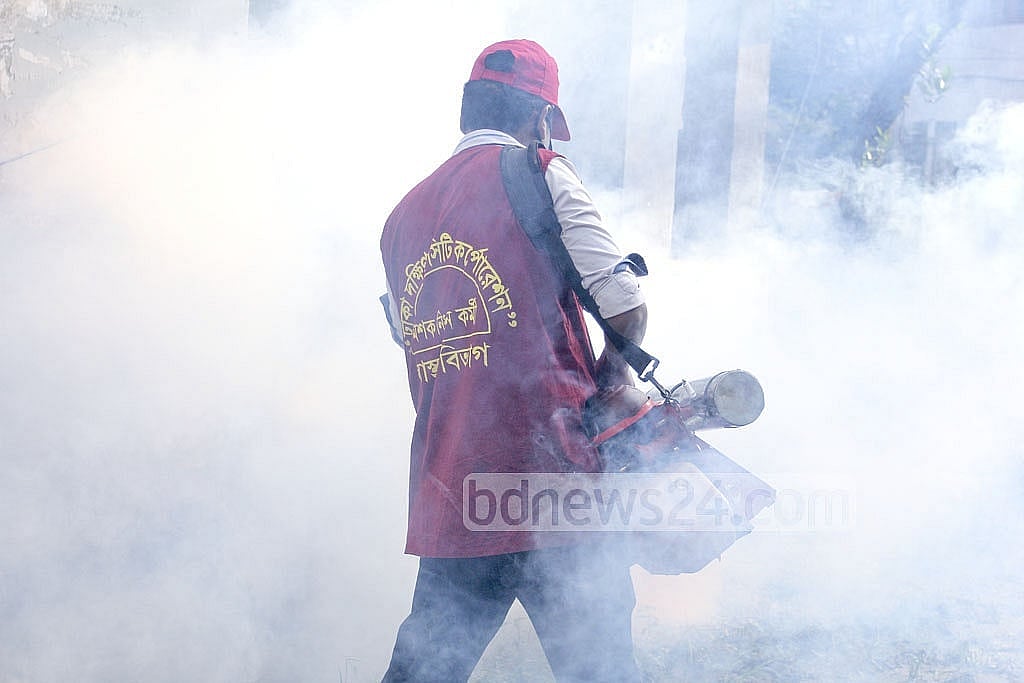
Sleep has become a nightly struggle, and in many neighbourhoods, residents say the fogging trucks that once blanketed the streets with insecticide have vanished.
“By evening the house is full of mosquitoes,” said Ali Haidar Patwari, a private-sector employee who lives at Mohakhali’s Dakshinpara.
“Even with mosquito nets and coils there is no escape. We haven’t seen fumigation smoke here for a long time.”
His experience is far from unique. Residents across Dhaka describe the same relentless problem.
Conversations with at least 10 people from different parts of the capital reveal a common refrain: mosquitoes are everywhere.
Research now confirms what residents have been feeling for weeks. In some places, mosquito numbers in February have risen by more than 40 percent compared with December.
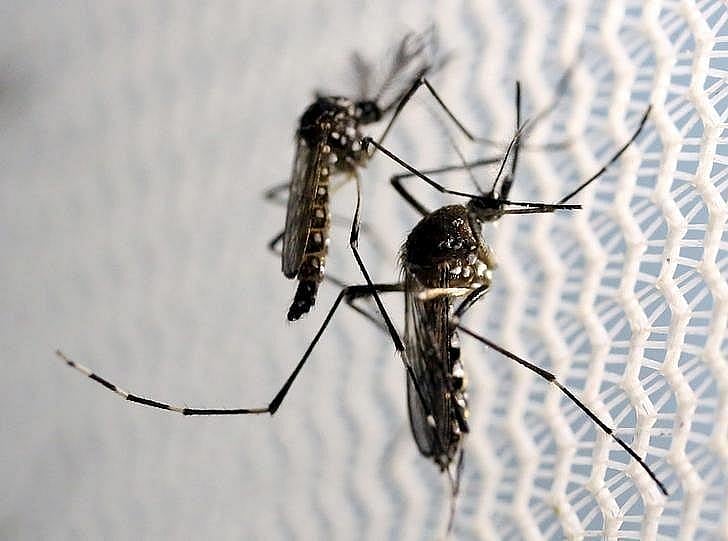
Scientists say several factors lie behind the surge: a milder winter that ended earlier than usual, pollution that remains poorly controlled, and a slowdown in mosquito-control programmes in the absence of elected representatives in Dhaka city corporations.
The new BNP government has previously blamed poor coordination between the two city authorities for the problem. Administrators have recently been appointed, while Health Minister Sardar Sakhawat Husain Bakul has announced plans to strengthen mosquito control efforts.
But on Dhaka’s streets, the insects are already thriving.
Rajin Chowdhury, a resident of Uttara’s Sector 18, said mosquitoes now dominate daily life.
“Mosquitoes are in the house 24 hours a day,” he said. “We are in trouble with the children. Before, they bit mainly at night. Now the problem continues during the day as well. We never take the mosquito nets down.”

In Mohammadpur’s Beribadh stretch, resident Arif Hossain believes the absence of elected councillors has weakened the response.
“City corporation workers used to spray medicine regularly,” he said. “But since there are no councillors now, the fogging machines haven’t come for a long time.”
For parents like Shyampur resident Tania Sultana, the worry goes beyond inconvenience.
“Mosquitoes surged especially after the cold eased,” she said. “I am worried about my two daughters. We can protect ourselves or stay alert, but children do not understand these things.”
Even roadside businesses are affected.
Ali Akkas, who runs a tea stall in Mirpur-2, said evenings have become almost unbearable.
“People come for tea after sunset,” he said. “Sometimes if you open your mouth, a mosquito flies straight in.”

A 40% Surge in Just a Month
The sharp proliferation has been documented in a recent study led by Prof Kabirul Bashar of Jahangirnagar University’s Department of Zoology.
The findings suggest the situation is not merely worsening but approaching a severe level.
Compared with December last year, mosquito numbers in February have risen by more than 40 percent in certain locations.
About 92 percent of the mosquitoes identified were Culex, while the remaining 8 percent included Armigeres, Mansonia, Anopheles, and Aedes species.
Culex mosquitoes are known to spread diseases such as filariasis and Japanese encephalitis, though these illnesses are not currently widespread in Bangladesh. Aedes mosquitoes transmit dengue, while Anopheles mosquitoes are responsible for malaria.

“If we compare February with December, mosquito numbers have multiplied significantly both inside and outside Dhaka city corporation areas,” Prof Bashar said.
“This rise is happening every day and will continue through March unless there is a major storm or heavy rainfall.”
How the Researchers Measured the Surge
Prof Bashar and his team used two methods to measure mosquito prevalence:
● Larval density analysis in water bodies
● Counting adult mosquito bites
For the larval analysis, researchers collected 250ml of water from different ponds and stagnant pools and counted mosquito larvae.
In January, water samples from Dhaka and Savar contained an average of 850 larvae. By February, the figure had risen to about 1,250.
To measure adult mosquito activity, researchers exposed a volunteer’s legs up to the knees and arms for one hour and counted how many mosquitoes attempted to bite.
In January, the number ranged from 400 to 600 per hour. By February it had climbed to around 850.
According to World Health Organization (WHO) standards, even five bites per hour indicates a high mosquito density.
In Dhaka, the figure is hundreds of times higher.
Where Mosquitoes Are Worst
The study, conducted in partnership with Dhaka North City Corporation (DNCC), monitored mosquito populations in several areas.
Prof Bashar said some neighbourhoods have become hotspots.
In Dhaka South City Corporation, significant surges were observed in:
● Shyampur
● Manda
● Mugda
● Postogola
● Shonir Akhra
● Rayerbag
● Rayerbazar
In Dhaka North City Corporation (DNCC), mosquito populations have surged in Uttara and Khilkhet.
Other areas with particularly high Culex density include Birulia in Savar, Baunia behind Mirpur DOHS, and Haji Camp.
Central Dhaka, where open drains and stagnant water bodies are fewer, appears relatively less affected.
Why Mosquitoes Are Multiplying
Researchers attribute the surge primarily to three factors.
First, this winter was shorter and milder than usual, meaning mosquito populations began expanding earlier in the year.
Second, pollution in ponds, canals, and drainage systems has not been adequately controlled.
Third, mosquito-control programmes slowed due to the absence of elected representatives in the two city corporations, creating administrative gaps.
Associate Professor GM Saifur Rahman of the National University’s Department of Zoology explained the biological factors behind the trend.
Normally, the Culex season begins around August or September, but cooler winter temperatures slow their growth and feeding.
“This year the winter period was shorter,” he said. “So the temperature rose earlier, allowing Culex mosquitoes to multiply sooner.”
The mosquito’s life cycle typically takes seven days when temperatures remain between 17°C and 22°C or higher. In colder conditions, the cycle can stretch to 15 or 20 days.
Cold weather also suppresses the insects’ blood-feeding behaviour and hormone production needed for egg development.
“As winter ended early, the population started increasing sooner,” Saifur said. “What we usually feel in March has already arrived in February.”
He warned that numbers may continue rising through March and April, unless heavy storms or intense rainfall disrupt breeding sites.
When temperatures climb above 32°C, the mosquito population may begin to decline.
What City Authorities Say
Two new administrators have recently been appointed to Dhaka’s city corporations. Repeated calls and messages to them went unanswered.
However, Jahane Ferdous-Binte Rahman, chief health officer of the DSCC, said control measures have already begun.
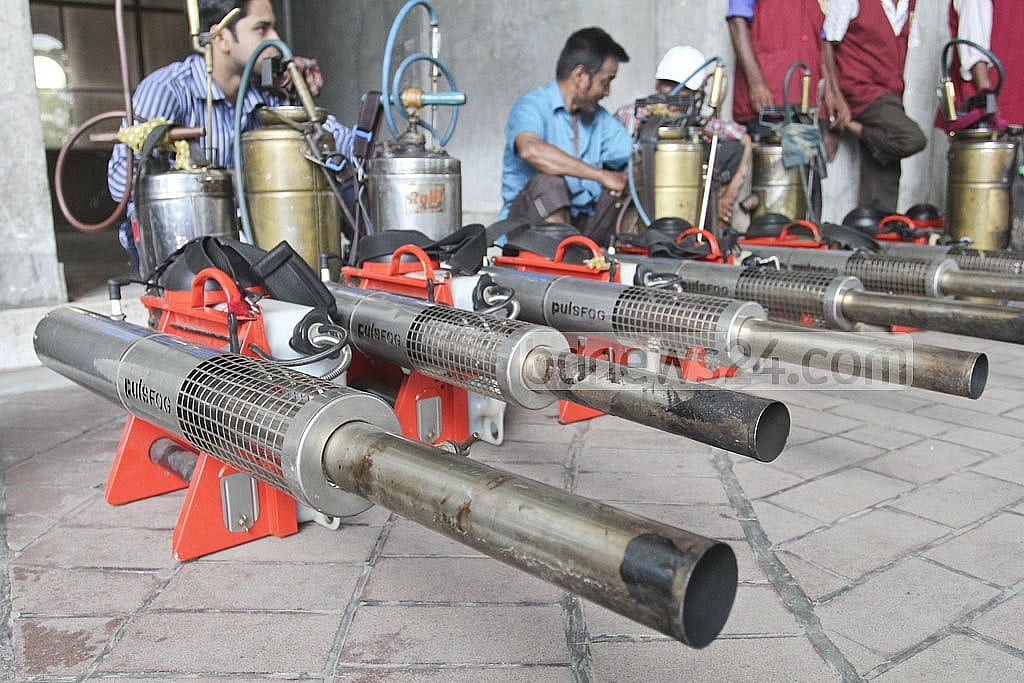
“Our regular activities are continuing,” she said. “Larviciding takes place in the morning and adult mosquito control through fogging in the afternoon. But because the infestation has proliferated, we are intensifying these efforts.”
She added that the administrator recently collected random samples of mosquito-control chemicals from the central storage facility to test their effectiveness.
Additional monitoring teams have also been assigned across the corporation’s 10 zones, with officials set to conduct field-level inspections.
The DNCC’s Chief Health Officer Brig Gen Imrul Kayes emphasised that mosquito control depends heavily on urban sanitation.
“This Culex mosquito depends entirely on how clean a city is,” he said. “Drainage, sewage systems, and overall cleanliness determine the situation. If I mark these factors out of ten, our city does not pass.”
He acknowledged the surge in mosquito numbers but argued that spraying alone cannot solve the problem.
“As long as people continue to dump waste everywhere, Culex mosquitoes will remain,” he said. “Social awareness is essential.”
Responding to complaints that city workers rarely visit some neighbourhoods, he said such perceptions were often shaped by frustration.
“Our teams do go regularly,” he said. “Morning larvicide spraying happens quietly without machines, so people may not notice it.”
Kayes added that the city corporation has mapped major canals and breeding grounds ward by ward and is working to address them.
“We admit that mosquitoes have increased,” he said. “But it is not as if the city corporation is sitting idle. Citizens also have responsibilities. Without cleanliness, no plan will succeed.”
As Dhaka warms into the coming months, the city’s nightly chorus of buzzing wings may grow louder -- unless cleaner streets and decisive control measures break the cycle before the monsoon arrives.