Home
+
Published : 21 Aug 2020, 01:19 AM
Perched on a makeshift podium on the back of a lorry, Hasina was about to finish her address when a series of explosions rang out, sending panicked onlookers scurrying for cover amidst a cloud of smoke.
As it transpired, the leaders and activists of the Awami League became the victims of the very atrocity they had banded together in protest against. The grenade attack, ostensibly an attempt on Hasina's life, signifies perhaps the darkest chapter in the Awami League's history since the assassination of Bangabandhu along with most other members of his family on Aug 15, 1975.
Hasina narrowly escaped the carnage with her life but the attack left 24 dead and hundreds injured.
Sixteen years on, Hasina is now in her third term as prime minister while the then prime minister of the BNP-Jamaat-e-Islami coalition government, Khaleda Zia, is serving time behind bars in a corruption case.
Bangladesh is observing the 16th anniversary of the incident on Friday but the scars from the gruesome attack still run deep.
THE EXPLOSION
The Awami League held its anti-terrorism rally on a Saturday. Party leaders began delivering their speeches from a makeshift stage erected on the back of a truck from 3 pm. Senior leaders took the stage at around 4 pm while party chief Sheikh Hasina arrived at the rally at around 4:30 pm. All of the leaders and activists were eagerly awaiting her speech.
Hasina and other leaders stood behind a table, used as the podium, on the right-hand side of the truck as they spoke. The Awami League chief's bullet-proof Mercedes SUV stood within a few yards of the steps at the back of the truck.
Hasina was flanked by Awami League leaders, including Mohammed Hanif and Mofazzal Hossain Chowdhury Maya, during her address.
Mamun sat beside the podium throughout the rally. Meanwhile, Shoeb stood on the bottom rung of the steps with Maj Gen (Retd.) Tarek Ahmed Siddique standing beside the car.
Mamun assumed Hasina was about to finish her speech and began to approach her. It was then that the first grenade was hurled at the stage.
It was followed by three more explosions as smoke engulfed the entire area.
Hanif and Mamun rushed to Hasina's side in the immediate aftermath. Both Hanif and Mamun urged Hasina to sit down but she refused. Mamun At one point, they forced her to sit.
Three more grenades went off around the truck. Shoeb, who stood at the bottom step, barked out orders to evacuate Hasina to safety immediately.
A grenade then bounced off the back of the truck and exploded next to vehicle as security personnel escorted Hasina to the steps. She was subsequently brought back on to the stage but the blast was believed to have cracked the truck's fuel tank to make matters worse.
In the meantime, the Awami League leaders, activists and security personnel formed a human shield around Sheikh Hasina to protect her. Mamun, Mohammed Hanif, Maya and Hasina’s cousin Nazibuddin Ahmed had all surrounded her.
Hasina's aides helped get her on her feet but she had lost her shoes and glasses. Shoeb held her when they reached the middle of the steps before she was seated on the front seat of the car.
But Hasina did not want to leave the injured behind, according to the security personnel at the scene.
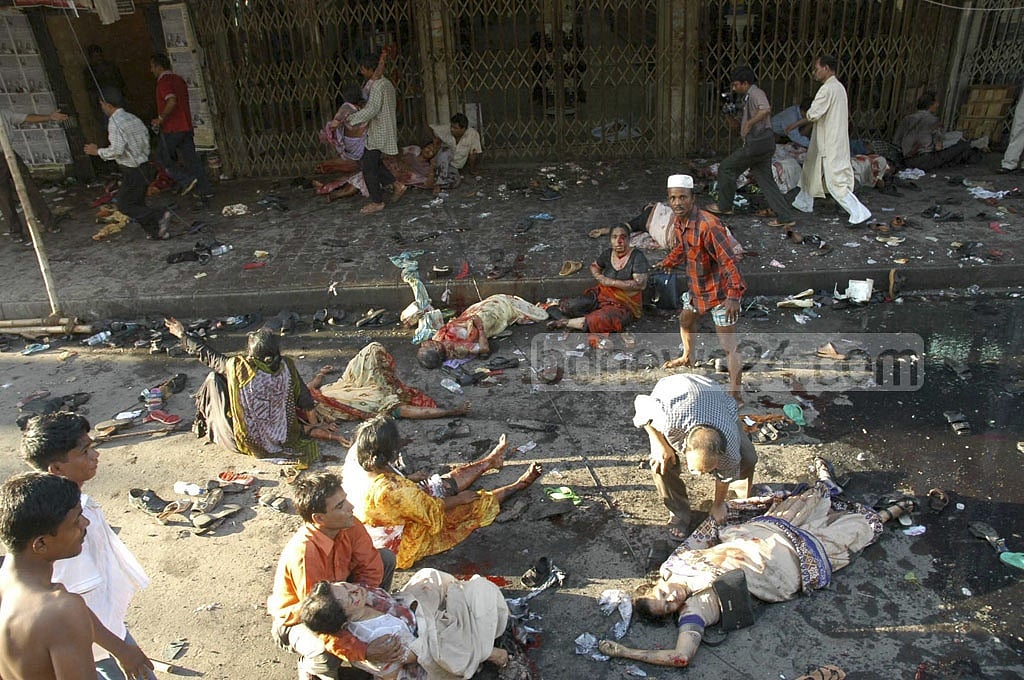
They had taken her to Sudha Sadan against her will as a heap of mutilated bodies lay scattered on the street between the truck and the Awami League office. The injured were left groaning in pain.
Meanwhile, Awami League leaders and activists struggled to send the injured to the hospital as Bangabandhu Avenue was made off-limits to transport after the explosion. They tried to carry the injured to Dhaka Medical College Hospital on rickshaws, auto-rickshaws and vans.
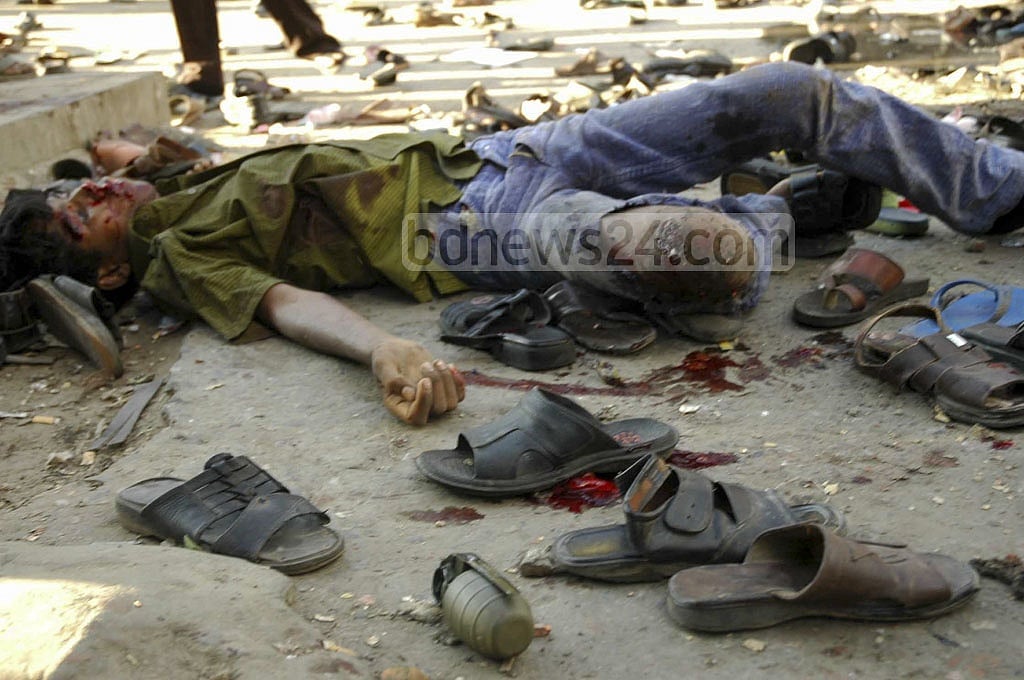
At least 16 people died at the scene. Ivy Rahman died on Aug 24 after 58-hour fight for her life. Mohammed Hanif, the first elected mayor of Dhaka succumbed to his injuries after one and a half years. The death toll from the grisly attack eventually stood at 24. Many of the injured suffered permanent physical deformities as they were maimed. Hasina suffered hearing loss and was under treatment at home and abroad for many years.
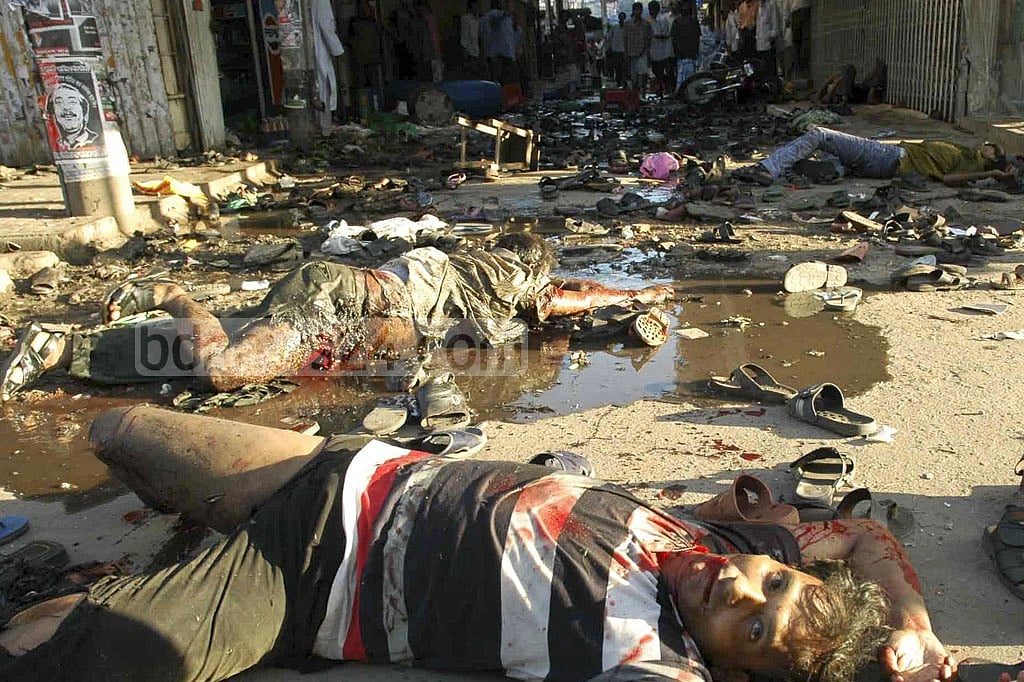
The other victims are: Awami League’s central sub-committee Deputy Secretary Mostak Ahmed Sentu, Women Awami League leaders Sufia Begum and Hasina Mamtaz, Madaripur Juba League leader Liton Munshi, Ratan Sikdar from Narayanganj, Dhaka Mohanagar Rickshaw Shramil League leader Md Hanif, Nazrul Islam College student Mamun Mridha, Juba League leaders Aminul Islam, Atik Sarkar and Shamsuddin Abul Kalam Azad, Swechhasebak League leader Razia Begum and activist Abdul Kuddus Patwari, Shramik League activists Nasir Uddin Sardar, Abul Kashem, Jahid Ali, Momin Ali and Ishaq Miyah.
TARGET: HASINA
Hasina narrowly escaped death in the attack, which was believed to be an attempt to assassinate her.
The grenades began exploding, accompanied by gunfire, as Hasina, after wrapping up her address, was stepping off a truck, which was used as a dais at the rally. Detectives said about 13 or 14 grenades had exploded at the scene.
Security personnel and party loyalists managed to protect her by forming a human wall around Hasina before she was whisked away.
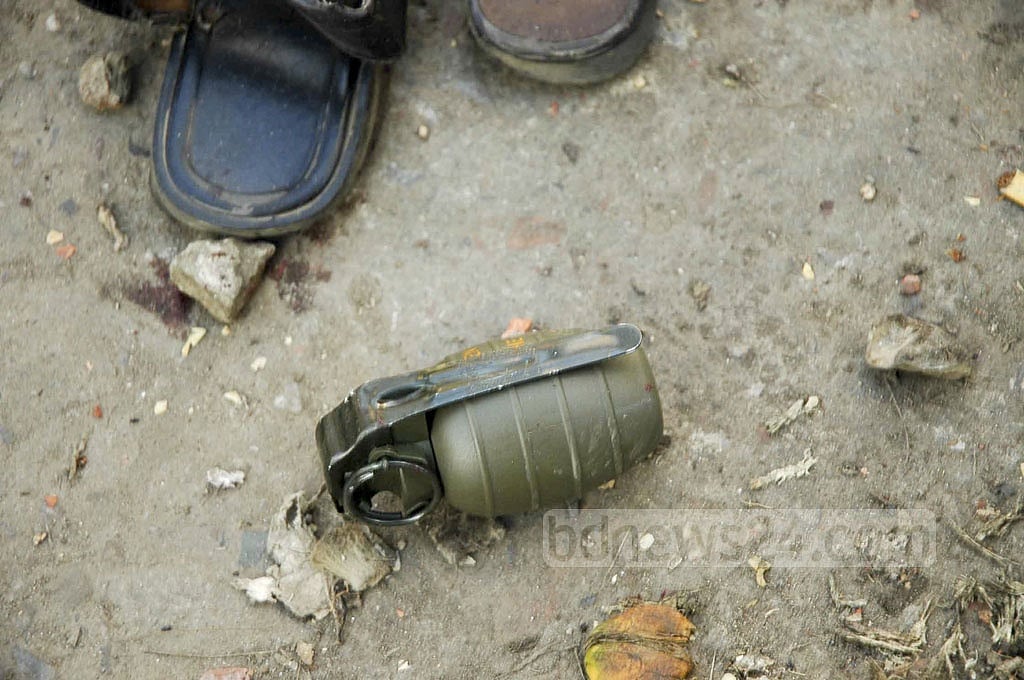
At least seven bullets had hit Hasina's car along with splinters. The tyres were punctured too. The three-layered bullet-proof vehicle also had a significant role in saving Hasina's life that day, Awami League stalwart Saber Hossain Chowdhury told the reporters the next day.
Driver Mohammed Abdul Matin managed to take Hasina safely to Sudha Sadan in Dhanmondi through Doel Chattar, Shaheed Minar, Palashi, New Market and Pilkhana.
"THEY SACRIFICED THEIR LIVES TO SAVE MINE"
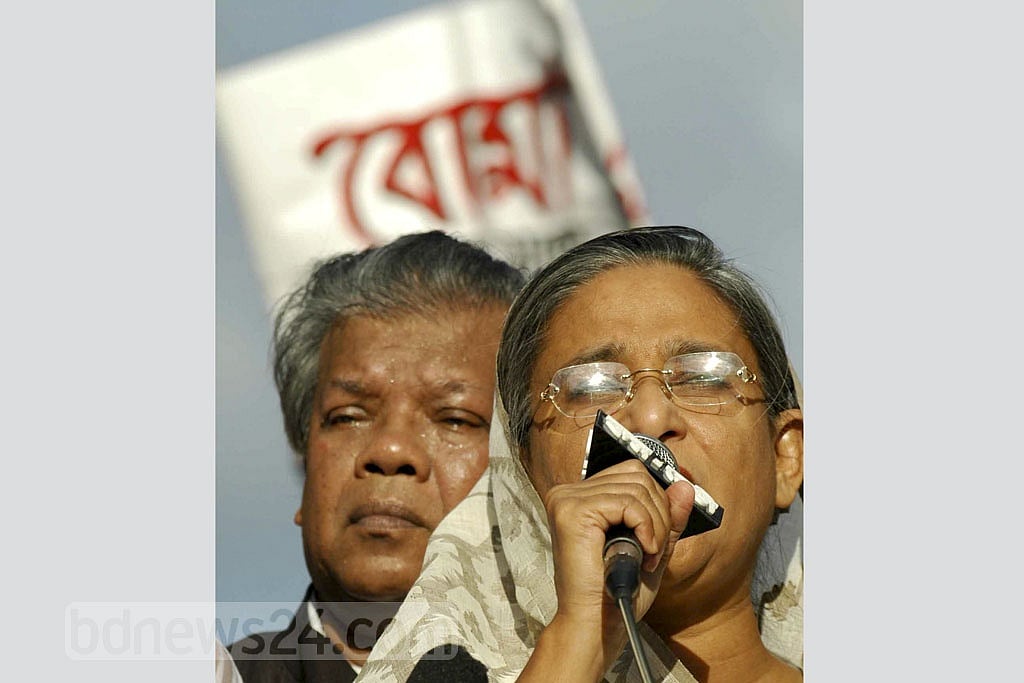
Sheikh Hasina, the then leader of the opposition, shared her agony in an interview with the BBC the same day.
“Our activists have saved my life by sacrificing theirs. They surrounded me while the grenades were exploding. Many of them were injured. My clothes are stained with their blood,” a tearful Hasina recounted.
“Terrorism is rampant across the country and it is being patronised by the government. Our rally was a protest against terrorism, which they (government) responded with grenades. The attackers targeted the spot I would go through to get in the car after finishing my address. There were 8 to 10 grenades going off one after another. One or two them can still be found undetonated. Many of our activists, including women, were killed. Almost all of the presidium members were injured.”
As members of her party sought to rescue the injured, help from the authorities were not forthcoming. Instead, police charged batons and fired tear gas at them, Hasina told the BBC.
“It was clear that police were acting under the instructions of the government,” she said.
DIVERTING THE COURSE OF PROBE
The state has alleged that the then top leaders of the BNP-Jamaat alliance backed the attack, purportedly carried out by militant group Harkat-ul Jihad-al-Islam or HuJI to render the Awami League leaderless by taking out its chief Hasina. The Arges grenades used in the attack were brought from Pakistan.
The Awami League alleged that there were attempts during the BNP-Jamaat government to divert the course of the investigation into the killings, culminating in the 'Joj Mia' facade.
The ‘truth’ about the attack started to come out following a reinvestigation during the term of the military-backed caretaker government. The Criminal Investigation Department or CID pressed charges in court on Jun 11, 2008.
The BNP denied any links to the attack. It instead alleged the government had Tarique charged in the cases to make political gains.
Besides Tarique, the then state minister for home affairs Lutfozzaman Babar, Khaleda’s former political secretary Harris Chowdhury, former deputy minister Abdus Salam Pintu and his brother HuJI leader Mawlana Tajuddin, Khaleda’s nephew Saiful Islam Duke, and several top officials of the National Security Intelligence or NSI and police were accused in two cases - one over the deaths during the attack and the other under the Explosives Act.
Three other accused, former minister and Jamaat secretary-general Ali Ahsan Mohammad Mujahid and HuJI leaders Mufti Abdul Hannan and Sharif Shahedul Alam alias Bipul have been hanged in other cases.
In October 2018, 14 years after the incident, Judge Shahed Nuruddin sentenced Lutfozzaman Babar and 18 others to death for their roles in the grenade attack.
Tarique, who has been living in the UK for the last 10 years, was sentenced to life imprisonment along with 18 others.