Published : 13 Dec 2025, 10:15 AM
Updated : 21 Aug 2026, 02:52 PM


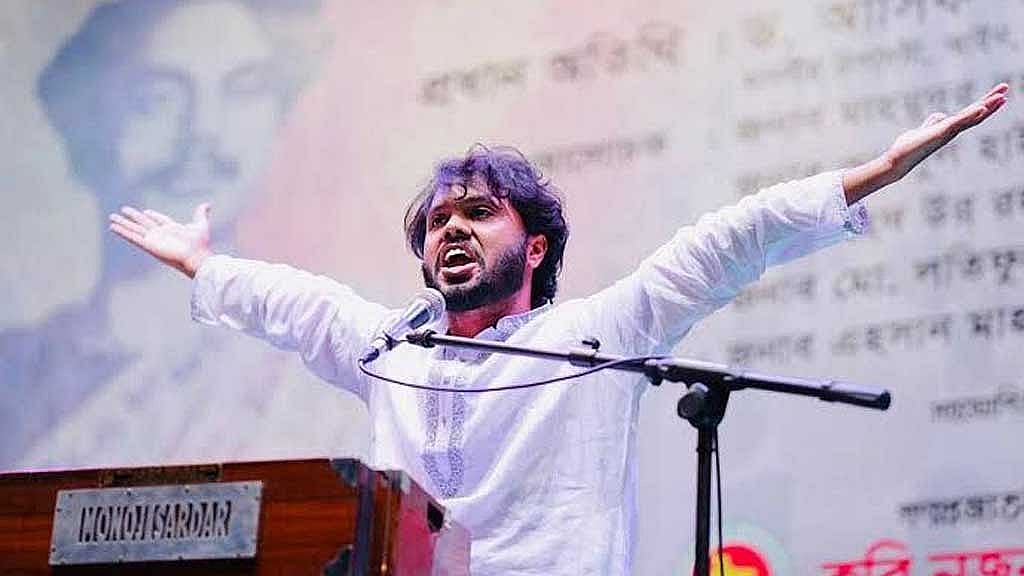
Blood has been spilled in Dhaka less than a day after Bangladesh unveiled its election schedule, when a well-known face of the July Uprising and the Awami League ban movement was shot in broad daylight after declaring he would run as an independent candidate for Dhaka-8 constituency.
The attack on Sharif Osman bin Hadi, convenor of the Inquilab Mancha platform, has reignited grim questions about the breakdown in law and order following the 2024 political upheavals and heightened anxiety over the safety of candidates and voters as the country moves toward the polls.
Political parties had already voiced fears over how security would hold in the run-up to the vote. Those concerns, analysts say, were swiftly and brutally vindicated when gunmen attempted to kill Hadi on Friday afternoon.
Former inspector general of police Muhammad Nurul Huda said such incidents are “no good sign” ahead of a parliamentary polls.
But election expert Abdul Alim issued a sharper warning: repeated attacks of this kind could render February’s election “uncertain”.
The violence erupted less than 20 hours after Chief Election Commissioner AMM Nasiruddin in a televised address on Thursday evening announced the timetable for the parliamentary election and a national referendum.
He urged citizens to vote in a “safe and festive environment” on Feb 12 and assured that security agencies would guarantee a fear-free atmosphere. The CEC said all relevant institutions and security forces will work to "ensure your safe and festive participation”.
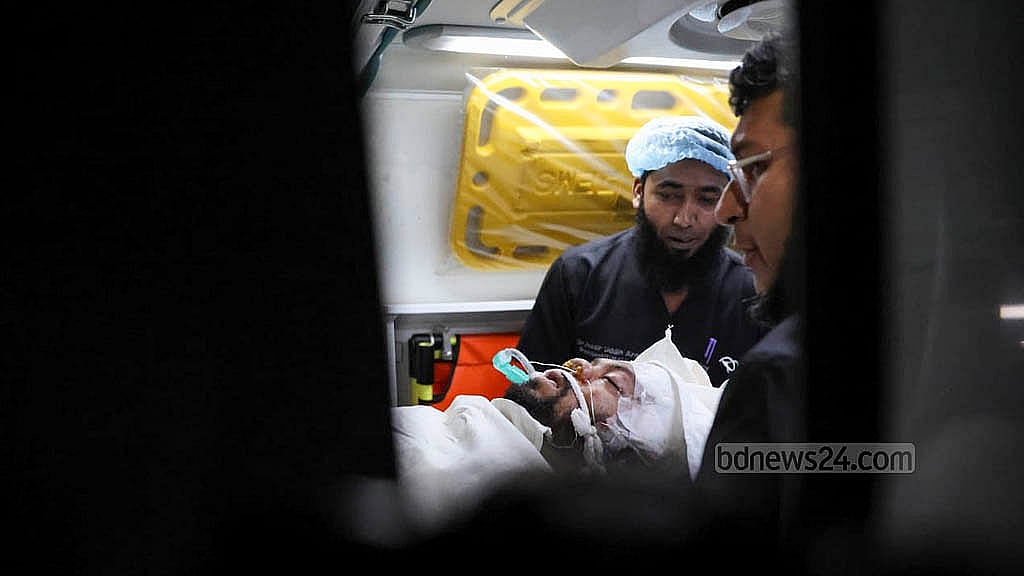
But moments after Jummah prayers, Hadi was shot at close range on Box Culvert Road in Bijoynagar while travelling by rickshaw. Attackers on a motorbike pulled alongside and opened fire, striking him in the head.
He was rushed to Dhaka Medical College Hospital in the same rickshaw. Surgeons performed an emergency procedure before transferring him to Evercare Hospital in Bashundhara shortly after 8pm.

Dr Zahid Raihan, head of neurosurgery at Dhaka Medical College and the surgeon who operated on him, described Hadi’s condition as “very grave”, adding that doctors were unable to offer any hopeful prognosis.
The attack has pushed the question of deteriorating law and order back to the forefront of national politics. Inspector General of Police Md Baharul Alam said the assailants’ intention was clear: to generate fear around the election.
“This was carried out by those who want to create a negative impact around the polls, those who want the election not to happen,” he said. “We are treating the incident extremely seriously.”
With the campaign period scarcely under way, there is a widespread fear this may be a grim warning of what lies ahead unless the government reasserts control, and swiftly.
TARGETING THE ELECTION?
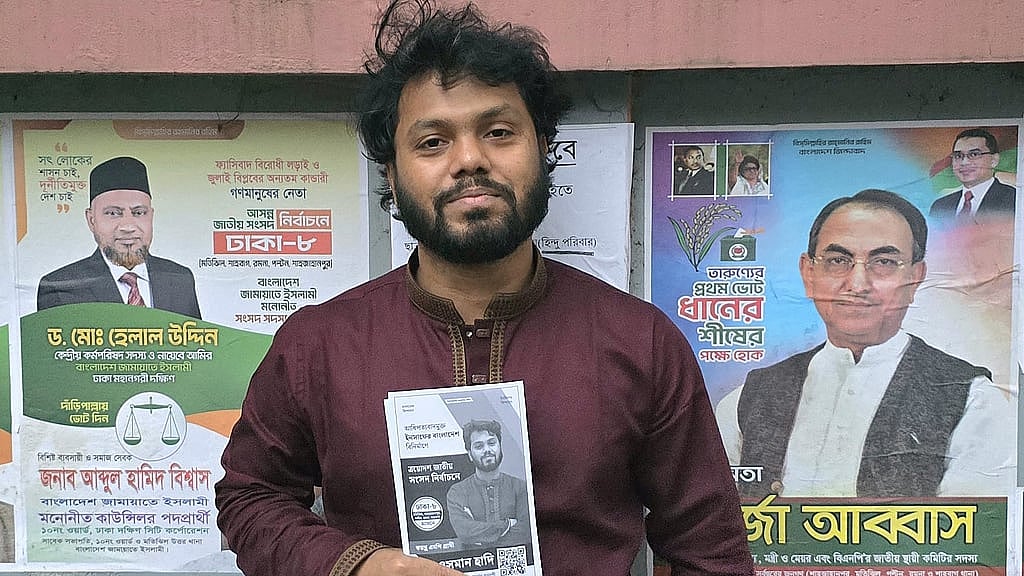
Hadi, the Inquilab Mancha leader, went out to distribute election leaflets during Jummah prayers.
The plan was for everyone to gather at Suhrawardy Udyan after leaflet distribution for lunch and discussion.
The news of the attack on Hadi arrived before that meeting.
Election expert Alim noted the attack could be linked to forces opposing the election.
“Major parties have welcomed the schedule. Those who do not want elections, who want to disrupt it, are undoubtedly responsible.”
Alim described the incident as “alarming”. “If this continues, the situation will worsen. Everything will be chaotic. The election environment will be destroyed. It must be controlled firmly immediately. There is no alternative.”
He questioned the police’s capacity to maintain control and recommended deploying the military with full authority if needed. “Election cannot be held in Bangladesh with police alone. With the current definition of law enforcers, magistracy powers can allow military deployment.
“If police cannot manage, then the Army must act. Law and order is the biggest challenge, and failing to tackle it will be dangerous.”
‘LACK’ OF SURVELLIANCE
ANM Muniruzzaman, president of the Bangladesh Institute of Peace and Security Studies (BIPSS), sees no improvement in the level of surveillance necessary for law-enforcing agencies ahead of the election.
He pointed to a “lack of competence” among responsible agencies and forces for failing to apprehend the criminals who were either released from jail or escaped following the political transition in August '24.
“This shows that the law and order was already fragile, and there is a risk of further deterioration. In this regard, the law-enforcement agencies, especially those who control them -- namely the home ministry -- should have been more proactive much earlier.”
“But we see no such initiative,” he added.
Muniruzzaman, however, did not support early military deployment.
He said, “Deploying the Army too early could affect their primary duties. Election-time deployment is appropriate. Some responsibilities are police’s and must remain with them.”
POLICE ‘INACTIVITY
A study earlier this year showed that 80 percent of university students believe an independent police commission is needed.
The report noted that police officers often follow the ruling party’s instructions and have become politically subservient.
Prof Kazi Maruful Islam, coordinator of a governance research group at Dhaka University, cited the report at a seminar.
He said police avoid taking complaints against political leaders or government officials.
The governance and public policy professor highlighted the “lack” of police activity ahead of the election.
“Since the July movement until now, the law and order in Bangladesh has not fully stabilised. In Dhaka and across the country, the law-enforcing agencies are still not fully active. As a result, we see crimes occurring daily,” he said.
“Internal reforms within police have not met expectations. Public expectation that police will protect life and property and catch criminals is still unmet. Unless agencies become fully alert ahead of the election, achieving a peaceful environment will be difficult,” he added.
ELECTION UPDATES FROM DHAKA-8
Hadi announced his independent candidacy from the constituency where the BNP nominated its Standing Committee member Mirza Abbas.
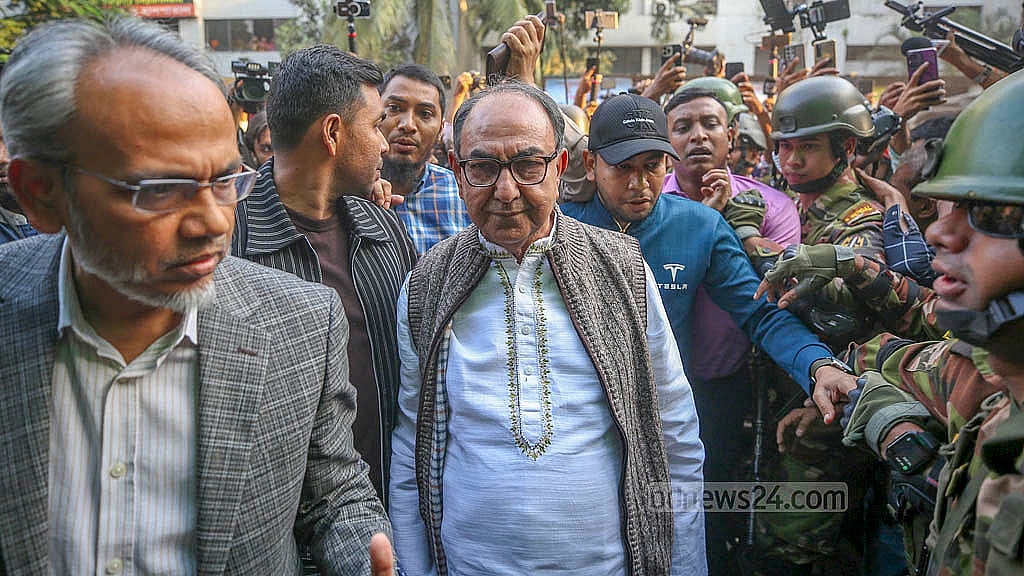
He was jeered by supporters of Osman Hadi when he arrived at the hospital to see his injured rival. When Abbas reached the emergency department of Dhaka Medical College Hospital around 4pm, Inquilab Mancha activists and Hadi’s supporters began shouting “fake, fake” slogans against him.
Army personnel later provided security for the BNP Standing Committee member and enabled him to enter the hospital building.
Speculation is rife over who Jamaat-e-Islami might field in the constituency, with the names of Dhaka University Central Students’ Union Vice-President Shadik Kayem and Islami Chhatra Shibir leader Sazzad Hossain Khan circulating as possible contenders.
POLITICAL PARTIES REACT
Several political parties instantly condemned the attack on Hadi.
Bangladesh Nationalist Party’s (BNP) Acting Chairman Tarique Rahman described the attack as “a plot against democracy”.
Speaking virtually from London on Friday evening, he condemned the attack and warned that the forces behind it are attempting to “disrupt” democratic processes.
He said Hadi’s attack is not an isolated incident as it followed a similar attack on a BNP candidate in a Chattogram constituency. “If we have to take a stand against this injustice, we must uphold democracy at any cost, restore democratic values, and ensure citizens’ rights."
BNP’s Secretary General Mirza Fakhrul Islam Alamgir termed the incident “a conspiracy to derail the general election”.
Islami Andolon described the attack as an ominous sign of what awaits Bangladesh’s fate. The party in a statement demanded the immediate arrest of the assailants and the murder mastermind.
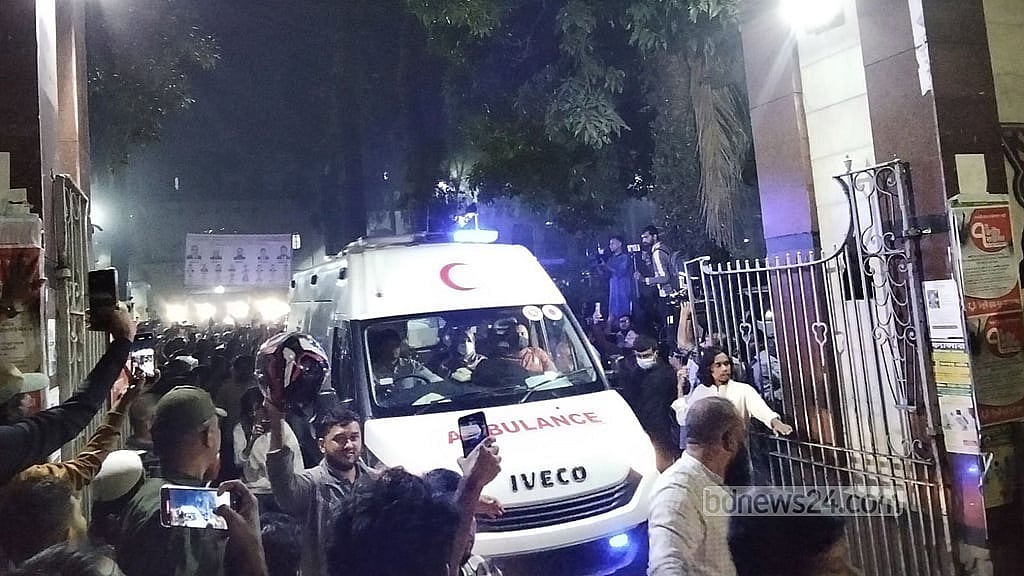
Jamaat-e-Islami demanded a transparent investigation into the murder.
DUCSU leaders also condemned the murder and gave the government 24 hours to arrest the assailants.
The BNP has also announced nationwide protests on Saturday to protest against the murder attempt.
AN ATTACK ON BANGLADESH'S 'VERY EXISTENCE'
Chief Advisor Muhammad Yunus condemned the shooting of Hadi as a calculated assault on the country’s “very existence”.
He vowed that such violence would not be tolerated “under any circumstances”.
According to his press wing, Yunus told an emergency meeting that the government would deliver a peaceful election “after overcoming every obstacle”, drawing on what he called the collective strength of the people.