Home
+
Published : 19 Oct 2025, 12:26 AM
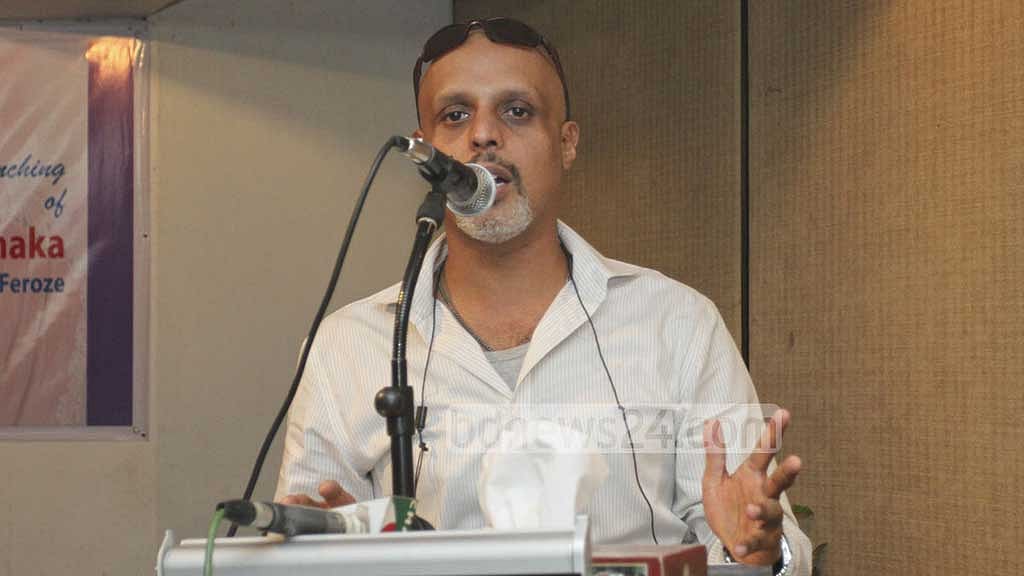
Believing that addressing the imperfections in Bangladesh’s Constitution is sufficient to address the issue of good governance is “childish”, says Supreme Court Advocate Shahdeen Malik.
“We started with the premise that definitely we had a horrible sort of government, in all senses of the term,” he told bdnews24.com’s “Inside Out” on Saturday. “But we somehow hit upon the idea that if we change the Constitution, the country will get better.”
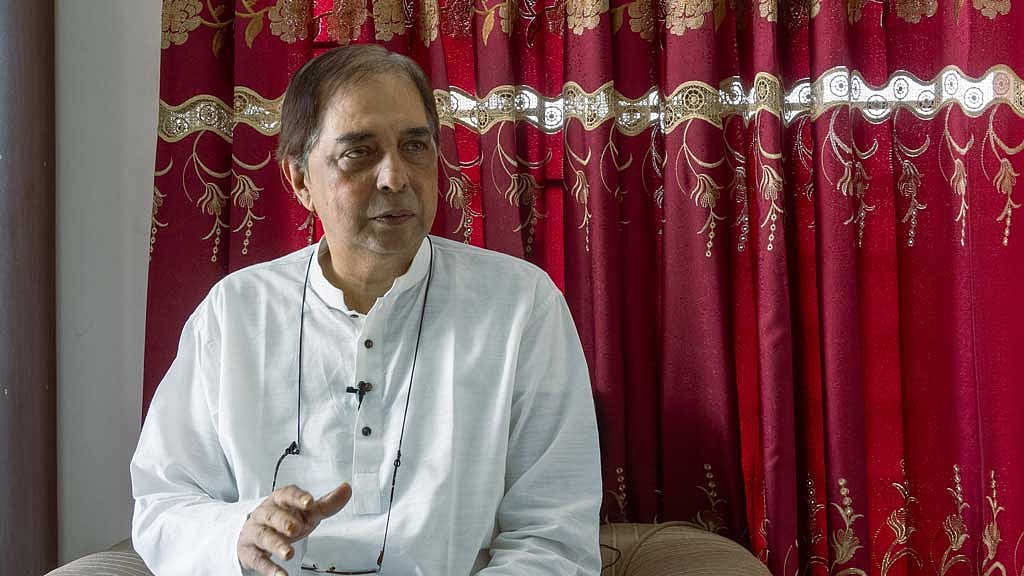
“The whole discussion over the past year was premised on the fact that if you have a beautifully written Constitution, you will have democracy, you will have everything, social justice and all that… Whether a country is democratic or not really doesn't depend on the constitution. It depends on a number of larger socioeconomic issues, political culture, and political tradition.”
All constitutions intend to deliver on similar lofty goals, but this says little about whether they will be achieved, the senior lawyer and constitutional expert said.
“I mean, there's no constitution which says we will have a rigged election. And there's no constitution which says the country may have a one-sided justice system.”
Malik pointed to the UK, Canada, and New Zealand as countries without a single constitution.
“To my mind, we started with the wrong premise that the terrible governance of the last regime was caused by an imperfect constitution. So, if you have a perfect constitution, there should not be any problem with the good governance. And this is a - I would even go as far as to use the word - a childish premise.”
‘DON’T SEE JULY CHARTER HAVING LONG-STANDING IMPACT’
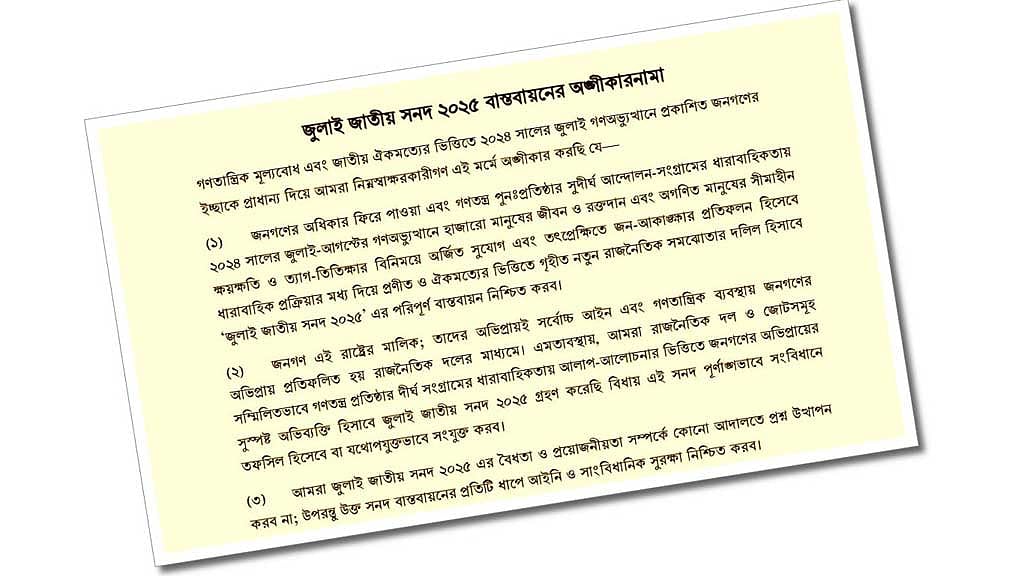
Malik spoke to bdnews24.com about a wide range of issues connected to the signing of the July National Charter. Though he described the consensus on certain broad issues as a “good start”, he was more sceptical about the extent of the agreement or its sustainability in the future.
“Political parties exist because everybody has different goals, different principles, different preferences and different methods for the development of the country,” he said. “If all political parties had the same views on these fundamental issues, then what's the point of having so many political parties?”
This means that while the parties could come together on some fundamental goals, they are unlikely to align on many others. As such, Malik does not see them adhering to the agreement in the charter.
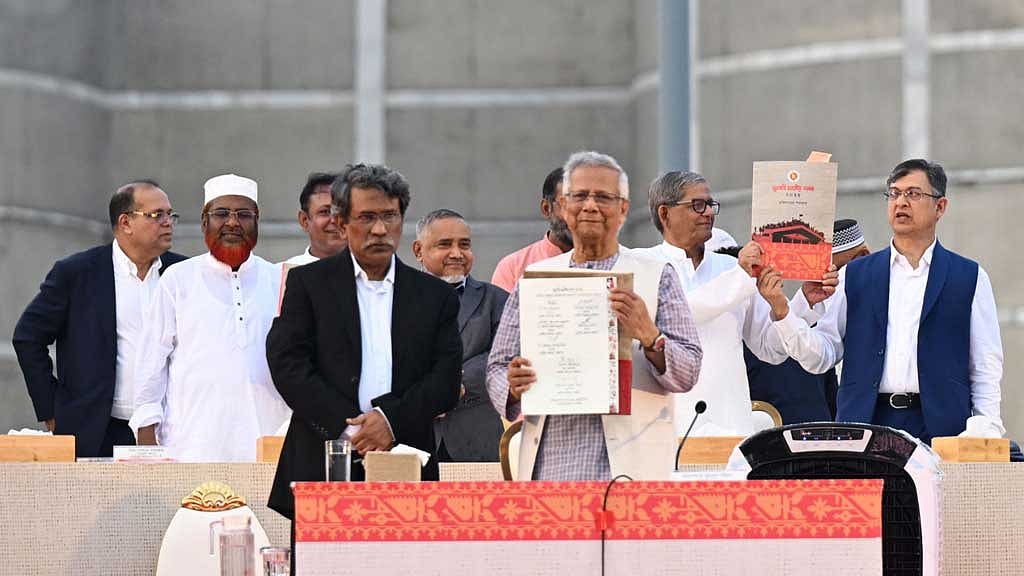
“The nature of political parties is they change. The nature of preferences and with new leadership, a political party acquires a sort of new goal and new aspirations. So, agreement between political parties except in the context of forming a coalition government is never long-lasting… So, in other words, I'm saying that I don't see this agreement, which is supposed to have reached there yesterday, having any long-lasting impact on our future politics.
‘HOW WOULD YOU PUT JULY CHARTER TO A REFERENDUM?’
Asked whether a public referendum could add legitimacy to the July National Charter, Malik said he was not sure how the document could be put to a vote.
“This 20-page July declaration, this charter we're talking about… I've heard that there are 84 points, 84 clauses. So, what would be your referendum question? Do you agree with these 84 points?” he said.
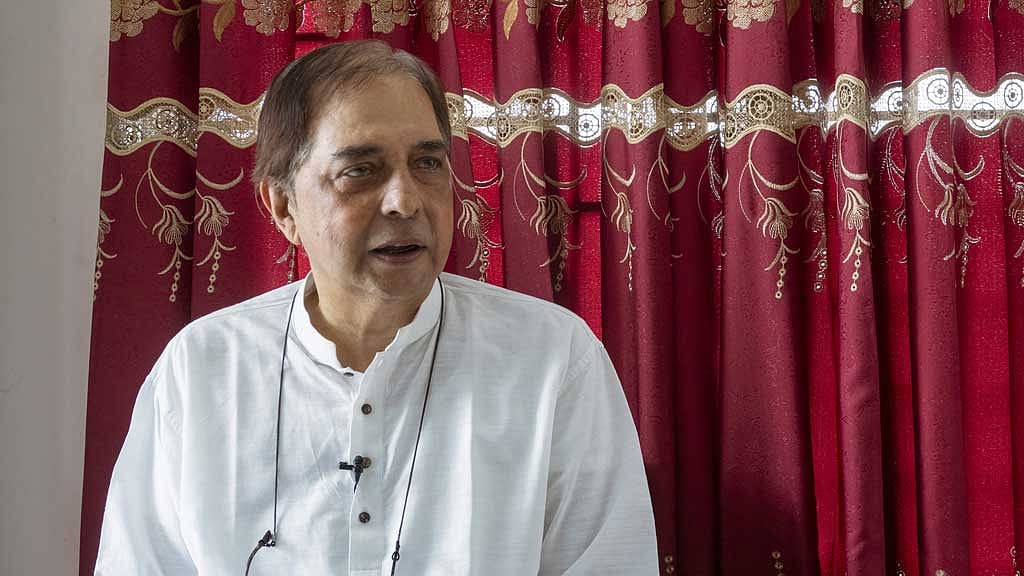
“This could be a referendum question. But wouldn't the people need to know what the 84 clauses are? And I don't think even 10 percent of our population have that high level of institutional education that they would go through a 20-page document and understand it and then make up their mind.”
Referendums are usually on a single issue, the senior lawyer said, pointing to the UK referendum that launched its Brexit from the EU.
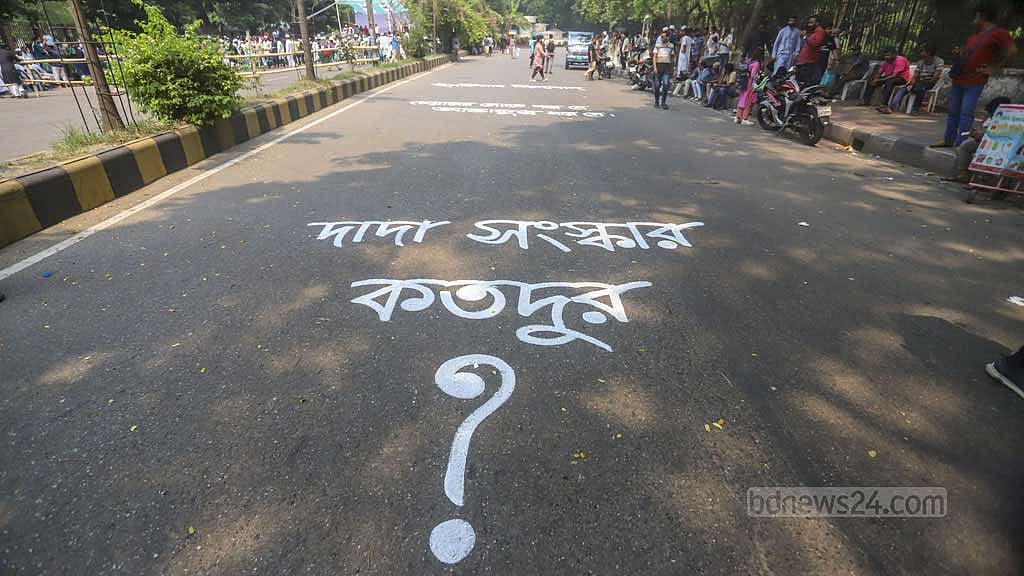
“Whether the UK wants to continue to be part of the EU or wants to get out of it. This is a referendum question. People understand that. And they have discussed the arguments for and against, and they have voted to go out of EU. So, when you have a one question referendum, yes. But when you have a 20-page questionnaire, how can it be a referendum?”
‘DON’T SEE POINT OF INTERIM GOVT STAYING UNTIL FEBRUARY’
While the interim government managed to lay out a roadmap for necessary reforms in several sectors through its commissions, Malik says it hasn’t been successful at implementing most of them during its tenure.
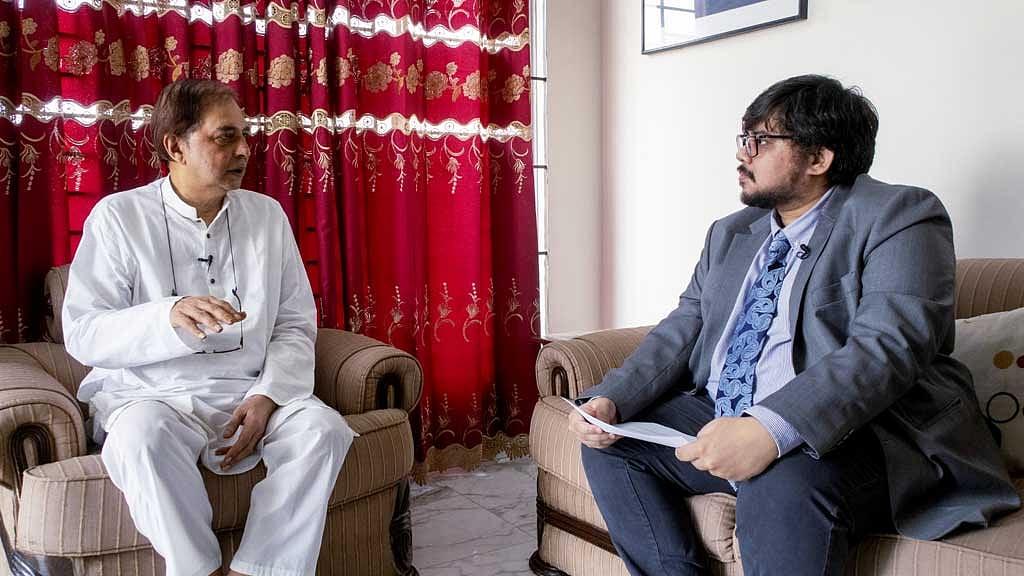
“Looking back at [the 14 months] of this government… I won’t go as far as to say it is a failed government, but it has become a non-functional government.
” So, the sooner we have an election and the power is handed over to the elected political party -- whoever it is -- the better. I would even say that I don't see any point in the government continuing till mid-February.”
The senior lawyer says that the interim government is unlikely to make any differences over the next four months and it would be best to escape the current political limbo in which little is being achieved.
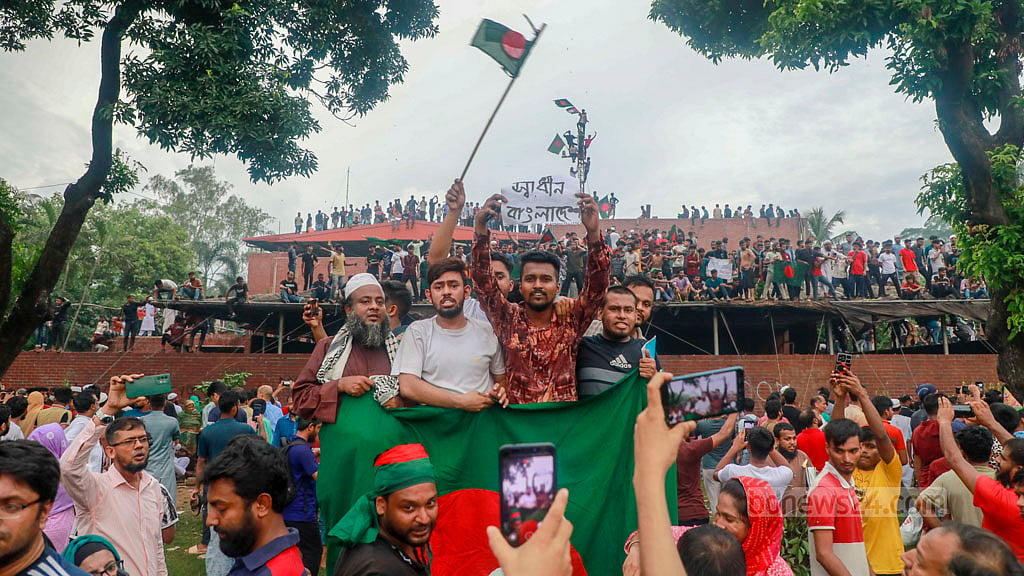
“One month more or one month less in the term of this government won't make any difference. So, I think the sooner we have an election… if the election commission can arrange it, I would rather prefer to have an election in early January than wait till mid-February.”