Published : 17 Dec 2025, 07:14 AM
Updated : 21 Aug 2026, 02:53 PM


Since the Liberation War, "Birangona" or war heroine Sheikh Fatema Ali has found no respite from humiliation.
The wartime rape victim has been continuously neglected and subjected to slander and social stigma.
Instead, she has endured humiliation and ostracisation, and watched her daughter’s family fall apart.
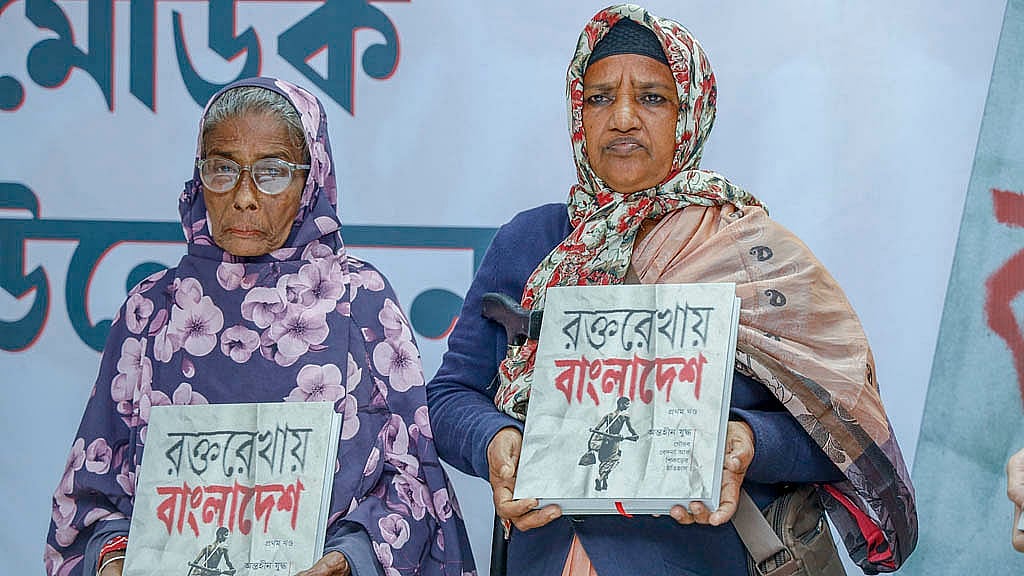
Now, nearing the end of her life, Fatema’s one wish is that her descendants do not have to carry the burden of her suffering.
The sexualised violence survivor in the 1971 war broke down at the launch of the first volume of a planned three-volume anthology on the history of the Liberation War. The first volume of the compilation, titled “Raktorekhay Bangladesh – Antoheen Juddho: Gourob, Bedona Ar Shikorer Itihash” — “Bangladesh, Penned in Blood: An Endless War, a storied legacy of grief and glory” — was released on Victory Day on Tuesday.
Fatema was visibly overwhelmed at the event. In brief but emotional remarks, she said: “Today, bdnews24.com has honoured someone as unfortunate as me, and I feel proud. I thank them for it.
It has been 54 years since independence. If only the respect bdnews24.com has shown us was reflected everywhere. Being treated with dignity like this brings me to tears.”
Her voice breaking, she added: “Please don’t look down on us any longer. Help us live as human beings. Make sure we are never humiliated again. I wanted peace for this country, though I don’t know if God will grant it.”
From Tarail village in Gopalganj’s Muksudpur, Fatema Ali saw collaborators report her father’s support for the freedom fighters. The Pakistan Army then set their home on fire and executed four of her brothers and a sister before her eyes.
As the family fled by boat, the soldiers struck again -- this time with the help of Razakars. They tortured her in front of her father and took her to the Sharsa and Bag Achra camps in Jashore. Pregnant at the time, she lost her unborn child as a result of the torture.
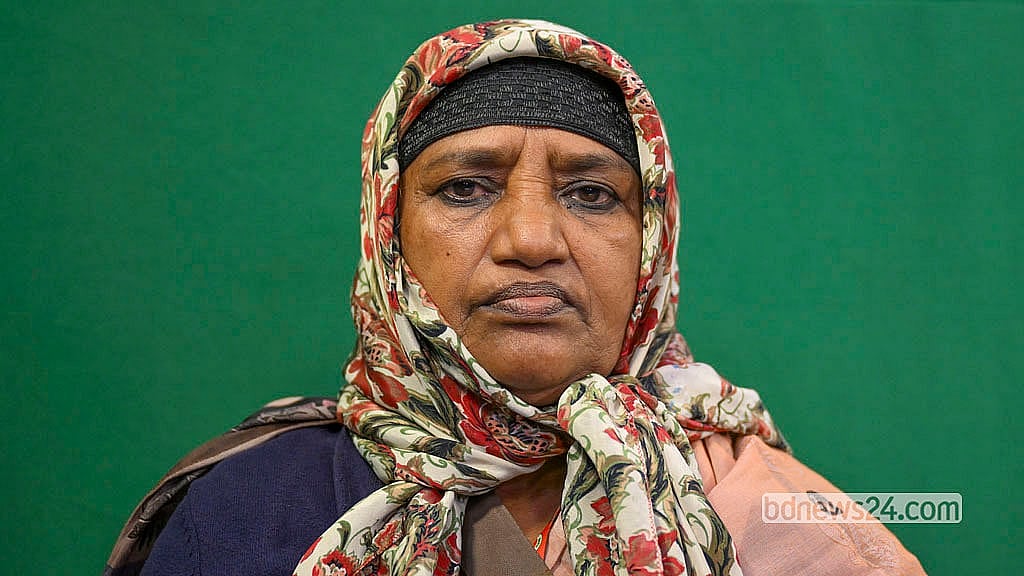
She still carries 1971 in both mind and body. The memories remain so vivid, she says, that the wounds feel fresh. She tried to run from them; in speaking of that attempt, she reflected on how times have changed.
She recalled a Victory Day programme she attended before coming to bdnews24.com’s Mohakhali office. This year, Victory Day felt different to her.
“We were invited with a card. But all the young boys and girls were sitting there, and there was no space for us to sit. It pained me a lot,” she said.
Fatema, who cannot stand for long without the aid of a stick, left after spending an hour and a half on her feet.
She said she threw herself into the war when she had her back against the wall. The fight she waged was not to gain anything, but to defend human dignity and her country.
“But today I heard from some people that freedom fighters will not even exist. I am deeply hurt; I am shedding tears,” Fatema said.
“They were born in the homes of mothers like us. This generation will run the country. But if they think like this, the pain is limitless.”
Yet, she added, she has faced far greater hardship in her life.
The war heroine lost her husband, and her children.
“My daughter’s family fell apart after it became known I was tortured in 1971,” she said. “Since then, my daughter has been living like a plank floating in the ocean, trying to raise three children.”
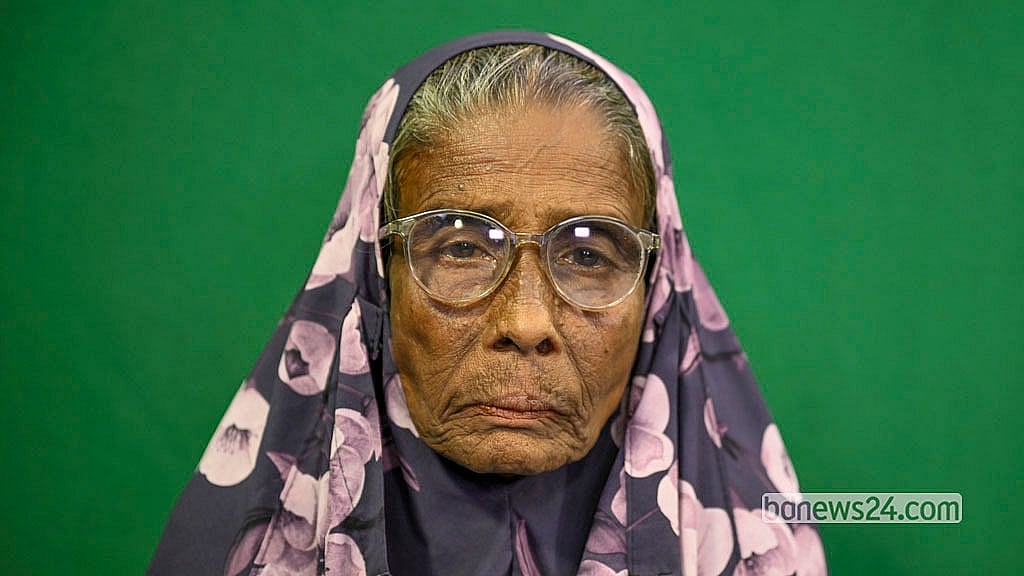
“My heartfelt request to my descendants is that they don’t subject us to such shame, that they don’t abandon us to slander,” Fatema said.
Another war heroine, Firoza Begum -- who also attended the bdnews24.com event -- shared a story that ran hauntingly parallel to Fatema’s.
From Hajratpur in Madaripur, she watched Pakistani soldiers kill her 6-month-old boy by smashing him to the ground. She, too, was taken to the Sharsa and Bag Achra camps, where she was repeatedly tortured.
Fighters from the “Hemayet Bahini” later attacked the camp and rescued Firoza and the other women.
Traumatised, Firoza was nursed back to life by none other than Fatema Ali.
Asked what kind of country she had once dreamed of, Firoza said: “I wanted peace for the country. I don’t know whether God will grant it or not. I am exhausted from enduring hardship. Wherever I go, I face kicks and blows from people.”
Her daughter, she said, was also thrown out by her in-laws because her mother was a war heroine. With little hope left, Firoza now carries the burden of supporting her daughter as she raises three children from two marriages.
“God knows what awaits her fate,” she said.
Firoza said she was rescued from the Pakistan Army camp “completely insane”, and remained that way for a long time.
“I was mad. I picked up scraps of paper. I did so many things,” she said. “Now I want to die in peace. I want nothing more.”