Published : 08 Dec 2025, 07:12 AM
Updated : 21 Aug 2026, 02:51 PM


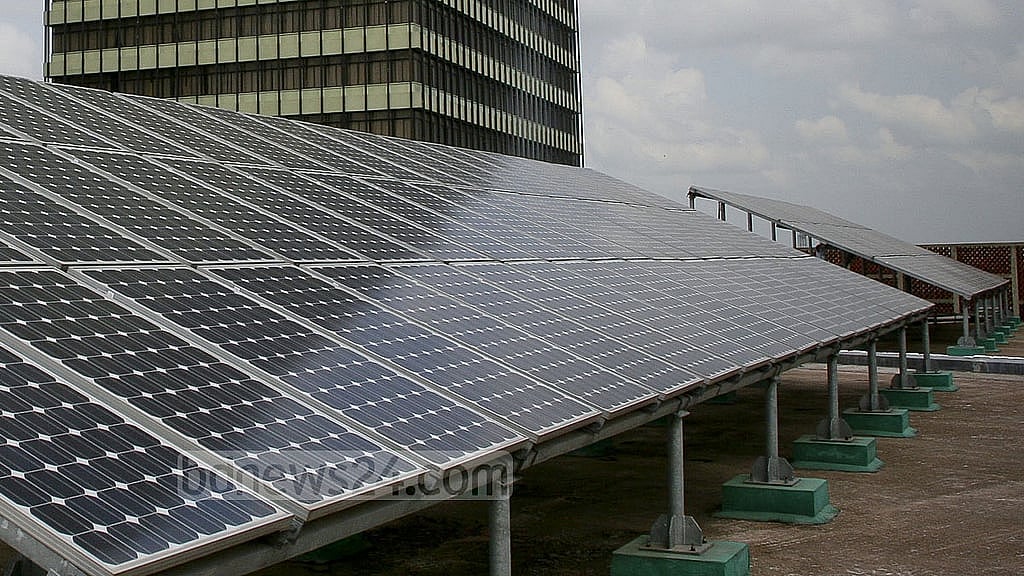
Pitched as a cornerstone of Bangladesh’s clean-energy future, the interim government’s rooftop solar drive is instead sputtering at take-off -- caught between rigid pricing, unresolved risks and investor unease that threatens to stall the programme before it properly begins.
The renewed push for rooftop solar power has drawn only muted interest from investors.
Despite extensions to tender deadlines in two phases, electricity distribution companies remain uncertain about how much response they will ultimately receive.
So muted has the response been that even after extending the tender deadlines twice, electricity distribution companies remain uncertain about how much participation they will ultimately attract.
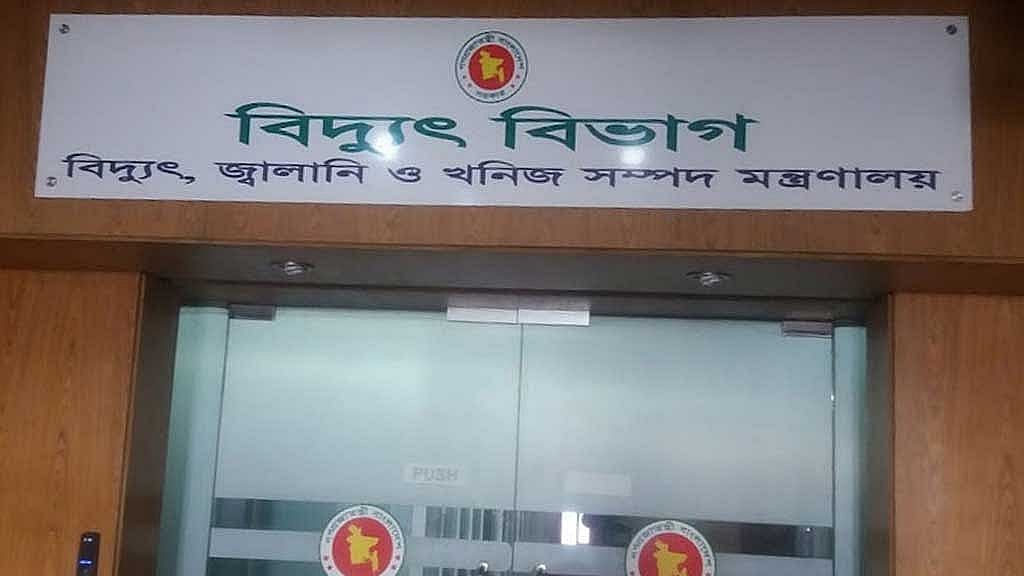
Several agencies, including DESCO, DPDC and PDB, have now set Dec 8 as the new date for opening the tenders.
They concede that the level of interest has fallen well short of expectations.
Investors, on their part, argue that the government’s proposal to generate electricity from rooftop solar panels is commercially unappealing.
In many cases, they say, the incentives are weaker than those offered to existing private power plants and other solar-based Independent Power Producers (IPPs). Several risk factors also remain inadequately clarified in the tender documents.
Power Advisor Fouzul Kabir Khan told bdnews24.com, “We are monitoring the situation. The tender period has been extended. There are still a few days left. After that, we will see what can be done.”
Following the student-led mass uprising on Aug 5 last year that toppled the Awami League government, an interim administration led by Nobel laureate Muhammad Yunus took office.
Since then, a series of initiatives have been launched to curb what the government describes as longstanding “corruption and conflicts of interest” in the power sector.
Fouzul moved swiftly to annul power purchase agreements deemed “unequal” under the previous regime wherever possible. So far, 39 such contracts have been cancelled.
Among the shelved projects were 34 solar power plants with a combined generation capacity of 2,678MW. Under the Awami League government, these projects were expected to attract investment worth about $2.4 billion.
The scrapped power plants had secured power purchase deals at prices of Tk 11 per unit or slightly higher.
INTERIM GOVERNMENT’S PLAN
The interim government has directed that 1,454MW of electricity be generated from rooftop solar projects by February next year, Advisor Fouzul has said.
To implement this plan, a circular issued in July outlined two financing models:
The circular states that all such rooftop solar projects will be connected to the national grid through net metering. This means that after meeting a building’s own electricity demand, any surplus power will feed into the national grid under a net metering arrangement. Investors will be paid every three months according to the metered surplus.
For participation, rooftops must be capable of producing at least 10kW of electricity.
Under the OPEX model, where solar panels are to be installed on the rooftops of educational institutions and hospitals, the maximum electricity tariff has been fixed at Tk 6 to Tk 7 per unit under the net metering framework.
TENDER DEADLINES
In October, the government announced plans to install solar panels on the rooftops of 46,854 government and educational institutions across the country.
At a programme at the time, Advisor Fouzul issued a blunt warning to the distribution companies:
“This must be connected to the grid by February. Strict action will be taken against distribution companies that fail. This will be part of officials’ performance evaluation. If any official shows non-cooperation, report it to us -- we will take action.”
Subsequently, a review of official government websites showed that distribution companies -- including DESCO, DPDC, BREB, BPDB and NESCO -- issued tenders in October for installing rooftop solar systems within their respective jurisdictions in line with those directives.
For Dhaka Power Distribution Company Limited (DPDC), the initial deadline for submitting and opening tender applications was Nov 18. It was first extended to Nov 27, and then again pushed back to Dec 8.
DPDC has identified 117 rooftops across schools, colleges, hospitals and other government facilities.
With a target of generating 5MW of solar power, DPDC has issued the tender under the OPEX model.
Similarly, DESCO issued tenders targeting 12.5MW of solar generation, with the original submission deadline also set for Nov 18. That too was first postponed to Nov 27 and later extended to Dec 8.
DESCO divided its service area into three regions:
Tenders have also been floated by Northern Electric Supply PLC (NESCO), the Bangladesh Power Development Board (PDB) and the Bangladesh Rural Electrification Board (BREB).
Md Mafizul Islam Bhuiyan, DESCO’s chief engineer (Development and Project), told bdnews24.com: “We are not getting the kind of response we had expected. People are not showing interest in this model.”
He said interest had waned because the projects were relatively small in scale, adding: “Still, two or three investors have submitted tenders.”
Mafizul noted that DESCO had earlier planned 15MW of solar power at metro rail facilities and 10MW at the Dasherkandi water treatment plant.
“We received strong interest at that time. Later, the respective authorities of those facilities said they would install the panels themselves.”
Explaining the repeated extensions, he said: “The deadline has been extended so that investor contractors can inspect the locations properly and make informed investment decisions.
“The time has been extended slightly in response to their applications so that they can properly assess the work.”
When contacted, DPDC Managing Director Nur Ahmed said the extension was aimed at encouraging wider participation.
DPDC’s Superintending Engineer for Renewable Energy and Research Zahirul Karim said, “Some tender documents have been sold, and some parties have sought additional information. Many attended the pre-bid meeting.”
WANING INVESTOR ENTHUSIASM
Under the rooftop solar policy, the maximum permissible tariff for electricity generated by these projects will be determined by the wholesale rate at which each distribution company purchases power from the Bangladesh Power Development Board (PDB).
To remain competitive, however, bidders will be required to propose tariffs that are lower than that benchmark.
According to the policy, the unit price of electricity under PDB’s projects must be declared at less than Tk 7.62. For DESCO and DPDC, the wholesale electricity price stands at Tk 8.50 per unit. In the case of the West Zone Power Distribution Company (WZPDCL), the wholesale price is Tk 7.46, while for NESCO it has been fixed at Tk 7 per unit.
Under the tender conditions, the unit price of rooftop solar electricity must be set below the respective wholesale tariffs of the distribution companies.
Moniruzzaman, director of Renewable Energy and Research and Development at the PDB, told bdnews24.com: “The way the pricing model has been structured is sufficiently profitable. However, when compared with earlier solar power projects, it may appear lower.”
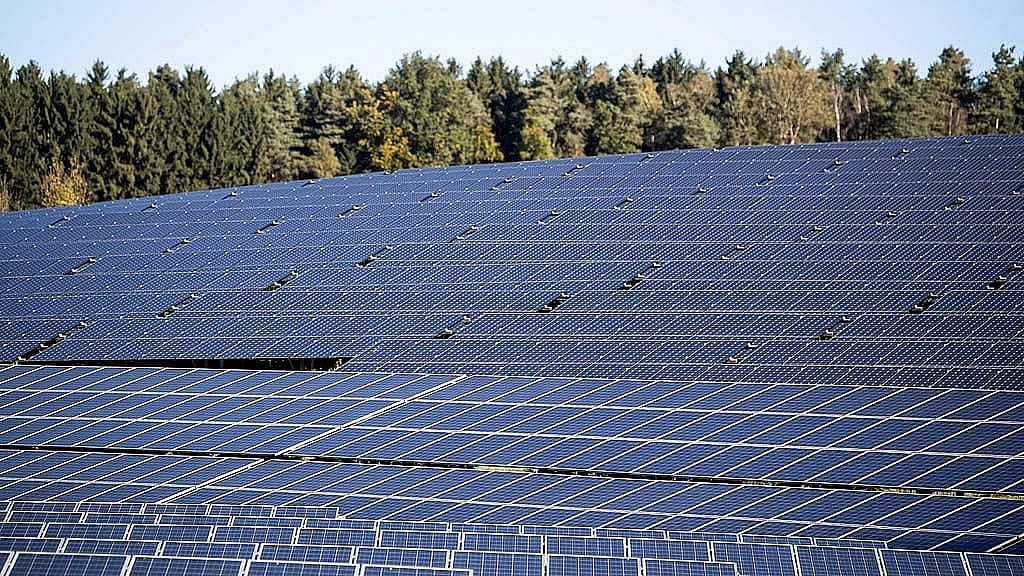
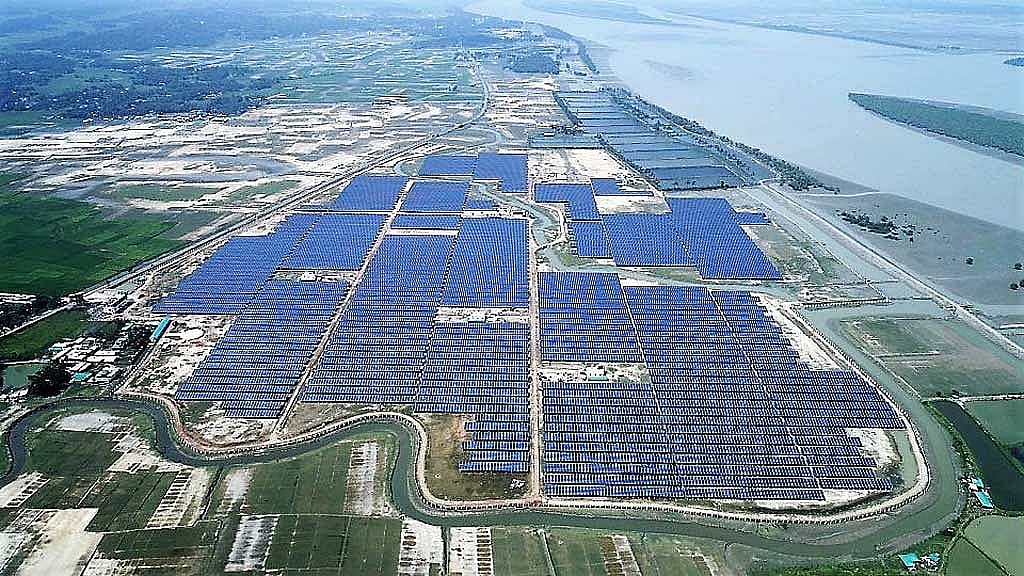
Referring to a recently commissioned 170MW solar power project built around the administrative complex of the Kaptai Hydroelectric Power Station, he said the total cost had stood at Tk 5.5 million. The investment is expected to be recovered within four years. By that calculation, the unit cost of electricity generation would be less than Tk 4.
During the tenure of the previous government, a 50MW project was implemented in February last year at Bil Sulungi in Chollisha Union of Netrokona.
The government signed a power purchase agreement at Tk 10.75 per unit with a joint venture involving Paragon Bangladesh, Risen Energy UK and the Centre for Renewable Energy.
That same year, approvals were granted for solar power plants with capacities of 100MW each in Rupsha Upazila of Khulna, Rajnagar Upazila of Moulvibazar, and Goalanda Upazila of Rajbari. For these plants, power purchase agreements were signed at a rate of Tk 10.92 per unit.
At Sundarganj Upazila in Gaibandha, the country’s largest 200MW solar power project was developed over roughly 263 hectares of fallow riverine land. A 20-year agreement was signed to purchase electricity from the project at 15 cents per unit, or Tk 16.60.
At Hemayetpur in Pabna, a contract was signed to purchase electricity from the 100MW Paramount Solar Power Plant at 11.9 cents per unit, or Tk 13.09.
In Mongla, Bagerhat, Orion Group constructed a 100MW solar power plant, where the unit price of electricity was set at 13.8 cents.
After the interim government assumed office, however, many of these projects were cancelled. Those that had already entered production earlier are supplying electricity at prices ranging from a minimum of Tk 11 to a maximum of Tk 14 per unit.
Md Nahiduzzaman, head of business development at Joules Power, which has participated in several solar power projects with the government, told bdnews24.com: “The government has floated a tender for nearly 1,000MW of solar power without conducting proper assessments.
“There are significant risks involved in installing solar panels on the rooftops of schools, colleges and universities. The tender does not clearly spell out any commitments regarding the mitigation of those risks. There is also a rigid framework for electricity tariffs.
“For these reasons, the proposal has failed to attract interest. We ourselves do not find it viable to invest.”
Mohammad Subail Bin Alam, chief operating officer of Renicon Infrastructure Engineering, said: “The risk factor in these projects is extremely high. The government is shifting the burden of responsibility onto the business community instead of bearing it itself.
“If the panels have to be removed for any reason, the government is offering no guarantee.”
Raising concerns about the possible pricing of electricity, he added: “The government says the retail price must remain below the bulk rate, yet VAT and taxes are added on top. Maintenance and installation costs will also be high. Either the tariff has to be increased or a minimum guarantee must be provided.”
He added, “The government is purchasing electricity from oil-based power plants at extremely high prices -- Tk 26 per unit, even Tk 40 per unit in some cases. Yet renewable energy is being confined within wholesale price limits. How, then, is renewable energy being encouraged?”
According to the 2024 report of the International Renewable Energy Agency (IRENA), Bangladesh lags far behind its neighbouring countries in meeting its solar power targets.
While solar power accounts for 24 percent of total electricity demand in India, 17.16 percent in Pakistan and 39.7 percent in Sri Lanka, in Bangladesh it contributes only 5.6 percent of total electricity demand.
Under the Renewable Energy Policy 2025, the government has set a target to meet 20 percent of total electricity demand from renewable sources by 2030, and to raise that share to 30 percent by 2040.