Published : 11 Nov 2025, 04:16 AM
Updated : 28 Aug 2026, 01:29 AM


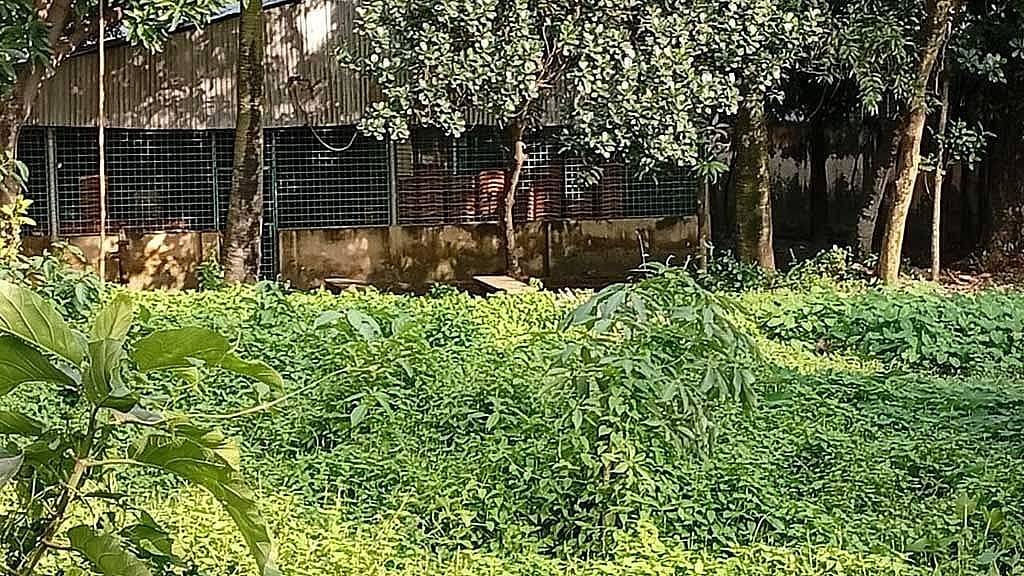
A bitter land dispute threatens the future of "Sursamrat The Alauddin Sangitangon", the historic music academy founded by legendary Hindustani classical music maestro Ustad Alauddin Khan in the heart of Brahmanbaria.
In the 1950s, he bought a house on Old Jail Road with the dream of founding a music college. In 1956, Alauddin Sangitangon opened on that site. For nearly seven decades, it has remained a fixture of the cultural landscape.
Five years ago, in 2020, four people went to court claiming ownership of part of the land. One of them, Habib Khan, told bdnews24.com he is a grandson of Alauddin’s elder daughter Saroja Begum. He says the other three are also Saroja’s descendants and that they possess title deeds to support their legal claim.
A recent court order directed that eight decimals of the plot be recorded in the plaintiffs’ names.
Manjurul Alam, the current general secretary of Alauddin Sangitangon, says the suit named the deputy commissioner as defendant but not the Sangitangon itself, so the case went ahead “ex parte”.
An appeal has since been lodged and is awaiting hearing, with both the Brahmanbaria deputy commissioner and the Sangitangon listed as appellants.
“Our land belongs to the Sangitangon,” Manjurul said, alleging “many false statements” in the suit. “Saroja Begum lived in Halderpara and never claimed ownership in her lifetime because she knew Ustad Alauddin Khan had donated the property to the Sangitangon. The institute is run by a committee chaired by the deputy commissioner.”
Habib, however, says while the original deed shows 52 decimals, the Khatian, or government-issued record of rights to land, lists 45 decimals, from which they have secured title to 8 decimals.
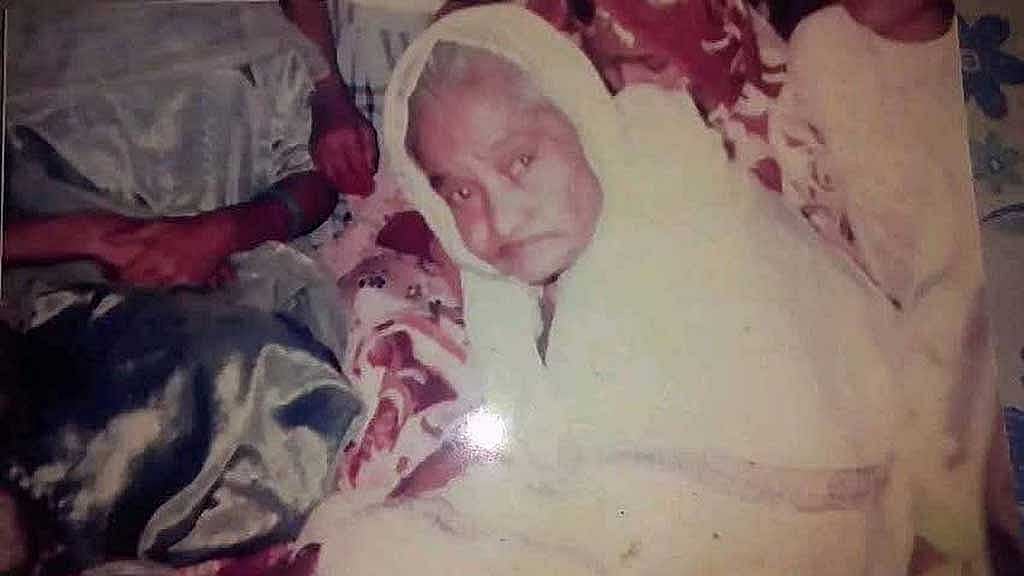
Alauddin had three daughters and a son. Only Saroja lived in Brahmanbaria while the others’ families settled in Maihar and Kolkata in India and in the United States. Across three generations, some 80 descendants are scattered at home and abroad.
Advocate Nasir Mia, a member of both the Brahmanbaria and Supreme Court bar associations, said the plaintiffs told the Land Survey Tribunal they own eight decimals, have built there and “enjoyed” the land, even farming fish in a pond.
“They sued the deputy commissioner,” he said. “Though the DC chairs the institute ex officio, the general secretary, who holds the executive post, was not made a defendant. An ex parte order followed, instructing that eight decimals be recorded in the plaintiffs’ names. The government side has appealed to the district judge to set it aside.”
Deputy Commissioner Mohammad Didarul Alam confirmed that “an appeal over the Sangitangon land is now sub judice".
ALAUDDIN’S NEPHEW DISPUTES ANY ‘DONATION’
Composer-musician Sheikh Sadi Khan, a nephew of Ustad Alauddin, says the maestro did not donate the land and claims the Sangitangon as “family property”.
“My uncle bought the house,” he said. “My father, Ustad Aayet Ali Khan, founded the Alauddin Sangitangon and taught regularly. Later he moved to Cumilla but still came weekly to teach.
"After his death, my nephew Hanif Gazi oversaw the Sangitangon with Abdul Mannan Sarker assisting. After Hanif’s death, a committee led by the deputy commissioner took over.”
Sheikh Sadi now wants the family to run it. “This is an institution in Alauddin’s name, yet political meetings have been held there. It hasn’t produced a major artist, which is tragic, when our family teaches music around the world. We will take it back under our control.”
WHAT ALAUDDIN KHAN WANTED
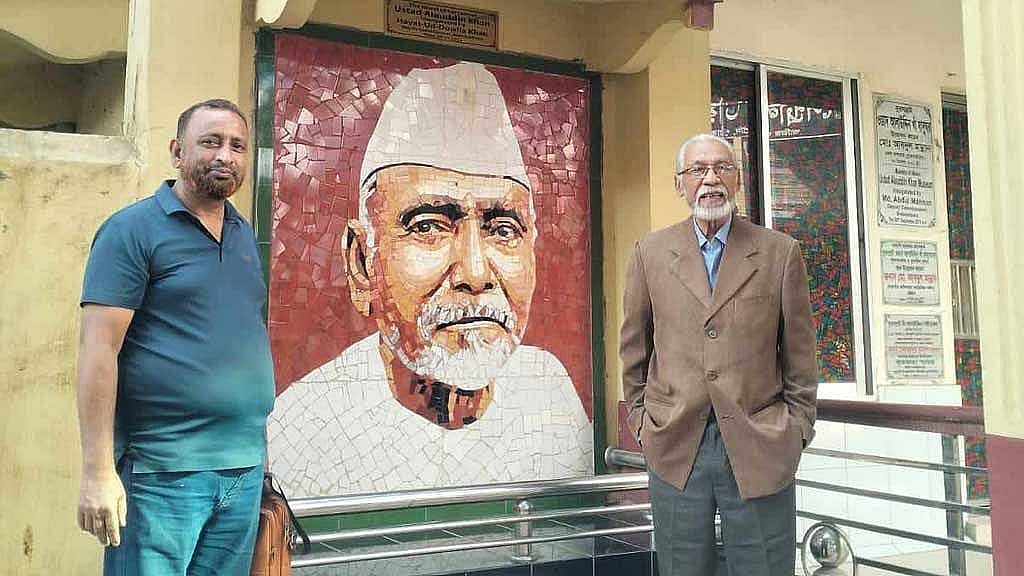
Born in 1862 in Shibpur in Nabinagar Upazila of Brahmanbaria, Ustad Alauddin Khan became court music guru at Maihar after 1918. He toured globally with dancer Uday Shankar in 1935 and was styled Sursamrat by the Queen of England.
Trained first by his elder brother Fakir Aftabuddin Khan, he later studied with Kolkata savant Gopal Krishna Bhattacharya alias Nuno Gopal and mastered multiple instruments such as flute, sitar, Mandolin and Banjo under Amrit Lal Dutta, aka Habu Dutta.
Honours included the Sangeet Natak Akademi Award (1952), India’s Padma Bhushan (1958) and Padma Vibhushan (1971), and Visva-Bharati’s Desikottama (1961). He died on Nov 6, 1972.
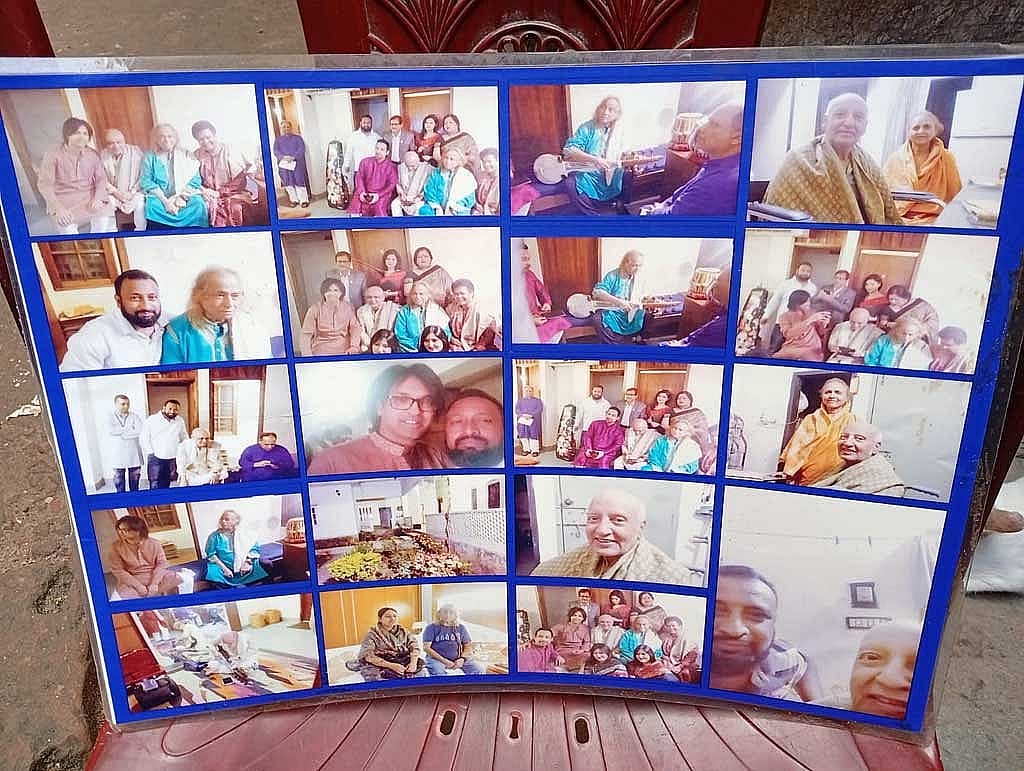
Letters suggest he intended to dedicate his property to a trust. Visiting Brahmanbaria in 1954, he repaired his parents’ graves in Shibpur and began building a mosque. On Dec 21, 1954, writing from Shibpur to disciple Jatin Bhattacharya of Maihar, he said: “After this, whatever property remains must be made debottor (a religious trust). Then I wish to establish the Alauddin music college at the house in Brahmanbaria. After that, I wish to open a girls’ school in Shibpur.”
Another letter of Mar 6, 1955, describes chasing land papers between Cumilla and Chittagong. “I’m arranging my worldly matters here. These things don’t finish in a day or two. Each application takes three to four months. I’m suffering a lot… twice or four times a month I go to Cumilla or Chittagong to follow up and flatter officials. Luckily, the officers and public in Pakistan are very kind to me and expedite my work. I am ever grateful.”
‘EVEN HIS SON NEVER CLAIMED OWNERSHIP’
The institute has operated with government involvement from the start. In 1956 the sub-divisional officer (SDO) chaired it under the name “Alauddin Khan Musical College”. After independence, it became “Alauddin Sangitangon”. Family members have served on committees over the years.
“Ustad Aayet Ali Khan taught here initially,” said Manjurul. “Later Mobarak Hossain Khan and Shahadat Hossain Khan sat on the committee. None ever claimed the land because they knew Alauddin had given it to the institution. The SDO signed the wasiyyatnama (testament) stating it would operate under the SDO’s supervision. It was not converted into a college later.”
He says the institute, still led by the deputy commissioner, has an advanced government plan for a six-storey complex costing about Tk 370 million.
At the request of artist Zainul Abedin after independence, the then SDO Tofail Ahmed helped revive the institute, repairing the boundary wall and other works, after which it relaunched as Alauddin Sangitangon. In 1977, Alauddin’s son Ali Akbar Khan performed at a Sangitangon event at the Women’s College grounds in Brahmanbaria.
Asked about a deed of gift, Manjurul said two arson attacks destroyed many records. “Important documents, including the wasiyyatnama, were burned. I had seen it, Alauddin Khan had given the site to the SDO to found a musical college. Since then the SDO, later the deputy commissioner, has overseen it.”
TWO ARSON ATTACKS
On Jan 12, 2016, arsonists attacked the Sangitangon. A second arson followed in March, 2021. Priceless items were lost: Alauddin’s sarod, violin, santoor, esraj, a prayer mat gifted by the Saudi king, a carpet from the Raja of Maihar, and many of the maestro’s handwritten letters, photographs and large portraits.
“Some instruments we had restored after the first fire were lost in the second,” Manjurul said.
‘A PRIZED PLOT HAS DRAWN SPECIAL INTEREST’
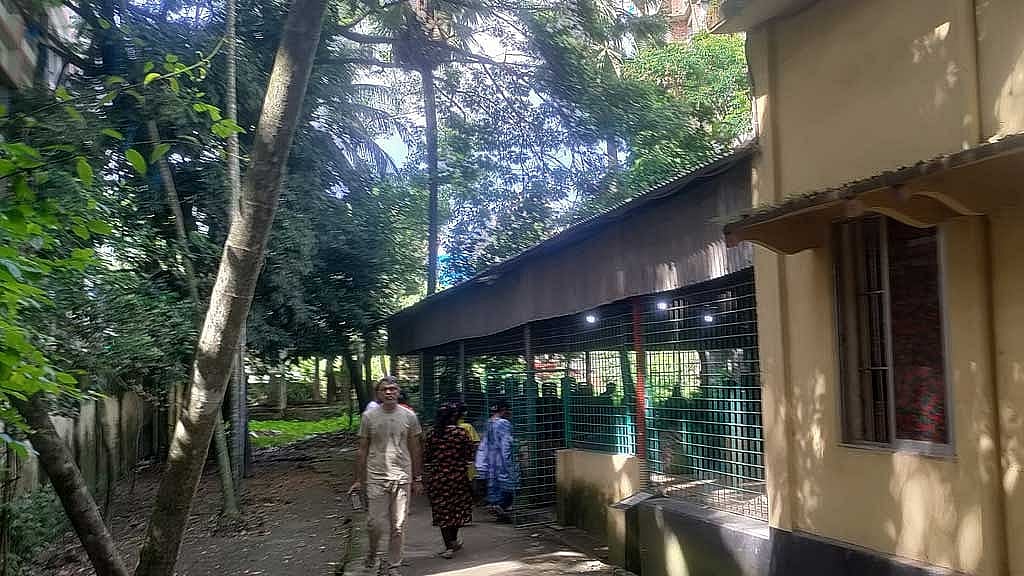
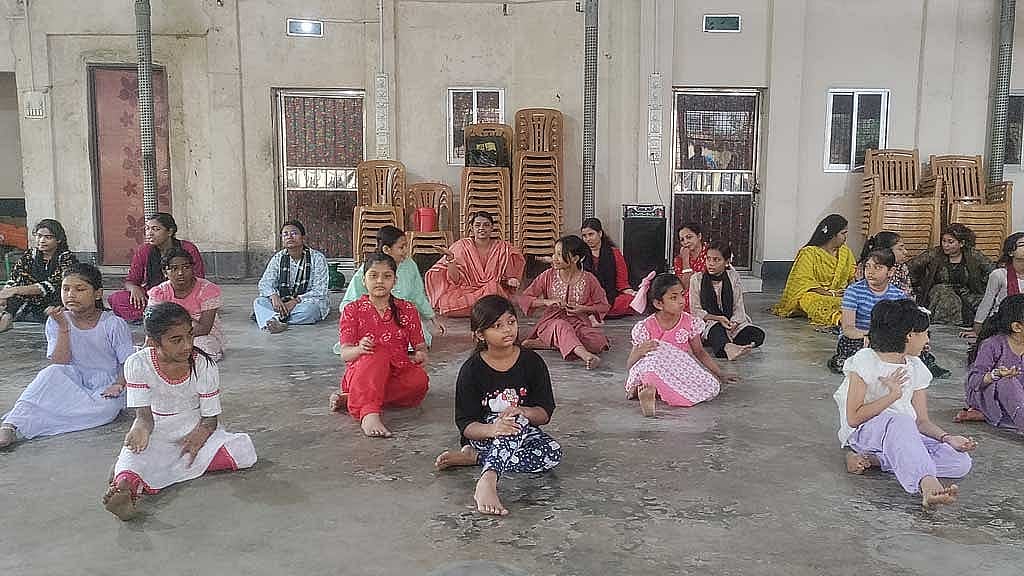
On the morning of Oct 31, the institute sounded alive, tabla rhythms and ankle bells from one room, a harmonium from another. Fridays and Saturdays are training days. In the auditorium, dance teacher Mohammad Al Saiful Amin Zia, better known as Zia Amin, led practice. His troupe recently performed at Expo Osaka.
Parent Husne Ara, waiting outside, said: “This is an institute in Alauddin’s name, yet none of his descendants come to teach. We’d hope for at least three or four masterclasses a year.”
Over time, the site has gained a 300-seat auditorium, extra classrooms and a boundary wall. It now teaches over 400 students classical and general music, classical and general dance, instruments and fine arts.
The late-stage ownership claim by descendants has stirred alarm among local cultural workers, some fearing the institute’s “erasure”.
They urge the government to step in, preserve Alauddin Khan’s legacy, and consider a music university and museum in his name.
Manjurul says a cultural affairs ministry-backed plan to declare the site a cultural heritage and build a major complex, museum, auditorium and training facilities, is far advanced after planning ministry vetting. “We hope the Alauddin Khan Cultural Complex will soon be built here with government support," he said.
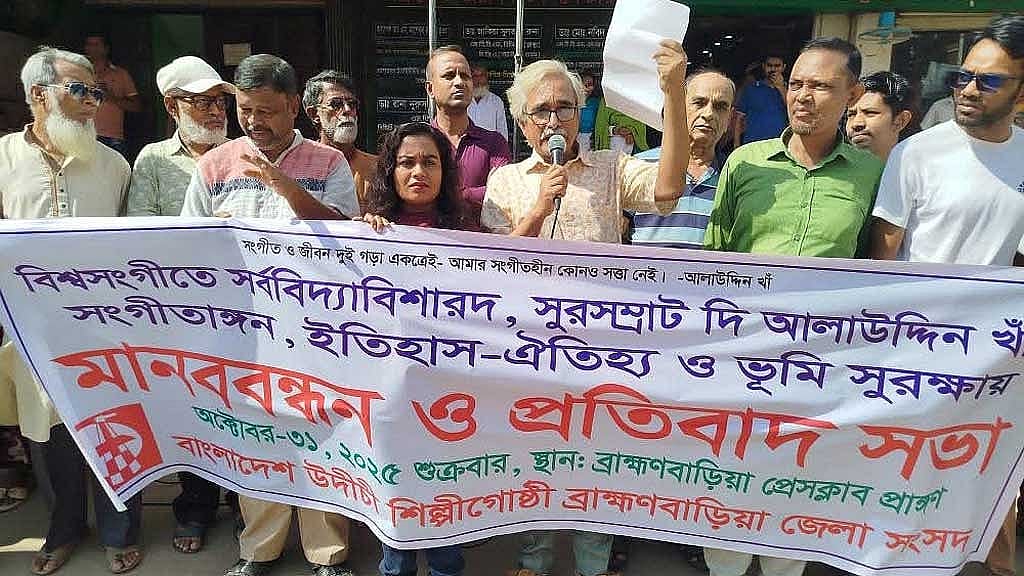
On Oct 31, Udichi’s Brahmanbaria unit formed a human chain outside the press club, demanding “land protection and preservation of the history and heritage” of the institute.
Branch President Zahirul Islam Swapan told bdnews24.com: “We understand Alauddin Khan donated this land to the Sangitangon. It has operated for years. Why claim ownership now? Who are these claimants and to what end? The government must act to protect his memory.”
He added that a “special group” has eyes on a prime city-centre plot. “The market value is high, but Alauddin Khan’s memory is worth far more. It must be saved.”
Photographer-researcher Nasir Ali Mamun, author of the novel Hem-Behager Maharaja on Alauddin’s life and work, said: “Though born in Brahmanbaria, Alauddin belongs to the world. A major research project is overdue across Brahmanbaria, Maihar, Kolkata and the US. It’s expensive, which is why it hasn’t happened.
"Many valuable artefacts and instruments remain scattered. The government should collect and house them in a substantial museum in Brahmanbaria.”
Mamun also called for a music university in the world-renowned ustad’s name. “Do not let this dispute dishonour him. He is an international figure. Only the government can build an institution of international standard here.”
Nurul Amin, general secretary of the Brahmanbaria Sahitya Academy, added: “The cultural affairs ministry just staged a large event on Ustad Alauddin Khan at Lalbagh Fort in Dhaka, yet the Sangitangon in Brahmanbaria faces an existential threat over land. It's undesirable.
"We heard a government plan was drawn up considering the site’s cultural value, but we don't know what stage it is at? The Alauddin Sangitangon must be preserved as a memorial to Alauddin Khan.”
Siraj Ali Khan explains inheritance row over Sursamrat the Alauddin Sangitangon