Home
+
Published : 04 Dec 2024, 02:07 AM
With only a month left before the new academic year begins, concerns are mounting over whether 325 million schoolchildren will receive their books on time.
The printing of 401.6 million textbooks is progressing slowly, with significant delays, particularly for books for grades six to eight. A severe paper shortage has exacerbated the problem.
Unlike previous years when textbooks were printed in India, the post-Awami League political scenario has prompted the interim government to rely solely on domestic publishers.
However, most of them have yet to commence printing for secondary-level textbooks. The printing for three primary grades is also struggling due to the paper crisis.
Since 2010, the Awami League government had established the tradition of handing out textbooks on the first day of the academic year.
While not all books were distributed at once, students would at least receive some on the opening day.
After Sheikh Hasina left for India on Aug 5 following a student-led mass uprising, the interim government declared the Awami League's newly introduced curriculum “unfeasible.”
Consequently, the government decided to revert to the curriculum from 2012, scrapping the new system late in the year.
Revising and editing the old curriculum for publication consumed significant time, delaying the printing process by nearly four months.
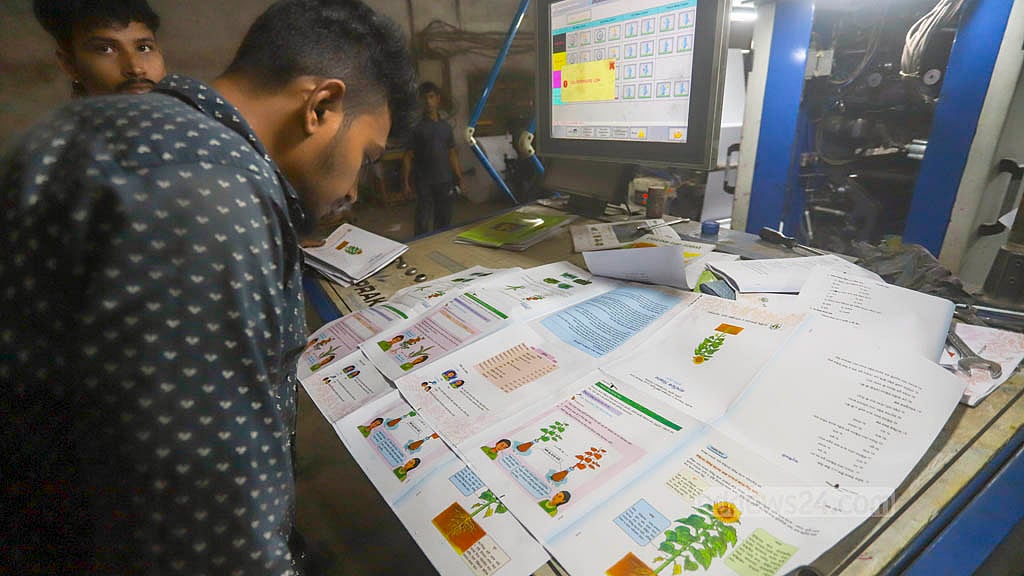
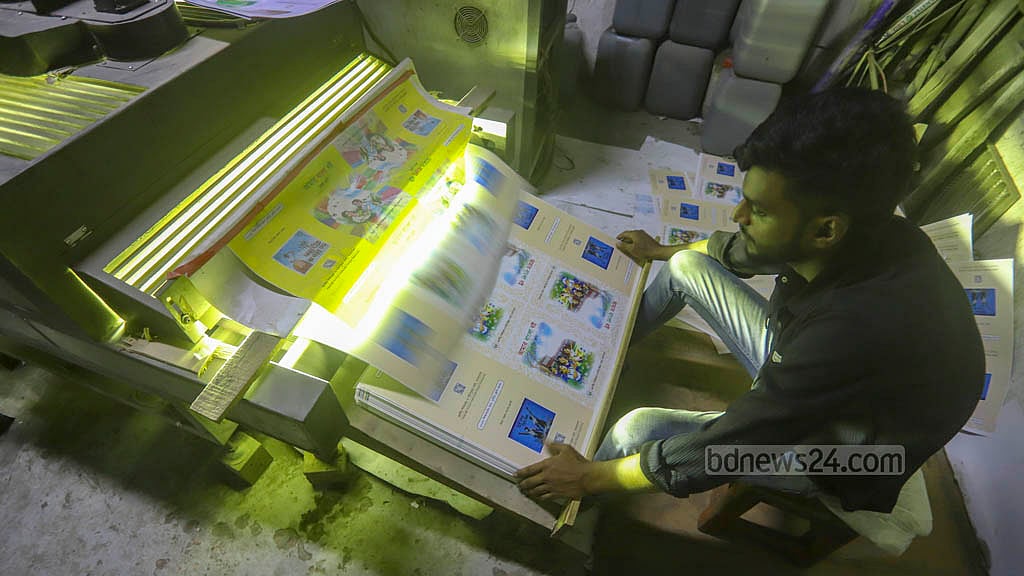
The National Curriculum and Textbook Board, or NCTB, began sending books to the presses only in early November.
Explaining the delay, NCTB Chairman AKM Riazul Hasan told bdnews24.com: “Usually, books are sent for printing in June. However, due to the revision and editing process of the 2012 curriculum, we could not start until November.”
He added, “After the new curriculum was cancelled in September, it took two months to revise over 150 of the 655 books from pre-primary to grade 10. The tender process for printing was completed in late October, and we began printing forty million books for grades one to three in 70 lots in November.”
Priority has been given to printing certain grades and subjects. The army has also been involved to speed up the process.
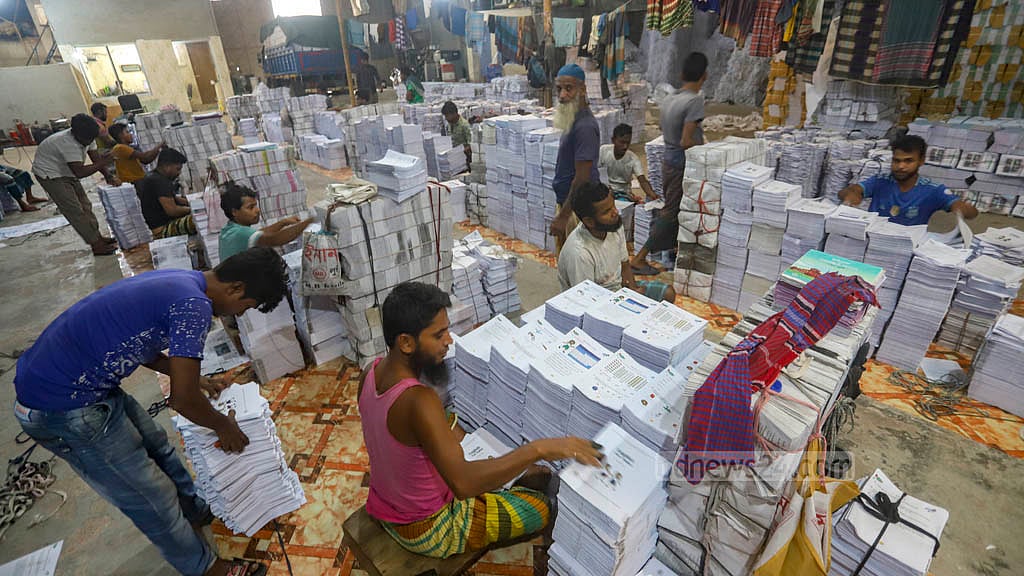
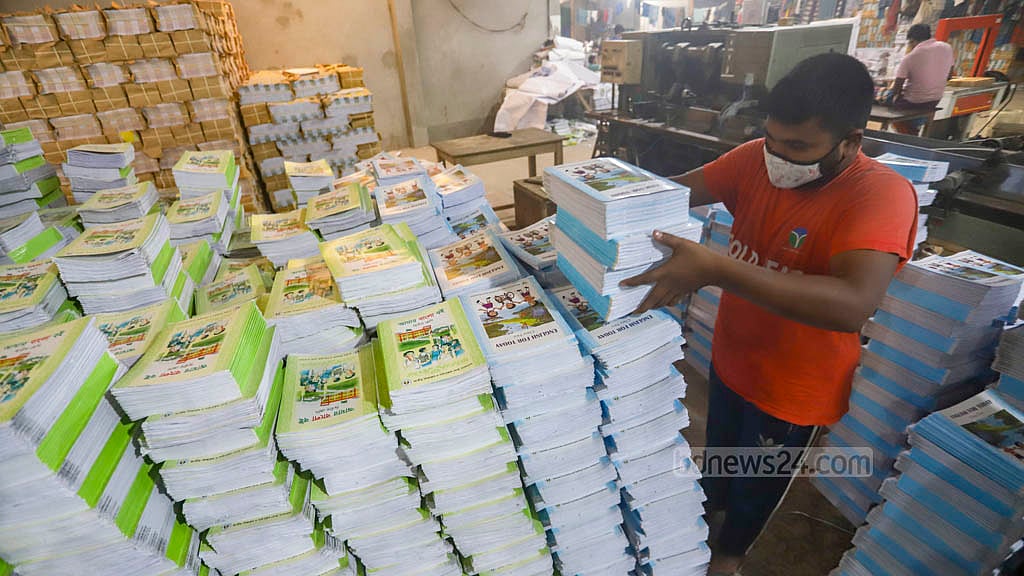
Currently, textbooks for grades one to three are being printed, and work on grade 10 textbooks is also underway.
For the first time in 12 years, grade 10 students will receive books under the old curriculum, which includes additional subjects compared to last year.
As a result, the total number of textbooks for this grade has increased by 95 million.
About 66.4 million copies are being printed for grade 10 students alone.
The question remains whether the efforts will be sufficient to ensure timely distribution to eager students as the clock ticks towards the academic year.
PRIORITY PRINTING UNDERWAY
The NCTB is prioritising printing textbooks for grade 10 students, who will transition to subject-based divisions this academic year after studying under a uniform curriculum in grade nine.
NCTB Chairman AKM Riazul Hasan told bdnews24.com: “Ten million copies, including grade 10 textbooks, have been assigned to the army’s printing facilities under the direct purchase method. These books will be available in the first half of December.”
For grades six to eight, textbooks on Bangla, English, Mathematics, Science, and Bangladesh and Global Studies have been prioritised, with the tender process completed.
Riazul added, “These books will reach Upazila levels by Dec 15.”
However, the tender process for grade nine books is yet to be finalised.
PRIMARY LEVEL CHALLENGES AMID PAPER SHORTAGE
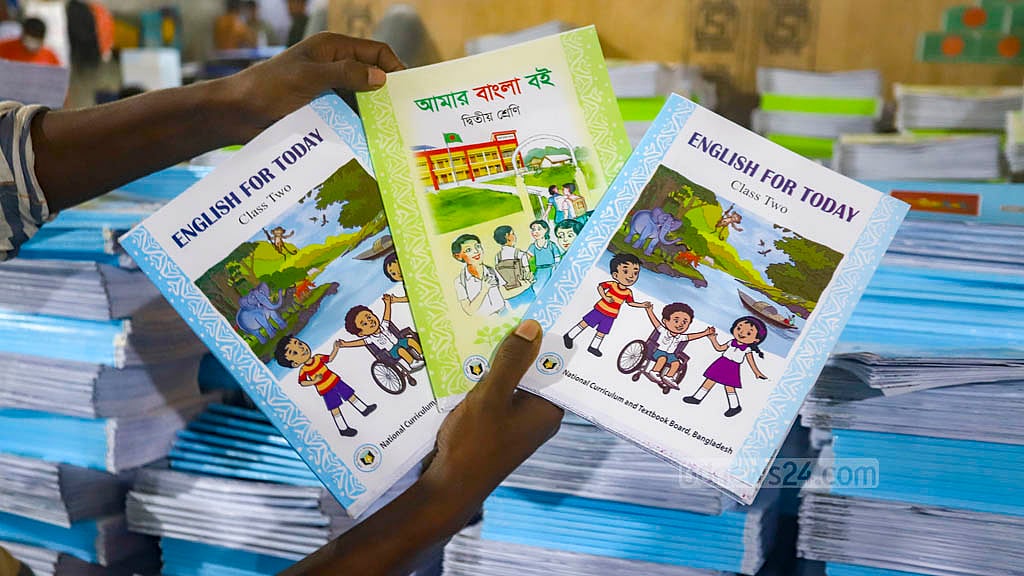
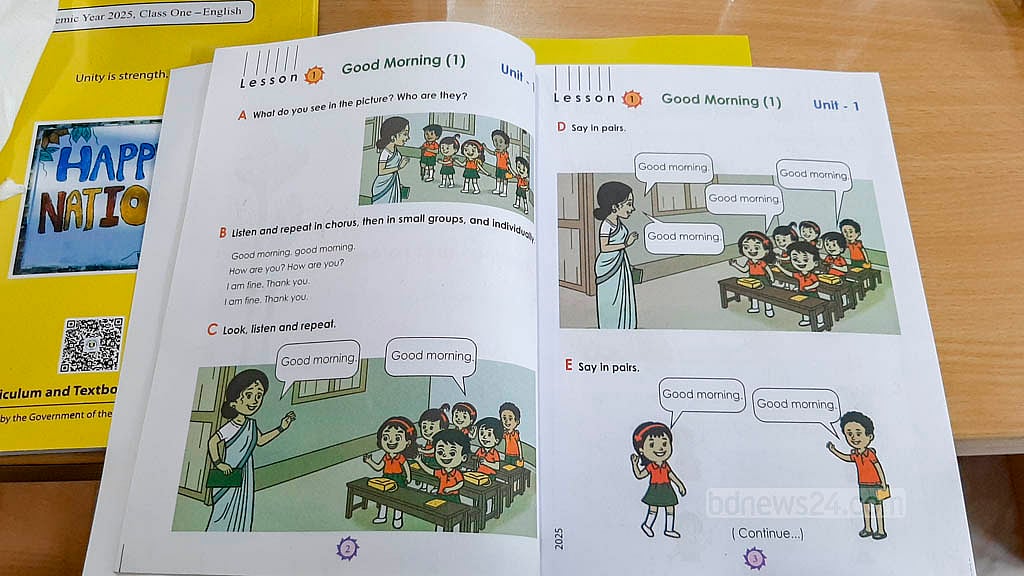
More than 19.7 million primary-level students from pre-primary to grade five are set to receive over 100 million new textbooks next year.
Printing for over 40 million books for grades one to three is distributed across 41 organisations in 70 lots.
Despite progress, printing companies are grappling with challenges.
AKM Rasheduzzaman, a representative from Letter and Colour Limited, said: “The paper shortage is a major hurdle. Only five paper mills are supplying 85 percent brightness pulp paper, and we’ve received just five tonnes out of the 24 tonnes ordered.”
He also cited delays due to late delivery and subsequent revisions of soft copy CDs for textbooks.
Despite these challenges, Rasheduzzaman expressed hope that printing could be completed by the second week of December.
SECONDARY-LEVEL TEXTBOOK PRINTING DELAYED
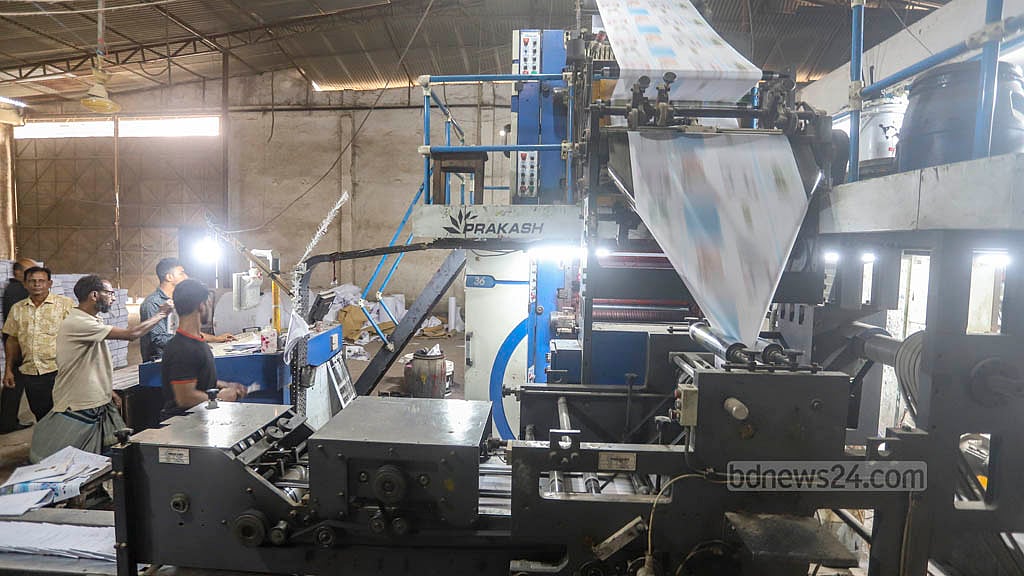
The NCTB is yet to begin printing textbooks for grades six to eight, even as preparations for next year’s academic session move forward.
Nearly 12.1 million secondary students are expected to receive around 300 million books in 2024, but delays in tender processes and the delivery of print orders threaten the timeline.
Rasheduzzaman of Letter and Colour Limited, tasked with printing grades six to eight textbooks, told bdnews24.com: “We hope to start printing by the second week of December. However, we’re yet to receive CDs or print orders. If everything arrives by the first week of December, we can begin production shortly after.”
Concerns persist over meeting the Dec 31 deadline.
Rasheduzzaman said, “Rushing could compromise print quality, leading to rejected books. Nevertheless, we aim to complete the work promptly.”
Another printer, Mohammad Anwar Hossain of Dohar Printing Press, echoed similar concerns, saying: “We haven’t received work orders, print orders, or CDs yet, making it impossible to start work.”
Despite these hurdles, NCTB Chairman Riazul remains optimistic.
“If printers are committed, all books can be printed in 21 days, ensuring students receive them by the start of the academic year,” he said.
The army’s involvement in printing 10 million textbooks is also expected to finish by Dec 15.
“If necessary, they will assist with other books to meet deadlines,” Riazul added.
NCTB has also warned of blacklisting firms failing to deliver on time while rewarding punctual ones in future projects.
REVISIONS AND NEW INCLUSIONS IN 2024 TEXTBOOKS
NCTB has made several revisions to textbooks, including the inclusion of the July-August uprisings and tributes to its martyrs across the Bangla and English books for grades five to 10.
Hasina’s message on the back cover will be excluded, while the contributions of Bangabandhu Sheikh Mujibur Rahman, Maulana Abdul Hamid Khan Bhashani, Tajuddin Ahmad, Syed Nazrul Islam, General Ataul Gani Osmani, and Ziaur Rahman will be featured.
On Ziaur Rahman, Riazul said, “His independence declaration on March 26-27 over the radio will be included.”
Some controversial content, such as the story "Sharifa’s Tale" from the grade seven social science textbook, will be removed.
NCTB has carefully reviewed all content to avoid offending any group, ensuring no “controversial” topics are included in the new editions.
The revised books will also exclude the theory of evolution, with Riazul explaining: “Evolution is a theoretical subject and not deemed essential for primary or secondary-level textbooks by our expert panel.”
ARABIC LANGUAGE REINTRODUCED
Arabic, previously an optional subject in the 2012 curriculum for grades six to eight, will return in 2024.
Prof Rabiul Kabir Chowdhury of NCTB’s curriculum wing confirmed this addition, saying: “Arabic will now be available as an optional subject in these grades.”
Islamic Studies textbooks will also feature Quranic verses in Arabic alongside their translations, reversing earlier practices of including only Bengali translations.
[Writing in English by Arshi Fatiha Quazi]