
Published : 12 Feb 2025, 11:08 AM
Updated : 21 Aug 2026, 12:35 PM


Six years ago, a deeply unsettling incident of sexual assault sent ripples of shock across Bangladesh.
Munna Bhakta, an assistant at the Suhrawardy Hospital morgue in Dhaka, was arrested on charges of sexually assaulting a corpse.
The case, however, did not remain an anomaly.
A few years later, Md Selim, a temporary security guard at Chittagong Medical College Hospital, was detained on similar charges.
While Munna was convicted under one legal provision, he was acquitted under another. Selim's case, meanwhile, lingers in the courts, stalled by the absence of witnesses.
This type of sexual intercourse or sexual contacts with dead bodies, known as necrophilia, is widely regarded by psychologists as a serious mental disorder.
Psychologists suggest that such behaviour often stems from mental developmental issues, abnormal sexual impulses, and psychological instability.
Prof Nur Mohammad, a faculty member in the Department of Psychology at Jagannath University, told bdnews24.com: “This represents an uncontrolled state in which the perpetrator gains an overwhelming sense of power and control over the deceased. In numerous instances, this behaviour can be traced to trauma or underlying personality disorders.”
He went on to identify the condition as a personality disorder, adding that it can also stem from experiences of sexual or mental abuse during childhood, or from an inability to form healthy relationships with living individuals.
“For instance, a dead body offers no reaction, which grants the perpetrator an unchecked opportunity to exercise unilateral control over it,” Prof Mohammad noted.
Despite the psychological complexities underlying these crimes, Bangladesh’s legal system remains ill-equipped to address them. Legal experts have called for explicit recognition of “necrophilia” in the country’s laws, acknowledging the need for legislative clarity.
They have also stressed the importance of integrating psychiatrists into various institutions, including prisons, hospitals, and educational facilities, to better address mental health concerns.
MUNNA'S PUNISHMENT
From Mar 29, 2019 to Aug 23, 2019, forensic investigators detected the presence of male semen in the vaginal swabs of five bodies related to suicides, all of which were sent from the Forensic Medicine Department of Suhrawardy Medical College Hospital.
After creating a DNA profile of these semen, evidence of the presence of a male semen was found in each case.
The victims, all girls aged between 11 and 17, were found to have no visible signs of trauma or sexual assault in their autopsy reports.
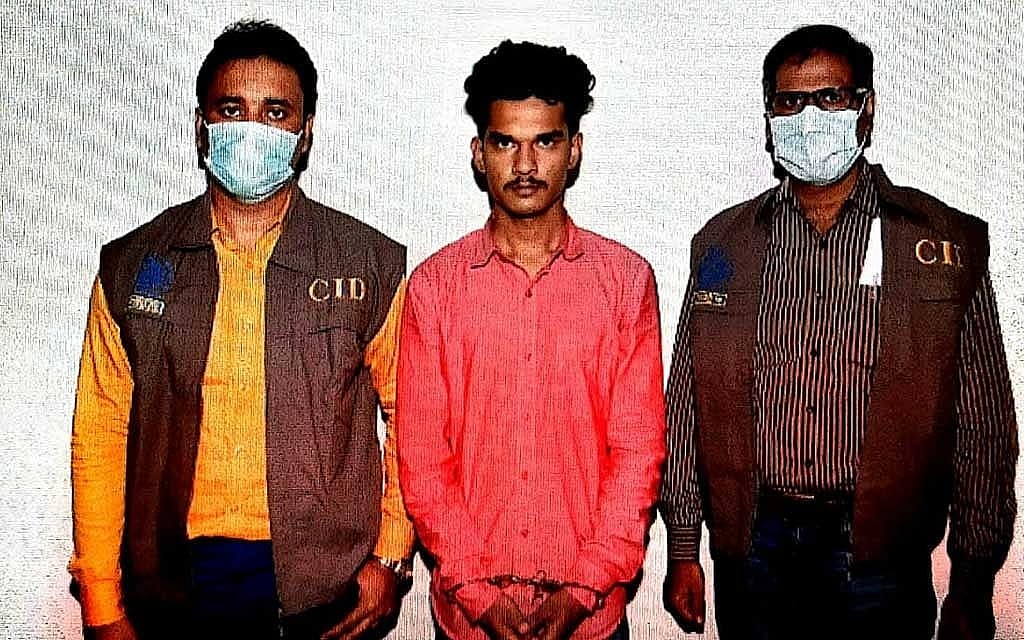
During the investigation, the Criminal Investigation Department, or CID, uncovered that Munna, an associate working in the morgue's dome, personally escorted the bodies upon their arrival for autopsy.
This role positioned him at the centre of the inquiry, leading authorities to suspect his involvement.
On Nov 19, 2020, Munna was arrested. The following day, a case was filed against him at the Sher-e-Bangla Nagar Police Station.
Subsequently, four additional cases were filed in March, April, October, and February 2021, with the police serving as the plaintiffs in each of the proceedings.
In each of the cases, Munna faced charges under sections 297 and 377 of the Penal Code. On Jan 31, 2021, Munna admitted to the charges of rape during a court appearance at the Dhaka Metropolitan Magistrates' Court, offering a formal confession.
The trial for these cases commenced thereafter, and on Jun 21, 2023, the court, presided over by Dhaka’s Additional Metropolitan Magistrate Tofazzal Hossain, delivered a verdict, sentencing Munna to various terms in connection with his crimes.
The court's verdict noted that, after a comprehensive review of the case, the charges against Munna under Section 377 of the Penal Code—punishable by law—had been substantiated by his confession.
As a result, the judge sentenced him to one year and seven months of hard labour under this section.
Munna was acquitted of the charges under Section 297 of the Penal Code, as the prosecution failed to establish the crime.
Munna’s lawyer Al Amin told bdnews24.com, “I don’t want to talk about this anymore. It’s a sensitive issue. But if you want, you can present my submission to the court."
In his submission, Al Amin argued that the charge against Munna under Section 377 of the Penal Code was legally unfounded. He contended that the section uses the terms "man" and "woman" in the context of the crime, referring to living individuals as specified in Section 10 of the same law, which states "of any age". Nowhere in Section 377, he noted, does the law mention the word "dead body," making it legally impossible for a corpse to be considered a subject of sexual intercourse under the statute.
Section 297: Whoever, with the intention of wounding the feelings of any person, or of insulting the religion of any person, or with the knowledge that the feelings of any person are likely to be wounded, or that the religion of any person is likely to be insulted thereby, commits any trespass in any place of worship or on any place of sepulture, or any place set apart for the performance of funeral rites or as a depository for the remains of the dead, or offers any indignity to any human corpse, or causes disturbance to any persons assembled for the performance of funeral ceremonies, shall be punished with imprisonment of either description for a term which may extend to one year, or with fine, or with both.
Section 377: Whoever voluntarily has carnal intercourse against the order of nature with any man, woman or animal, shall be punished with 2[imprisonment] for life, or with imprisonment of either description for a term which may extend to ten years, and shall also be liable to fine.Explanation. Penetration is sufficient to constitute the carnal intercourse necessary to the offence described in this section.
Al Amin pointed out that the term "dead body" appears in Sections 499, 464, 318, and 201 of the Penal Code, but not in Section 377. He further cited Section 7 of the Penal Code, which states that a term used once in the law must maintain the same meaning throughout.
Referring to Sections 45 and 46, which define life and death as applying to a person, Al Amin argued that Section 377 does not include the term "dead body." Based on this interpretation, he contended before the court that the charge against Munna under Section 377 was unlawful.
Al Amin further argued that all crimes related to the human body are addressed in Chapter 16 of the Penal Code, which deals with offenses against individuals. Since acts such as murder, unlawful restraint, or harm to a dead body are not classified under this chapter, he contended that illegal sexual intercourse with a corpse was likewise not legally possible under the statute.
SIMILAR INCIDENT IN CHATTOGRAM
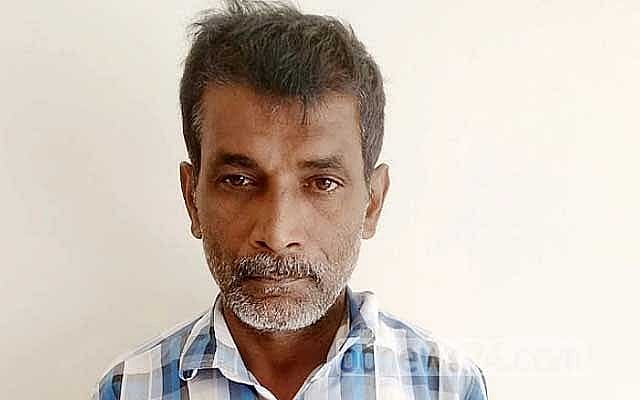
The CID arrested Selim, a temporary security guard at the Chittagong Medical College Hospital morgue, on Feb 28, 2022, on charges of sexually assaulting the corpses of women brought in for autopsy. Authorities filed a case against him at Panchlaish Police Station in Chattogram.
Following an investigation, the CID determined that Selim, entrusted with overseeing the morgue, was exploiting his position. Whenever the body of a young woman arrived for postmortem examination, he would wait for hours and sexually assault the corpse.
Sajjad Hossain, the chief of investigations at Panchlaish Police Station, told bdnews24.com: “This case is no longer under investigation. After the investigation, a charge sheet has been submitted to the court. The case is probably under trial now.”
A review of court records confirmed that the trial is underway in the court of Additional Chief Metropolitan Magistrate of Chattogram Sarker Hasan Shahriar.
The court formally accepted the charge sheet, which was filed under Section 377 of the Penal Code, and initiated proceedings against Selim on Nov 22, 2023.
Fourteen individuals have been named as witnesses in the case, but none have testified so far. The next hearing, scheduled for Jan 29, is set to begin the process of recording witness statements.
Md Abul Kalam Azad Nazir of the Chattogram Chief Metropolitan Magistrates' Court confirmed that the accused, Selim, remains in custody.
“After his arrest, he confessed to the crime and also gave a statement under Section 164 in the court,” Azad said.
AMBIGUITY IN EXISTING LAWS
Rape remains a grave criminal offense under the existing legal framework of Bangladesh, with laws designed to safeguard the rights and dignity of living individuals. The country’s Penal Code, under Sections 375 and 376, outlines the legal definition of rape and prescribes punishments accordingly. Yet, despite the severity of the crime, the law remains silent on violations committed against those who are no longer alive.
Notably, the Penal Code lacks explicit provisions addressing the rape or sexual assault of a corpse—commonly referred to as necrophilia. While Section 377 criminalises sexual acts deemed “against the laws of nature” when committed with a man, woman, or animal, it does not extend its reach to the desecration of the dead. This legal gap raises concerns over accountability and justice in cases where the sanctity of the deceased is violated.
LAWS ON PUNISHMENT VARY WIDELY ACROSS DIFFERENT COUNTRIES
Different countries around the world have specific laws regarding the sexual assault or rape of a corpse.
India reformed its rape laws after the Nirbhaya rape case in 2013.
Section 375 of the Indian Penal Code includes provisions under which the sexual assault or rape of a corpse is classified as a punishable offence.
In the United States, the rape of a corpse, or sexual violence against a deceased individual, is treated as a serious crime, with most states, including California and New York, enforcing strict penalties for such acts.
Under California Penal Code 7052, it is a crime to engage in sexual intercourse with a corpse or to defile one in any other manner. The misuse of any part or organ of a deceased individual is prohibited. Conviction carries a maximum penalty of eight years in prison, along with a potential fine.
In New York, Penal Code 130.20 criminalises sexual violence, indecency, or defilement of a corpse, categorising such acts as a "Class E felony”. The maximum penalty for this offense includes up to four years in prison, fines, and other conditional sentences.
In Florida, it is a crime to defile or engage in sexual activity with a corpse, classified as a second-degree felony. The maximum penalty for this offense includes up to 15 years in prison and a fine of $10,000.
In the United Kingdom, cadaver rape or sexual violence against a corpse is criminalised under the Sexual Offences Act 2003. Section 70 stipulates a maximum sentence of five years in prison for those convicted of such acts.
In certain cases, particularly when the crime is deemed severe, the penalty for corpse rape or necrophilia can include life imprisonment. This law plays a crucial role in safeguarding the dignity of the deceased. Additionally, those convicted may be placed on the sex offender registry, which can have long-lasting repercussions on their ability to move freely and maintain employment in society.
In Germany, corpse rape or necrophilia is punishable under Sections 168 and 174 of the German Criminal Code, with offenders facing a prison sentence ranging from one to three years, along with a potential fine.
“NECROPHILIA NEEDS TO BE ADDED TO THE PENAL CODE”
The current legal framework in Bangladesh addresses the desecration of a dead body, but lacks specific provisions for crimes such as rape.
Senior lawyer ZI Khan Panna argues that the solution lies in amending the Penal Code to include explicit reference to a "dead body" in relation to sexual offences. He suggests that by incorporating this term into Sections 376 or 377, the law will be able to clearly define the crime.
He told bdnews24.com, "I believe this type of crime falls under abnormal activities. However, since there is no mention of it, if the term ‘dead body’ was included in Section 376 and 377, along with a prescribed punishment, there would be no barriers to the prosecution of such cases."
“This is a mental issue," said Panna, emphasising that a rational person should instinctively recoil at the sight of a dead body. He went on to advocate for a broader approach to mental health, calling for greater attention to psychiatric care in the country.
He continued, "While there are numerous physicians in hospitals, psychiatrists remain critically underrepresented—a deficiency that must be addressed in both prisons and the broader community."
Panna stressed the importance of incorporating mental health professionals into educational institutions, suggesting that psychiatrists should be actively involved in schools and colleges.
"Juvenile crime is on the rise in society, and this too stems from mental health issues. If psychiatrists were to conduct educational sessions in schools and colleges, I believe these issues could be mitigated."
Fauzia Moslem, president of the Bangladesh Mahila Parishad, contends that punitive measures alone are insufficient to reduce crime. She emphasised that a multifaceted approach is necessary to address such issues effectively.
In a recent statement, Muslim highlighted the organisation's ongoing efforts to reform the country's rape laws.
"We held a meeting with women's groups to discuss the rape of a corpse and how to incorporate it into the legal framework. We are actively working on amending the entire rape law."
Former Supreme Court Justice MA Matin has suggested that the crime of "corpse rape" could potentially be prosecuted under Section 377 of the Penal Code.
"If it doesn't cover it, there is one way, and that is if the Appellate Division gives a ruling on this issue, it will cover it. And if this issue is not in any interpretation of the Supreme Court, then a law will have to be made for it or it will have to be added to the law,” said Matin.
[Writing in English by Ruhshabah Tabassum]