Published : 02 Nov 2023, 04:21 AM
Updated : 02 Nov 2023, 09:00 AM


Amid violent antigovernment protests before the election, the residents of Dhaka face a dilemma: whether to hunker down at home or brave fears of deadly violence.
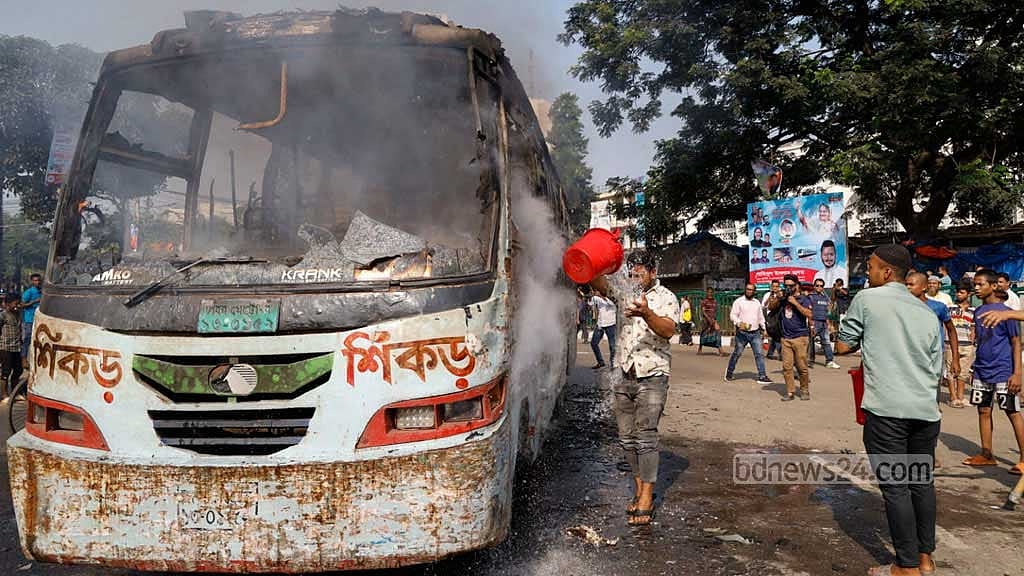
Arson attacks on public transports and clashes with the police have marked the three-day nationwide blockade called by the BNP and backed by the Jamaat-e-Islami.
Shaheen Alam, who was having a chit-chat about the situation at a tea stall in Monipuripara, Farmgate, on Wednesday, said: “Neither the government nor the opposition thinks about us. They call shutdowns and blockades from air-conditioned rooms, and drive commodity prices.”
“We, the general public, can’t deal with the situation anymore.”
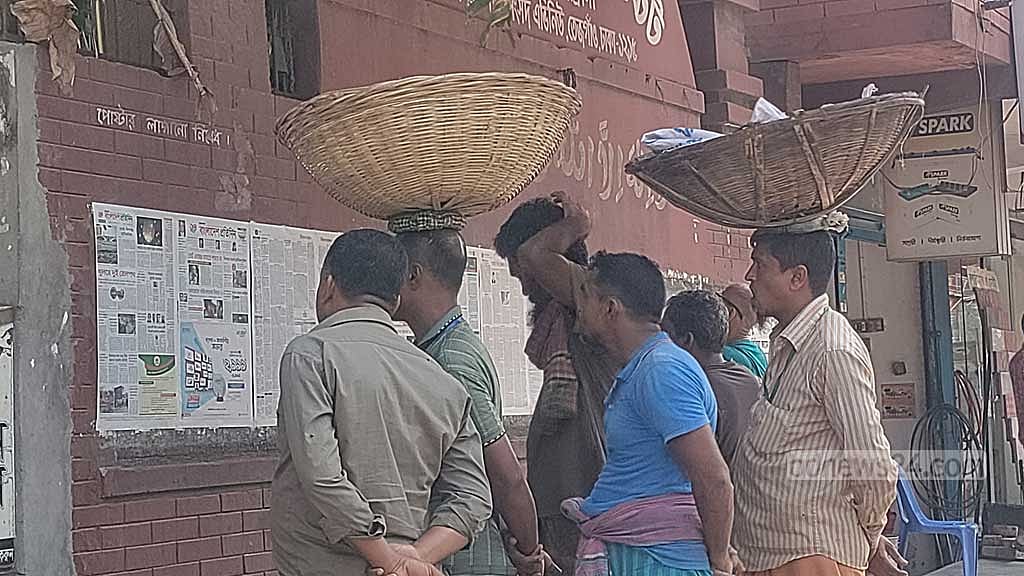
Akkas Hossain, a worker who was reading newspapers on the wall of the local mosque, said they did not want such a confrontation.
“It won’t benefit us no matter who gets the power. My head spins when I think about price rises,” he said.
Most of the schools are closed during the blockade. Some are giving lessons online.
As people are not going out without urgent reasons, small businesses face a fall in sales.
In addition to the hit on their livelihoods, they face the risk of being caught in violence.
“I'm scared when I open my shop, but poor people like us must work,” said Barek Mia, who runs a tea stall in Mohammadpur.
Md Asad, who sells Jhalmuri on the footpath of Bangla Motor, said sometimes the police drive them off the streets while they have to run away when clashes erupt. “This is the life of the poor.”
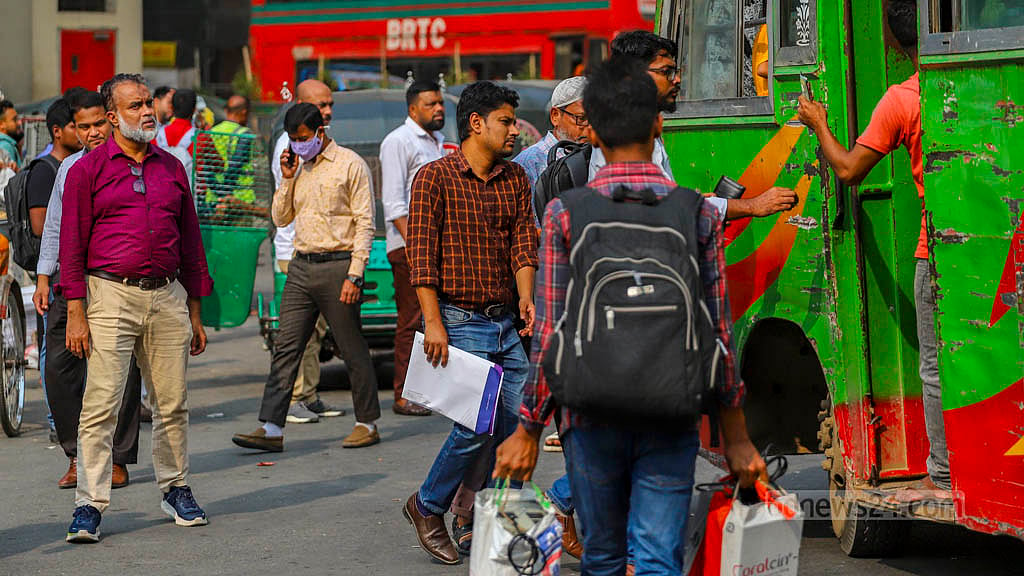
Although owners decided to operate passenger and goods transport services, very few buses were running on the long-distance routes.
Ilias Hossain, the conductor of a bus of intracity Balaka Paribahan, said the company has not running all the buses on the streets because of a lack of passengers amid the fear of arson attacks.
“You can’t earn money if you stay at home. But there’s no guarantee that you’ll bring some money home if you work outdoors. “We’re having to run the services with many seats empty during the trips.”
Abdus Salam, an autorickshaw driver, lamented that he could not earn the amount of money needed to pay the owner of the three-wheeler amid a scarcity of passengers.
Inter-district bus passengers hire autorickshaws when they arrive in the city or leave home for the bus stations, but with the long-haul operations suspended, Salam does not have enough passengers.
“And there are risks involved with getting out. I was caught in the clashes in Mirpur yesterday and saved myself by driving into a narrow alley. Today, my family asked me not to get out for work, but how can people like us, who live from hand to mouth, afford that?”
“Common people like us must go out for work even though we are afraid of everyone – the Awami League, the BNP and the police,” said Rasel Ahmed, a ridesharing motorcyclist.