Home
+
Published : 22 Jul 2025, 01:14 AM
Several victims of Monday’s air force jet crash at Milestone School and College in Dhaka’s Uttara remain unidentified as their bodies were charred beyond recognition, a senior official at the Ministry of Health and Family Welfare said.
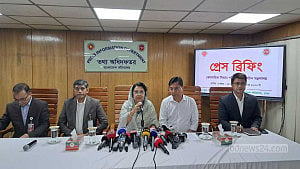
Sayedur Rahman, special assistant to the ministry, said DNA samples were being collected from the remains. Six of the bodies are currently at the Combined Military Hospital (CMH), and one at Uttara Modern Hospital. He suggested the unnamed victims are likely children.
At a press briefing held at the National Institute for Burn and Plastic Surgery on Monday night, Sayedur reported that 17 of the dead were confirmed to be children.
He explained the discrepancies in death tolls were due to the time required for coordination among multiple hospitals.
At least 20 people were killed in the crash, which saw a Bangladesh Air Force jet collide with the school building shortly after takeoff. Over 150 others, most of them students, were injured or burned.
Among those burned, only a few were adults. This includes two teachers, and one school staff member, while the rest were children. Over 100 injured children were identified, though only a few of them had been discharged by Monday evening.
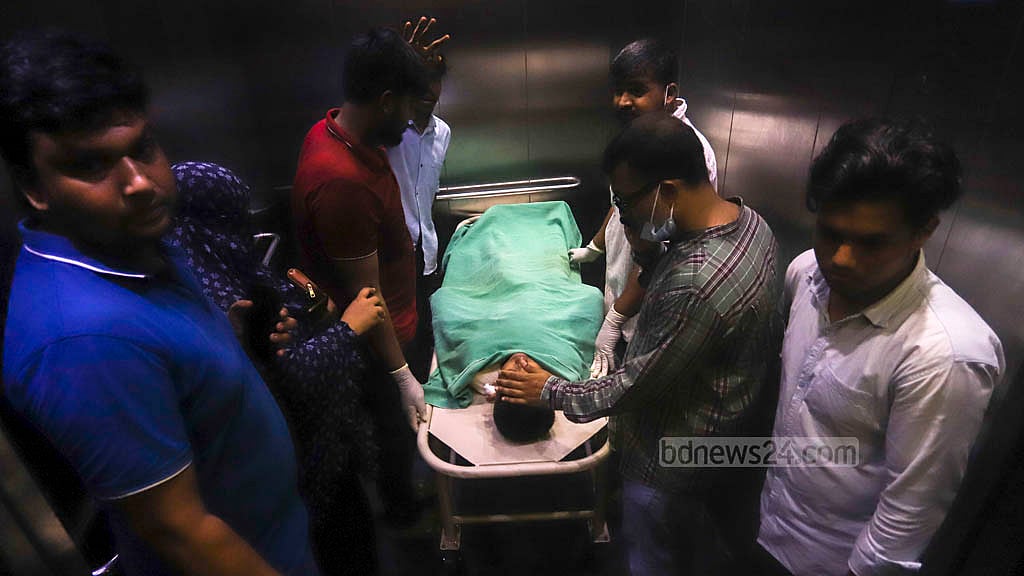
The victims are being treated across seven hospitals, though most are now at the Burn Institute or CMH.
As of Monday, 44 patients remained at the Burn Institute, where three victims died.
Four patients were transferred to Dhaka Medical College Hospital, one of whom later died.
CMH confirmed 12 deaths and was treating 25 others.
Sayedur assured that the Burn Institute had the capacity, skilled personnel, equipment, and adequate blood supply to manage the crisis.
The hospital had nine patients on ventilators in intensive care, and additional ventilators ready with backups at Dhaka Medical College.
He noted the overwhelming public response in donating blood and explained that while blood supplies were enough for the day, additional donations may be needed from Tuesday.
Volunteers were being asked to leave their names and contact numbers for future coordination.
Due to the critical condition of many patients, Sayedur urged the public not to crowd the premises.
Nasir Uddin, director of the Burn Institute, echoed the plea, saying that the fewer visitors, the better it would be for patient recovery.
He confirmed that politicians were not being allowed near patients and only essential hospital staff had access.
In response to questions about ICU capacity, Sayedur clarified that there were no shortages.
“All current ICU patients have beds, and additional beds have been arranged,” he said. The institute has 20 ICU beds, a High Dependency Unit, and 20 ventilators.
Around half the patients were in primary critical condition. He warned that even patients with 15-20 percent burns could deteriorate if they contracted infections, and that five percent burn injuries could also be life-threatening in such situations.