Home
+
Published : 22 Jun 2025, 02:14 AM
As Bangladesh navigates its fragile democratic transition following the fall of the Awami League government, political groups are working toward the signing of a National Charter in July -- a symbolic document that outlines proposed reforms for the country's political and governance systems.
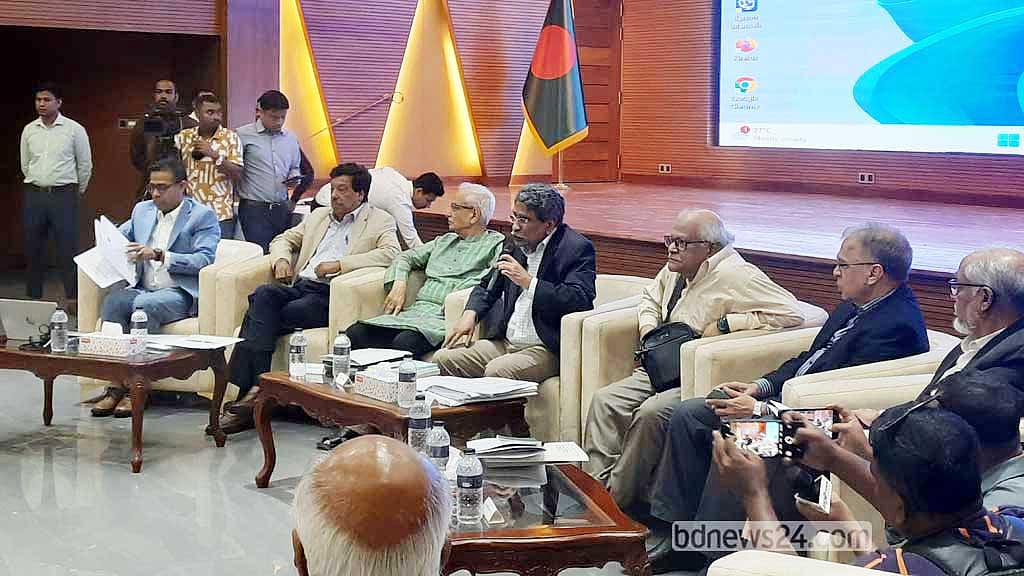
According to the National Consensus Commission, which is spearheading the initiative, the charter is being drafted based on broad agreement among political parties. In signing it, the parties are expected to make public commitments to implement the proposed reforms.
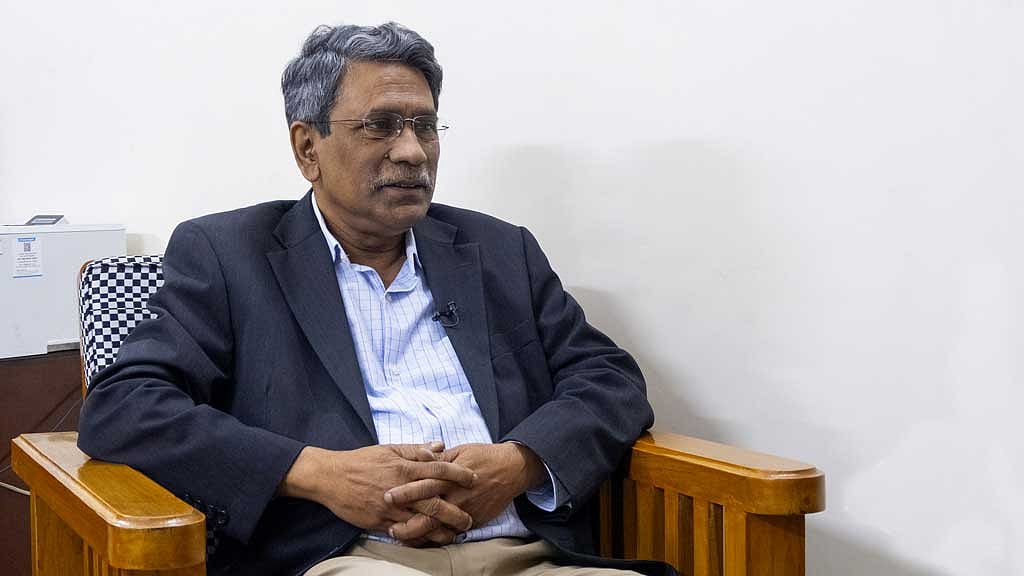
Speaking to bdnews24.com, the commission’s Vice-Chair Ali Riaz said: “The goal is to have parties in the next parliament commit to enacting these reforms. If that happens, we could see real progress toward a democratic transformation.”
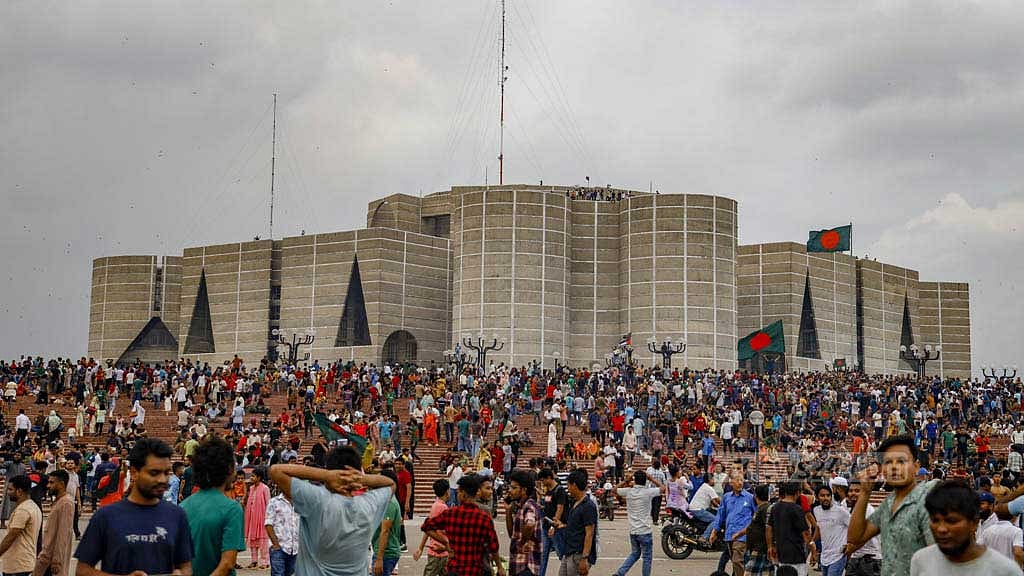
Following the dramatic political shift on Aug 5 last year, an interim government took charge with a reformist agenda.
By February this year, six sector-specific reform commissions had submitted their reports, laying out 166 recommendations across governance, elections, judiciary, anti-corruption, public administration, and constitutional reform.
In response, the National Consensus Commission was formed on Feb 15 to foster agreement across party lines.
It sought feedback on the recommendations from 38 political parties and alliances and 33 among them responded.
Between Mar 20 and May 19, the commission held 45 dialogue sessions to build alignment.
After a brief pause during Eid-ul-Azha, a second round of discussions began on Jun 2, and talks are still under way.
SO, WHAT’S IN THE CHARTER?
Asked about the content of the National Charter, Riaz explained that the document will include only those issues where consensus has been reached.
“The charter reflects political agreement on key recommendations made by the six reform commissions. These include matters related to the future shape of the state, the system of governance, election integrity, anti-corruption mechanisms, and more,” he said.
The document, according to him, will contain a shared commitment from all signatory parties to pursue necessary constitutional and legal changes to implement the agreed reforms.
SYMBOLIC GESTURE OR REAL ROADMAP?
Will this charter really move the needle on Bangladesh’s democratic challenges?
Riaz, who also teaches political science at a US university, believes it could, if taken seriously.
“For over 16 years, and arguably for most of its 53-year history, Bangladesh has lacked strong institutions. There is little accountability, no real balance of power, and corruption is rampant,” he said.
“On top of that, the electoral process has been deeply flawed. We've seen three fraudulent elections in a row. These are the structural barriers to democracy that the charter is trying to address.”
Riaz stressed that while the charter would not instantly transform the country’s political landscape, it could mark a critical turning point.
“It won’t deliver full democracy overnight. But if parties commit to the reforms and follow through, this could be a meaningful step toward institutionalising democracy in Bangladesh.”
WHAT CHANGES ARE BEING CONSIDERED?
The proposed National Charter could trigger sweeping changes to Bangladesh’s constitution, depending on political consensus.
According to Ali Riaz, if parties agree on reform priorities, these would be incorporated during a future constitutional amendment process.
"This wouldn’t just touch the constitution," Riaz noted. “It could influence laws, regulations, executive orders... virtually every layer of governance.”
He pointed to Article 70 as an example of potential transformation.
“Previously, MPs couldn’t vote independently on most matters. But we’ve now reached consensus that, except for two specific cases, lawmakers will have the freedom to vote based on their judgment. That’s a major democratic step forward.”
HOW WILL THE CHARTER BE IMPLEMENTED?
Asked how the charter would be enforced, Riaz stressed that any constitutional amendments would require a functioning parliament. “We don’t yet know the structure of the next parliament, but that’s where the formal changes would have to happen,” he said.
However, he also outlined alternative pathways to implementation beyond the legislature.
“There are parallel mechanisms. One is through an agreed action plan, where all parties publicly commit to the reforms and gain public backing,” he explained.
Another option, he suggested, involves setting a pre-election legal framework, where parties unwilling to accept the charter’s core principles could be barred from contesting.
“It could even be stipulated that any party entering the race, and ultimately winning, would be legally or politically obligated to implement the agreed reforms.”
WHAT THE POLITICAL PARTIES ARE SAYING
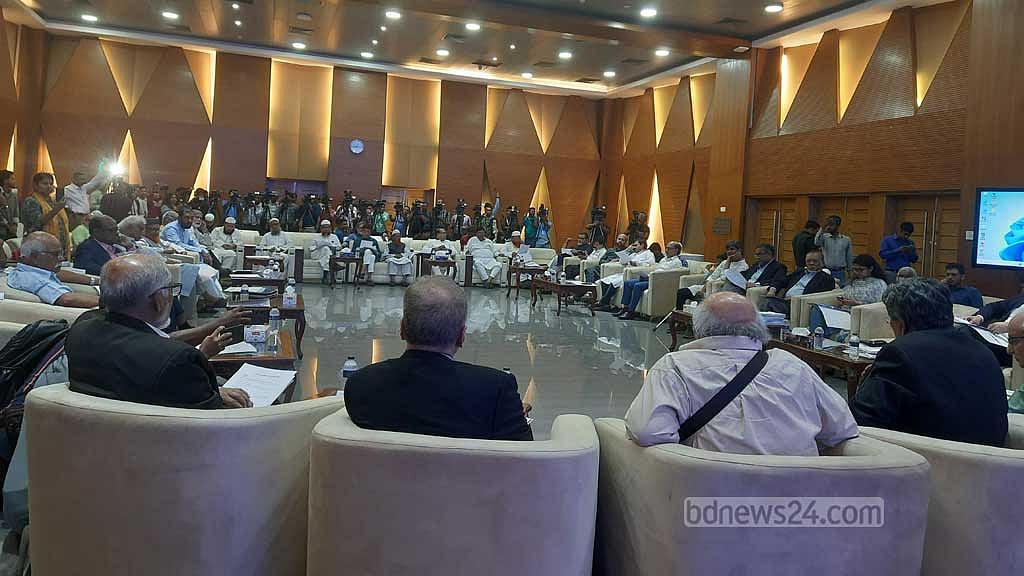
As the July target for signing the National Charter approaches, political parties across the spectrum have begun outlining their expectations, and their bottom lines.
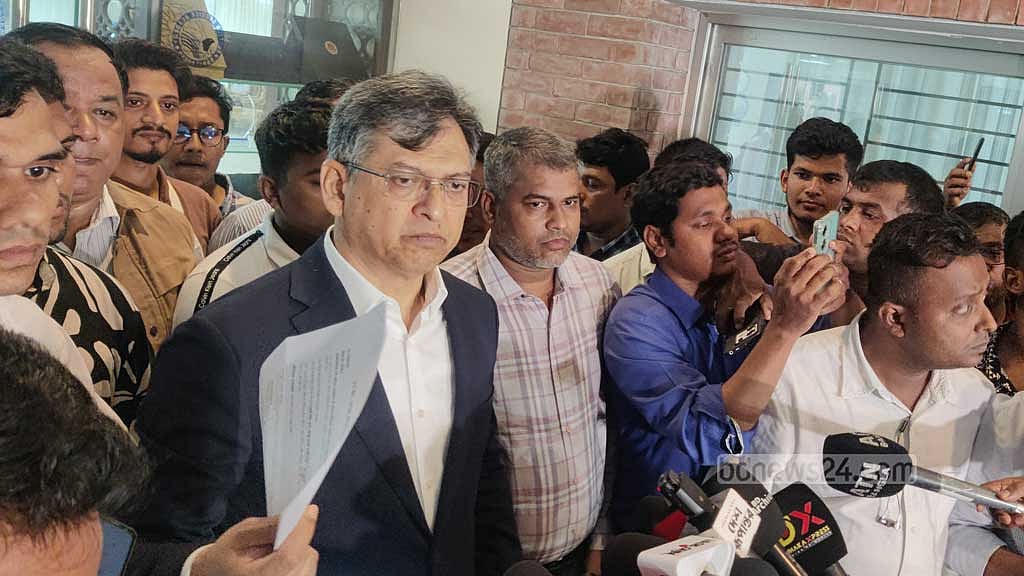
Speaking to reporters during a break in the second round of dialogue with the National Consensus Commission on Tuesday, BNP Standing Committee member Salahuddin Ahmed expressed cautious optimism.
"We hope to conclude the reform discussions and sign the National Charter within July," he said.
He confirmed that consensus had been reached on reforming Article 70 of the Constitution, long criticised for restricting MPs' voting independence.
"Everyone agrees on two exemptions, votes of confidence and the budget bill. Aside from these, MPs will be able to vote freely," he explained, adding: "Several other parties have proposed constitutional amendments alongside this."
Salahuddin also noted progress on parliamentary oversight.
"There’s been an agreement that key standing committees--on public accounts, parliamentary privileges, and government pledges--will be chaired by the opposition, based on proportional representation. That’s a significant shift."
Zonayed Saki, chief coordinator of the Ganosamhati Andolon, echoed the sentiment but stressed the importance of minimal consensus.
"Only the reform points where parties broadly agree will go into the National Charter. The rest will stay in individual party manifestos," he told bdnews24.com.
According to him, even modest agreement could be transformative. "If we reach consensus on even a few core issues--governance, accountability, power-sharing--this could shift the entire political structure of the country."
He added that current discussions include Article 70, the creation of a bicameral parliament, judicial independence, term limits for prime ministers, local governance, and women's political representation.
"If we can reach even a foundational consensus on these and enshrine them in the National Charter," he stressed, "it could mark a qualitative leap in our democratic development."
Mushfiq Us Salehin, joint member secretary of the National Citizen Party (NCP), emphasised structural reforms.
"We’ve already submitted proposals on key reforms like redistributing executive power, and ensuring a transparent, impartial appointment process for constitutional institutions," he told bdnews24.com.
He stressed the need to realign the executive, legislative, and judicial branches for balance. "If the charter includes these correctly, we believe it can play a pivotal role in Bangladesh’s democratic transformation."
Ruhin Hossain Prince, coordinator of the Left Democratic Alliance and general secretary of the Communist Party of Bangladesh (CPB), said the left is aiming for deep-rooted change.
"We don’t believe meaningful public welfare is possible without radical reform. It’ll take time, yes. But if Ali Riaz [vice-chair of the commission] is aiming to include only consensus points in the charter, that’s not unrealistic. It would at least move things forward," he said.
He added, "And if a capable new parliament emerges, those representatives can carry the process further."
Rashed Khan, general secretary of the Gono Odhikar Parishad, also welcomed the initiative, calling the charter “very positive".
"Of course we will sign it. As will the BNP and other parties. No one has raised real objections yet," he said.
He framed the charter as an antidote to Bangladesh’s past failures in governance.
"There have been countless uprisings, protests, and revolutions, but never structural reform. We’ve broken the fascist foundations of the state, but each time we tried to rebuild, we fell short."
HOW WILL THE CONSTITUTION BE AMENDED?
The reforms laid out in the National Charter, particularly those involving Article 70, would require formal amendments to the constitution. But how feasible is that, legally and politically?
According to Jyotirmoy Barua, a Supreme Court lawyer, any constitutional change must follow the exact procedures outlined in the constitution itself. "Reform must happen through the constitutional mandate, as prescribed in the law," he told bdnews24.com.
He described the National Charter as an expression of collective political will, not a legal directive.
"The charter is about aspirations. It’s a declaration of what citizens through political consensus want their state to look like. It's essentially a manifesto."
Barua emphasised that the document should offer not just principles but a roadmap. "It must include clear directions: how reform will take place, which procedures will be followed, and what mechanisms will guide constitutional amendments."
Ultimately, he said, the practical implementation would depend on how future governments interpret and act upon the charter.
"Whether and how changes are applied will depend on the administrations that come next. We’ll have to wait and see how they respond to this blueprint," he added.
"Even if the reforms aren't revolutionary, they could still lead to meaningful improvements. We’ll only know once they are put into action."
However, constitutional expert Shahdeen Malik expressed deeper scepticism, particularly regarding the charter's enforceability.
"Say all the political parties agree and sign it. Then imagine the new prime minister proposes constitutional amendments in line with the charter, especially repealing Article 70. But what if the other MPs refuse to go along? What happens then?" he asked.
Shahdeen warned about a central limitation: "The charter is not a legally binding document. No matter how much it promises or how many signatures it carries, it has no legal force."
Still, he acknowledged that voluntary action is possible.
"If the parties choose to implement reforms based on the charter, there’s no legal barrier to doing so. But beyond moral obligation, there’s no legal compulsion to act on it," he observed.