Published : 01 May 2026, 05:31 PM
Updated : 28 Aug 2026, 01:34 AM


The Election Commission has described as “abnormal” the registration of unusually high numbers of voters at several houses on a single road in Narayanganj, including two properties owned by a former city councillor.
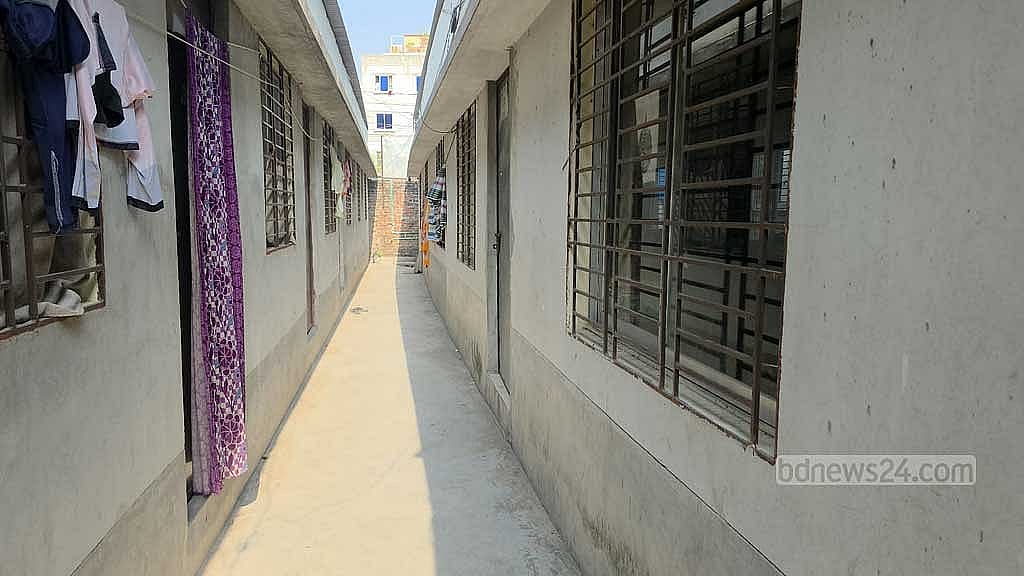
At Holding No. 56 on Mokorba Road in Khanpur, Ward No. 11 of Narayanganj City Corporation, a tin-shed house occupied by just five tenant families has 182 registered voters.
A short distance away, another three-storey house at Holding No. 43/1, where six families live including the landlord and his brother’s family, has 136 registered voters.
Both houses belong to former councillor Wahidul Islam Chhakku.
Two other houses on the same road — Holdings No. 49 and 51 — account for another 120 voters.
According to the voter list published by the EC on Nov 24 ahead of the 13th parliamentary election held on Feb 12, a total of 438 voters are registered at the four holdings on Mokorba Road in the area known as Nagar Khanpur. Yet the total number of voters in the locality is only 1,336.
EC officials say such a concentration of voters at a small number of houses is unusual.
Based on the size of the properties and the number of residents, officials say no more than 20 to 30 voters would normally be expected at each holding.
They say the matter is now heading for verification to determine how so many voters came to be listed at the same addresses.
Officials at the local election office said some of the voters at the four holdings were added during the latest update, while others had been registered earlier but continued to use the same addresses.
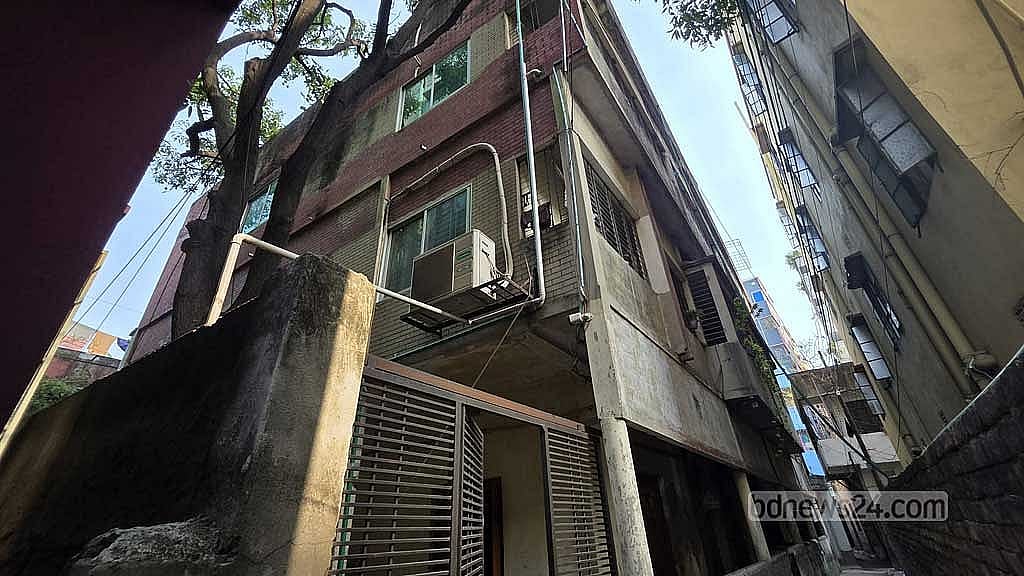
Two of the four houses belong to Chhakku, a local BNP leader. He lives in one of them, while the tin-shed house is rented out and also used as his office.
At Holding No. 56, one side of the property is used as the former councillor’s office and the rest is rented to five working-class families. None of them are originally from the area, and many are not voters in the ward.
One tenant, restaurant worker Md Tanvir, said he had moved into the house about a year and a half ago, but his family had not registered as voters using that address.
Tanvir himself is not yet a voter, but he showed the national identity card of his mother, Taslima, whose address is listed as “Dulu Mia’s House” in nearby West Talla. Their permanent home is in Patuakhali.
There are 16 residents in the house, including two children under 15 who are not yet eligible to vote. Even so, 182 voters are registered at the address.
At Holding No. 43/1, another house owned by Chhakku, he lives in one flat while his brother’s family lives in another. Four more tenant families also live there.
Tenant Md Hasan said his family had three members. He is registered as a voter in Gazipur, while his wife, Aklima, is a voter in this ward. But her address is listed as 30 Mokorba Road, not the house where they now live.
At Holding No. 51, where four families have lived as tenants for the past 10 years, there are 14 family members in total. Two are minors, one became a voter last year and the rest were registered earlier. Yet 47 voters are listed at the address.
Resident Afroza Akter said she was surprised to hear the figure. Her sister, Piyari Akter, also lives there as a tenant.
“We have been renting here for many years. There is no reason for any new tenant to come here,” she said.
According to EC sources, there are 1,336 voters in the Mokorba Road Khanpur area of Ward No. 11 — 700 women and 636 men. Of them, 438 are registered at just four holdings.
When the voter list was shown to a district election office official, the issue became clearer. A search of the online database showed that in most cases, Chhakku had acted as the verifier and certifier of documents for the voters listed there.
For example, one voter, Abhay Chauhan, was registered in 2023 using the address of Holding No. 56. His permanent address is in Habiganj. He studied at a high school in Narayanganj. His documents were certified by Chhakku, who was then serving as councillor of Ward No. 11. He remained in office until councillors across the country were removed after the 2024 mass uprising.
One election official said many voters could be registered at the same holding depending on the size of the property and the number of residents, but added that this case was clearly unusual.
“These houses cannot accommodate that many voters. Besides, people who rent somewhere for six months or a year are usually not interested in registering there,” the official said.
He added that such activity often takes place during voter list updates.
“Registering many voters at the same holding can benefit local representatives or political leaders. They can keep voters under their influence, which helps during elections.”
Md Khorshed Alam, Jamaat-e-Islami president of the same ward, alleged that Chhakku had manipulated voter registrations while serving as councillor.
“Not only at his own houses, but also at the houses of relatives and friends,” he said. “He provides various benefits to these voters so he can gain support during elections. This is a scheme to create fixed voters.”
Khorshed, who is also a likely Jamaat candidate for councillor in the next Narayanganj City Corporation election, said he would raise the issue within the party and seek action from the EC.
Contacted for comment, Chhakku admitted that a high number of voters had been registered at the same holdings.
He said he had allowed temporary tenants living in the area for work to use his address to help them register as voters.
“To become a voter, house tax receipts and electricity bills are needed. Tenants often do not get these from landlords. Since I was councillor, I only helped people,” he said.
He denied doing so for electoral gain.
“There is no legal barrier in this. I get votes because I work for people. Why would people vote for me if I did not work for them? People vote based on the development work they see in the locality.”
Dhiman Saha Jewel, district president of the civil society group Shushashoner Jonno Nagorik (SHUJAN), said such practices had been used before to create political advantage.
“We saw such examples in the last national election too,” he said. “There were allegations that Jamaat-e-Islami transferred voters to increase numbers in certain constituencies. Election officials also show negligence in such cases.”
He described the practice as “completely illegal” and called for a transparent voter list after a proper investigation.
“If manipulation is proven, those voter registrations should be cancelled. Otherwise, one individual will gain an unfair electoral advantage, which is an obstacle to free and fair voting.”
District Election Officer Md Alamgir Hossain said documents were checked during voter registration, but added that many were often supplied through councillors’ or Union Parishad offices.
“In such cases, some irregularities can occur,” he said. “Still, if there are abnormal numbers of voters at the same holding, it will be investigated and verified.”
He said action would be taken if wrongdoing was found.