Published : 30 Apr 2026, 05:41 PM
Updated : 28 Aug 2026, 01:34 AM


Torrential rain coupled with upstream water have inundated the Haor, plains and hilly regions of Netrokona, submerging Boro fields and damaging mud houses, while rising river levels have triggered flooding in low-lying areas.
Thunderstorms and rainfall have battered the district since early April, with hailstorms also damaging Boro crops.
Several farmers and agricultural workers have died in lightning strikes during this period.
Heavy rain began on Sunday afternoon and continued intermittently with thunderstorms.
The Bangladesh Meteorological Department recorded 101mm of rainfall in Netrokona in the 24 hours until Wednesday evening.
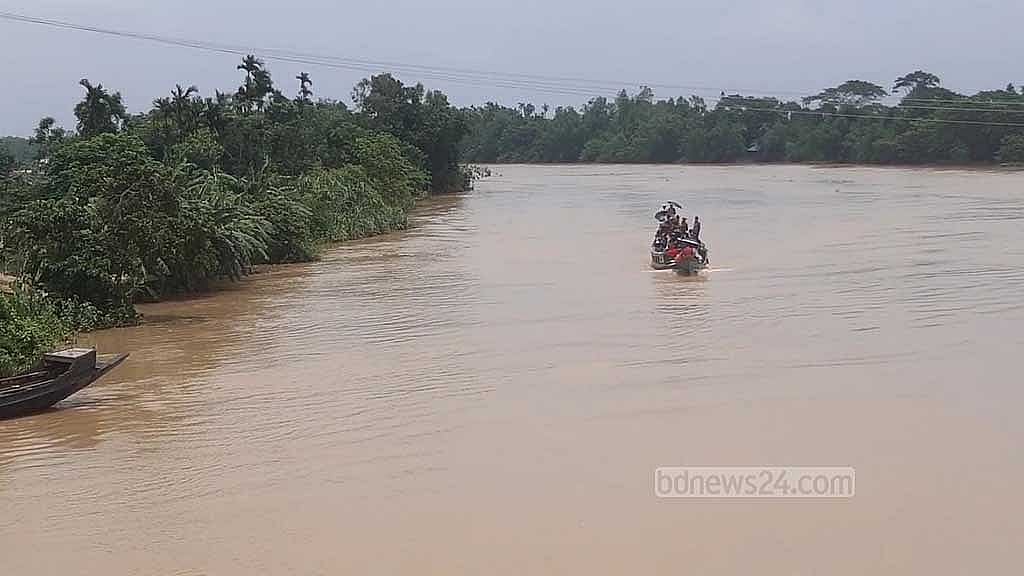
Sakhawat Hossain, executive engineer of the district unit of the Bangladesh Water Development Board, said water levels in the major rivers had risen sharply.
As of 9am on Thursday, the Bhogai-Kangsha River was flowing 1m above the danger mark at the Jaria-Jhanjail point, up from 93cm on Wednesday afternoon, he said.
The Updakhali River was flowing 73cm above the danger level at the Kalmakanda point, compared with 60cm the previous afternoon.
However, the Someswari, Magra, and Dhanu rivers remain below their respective danger levels.
Meanwhile, waterlogging in Boro fields across the district has worsened, damaging ripe crops and leaving farmers in distress.
Montosh Bishwasharma, a farmer from Konura village in Kalmaikanda's Kailati Union, said 24.78 decimals of his Boro field had gone under water following rain on Monday and Tuesday.
"The entire crop is being ruined. All we can do now is watch," he said.
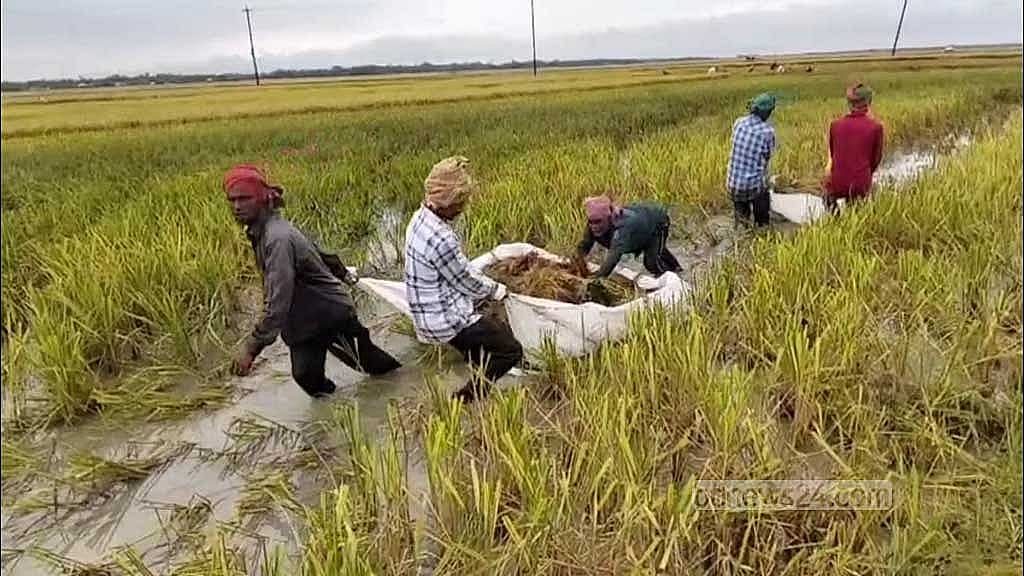
"Some more paddy was nearly ready for harvest, but I cannot find workers. A portion of the crop is still floating above the water. If I can harvest it now, I may still save some."
Sujan Mia, a farmer from Gobindashree village in Madan, said he had cultivated Boro on 1.51 hectares of land.
"I managed to harvest around 0.67 hectares with great difficulty. The remaining 33 decimals have gone under water," he said.
"My land was in Gobindashree Haor. Rainwater got trapped there, causing this situation."
He said even the harvested paddy was now at risk.
"I cannot dry it, cannot sell it wet, and cannot store it either. It is lying in the threshing yard and may soon be ruined. Many farmers in my village are facing the same problem."
Over 9,000 Hectares of Boro Crops Submerged
According to the Department of Agricultural Extension (DAE), Boro paddy was cultivated across 185,547 hectares in Netrokona this season, with 41,065 hectares located in the Haor (wetland) regions and the remainder in plains and hilly areas.
Amirul Islam, deputy director of the DAE, said relentless rain has triggered severe waterlogging across haors in Madan, Mohanganj, and Khaliajuri, as well as over 50 beels (water bodies) in the plains.
This has left more than 9,000 hectares of low-lying Boro crops underwater, with fears of further losses as the downpour continues.
The adverse weather has drastically slowed the harvest.
"Daily harvesting in the Haors has plummeted from 2,500 hectares to less than 1,000 hectares due to the rain," Amirul said.
To combat the crisis, the department has requested 6,000 additional agricultural labourers from Dhaka.
So far, 22 percent of the district's total Boro crop has been harvested, with 65 percent completed in the hHaors.
Authorities aim to finish reaping the remaining Haor crops by May 10.
741 Homes Damaged
The extreme weather has taken a toll beyond the fields, damaging homes and claiming lives.
Data from the District Relief and Rehabilitation Office shows that 741 houses across 10 Upazilas have been partially or completely destroyed, affecting 60 members of 15 families.
Moreover, lightning strikes in April have killed six people, mostly farmers and labourers, and injured one.
District Relief and Rehabilitation Officer Muhammad Ruhul Amin said 17,717 farmers have seen their crops submerged.
In response to the burgeoning flood threat, disaster management committees have convened at both district and Upazila levels.
"Rescue teams and watercraft are on standby, and essential relief materials are ready," Amin said.
A formal request has been sent to Dhaka for an extensive emergency package, including 270 tonnes of GR rice, 3,300 packets of dry food, 2,340 bundles of corrugated iron sheets, and over Tk 196 million for farmer rehabilitation.
Additional funds have been sought for cattle feed, child food, and housing grants.
Netrokona Deputy Commissioner Khandakar Mushfiqur Rahman said all necessary measures are in place.
"Upazila administrators (UNOs) have been instructed to prioritise the harvest and flood preparedness. We are coordinating with public representatives and citizens to overcome this disaster," he said.