Published : 29 Jul 2024, 08:30 AM
Updated : 21 Aug 2026, 11:42 AM


Before the student protest for reforms to government job quotas turned violent in other areas, tension was already rising in Dhaka’s Jatrabari. Calm took longer to return to the area than in other places. Even amid curfew, the clashes continued for five days.
Bodies kept coming to the hospitals from the area every day, but it could not be confirmed how many.
A media worker residing in Jatrabari said many of those engaged in the clashes with the law enforcers in the area were young and reckless.
A senior citizen says owners of newly constructed buildings acted in a questionable manner by sheltering the saboteurs while others were forced to open their doors.
Besides students from schools, madrasas, colleges and universities, the working class of the area took part in the clashes, according to witnesses.
Some believe the hanging of a slain policeman’s body bears some signs that student protesters cannot do such a thing.
A local MP says the people clashing with police appeared to be trained while it seemed to be a “festival” of violence to a landlord, who said the assailants continued attacks even after suffering deaths or injuries.
A local journalist overheard their plans to attack Jatrabari Police Station amid tear gas and firing.
HEATED BEFORE COMPLETE SHUTDOWN
Jatrabari was heated a day before students clashed with police in Badda and Uttara on Jul 18.
Even the Fire Service and Civil Defence was blocked from dousing the fire after an arson attack on Mayor Hanif Flyover’s toll plaza – a key access point to Dhaka.
Dhaka’s road link was completely snapped with Chattogram, Sylhet and Narayanganj as police failed to bring the situation under control that night.
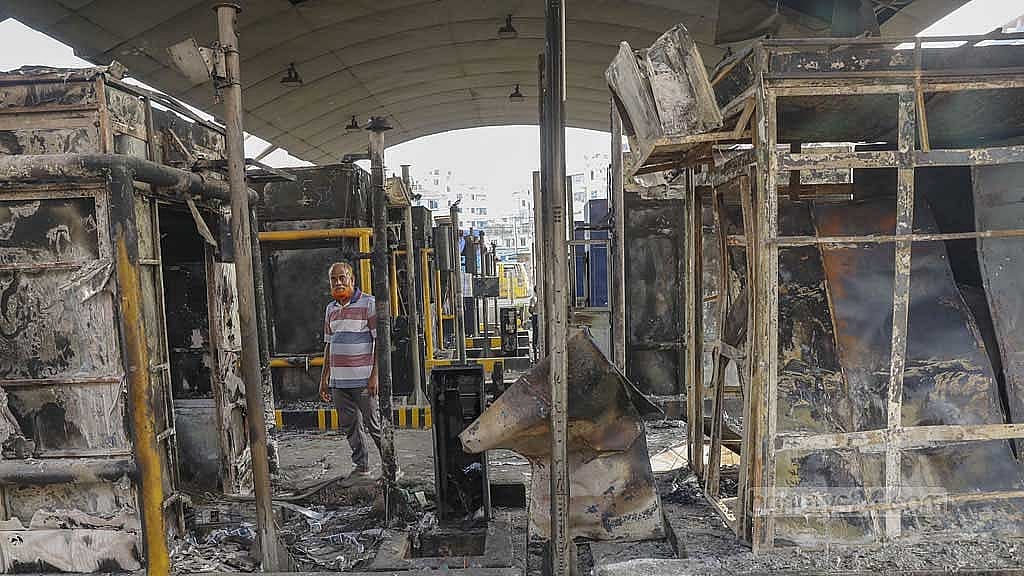
The clashes spread to Chattogram Road from Jatrabari via Signboard the following day. Police also clashed with attackers on Demra Road and Demra Staff Quarters Area.
But to the south, in Jurain and the areas around Dhaka-Mawa Highway, the situation was calm. Life was normal in the Sayedabad Bus Terminal, Janapath intersection, Doyaganj and Rajdhani Market.
WHO PARTICIPATED IN THE CLASH
The area on the outskirts of the capital, known for its working-class residents and numerous Qawmi madrasas, witnessed significant clashes on Jul 17 and 18.
Locals and witnesses have reported seeing many unfamiliar faces involved in the conflict, a statement backed by law enforcers’ claims.
Residents said while some local youths were present, many were clearly not students.
The involvement of Qawmi madrasa students was also apparent.
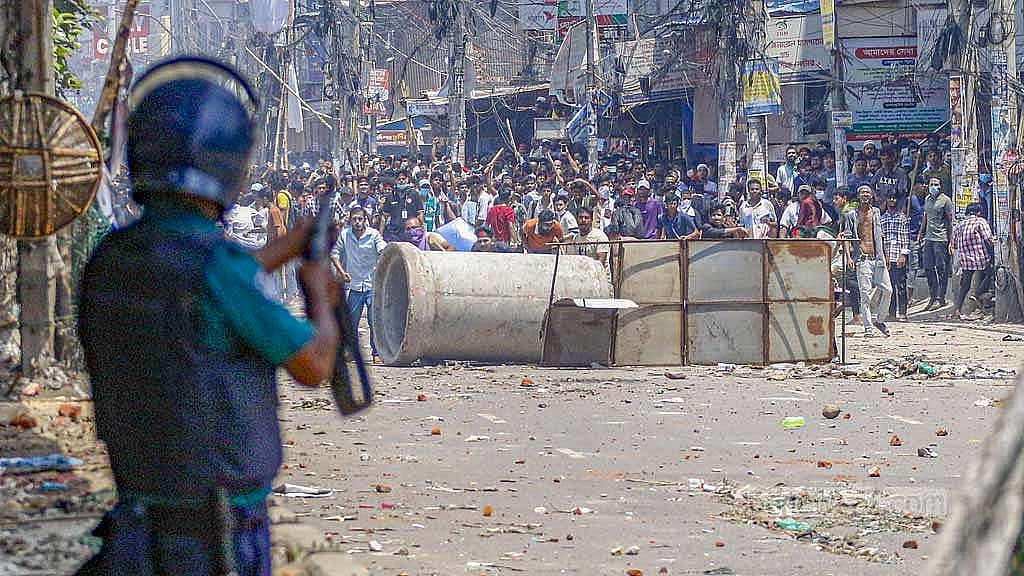
Unlike the school and college students who went home at night, these unfamiliar people continued the clashes into the night.
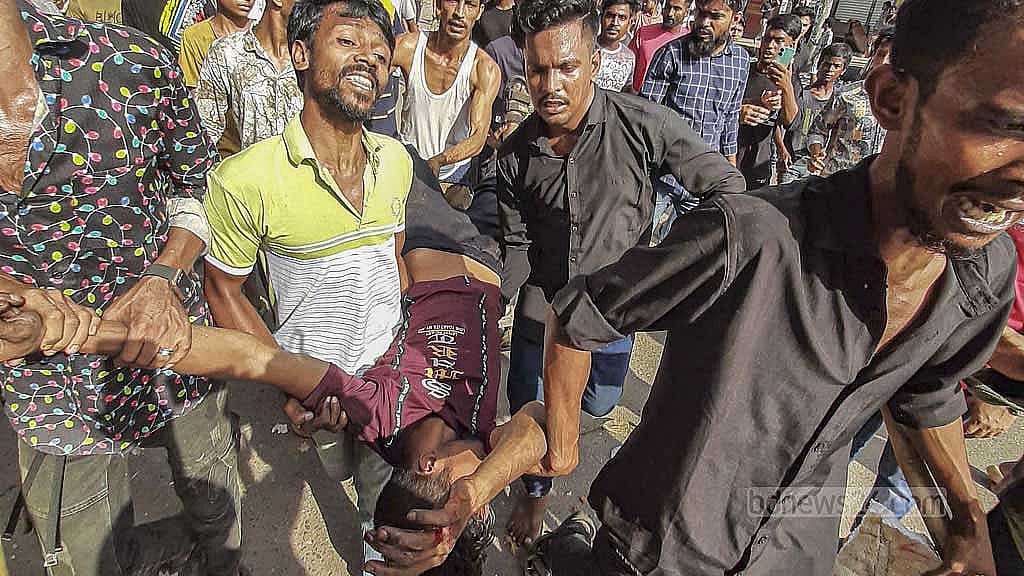
On Jul 19 and 20, at the emergency department of Dhaka Medical College Hospital, most of the injured were identified as low-income individuals, including street hawkers, madrasa students and teachers, autorickshaw drivers, factory workers, rickshaw pullers and shop workers.
School, college or university students were notably fewer among the injured.
Despite the end of the conflict, discussions among locals about the five-day turmoil persist.
Reports from areas like Kutubkhali, Rasulbag, and Matuail Medical indicate varied local perspectives.
A tea stall owner said, “Many people from the area were on the streets; most joined out of impulse. But when the shooting began, people became stubborn and continued to act this way.”
The manager of an auto garage, speaking anonymously, said: “Local street hawkers, food sellers, auto drivers, and madrasa students participated in the clashes.”
“Some unruly teenagers were also involved, likely supplied with sticks and other weapons.”
A police officer from the Wari Division said, “The presence of numerous madrasas in Kadamtali and Jatrabari is always considered in our assessments.”
“Madrasa students participated in the conflict, alongside others who were extremely reckless.”
Journalist Sheikh Abu Taleb, who visited the scene on Jul 18, said: “Students, madrasa students, and some reckless teenagers were all present.”
“They did not retreat even under gunfire and tear gas, expressing intentions to set fire to the Jatrabari Police Station.”
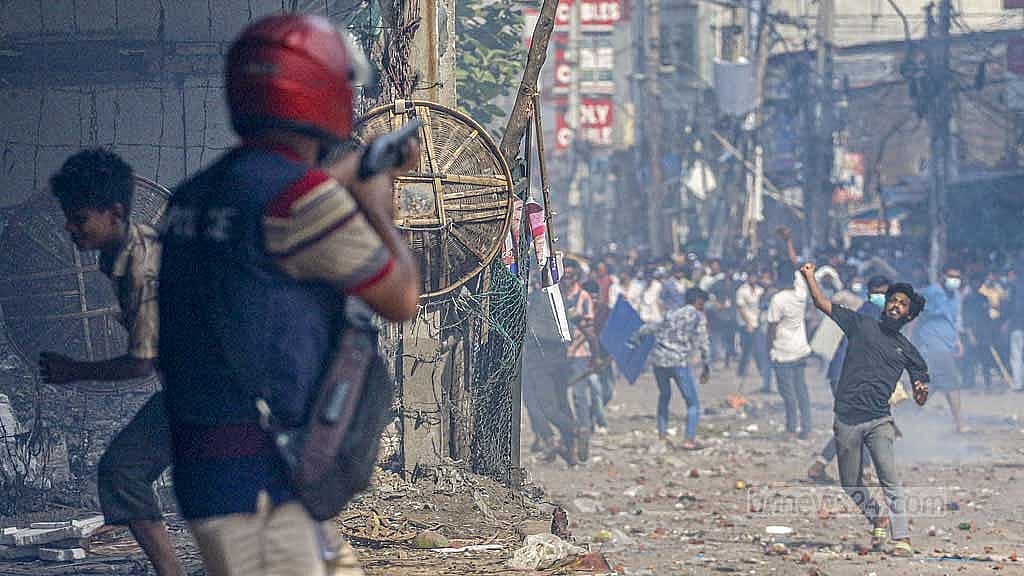
“These teenagers seemed to have some form of backing, which contributed to their recklessness,” he added.
People who witnessed the protest closely said school and college students were involved in the movement from Wednesday to Thursday. They returned home at night.
But, throughout the night, some teenagers and young people continued the clash, treating it as a “festival”.
SUSPICIOUS ROLES OF NEW RESIDENTS
A resident of Hazi Badsha Mia Road in Matuail, who has lived in the area for nearly 40 years, described the violence on Jul 19 as akin to “war”.
He said police opened fire during the clashes.
The resident, speaking on condition of anonymity, said: “Matuail and Rayerbagh were swampy and low-lying areas 15-20 years ago. The area developed around some madrasas and schools.”
“Most residents have recently built new homes, and there is talk that many of them are linked to the Jamaat-e-Islami, though they claim otherwise.”
He continued, “During the violent phase of the protest, tenants in many houses, local business employees, and even some security guards joined the clashes.”
“When police arrived with weapons, most people retreated to their homes, which allowed them to stay out of sight for an extended period.”
“Those who came from outside to engage in violence managed to hide in nearby homes, with landlords reportedly allowing this.”
“A few landlords who tried to resist ultimately had to open their doors under pressure.”
Motahar Ali, another resident, said he could not leave his house during the violence. “If I tried to go outside, I faced danger from either the protesters or police.”
“I saw everything from the window and occasionally from the roof, but the helicopter-borne tear gas and sound grenades made it even more perilous. It felt like living a life in captivity.”
“People from every house were coming out with stones, rods, sticks, and even knives. It seemed like everyone had some form of weapon,” said Motahar.
“One person was shot, and others, shouting for help, urged more people to join the fight against police. It seemed more like a festival than a protest.”
“The number of casualties didn’t seem to matter to anyone. The more violence there was, the more people seemed to be motivated to join the fray, creating a situation where it felt like a war zone and no one had time to stay at home,” he added.
CELEBRATION AFTER MURDER
Students from local schools and colleges in the vicinity of Jatrabari began a blockade of the Dhaka-Chattogram Highway in support of the quota reform movement on Jul 17.
By the afternoon, local residents joined the protesters, and clashes with police began by evening.
Throughout the night, confrontations continued, with rioters setting the flyover’s toll plaza on fire and the unrest spreading into local alleys.
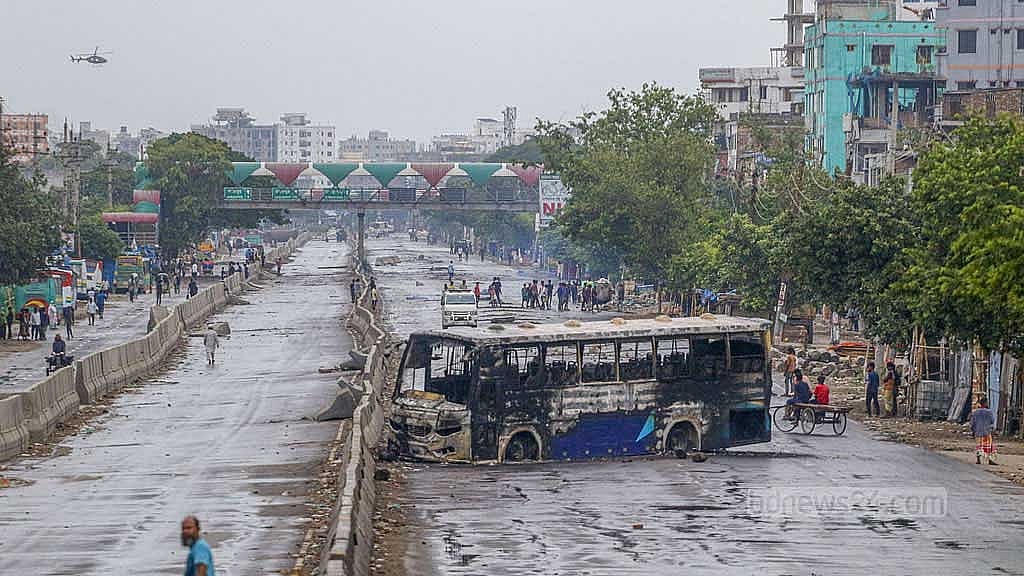
Several people, including a two-year-old child with pellet wounds, were admitted to DMCH that night.
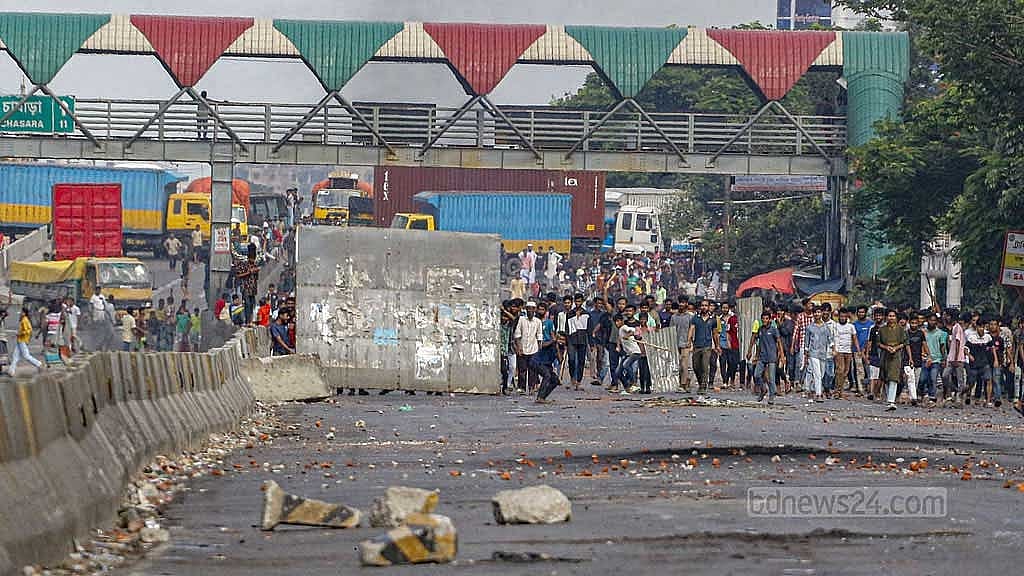
The conflict subsided by late night, but on Jul 18, students resumed their protests with a complete shutdown, obstructing the flyover's ramp with a container lorry.
That day, clashes in Badda and Uttara claimed several lives, with similar violence occurring in Jatrabari.
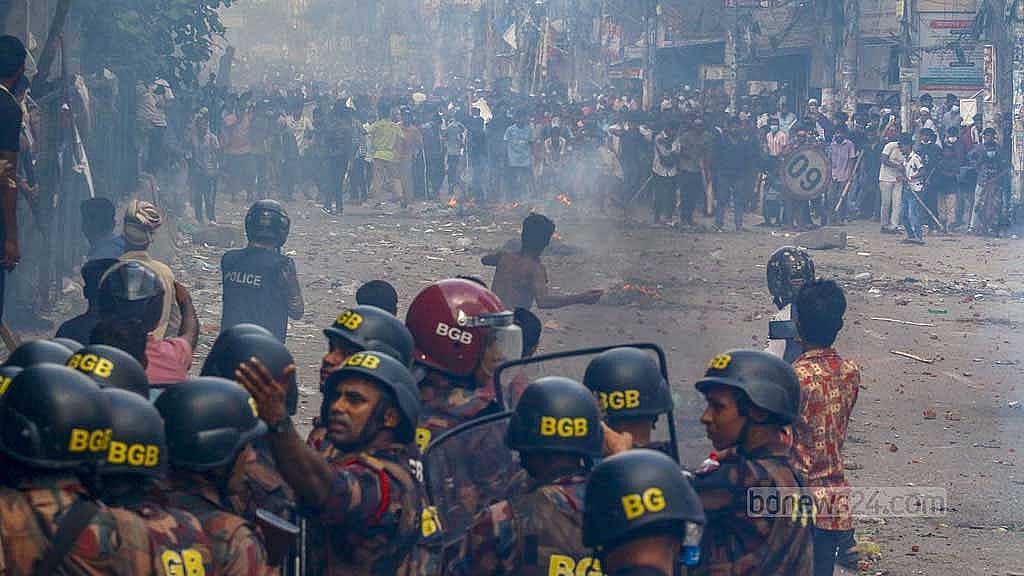
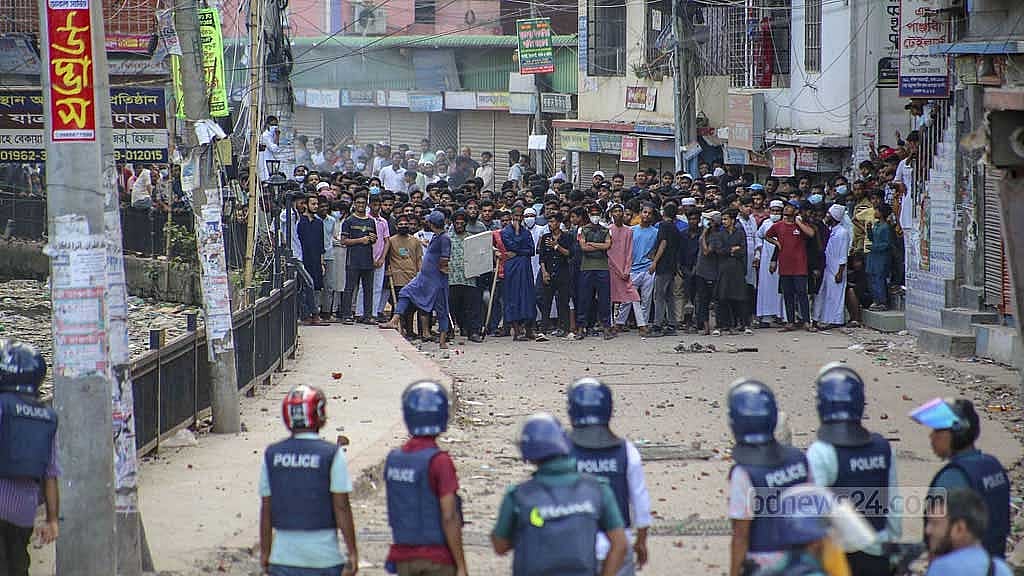
Protesters threw bricks at police, who responded with rubber bullets, pellets, and tear gas, while Border Guard Bangladesh, or BGB, personnel were also deployed in the afternoon.
The rioters advanced towards a fish market, which is about 150-200 feet away from the Jatrabari Police Station, around 3pm on Thursday.
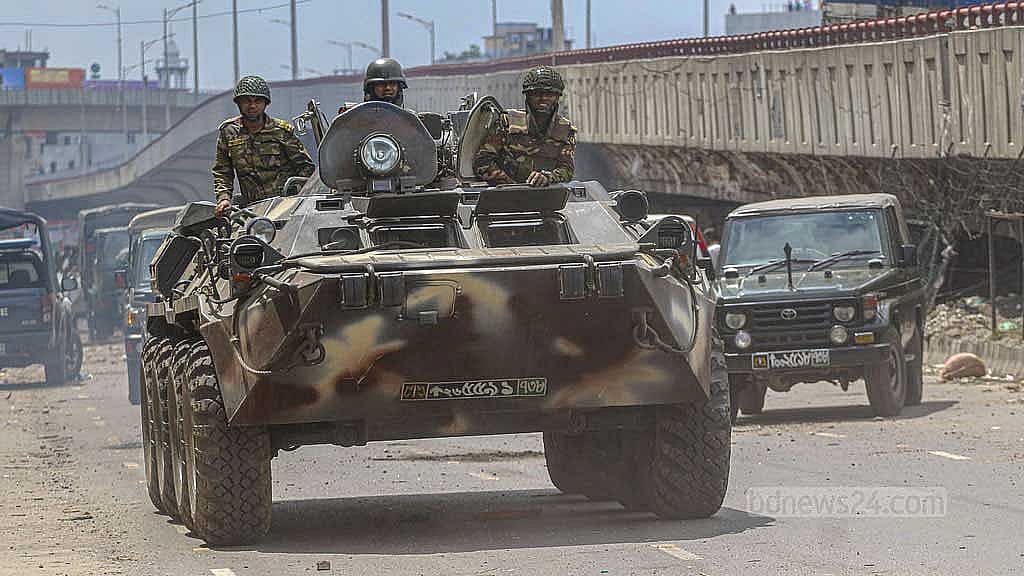
Police retreated to the station and responded with tear gas and gunfire, causing the rioters to fall back temporarily.
The rioters used plastic barrels, small drums, and traffic barricades as shields to advance again but were pushed back by further police action.
Eventually, they retreated into local alleys and streets.
On Jul 20, with the onset of a curfew, police took control from Jatrabari to Shonir Akhra, and the rioters moved towards Demra Road, shifting the conflict there.
That morning, a horrific incident occurred in the Rayerbagh area.
Assistant Sub-Inspector Mohammad Moktadir of the Tourist Police left his house in Matuail to go to the office in Paltan.
After his identification was checked, a group of people beat him to death. They then hanged him by the legs with a rope on the Rayerbagh footbridge for several hours.
Additional Commissioner of Dhaka Metropolitan Police Mohammad Harunor Rashid said they have identified those involved in the incident.
Sporadic clashes continued in Rayerbagh, Matuail, Signboard, Chittagong Road, Demra, and Staff Quarters areas until Jul 21.
Law enforcers, including RAB, BGB, and the army, were stationed in these areas.
Locals reported seeing helicopters flying at low altitudes over the area.
WHAT POLICE SAY
Assistant Sub-Inspector Saiful Islam from Kadamtali Police Station, who was on duty in the area for three consecutive days, shared his experience.
"On Thursday, they occupied the roads all day. In the evening, they threw cocktails from the flyover onto Jatrabari Police Station and later attacked Kadamtali Police Station”
“From that point on, we were instructed to secure the station and the surrounding areas."
Saiful continued, "On Friday (Jul 19), after Juma prayers, about 15,000 to 20,000 people arrived from the Kanchpur side and took over the roads in Shanir Akhra and Rayerbagh.”
“They persistently tried to enter Dhaka."
“They stayed on the road all day and night on Friday and until Saturday afternoon, after which they were forced to leave,” he said.
“While they were on the road, they repeatedly tried to attack police, and in these attacks, our police officers were also killed.”
Regarding the extended duration of the conflict, he said: "The large number of people and the presence of armed individuals made it challenging to control the situation."
MP SAYS ATTACKERS WERE ‘WELL-TRAINED MILITANTS’
Moshiur Rahman Mollah Shajal, a ruling Awami League leader who won a seat in the last parliamentary election from Jatrabari, Matuail, and Rayerbagh (Dhaka-5) as an independent candidate, said: "The individuals who wreaked havoc in Jatrabari and Shanir Akhra are fully trained Jamaat-e-Islami and Shibir operatives – essentially militants."
"Our people did not lack in numbers, but even if there had been more of us, it wouldn't have made a difference, because they are armed militants,” said the Awami League leader.
“We had no weapons. They brought hundreds of armed individuals to confront our thousands."
He continued, "They stood their ground in front of police gunfire and fought. Despite tear gas being fired from helicopters, they did not relent.”
“They are not affiliated with any ordinary political party. We have reported these issues to the central authorities."
He also acknowledged the organisational weaknesses within the Awami League.
"There was indeed a lack of coordination among us. Not all leaders and activists were on the ground," he admitted.
Harunur Rashid Munna, general secretary of Jatrabari Awami League, said: "After the election, there was a division here because an independent MP was elected.”
“If you inquire, you can find out who was with him."
He continued, "Our Awami League members were on the field day and night. However, those who carried out the attacks and violence were trained.”
“It was not possible to counter them with mere manpower; armed resistance was needed, which we were unable to provide. It is difficult to counter trained operatives."
[Writing in English by Fariha Bristy; editing by Osham-ul-Sufian Talukder]