Home
+
Published : 27 Nov 2025, 05:04 PM
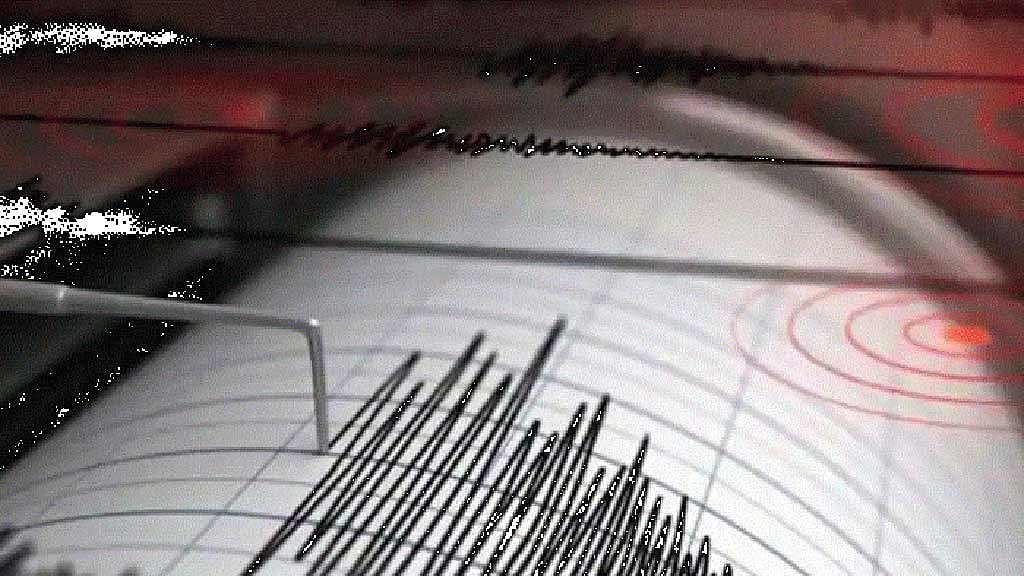
Bangladesh has been shaken by another tremor in the span of a week, even before the panic from four quakes in two days had fully subsided.
Rubaiyat Kabir, an official at the Seismic Monitoring Centre of the Bangladesh Meteorological Department (BMD), said the quake struck at 4:15pm on Thursday.
He told bdnews24.com that its epicentre was in Ghorashal, Narsingdi, 28km from Dhaka. It was a mild earthquake, measuring 3.6 on the Richter scale.
Earlier the same day, the European Mediterranean Seismological Centre (EMSC) reported that two earthquakes had hit Bangladesh around 3:30am.
According to the agency, a magnitude-4 tremor occurred at 3:29:55am, with its epicentre in the Bay of Bengal, 150km from Cox’s Bazar. One minute later, at 3:30:49am, another quake struck 24km north of Sylhet, measuring 3.4 on the Richter scale.
On the morning of Nov 21, Bangladesh was struck by one of the deadliest earthquakes in decades. At least 10 people were killed in three districts and more than 600 others were injured. That 5.7-magnitude quake had its epicentre in Madhabdi, Narsingdi, just 13km from Dhaka, and its hypocentre lay 10km beneath the surface.
The next morning, a 3.3-magnitude quake shook Palash in Narsingdi. Before residents recovered from that jolt, two more tremors hit the same evening within seconds of each other -- one centred in Dhaka’s Badda and the other again in Narsingdi.
After repeated earthquakes, experts have urged the government to swiftly determine the necessary emergency measures.
On Friday, BUET civil engineering Prof Mehedi Ahmed Ansary warned the authorities that “today’s earthquake can be termed a foreshock. Before a major earthquake, smaller tremors like this occur”.
Geoscientist Prof Syed Humayun Akhter believes Bangladesh faces the threat of a major earthquake. He said the danger had reached an alarming level due to a lack of public awareness and insufficient government planning and preparedness.
In his view, earthquakes cannot be stopped, prevented or predicted, but their impact can be reduced if the right decisions are taken.
“The bottom line is that we must build our capability, and adopt short-term, medium-term and long-term plans for earthquake resistance and disaster management.”
Amid mounting public anxiety, Chief Advisor Muhammad Yunus convened an emergency meeting on Monday with experts and relevant officials. The meeting decided to form a taskforce.