Home
+
Published : 12 Jun 2026, 08:35 PM
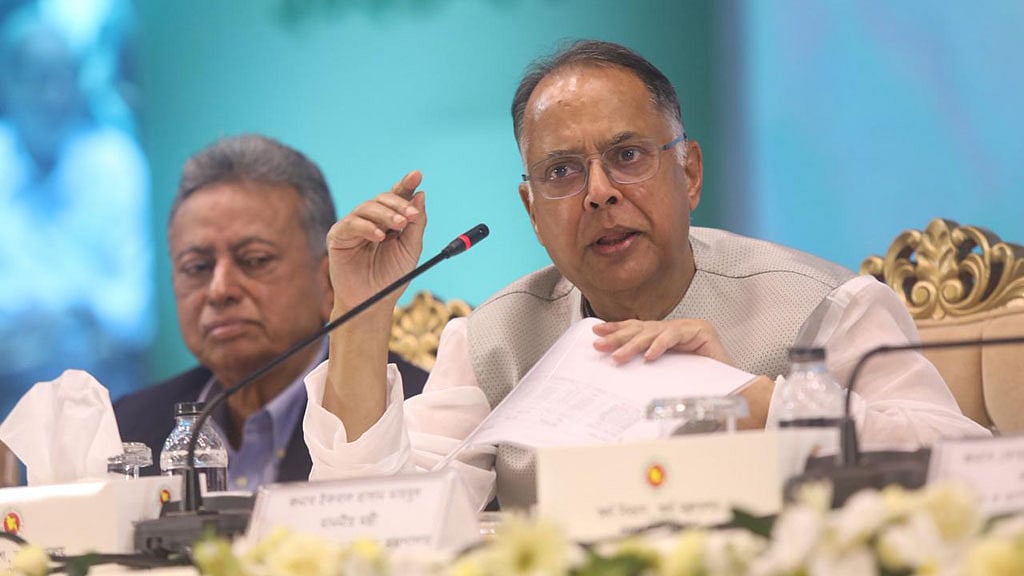
The Minister of Power, Energy and Mineral Resources in Bangladesh Iqbal Hassan Mahmood Tuku says the government is considering legal action over the arrears accumulated in power plants due to capacity charge agreements made during the Awami League government.
The minister outlined the plan at a post-budget media briefing at the Osmani Memorial Auditorium in Dhaka on Friday. He did not specify what action would be taken or against whom.
Tuku said, “The possibility of taking legal action on the capacity charge arrears is being considered.
“The law ministry’s opinion has been sought on this issue. If a favourable opinion is received, necessary action will be taken.”
He noted that the interests of investors have taken precedence in the agreements made during the Awami League government in the power sector, adding that these agreements would lead to major “financial and legal complications”.
The minister said, “The capacity charge system was introduced in the country's power sector so that private investors could easily get bank loans.
“The previous agreements were made by that government to steal, and the agreements were made in favour of all investors, not the government.”
Tuku claimed that he started working on capacity charges right after taking office as a minister.
“I discussed it with Chinese investors. They said that if the capacity charge is suddenly stopped, the banks that finance them will suffer, and it will not be possible to operate many power plants.”
In 2009, Bangladesh’s power plants had a production capacity of less than 6,000MW.
The Awami League-led government, which came to power that year, enacted the Indemnity Act to encourage the establishment of rental-based power plants to increase power generation.
At that time, more than 100 power plants were set up without tenders, most of which were private investments. By introducing capacity charges into power purchase agreements, investors were guaranteed a maximum return of up to 15 percent.
Consequently, they continued to receive their payments regardless of whether the plants were operating.
Many power plants remained idle in both winter and summer due to low demand, yet payments were still required after installation.
During global energy crises, such as the Russia-Ukraine war, plants stayed inactive because gas and oil imports fell short of demand.
Similarly, amid the COVID-19 pandemic, prolonged economic stagnation prevented many plants from operating at full capacity for months.
The situation grew more complex as the country’s foreign exchange reserves declined rapidly, reducing the ability to purchase international energy.
Experts say reserves have fallen while covering the costs of money laundering and liquefied natural gas (LNG) imports, with the government having to pay most capacity charges in US dollars.
According to official parliamentary records since 2009, Bangladesh has paid approximately Tk 1 trillion in capacity charges over 14 years, with significant amounts still outstanding.
However, the energy minister believes that forcibly ending the capacity charge would create a power supply crisis.
At the briefing, he said: “The power stations have not been repaired or maintained. All the power has been purchased from the private sector, hence the power sector has accumulated arrears of about Tk 560 billion.
“The Rural Electrification Board had decided to purchase 500,000 digital metres. Of these, 250,000 metres were brought to Bangladesh, but only 65 metres have been put into operation in three years. The rest are lying in warehouses.
“After taking the initiative to stop the supply of the remaining metres, it was found that the supplier had already been ordered to ship them.
“If we cancel it now, he will win if he goes to court. Money has been siphoned out of the country in this manner.”
The minister also criticised the DPDC’s underground cable project, saying: “As part of the development plan until 2040, 65 substations were supposed to be built.
“Only 38 substations were completed before the project expired.”