Home
+

Published : 01 Aug 2023, 03:22 AM
Rising commodity prices have made life difficult for Imran Shikdar who gets around Tk 20,000 every month for his quality control job at a readymade garment factory in Gazipur. Barely enough to get by.
But Imran has a new nemesis: extreme heat.
The company has done “everything” to reduce the heat inside the factory, such as installing ceiling fans and exhaust fans, and the only thing left is buying air-conditioners.
But that will be an expensive option for cooling a floor where 150 people work, he believes.
“The heat never relents. It feels like a wave of heat coming from outside, and then you have the machines emitting heat,” Imran explains.
Workers in a crowded factory always feel the heat, especially in summer, but the working conditions in Bangladesh are worsening of late.
Extreme heat is crushing productivity of the workers and a drop in gross domestic product (GDP) leaving a negative impact on the national economy. This became explicit in a recent research by the London School of Economics.
The paper titled ‘Adapting to the impacts of extreme heat on Bangladesh’s labour force’ published in July said that extreme heat has impacted the labourers in the readymade garments and agriculture sectors.
At least 37 percent of the workforce in Bangladesh were engaged in the agriculture sector and 22 percent in the industrial sector in 2021, researchers said, citing the World Bank. Mostly, those who work in an open place, face the risk of heat stress.
The labourers working in the factories having no air-conditioners or any other means to protect them from heat are confronting the negative impact of the increasing temperature.
The readymade garment sector in Bangladesh has more than 4 million workers, with 80 percent of them women. In July, when the workload is quite heavy, the temperature inside the factories goes up to 38 degrees Celsius, posing a threat to the workers’ health.
CLIMATE CHANGE
Experts say the effects of climate change and global warming are evident in vulnerable Bangladesh, with more storms, floods, lightning strikes, rising sea and salinity, and other natural calamities hitting the country.
But recently, it is evident that the heat itself is posing a threat to health, productivity and economy.
Usually, the monsoon begins in June every year but this year the monsoon arrived in the third week of June. After rains for a few days, vast swathes of Bangladesh is experiencing a heatwave now.
Bangladesh experienced the longest heatwave in June 2023 since independence in 1971. The mercury crossed 40 degrees Celsius in most parts of the country.

No specific research has been done as yet to confirm that climate change is the key factor behind the change of weather in Bangladesh. But scientists agree that climate change has caused the extreme weather phenomenon globally.
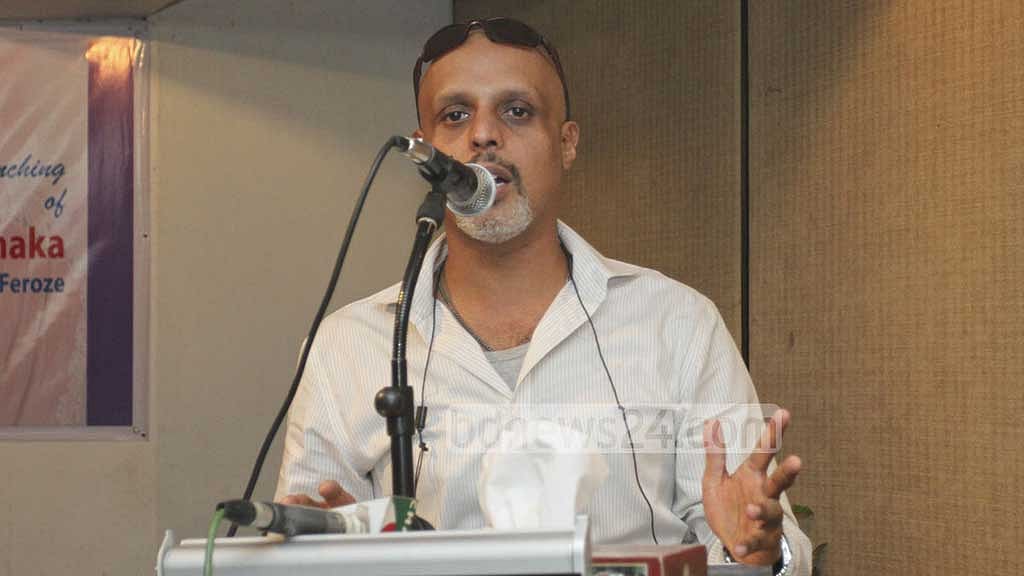
“El-Nino is quite active this year. When El-Nino is active it pushes up the global temperature. Not only us [in Bangladesh] but everyone around the world is experiencing the change,” said meteorologist Dr Muhammad Abul Kalam Mallick.
“Bangladesh and its neighbouring countries like Myanmar, Thailand, Pakistan, and a large part of India turned into a heat zone all at the same time in April-May this year,”
He believes globally there has been a change in temperature trend from the 1970s but this year the change is more significant.
The rainfall in July was 59 percent lower than the average in the past 23 years. “This change isn’t normal.”
The highest temperature of 38.4 degrees Celsius on Monday was recorded in Chuadanga. It was 37.1 degrees Celsius in Dhaka.
Ashim Shikari, a farmer in Patuakhali’s Kalapara, is suffering immensely from the heat as he is preparing a paddy seed bed.
“Currently, there’s no heavy rainfall despite it being the season to sow the seedlings. The heat is way too much. We can’t work during the daytime because of the heat,” he said.
Hence, Ashim and other farmers are preparing the farming land from dawn to 10am and then again from 4pm to 11pm.
“My farming land would have been prepared by this time if the weather wasn’t hot.”
Rashid Mia, a sexagenarian rickshaw-puller at Moghbazar in Dhaka who has been pedalling rickshaw for 30 years, said: “Now my body doesn’t permit anymore [to pedal a rickshaw], especially because of the heat.”
"But I have to do it as I need money to marry off my youngest daughter,” said the father of four daughters.
HOW HEAT IMPACTS ECONOMY
The research conducted by the London School of Economics said that in Bangladesh there is projected to be a decline in labour supply and labour productivity in sectors highly exposed to heat, where work is conducted outside in the sun. Combining these measures, declines are projected of 11.3 percentage-points under a 1.5 degrees Celsius warming scenario around the year 2040.
Similarly, the decline will be of 20.9 percentage-points under 2 degrees Celsius of warming by around 2060, and 46.2 percentage-points under 3 degrees Celsius of warming by around 2080.
Even the sectors less exposed to heat, in which work is conducted inside or outside but in the shade, are facing risks.

For those sectors, labour supply and productivity combined are projected to decrease by 9 percentage-points under a 1.5 degrees Celsius warming scenario by 2040, 13.3 percentage-points under 2 degrees Celsius by 2060, and 25.1 percentage-points under 3 degrees Celsius by 2080, the researchers believe.
These reductions will have negative effects both on Bangladesh’s national output and on individual incomes, which will make it more difficult for Bangladesh to reduce poverty and attain the Sustainable Development Goals or SDGs.
It is estimated that the impact of a 3 degrees Celsius global temperature rise could reduce GDP in Bangladesh by 1.7 percent per year by 2037 and by 7.6 percent per year in the long term if there is no climate adaptation.
ADAPTATION REQUIRED
The time has come for the people in Bangladesh to adapt to the increasing temperature, said meteorologist Dr Mallick.
Workers of the marginal groups feel the heat more than others, he said. "When the air is humid or the sky is clear, those working in the open spaces or engaged in physical labour feel the hot temperature more than others. This is because they are exposed to direct sunlight.”
He said the garment factory workers feel the heat more as they work in a big group and with too many machines around. The temperature is always high inside the factories, he said.
“Look at the poultry farms, they need to maintain a certain temperature. But when the temperature crosses a threshold, production stops. Excessive heat is bad for animals, the agriculture sector and every other sector.”
HEALTH RISKS
The research paper said that increased heat stress is already having a negative impact on workers’ health. This may cause heat stroke, loss of an organ or even death. Also, heat stress-related problems include slower productivity, multiple recess times, reduced mental capacity and loss of physical strength.
“Physical labourers like rickshaw pullers, and construction workers are exposed to the risk of heat stress more than others. This is because they don’t even have a fan over their head,” said Dr Mushtuq Husain, an advisor to the government’s Institute of Epidemiology, Disease Control and Research.
"They suffer from dehydration in severe heat. They can also suffer from vertigo, stomach ailments, troubled blood circulation, risk of heart attack, and hypertension.”
Global warming has been causing a change in the traditional six-season weather in the subcontinent, said public health expert Dr Lelin Chowdhury.
“Sound health has a deep connection with productivity in humans. When there’s excessive heat, people sweat and lose salt and other minerals. Hence, they become weak. Besides this, the human mind is related to physical health.”

“Weak health impacts the mind and creates an imbalance in an individual’s mood. They become irritated and grumpy. This affects their social health and their work life. Therefore, it’s not only the physical labourers, but also everyone is at risk.”
Dr Chowdhury said shades and ceiling fans can be used for those who do heavy work sitting in one place. “We can plant such trees that grow fast and offer shade for the workers.”
The authorities can plant more grass and spray water on the streets to cool down the environment, he said. “We can arrange safe drinking water at different points so that rickshaw pullers can drink and don’t get dehydrated. The government should take these measures.”
Dr Chowdhury believes that destroying forests must stop now to combat the current crisis.
“As we go on destroying the forests, another trouble emerges. Those viruses and bacteria earlier never found in humans now began to infect them.”
HOW ADAPTATION CAN BE DONE
In Dhaka, the population density increased by 76.59 percent between 2001 and 2017, which was found to have significantly increased the temperature in the city.
The average temperature is 3 degrees Celsius higher in Dhaka city compared with its rural surrounding areas, the research report said.
Migration in Bangladesh has followed a trend from rural to urban areas in recent years. The ensuing rapid urbanisation can exacerbate the negative impacts of climate change, as it may contribute to the heat island effect of large cities and put more people at risk of heat stress, researchers warned.
Better data on how heat is harming worker health and reducing labour supply and labour productivity can support stronger enforcement, along with regulations that protect the health of workers, the research said.
Action on climate change, including making reforms towards a low carbon economy, is also likely to affect the labour market by causing significant reallocation of workers. This will require just transition policies to be put in place, to avoid rising unemployment, poverty and inequality.
Measures to ensure that the transition to a low-carbon economy is just may include creating new job opportunities, retraining workers, and ensuring the protection of the labour force, including migrant workers and informal workers.
While British researchers are warning against the impact of climate change in Bangladesh, what are the local policymakers and factory owners thinking?
bdnews24.com tried to contact State Minister for Labour Begum Mannujan Sufian and Labour Secretary Md Ehsane Elahi several times in the last week but they did not pick up the phone.
Bangladesh has gone through a big transformation already, said Barrister Shehrin Salam Oishee, a director of Bangladesh Garments Manufacturers and Exporters Association.
“Right now we have 198 US Green Building Council-certified Green garment factories in Bangladesh, with over 500 factories in the pipeline for certification, all of which are environment friendly focusing on ensuring the health and well-being of workers.”
“These state-of-the-art factories are equipped with low-volume high-speed fans, thermal control, and daylight savings technology etc. Also, there are lots of open space and trees planted inside of the factory which also gives comfort to the workers,” she said.
Apart from that, all of the factories in Bangladesh are now checked for fire, structural and electrical safety which also covers the smooth working environment, according to her.
The factories are now equipped with canteen and dining space, which allows the workers to have their lunch and tiffin inside the workplace instead of going back to their home for having lunch in the scorching heat, the BGMEA director said.
Ha-Meem Group Managing Director AK Azad said all of their factories had cooling systems and enough ventilation systems so that the workers feel comfortable.
“Even then there could be some trouble which we can’t deny,” he said.
[Writing in English by Sabrina Karim Murshed and Osham-ul-Sufian Talukder; editing by Biswadip Das]