Published : 06 Mar 2026, 07:37 AM
Updated : 28 Aug 2026, 01:32 AM


The Pulse:
Regional spillover: The conflict expanded beyond Iranian borders as Tehran launched drone strikes on a US base in Erbil, Iraq, and conducted a first-ever assault on Azerbaijan. The strikes on Azerbaijan damaged an airport terminal in Nakhchivan, heightening fears of a broader regional rift as Baku strengthens security ties with Israel.
Hormuz standoff paralyses trade: The closure of the Strait of Hormuz has begun to cripple Bangladesh’s energy security. Reports indicate that oil shipments are stalled, triggering panic buying at Dhaka filling stations and forcing the government to issue strict fuel-saving directives.
Aviation in turmoil: Over 200 international flights have been cancelled at Dhaka’s Hazrat Shahjalal International Airport over the last six days. In Chattogram, nearly 50 flights were grounded on Thursday alone, leaving thousands of migrant workers stranded as routes to Dubai, Abu Dhabi, and Doha remain suspended.
Lebanese toll mounts: Israeli airstrikes in Lebanon intensified, with the death toll reaching 77 in just four days. Recent strikes targeted southern villages and Beirut’s suburbs, prompting retaliatory missile fire from Hezbollah against Israeli troop movements near the Manara site.
Succession and defiance: Despite the vacuum left by Ali Khamenei’s death, Iran’s military remains active, reportedly seeking advanced anti-ship missiles from China. Domestically, Tehran is preparing for a massive funeral ceremony for Khamenei, even as the streets of the capital remain “eerily empty” under the threat of further strikes.
Diplomatic deadlock: While Tehran signalled a willingness to offer nuclear concessions in exchange for “peaceful enrichment” recognition, the Trump administration has largely rejected overtures from the emerging Iranian leadership, maintaining a high-intensity military posture.
Mass exodus at the borders: A humanitarian crisis is unfolding as tens of thousands of Iranian civilians flee the intensified aerial campaign. On Thursday, Turkish authorities reported a "massive surge" at the Van border crossing, while Pakistan’s Balochistan province has seen thousands of families arriving in makeshift camps. Human rights agencies warn that with the internet blackout and fuel shortages, these fleeing populations are at extreme risk, creating a mounting displacement challenge for Iran’s neighbours.
US President Donald Trump claimed the right to join Iran in deciding its next leader on Thursday as the war escalated further, with US and Israeli jets hitting areas across the country and Gulf cities coming under renewed bombardment.
In an interview with Reuters, Trump said Mojtaba Khamenei, the son of the late Supreme Leader Ali Khamenei - a hardliner who has been considered a favourite to succeed his father - was an unlikely choice.
"We want to be involved in the process of choosing the person who is going to lead Iran into the future," he said by telephone.
"We don't have to go back every five years and do this again and again ... Somebody that's going to be great for the people, great for the country."
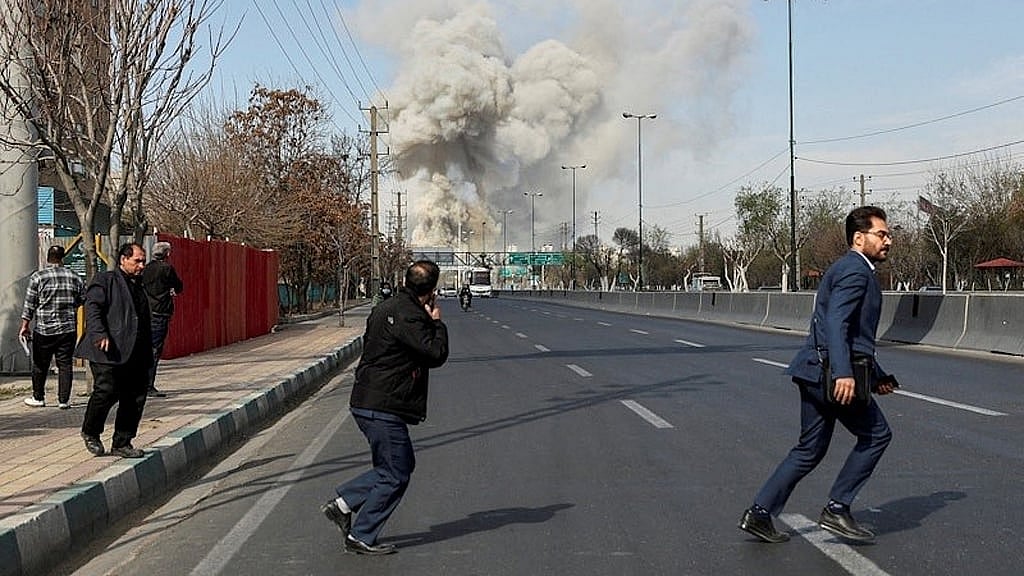
The comments came as the Israeli military warned residents to evacuate areas including eastern Tehran, while Iranian media reported blasts were heard in various parts of the capital.
"Today is worse than yesterday. They are striking northern Tehran. We have nowhere to go. It is like a war zone. Help us," said Mohammadreza, 36, by phone from Tehran, with a shaky voice as explosions rang out from what Israel described as its latest wave of strikes on Iranian government targets.
WARNING SIRENS BLARE IN MULTIPLE NATIONS
As Iran responded, warning sirens sounded in Israel, Dubai and Abu Dhabi and fire crews in Bahrain extinguished a blaze at a refinery following a missile strike.
With the war now in its sixth day, Azerbaijan became the latest country drawn in, as it accused Iran of firing drones at its territory and ordered its southern airspace closed for 12 hours. Iran, which has a significant Azeri minority, denied it had targeted its neighbour but the episode underlined how rapidly the war has spread since the surprise US and Israeli airstrikes that killed Khamenei on Saturday.
Along with the gleaming cities of the Gulf, in easy range of Iranian drones and missiles, Cyprus and Turkey have both been targeted, European nations have pledged to deploy ships to the eastern Mediterranean and hostilities have been seen as far afield as the coastal waters off Sri Lanka, where a US submarine sank an Iranian warship on Tuesday, killing 80 crew members and drawing Iranian vows of revenge.
In Iran, at least 1,230 people have been killed, according to the Iranian Red Crescent Society, including 175 schoolgirls and staff killed at a primary school in Minab in the country's south on the first day of the war. Another 77 have been killed in Lebanon, its Health Ministry says. Thousands fled southern Beirut on Thursday after Israel warned residents to leave.
NETANYAHU SAYS 'MUCH WORK STILL LIES AHEAD'
Although some international financial markets recovered from falls earlier in the week, the economic impact of the campaign intensified, with countries around the world cut off from a fifth of global supplies of oil and liquefied natural gas and air transport still facing chaos and global logistics increasingly snarled.
On Thursday, Iran's Revolutionary Guards said they had hit a US tanker in the northern part of the Gulf and the vessel was on fire, the latest of numerous reports of such attacks.
Visiting an air force base in the south of the country, Israeli Prime Minister Benjamin Netanyahu said Israel's achievements so far in Iran had been "great" but that "much work still lies ahead."
Iran's foreign minister said Washington would "bitterly regret" the precedent it had set by sinking a ship in international waters without warning. A commander of the Revolutionary Guards, General Kioumars Heydari, told state TV: "We have decided to fight Americans wherever they are."
The body of Supreme Leader Ayatollah Ali Khamenei, killed in the first hours of the US-Israeli air campaign in the first assassination of a country's top ruler by an airstrike, had been due to lie in state in a Tehran prayer hall from Wednesday evening to launch three days of mourning.
But the memorial, expected to draw many thousands of mourners to the streets, was abruptly and indefinitely postponed shortly before it was due to begin.
IRANIAN TV HACKED
Two sources familiar with Israel's battle plans said that having killed many Iranian leaders during nearly a week of strikes, Israel was now planning to enter a second phase when it would target underground bunkers where Iran stores its missiles.
Israel has said its aim is to overthrow Iran's clerical rulers. Washington says its goal is to prevent Tehran from being able to project force beyond its borders, but it has also called on Iranians to rise up and seize power.
State television was hacked on Thursday, airing a video of Reza Pahlavi, the exiled son of Iran's last shah who has emerged as a significant opposition figure.
"A heavy burden of destiny rests upon the shoulders of us all. And we, together, will walk this path until final victory. Long live Iran," he said.
Air raid sirens in Israel sent Israelis to shelters. Military spokesman Effie Defrin said there had been a decrease in the number of daily missile launches from Iran, although "the threat still exists".
"The more we intensify the damage and eliminate the launchers, the more the threat will diminish over time," he said.