Published : 02 May 2026, 07:13 AM
Updated : 28 Aug 2026, 01:34 AM


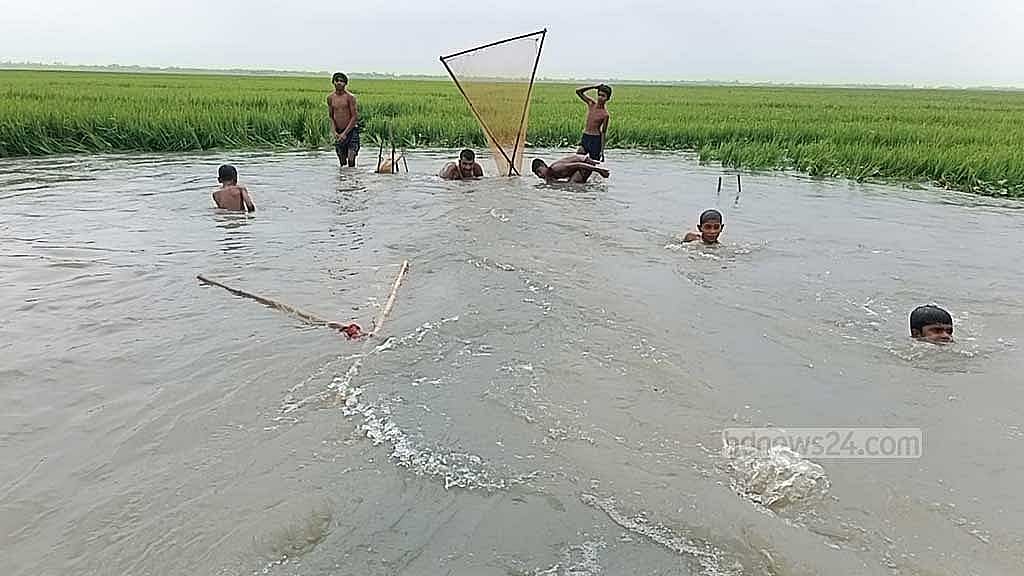
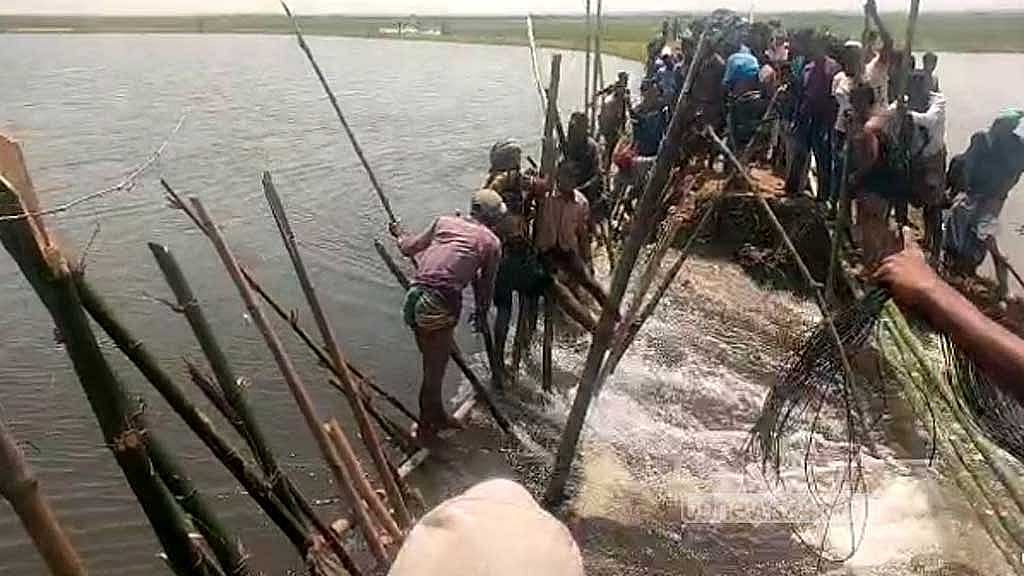
Every year, in districts with Haor wetlands, the dams and embankments are breached by upstream flow, submerging the only crop of the year - Boro paddy. This year, there haven’t been widespread reports of dams collapsing, but farmers are still blaming the structures for their crop losses.
The Water Development Board (WDB), the agency responsible for the dams, agrees with the criticism. An official of this government agency said that one of the reasons for waterlogging in the Haor is “unplanned development”.
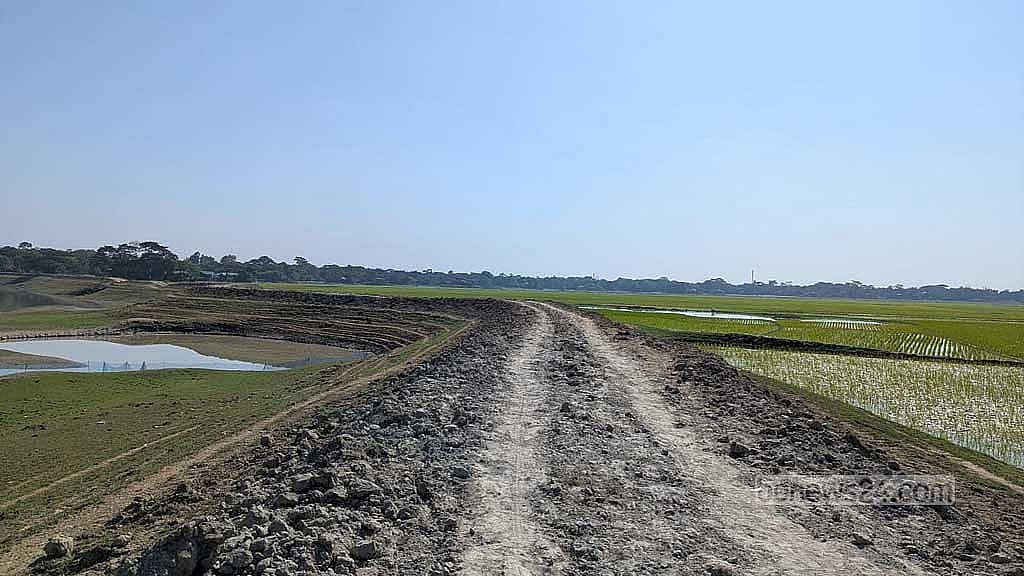
Farmers and Haor Movement leaders say that over the last decade, dams have been constructed recklessly in the wetlands in the name of crop protection, but largely motivated by politics and nepotism. Due to these dams, the drainage paths for rainwater from the Haor have been blocked.
The high land on the banks of the Haor, which is submerged during the monsoon, is called “jungles”. During the dry season, the forest is cut down, and the soil is used to make dams.
During the monsoon, that soil is washed away and carried into the canals and rivers adjacent to the Haor. This raises the riverbeds and reduces the water capacity of these rivers. As a result, when the water from upstream flows down, there is nowhere for it to go. Instead, any stretch of continuous rain causes waterlogging and drowns farmers' dreams.
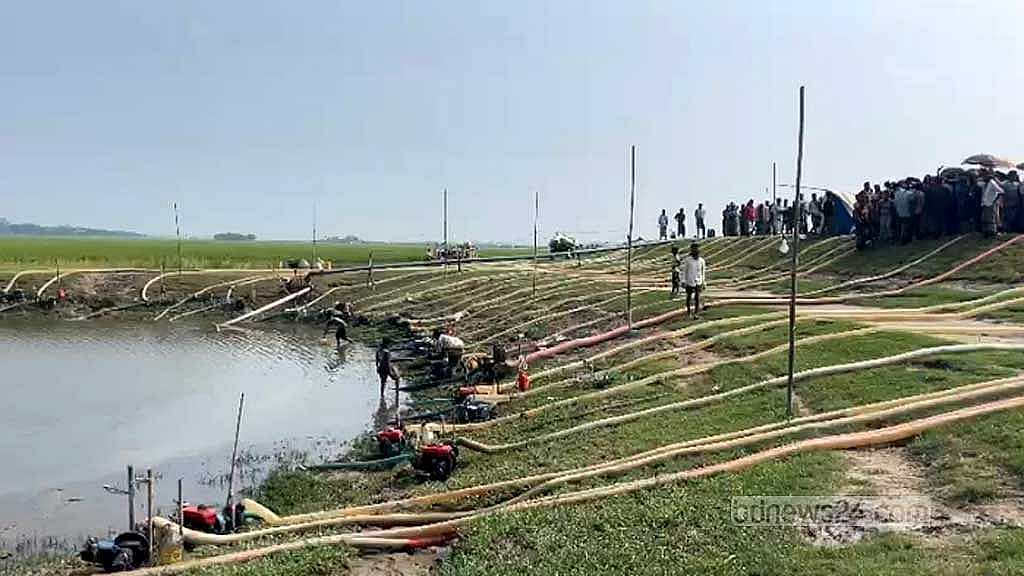
Initially, farmers in many Haors tried to remove the water by installing hundreds of diesel-powered pumps. But when the rains are heavy, and the Haors are flooded, farmers and the WDB can do very little. As a result, the paddy cannot be saved. Many in the Haor areas have begun describing the situation as a “new disaster”.
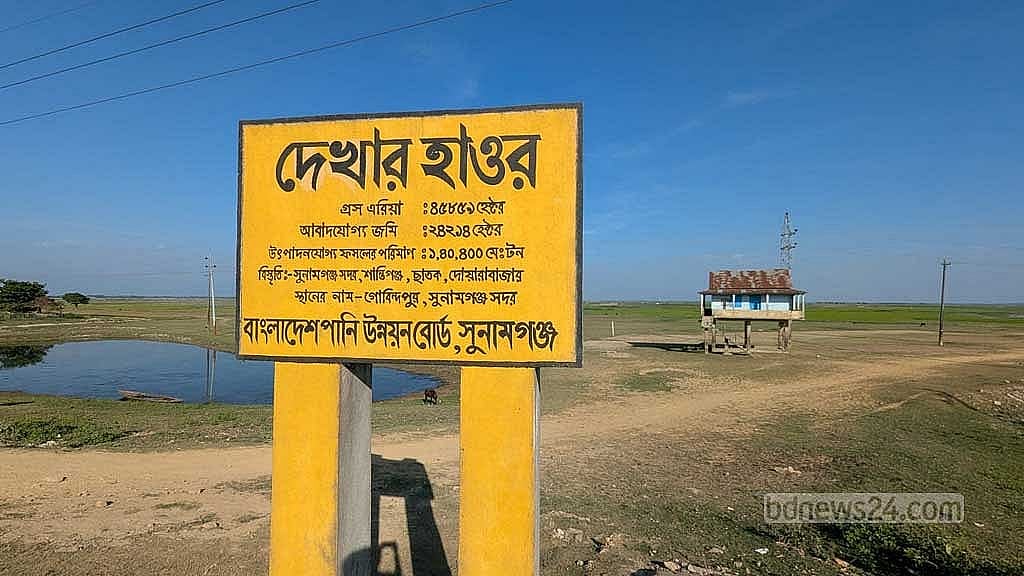
Approached for comment, experienced farmers in the Haor region said that such waterlogging due to rainwater occurs every five, 10, 15, or 20 years. The people of the Haor call this “Kanchira” (“raw year” or year of rain and clouds). The people of the Haor call a good year a “Sonar Baishakh” (a Golden Baishakh). This time, the Haor is facing a “Kanchira” year.
This year, it has been raining in the Haor wetlands since the Bengali month of Falgun (which began on Feb 20). The rains inundated and destroyed the unripe crops in the lowlands in the second week of March. At the time, farmers also irrigated various Haors by installing pumps. Sunamganj-1 constituency MP Kamruzzaman Kamrul also provided cash for irrigation.
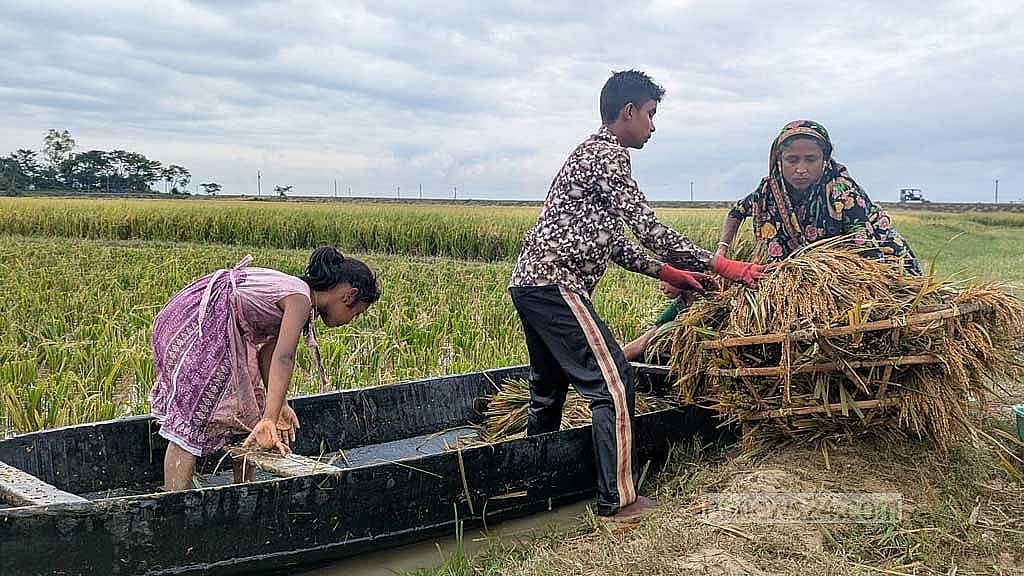
Farmers installed hundreds of pumps to drain water in Halir Haor and Pagna Haor in Jamalganj. Farmers also harvested some crops.
But after Apr 25, it began to rain continuously. It was particularly heavy on Apr 27, when the crops of all Haors were submerged. That water is still flooding the crops.
How the Danger has Changed
Previously, when dams broke and submerged paddy fields, the farmers put the blame squarely on the WDB. They alleged that the agency had engaged in corruption in dam construction, leading to substandard embankments that regularly breached.
After substantial crop losses in 2017 and in response to farmers’ demands, changes were made to dam construction and repair methods.
From the following year, thousands of crop protection dams were built in the Haor through the Project Implementation Committee, or PIC, in coordination with farmers, the WDB, public representatives and the administration. There were allegations that the dams were built indiscriminately, destroying the wildlife and environment of the Haor wetlands.
The amount of soil excavated in the area has increased every year, in line with the number of dams. Along with these unplanned constructions, massive amounts of soil from these dams are flowing into Haor, rivers, canals and water bodies every year.
According to statistics from the Sunamganj branch of the WDB, nearly Tk 1.50 billion has been allocated to the district under 718 projects in the current 2025-2026 fiscal year. A total of 3.12 million cubic metres of soil have been excavated in these projects.
In the previous fiscal year (2024-2025), 3.04 million cubic metres of soil were excavated for 684 projects that cost Tk 1.45 billion.
In the 2023-2024 fiscal year, Tk 1.03 billion was allocated under 734 projects for the construction of about 600 metres of dams. Some 3.2 million cubic metres of soil were used in those projects.
Over the three-year period, crop protection dams were constructed or renovated at this Haor. Nearly 9.37 million cubic metres of soil were used.
The Haor's jungle, highland, forests, trees and biodiversity have been devastated as a result of these excavations. On the other hand, the water reservoirs of the Haor, the wetlands, and the rivers and canals adjacent to the Haor have filled up with that soil. Instead of serving as defenders of crops, the dams have now turned into their own menaces.
Farmers have other complaints about the WDB’s accounting of this soil, too. They say that although massive undertakings were described on paper to obtain massive budget allocations, much less was actually done.
Ripchan Habib, a farmer of Matian Haor in the Patabuka village of Tahirpur, said: “Every year, there’s almost a competition to build unnecessary dams. The soil for this dam is provided by cutting down forests. That soil again falls into the Haor during the monsoon. This is filling up the Haor. Many water bodies and canals in our area have been filled with the soil of the Haor dams.”
Sajal Kanti Sarkar, a researcher from Madhyanagar, works on the wildlife and ecosystem of the Haor. He said, “The ‘Kanchira year’ returns to the Haor every 5-10 years. Now, waterlogging is becoming apparent due to social media. But in the past, too, ‘dobra’ or ‘tabla’ (waterlogging) has ruined the crops of the Haor.”
The tonnes of soil from the massive dam projects are ruining the environment and biodiversity of the Haor, he said.
Policy Weaknesses and Implementation Gaps
WDB data shows that there has been more rainfall than usual this season.
Records from Apr 27-30, 2025 show that the water of the main Surma river of the district was flowing at a height of 3.59cm, 3.46cm, 3.37cm and 3.25cm at the Sunamganj point over those days.
This year, from Apr 27-30, the water of the Surma river at Sunamganj point (as of 9am) was flowing at 3.51cm, 3.86cm, 4.36cm and 4.54cm, respectively.
Similarly, there was comparatively little rainfall last year. This year, the rain has been coming down heavily since Apr 25.
Over the span of 24 hours on Apr 27-28, 133mm of rainfall was recorded at the Laurer Gar point in Sunamganj, 76mm at the Chhatak point, 137mm at the Sunamganj point and 205mm at the Dirai point.
However, last year, only 27mm of rainfall was recorded on Apr 28. From the next day onwards, a combined 7mm of rainfall was recorded over the period that year.
Associates for Innovative Research and Development (AIRD) Director and PhD researcher Abdul Haye Chowdhury says, “This long-standing crisis of early flooding in the Haor region is not just natural; it is due to policy weaknesses and lack of implementation. Haor dam construction and repair activities are being carried out year after year under flawed policies like Kabikha (food for work) and the PIC (Project Implementation Committee).
“Due to widespread corruption, inefficiency and lack of accountability in these projects, the dams are not sustainable. As a result, the dams break at the slightest mountain runoff, and crop losses occur repeatedly.”
He said, “The soil from dam repairs implemented through corruption and unplanned dam repairs is reducing the water holding capacity of the Haor in the long term as it is deposited back into the wetlands. This is one of the reasons for this disaster.
“This process, which has been going on for decades, is seriously damaging the natural balance of the Haor area. Wrong government policies, lack of public involvement, and corrupt management, and the negligence and inefficiency of officials are at the root of this crisis.”
The researcher believes that this crisis will not be resolved unless the Department of Bangladesh Haor and Wetland Development is transformed from its current “on-paper existence” into an effective and strong institution.
‘Long-Term Plan Needed’
Sunamganj WDB Executive Engineer-2 Md Imdadul Haque said, “The hasty development of the Haor is the ultimate cause of waterlogging.”
Admitting that the soil from the dam is filling up water bodies, canals, and rivers every year, he said, “We have been working from the start to resolve waterlogging. Still, due to heavy rainfall, the land in every Haor has been inundated.”
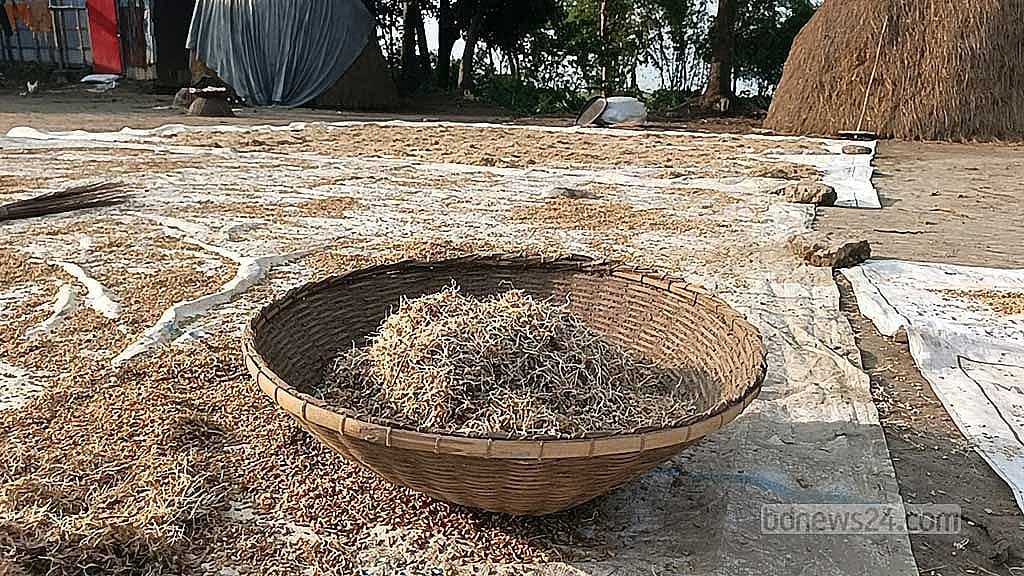
Deputy Director of the Sunamganj Department of Agricultural Extension Mohammad Omar Faruk said that about 15,553 hectares of Boro paddy have been destroyed due to waterlogging this time. The damage will only go up.
Sunamganj-1 constituency MP Kamruzzaman said that a long-term plan is needed for the Haors.
“To protect Haors, we must form a ministry for Haors and carry out all kinds of development after taking the opinions of the people of Haors into consideration. If we do not work by understanding the character and nature of the Haor, the Haor will have its revenge in the future. Therefore, the overall development of the Haor must be planned out.
“However, to protect Haors on an urgent basis, rivers, canals, and water bodies must be excavated. We have already started digging canals in the Haor wetlands.