Home
+
Published : 29 Jul 2024, 10:30 PM
The ruling Awami League-led 14-Party Alliance has finally decided in principle to ban Jamaat-e-Islami and its student wing, Islami Chhatra Shibir, which opposed Bangladesh's independence in 1971.
Awami League General Secretary Obaidul Quader announced that the government will soon take a final decision on the matter.
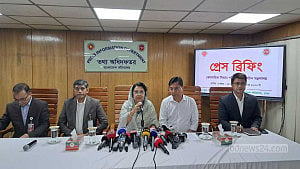
Speaking after a meeting at Ganabhaban on Monday evening, he said: “The 14-party alliance has unanimously decided to ban the political activities of the Jamaat-Shibir group.
“The alliance leaders believe that BNP, Jamaat, Chhatra Dal, Shibir, and their extremist allies are conspiring to undermine Bangladesh's independence and sovereignty. They are involved in terrorism, unrest, and murder to destabilise the country.”
The road, transport and bridges minister added: “Recently, they created instability by staging covert attacks and shootings to put the blame on the government. They have committed unprecedented acts of terrorism, including killing police officers and hanging bodies. It is essential to eradicate this anti-national force for the country’s interest.”
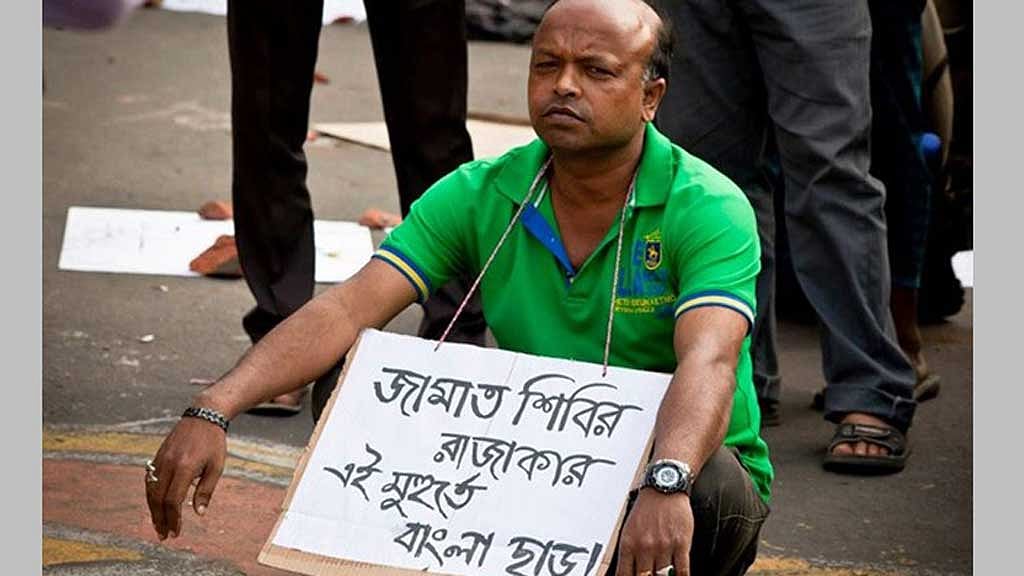
Calls to ban Jamaat, a religious-based party in Bangladesh, have been longstanding. Although the Awami League government initiated trials for war criminals in 2009, the demand for banning Jamaat has gained renewed strength, yet no significant action has been taken over the past 15 years.
Recently, government officials have blamed the BNP and Jamaat for the violence associated with the quota reform movement, leading to this decision by the 14-party alliance.
After the meeting, Hasanul Haq Inu, president of Jatiya Samajtantrik Dal or JaSoD, said: "We have concluded that Jamaat and Shibir, being terror outfits, have not ceased their attacks on the state. Therefore, to protect Bangladesh's constitutional and democratic processes and politics, it is necessary to ban their activities."
He added: "We have proposed this move and hope that Prime Minister Sheikh Hasina will take necessary administrative steps."
Rashed Khan Menon, the president of the Workers Party, said: "The 14-Party Alliance believes that there should be no delay in banning Jamaat and Shibir. We must act to prevent further rise of terrorism and extremism in the country.
“We have made this decision and requested the government to act. We hope to see action from the prime minister soon."
Dilip Barua, the general secretary of the Communist Party of Bangladesh (Marxist-Leninist), said: "Under the leadership of Prime Minister Sheikh Hasina, a historic decision has been made to ban Jamaat and Shibir. This decision, based on various incidents, is significant and will play a crucial role in overcoming the current crisis nationwide."
TROUBLED PAST
With some of their top leaders hanged for war crimes, some in jail and some in hiding, the Jamaat has been in a deep political quagmire for over a decade.
Their longtime alliance with the BNP also appeared to have collapsed after years of controversy.
Finally, the top appeals court confirmed the decision to revoke its registration as a political party, dismissing a challenge against a High Court verdict.
The Jamaat had been banned after independence for collaborating with the Pakistani military during the 1971 Liberation War, but it was rehabilitated in Bangladesh politics with the help of military ruler and BNP founder Ziaur Rahman.
After Zia’s rule, the party was actively engaged in politics even during the reign of army dictator HM Ershad.
When Bangladesh re-established a democratic government, the Jamaat never faced any trouble during the rule of BNP Chairperson Khaleda Zia. Instead, two of its leaders became members of her cabinet.
The party, a known anti-liberation force, started to feel intimidated when the Awami League came into power and introduced the war crimes trial in 2010. Most of its top leaders were either hanged or jailed until death.
After the 10th general election, the BNP and the Jamaat launched protests to nullify the election. They resumed deadly protests a year later, but the Jamaat faced nothing but trouble as its leaders and activists were arrested. The leaders are often arrested even now in meetings for “plotting violent antigovernment activities”.
The High Court scrapped the Jamaat’s registration with the EC as a political party following an appeal by other religion-based parties.
It filed an appeal against that verdict which has recently been settled after a decade. The top court, too, turned down the Jamaat’s appeal.
As they had no registration as a political party, Jamaat candidates had to file their nominations as independent contestants in the 2018 general election. When their ally the BNP allowed them to use its symbol, the Jamaat candidates contested the election with the paddy sheaf logo.
Even before its registration was cancelled, the High Court had declared the Jamaat’s election symbol, the ‘weighing balance’, illegal, as it was an emblem of justice in the courts.
Now besides the ban, the party faces another risk, as the Appellate Division asked a petitioner to go to the High Court for the hearing of an appeal to try the Jamaat at the International Crimes Tribunal as an organisation for committing war crimes.