Home
+
Published : 02 Sep 2024, 09:42 AM
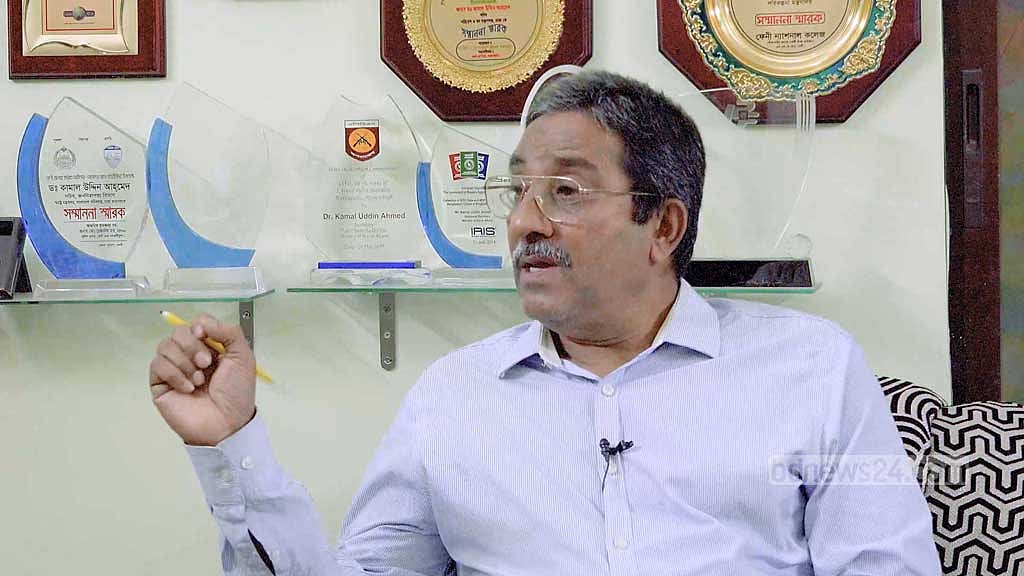
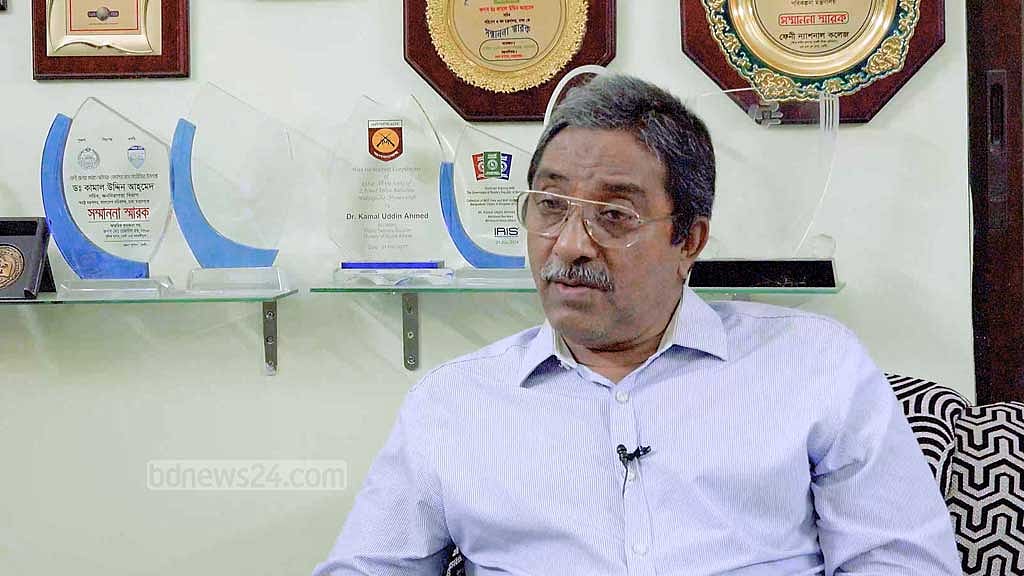
Kamal Uddin Ahmed, chairman of the National Human Rights Commission, or NHRC, believes the development of human rights in Bangladesh is possible through establishing the rule of law through democracy, proper implementation of people's views and protecting the fundamental rights of citizens amid a range of limitations.
The NHRC’s limitations were due to its capacity and its legal framework, he said.
"Unfortunately, the commission cannot investigate law-enforcing agencies, it can only ask the government to submit a report on it."
Based on his experience of almost two years as the agency's chief, he said, "There are many types of laws in Bangladesh but the enforcement is not enough. At the moment there are legal frameworks in many areas, but unfortunately, the implementation is falling short, I would say."
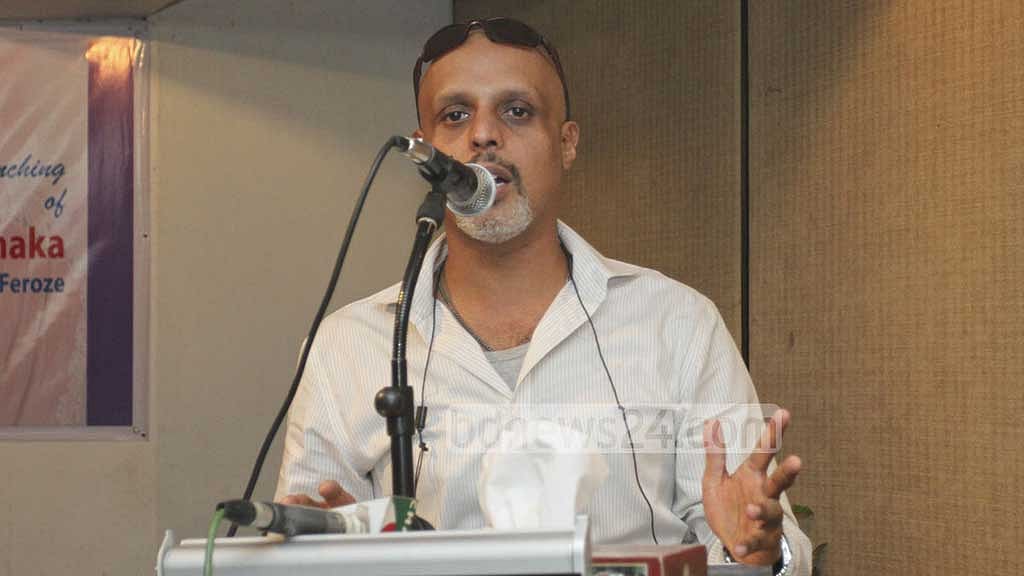
Ahmed’s remarks came during his interview with bdnews24.com’s ‘Inside Out’.
He said it is the responsibility of the state to strengthen the NHRC so that it can do more.
Ahmed, who took charge of the commission in December 2022, said, “I believe the current interim government is neutral. They should prioritise strengthening the Human Rights Commission."
Although the incidents tied to extrajudicial killings, torture in jail and ‘enforced disappearances’ of dissents were repeatedly discussed during the previous government’s term, the Awami League government had denied the allegations. Similar allegations have also been made during the tenures of other governments. And so the question arises - how can the state of human rights in Bangladesh be improved?
The NHRC chief said, “The implementation of people's views is possible by establishing the rule of law in the country through democracy. That’s how it’s possible.”
“At the same time, fundamental rights of the citizens must be protected. If this can be done, hopefully, the rule of law can be established."
The full interview is available on bdnews24.com's Facebook page and YouTube channel.
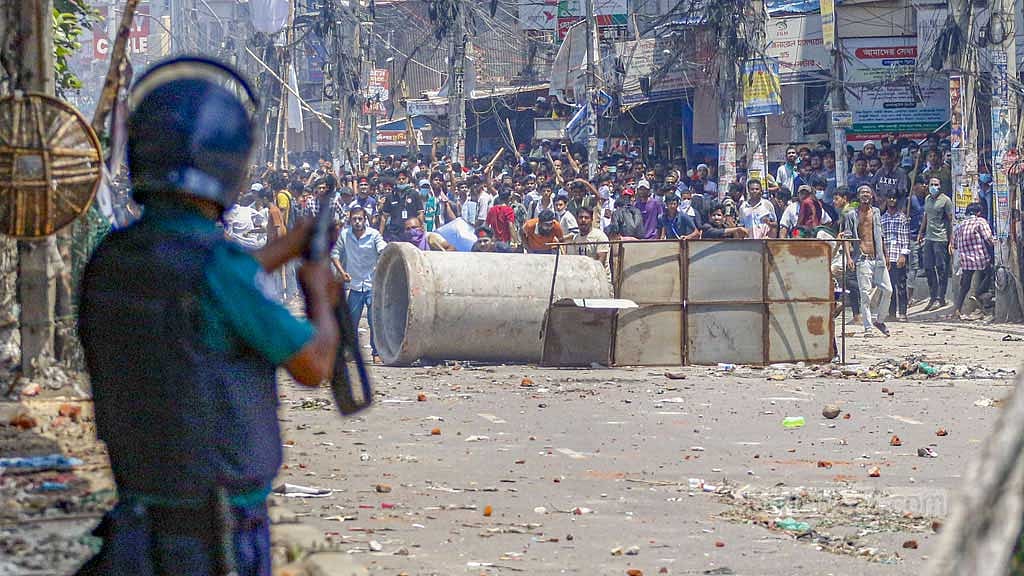
After the Awami League government fell in the face of a massive student-led uprising, the issue of ‘enforced disappearances, murders, and tortures’ allegedly carried out by various law-enforcing agencies over the government’s 15-year tenure has been coming to the fore.
Reports of torture during detention, prolonged secret imprisonment, and accusations against the security forces for operating a secret torture facility known as 'Ayna Ghor', or ‘house of mirrors’, also surfaced in media reports.
“The previous government or any other government whoever did so, is completely ‘illegal’. It needs to be stopped and brought to the attention of the people," Ahmed said.
"Undoubtedly enforced disappearance is unlawful, tortious and it violates freedom of movement and is quite unfortunate."
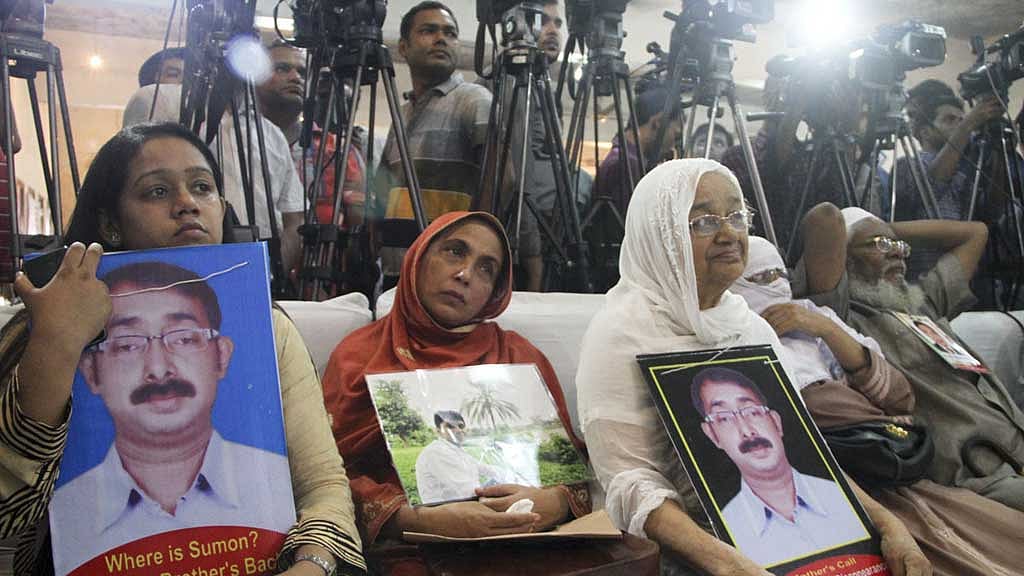
Speaking of the reports emerging about many ‘missing’ people, Ahmed said: "I am really shocked to hear about the unfortunate condition of their families. A woman said she couldn’t sleep at night. Whenever she hears a sound somewhere, she thinks her son is coming. She has been bearing that pain for years.”
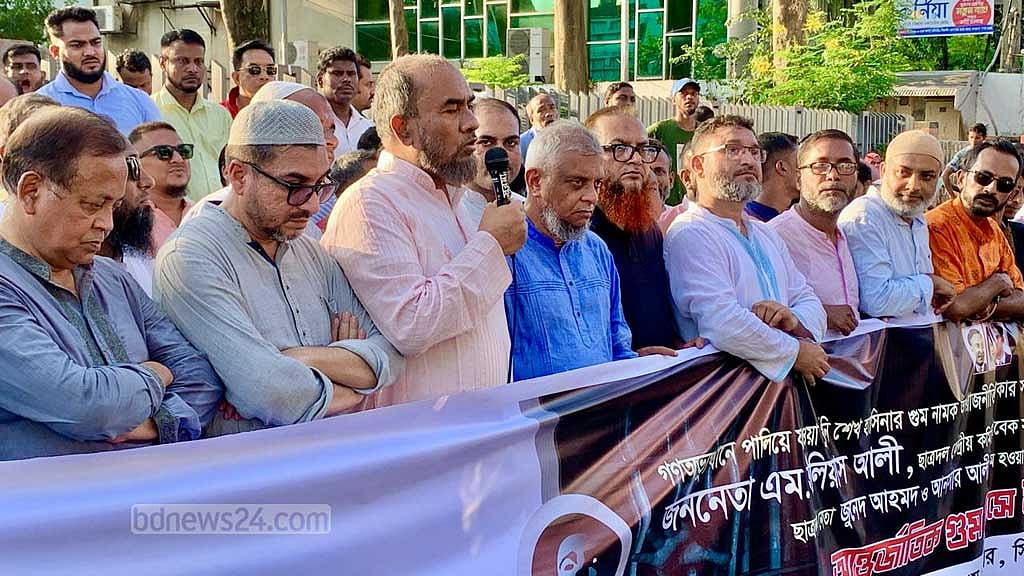
He highlighted his agency’s limitations in response to a question over whether the commission is conducting any investigation despite all this or what was the commission’s stance during previous complaints. He said, “Unfortunately, the NHRC cannot investigate against the law-enforcing agencies, whereas it can vigorously investigate other human rights violation cases.”
“If the complaint is against the law-enforcing agencies, the commission can only call on the government to submit a report on it."
Shedding light on the National Human Rights Commission Act, 2009; the agency’s chairperson said, “The human rights commission act or any other laws do not allow investigation against the law-enforcing agencies.
“So this is a big flaw. I believe it should be amended and we have proposed the amendment and a provision on the matter.”
He also remarked that the NHRC could be given the authority or opportunity to investigate these matters and suggest actions to the government to find the perpetrators.
The issue tied to the secret torture facility 'Ayna Ghor', which emerged during the previous government’s tenure, also surfaced during the discussion. The relatives of the victims have alleged that they were forcibly taken away by the police and intelligence agencies and subjected to torture.
The interim government took charge after former prime minister Sheikh Hasina fled to India in the wake of the student-public movement on Aug 5. As reforms take centre stage for the interim cabinet led by Nobel laureate Mohammad Yunus, the question of how a human rights framework can be established arises.
In his address to the nation, the chief advisor had announced that the members of government agencies, including the Army, the Bangladesh Police, Border Guard Bangladesh, and Rapid Action Battalion, who were involved in crimes such as ‘enforced disappearance, murder and torture’ would be identified and brought to justice.
Asked whether the NHRC will investigate the ‘Ayna Ghor’ and these torture cells in this context, Ahmed, who once served as the secretary of the Ministry of Home Affairs, said: "The Ayna Ghor issue has come up in the last few months. And it's not very specific.”
"Recently, we came to know clearly that some people have left that place.:
“Though it is said that [the facility] is located in a particular intelligence agency’s office, but [UPDF leader] Michael Chakma says he was taken to at least five different places.”
So if we consider that the facilities are under the control of intelligence agencies or law-enforcing agencies, we have nothing to do there. That means we can't conduct any particular investigation there."
The United People’s Democratic Front or UPDF leader Michael returned home five years after he went 'missing.' According to the party’s statement, he was released in a blindfolded state somewhere in Chattogram in the early hours on Aug 7.
His family members and the UPDF have been alleging that Michael was picked up on his way back to Dhaka from Narayanganj’s Kanchpur on Apr 9, 2019. No one had heard from him since. The then government did not issue any statement on the matter.
The interim government set up a five-strong commission, led by retired Justice Moinul Islam Chowdhury, to investigate cases of enforced disappearances allegedly carried out by law-enforcing agencies during the 15-year rule of the Sheikh Hasina regime.
In response to the matter, the NHRC chief Ahmed said. “If they can do it, I expect the truth will be uncovered. People will come to know how people were confined here.”
"We have sent a directive to the home affairs ministry to give us all the details of these matters. How many people were detained, what was their condition, and whether they were detained under any legal framework or why they were held hostage.”
"Or if there is any information about any further disappearance or death as many have yet to reach their families. Protests have been ongoing on the matter in various parts of the country. It's very unfortunate."
"The previous government has fallen and a new interim government has taken over, but the families still can't trace them," he said.
Stating his views on the amendment of the Digital Security Act, Ahmed said: "We have sent our comments and expressed our clear views on the CSA and DSA, meaning the Digital Security Act needs to be amended. Freedom of speech must be guaranteed."
However, the proposal is still pending, he said.
On the issue of extrajudicial killings, he said, "If you believe that after signing the convention to make it more effective, there may be a long way to go. No doubt but I can say that there are many types of laws in Bangladesh, and the enforcement is really not enough. From the point of view of the convention, if you want to have a better implementation, I would rather say that the larger legal framework can be taken into consideration."
Bangladesh's penal code contains specific provisions for the prevention of abduction, wrongful confinement, torture and custodial death, and punishment for those responsible for death and torture in prison. There are also provisions against illegal confinement and forced disappearances, he said.
WHAT DOES THE COMMISSION DO?
Ahmed said: "When we receive complaints from such families and people of the society, we take those complaints and discuss them in our bench, we form a committee to investigate the matter and the investigation is done.”
"But an important point is that unfortunately there is nothing to be done if the crime is committed by a law-enforcing agency.”
He said, "There is more to this than just the disappearances or extrajudicial killings over the years. If I say murder of people in different places, rape incidents, abuse for dowry, then domestic violence against women, marital violence, divorce and the number of cases and issues related to our work.
"Crimes such as murder of children, rape, sexual assault and child marriage – which is a vice in our society."
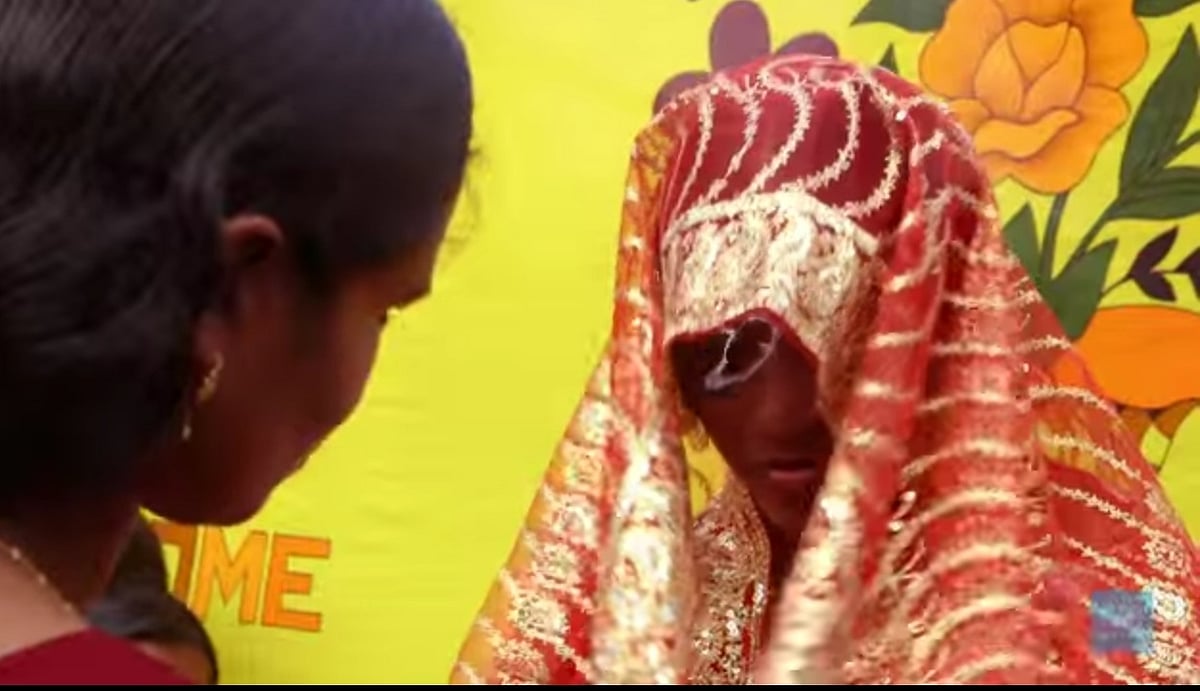
Elaborating on his point on child marriage, he said: “A child, especially a girl child, can't resist when the family tries to arrange her marriage. A few days later, she was subjected to repeated abuses by her in-law's family, and her life immediately became miserable. She can't live independently. Because she had no access to education as well."
WHAT IS THE COMMISSION DOING TO PROMOTE RIGHTS?
The NHRC chair said, "Child marriage is a big case for us, which we have accepted as a big violation of human rights from the commission. We have gone to different places in different districts, tried to convince the people, and worked to end this blatant violation of rights.
"After a lot of hard work, we have also declared some villages as 'child marriage-free'.
"At the moment our commission, where my term is not long, we have been working for about a decade and a half. In the meantime, we have made it clear that through investigation, motivation and visits to different places, we have declared 270 villages as ‘child marriage-free.’"
Remarking that Bangladesh is one of the countries in the world where the number of child marriages is still very high, he said, “This is increasing gently and the commission is playing a big role in forcing the society out of child marriage.”
Identifying domestic violence as another unfortunate phenomenon, he said: "We see in many families where violence has taken place on domestic help. They are incapable of doing anything. So we are with them. We have forced some particular people who own the land or the house to pay the compensation. This happened in many cases."
"You may have seen sexual harassment in institutions, even in universities, teachers harassing female students, we stand by them. We have enacted the law and submitted it to the parliament for passage.
"Sometimes we have seen that students have lost their eyesight, and some more unfortunate situations have happened. "
The commission is also working on complaints against the police in certain capacities, he added.
"There are many complaints against the police. The police do not listen to the people in time, take bribes or abuse or torture some people. And we took those things into account.”
"We also fight back against violence against journalists. You may recall journalist Nadim from Jamalpur. Some perpetrators killed him because he wrote against them. The convict was a member of the then-ruling party and was later expelled by the party.
"We visited his home in Jamalpur. And for the right justice, the commission helped to arrest the culprits. The accused are being interrogated at various places. They will be brought to justice."
Citing many such successes, he said, “Where journalists were attacked, we have stood by them and spoken up for them.
"There is also violence against minorities. Places of worship tied to minorities have been attacked in various places. Their idols were also vandalised. We visited Thakurgaon and Cumilla during such incidents and ensured justice."
Citing his work experience, he said: "In Telugu villages, schools of cleaning workers and sweepers have been demolished. Their church was destroyed. They have been forcibly evacuated. I personally went there and complained against the city corporation. But they didn’t pay attention at first.”
"I spoke to the mayor and finally stopped it. Now buildings are being constructed and they are getting better accommodation."
"The commission also works on issues such as the rights of the elderly, land rights and so on. We have lawyers to help the poor, marginalised people with any kind of rights such as the rights of migrant workers.
"We are providing services for their rights. There are four benches in the commission. About 100 cases are filed per week. There are also alternative dispute resolution mechanisms. This is very important and we are working on it. Many people are happy that we are dealing with their problems, serving them, and doing it through human behaviour. They didn't have to pay anything."
DO NOT HAVE SUFFICIENT ‘WORKFORCE’
The chairman said that the commission is a mandated body of the United Nations. There is a provision in the law that the agency will have central headquarters in the capital, divisional offices, and offices in 64 districts. There is also a provision for offices at 492 Upazilas.
"If we could develop offices like this in the country, it would really work better.
"But unfortunately even our central office is on a rented floor. There's only one floor to take care of hundreds of cases, hundreds of different things, and we only have three separate offices. There are no other district-level or Upazila-level offices. That's how we perform."
"It is the responsibility of the state to make the Human Rights Commission strong so that it can do a better job. We have submitted a new organogram with a better setup to the ministry. We are not saying that the Upazila office is needed tomorrow. The number of offices should be increased gradually. Especially the divisional offices so that we can work better.
"I think the current interim government is neutral. They should focus on strengthening the commission."