Published : 31 Dec 2025, 06:40 PM
Updated : 21 Aug 2026, 02:57 PM


The year of 2025 has been marked with an increase of major armed conflicts around the world. This year has seen a record number of conflicts in various regions since World War II. These armed conflicts have caused an increased global instability.
The key ongoing and new conflicts this year have been centred in Gaza, Ukraine, Sudan, Democratic Republic of Congo, Myanmar. Besides, India-Pakistan tensions are heightened due to the Kashmir issue.
The Russia-Ukraine war has entered its fourth year. Despite ongoing discussions on a proposal by US President Donald Trump to end the war, Russia has intensified its ground attacks in Ukraine.
The US struck Iran's nuclear facilities this year, adding a new dimension to the Israel-Iran conflict. The US continues to attack Venezuelan ships. Meanwhile, the Israel-Hamas war in Gaza has reached a ceasefire, but the bloodshed has yet to be stopped.
Long-standing tensions led to a series of brief skirmishes in the middle of the year, with intense clashes between India and Pakistan in May, Iran and Israel in June, and Cambodia and Thailand in July. After a ceasefire, bloody clashes between the two countries broke out again towards the end of the year in December.
Bangladesh, Armenia, Bulgaria, DR Congo, Ecuador, France, Georgia, Germany, Haiti, Peru, Somalia, and South Korea were also plagued by internal crises this year. South Korean President Yoon Suk Yeol was removed from office through arrest and impeachment.
The world witnessed the protests in some countries led by Gen-Z this year.
Nepal's Prime Minister KP Sharma Oli was forced to step down in the face of Gen-Z protests. Gen-Z-led protesters were also seen staging protests in Algeria, Bulgaria and several other countries. In addition to Nepal, government has fallen in Madagascar.
Military coups have taken place in several African countries. New leaders have come to power in many countries, including the United States, Canada, and Germany. Japan and Namibia have elected their first female heads of government.
Donald Trump has taken power in the United States for the second time. In the first 100 days of his return to power, Trump has shaken the world with one measure after another. He kept most of the nations busy by imposing high tariffs and removing tariffs in several rounds.
Trump has created widespread instability and turmoil in the global economy and business by imposing various types of retaliatory tariffs on most countries. This has sparked a new trade war between the world's two top economies, China and the United States.
The US-China trade war shows no signs of ending even as the year draws to a close. In terms of technology, DeepSeek, a Chinese competitor to US chatbot ChatGTP, has made a splash around the world this year.
TRUMP’S TARIFF BOMBS HIT EVERY COUNTRY:
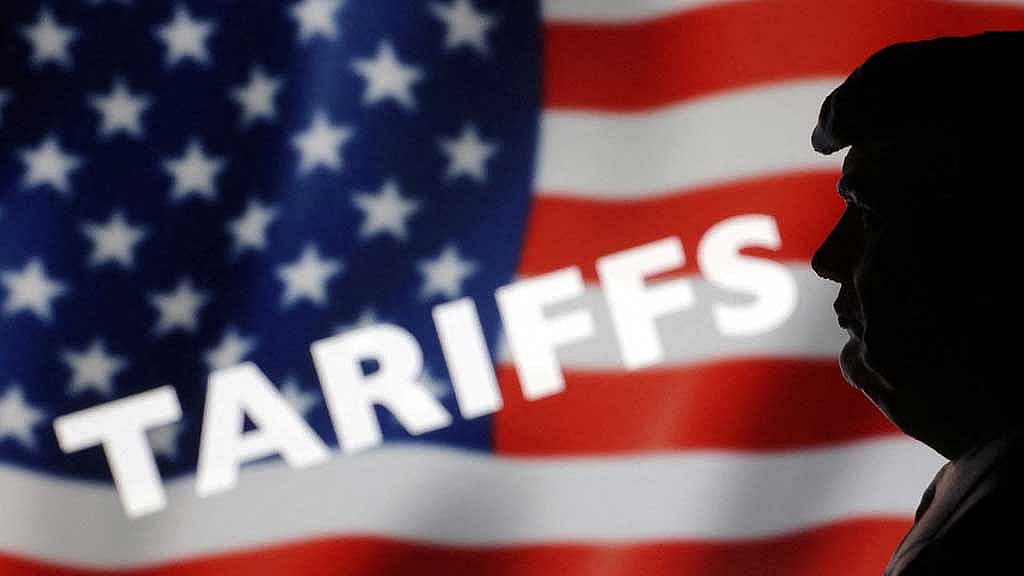
After returning to the White House for a second term on Jan 21, President Donald Trump launched an unprecedented trade war. This marked the largest transformation in global trade in the past 100 years.
Nearly every country in the world was affected by increased tariffs on their exports to the United States. In many cases, the tariff rates were extremely high—reaching up to 50 percent.
Toward the end of July, Trump announced that dozens of countries had taken advantage of the United States through unfair trade practices, and that new tariffs would, therefore, be imposed. These tariffs came into effect in August.
Countries including Bolivia, Ecuador, Iceland, and Nigeria faced tariff rates of 15 percent. Tariffs on countries such as Sri Lanka, Taiwan, and Vietnam rose to 20 percent. Bangladesh was also affected by these measures.
Among other countries, Trump imposed tariffs of 19 percent on Pakistan, 15 percent on Afghanistan, 19 percent on Indonesia, 19 percent on Malaysia, 40 percent on Myanmar, and 19 percent on the Philippines.
Brazil was among the hardest hit, facing a tariff rate of 50 percent. India initially faced a tariff of 25 percent, which was later doubled after Trump cited India’s purchase of Russian oil.
Even countries that were not directly targeted were subjected to a flat 10 percent import tariff.
In April, Trump imposed retaliatory tariffs on goods from all countries but later suspended them for three months. Initially, he aimed to strike “90 deals in 90 days.”
Although that goal was not fully achieved, he was able to reach several preliminary agreements, particularly with the European Union. Similar agreements were reached with the United Kingdom, Vietnam, the Philippines, Indonesia, and Japan.
China had long been a key target of Trump’s trade policy. Initially, he sought to punish Beijing over what he described as its failure to stop fentanyl trafficking.
Eventually, Trump imposed tariffs of up to 145 percent on Chinese goods, formally entering a trade war with China. In response, China imposed additional tariffs on US imports.
As a result, a new phase of the trade war began between the two countries. Although the tariff measures somewhat slowed China’s economic growth, the United States did not gain significant overall benefits.
In reality, Chinese exports to the United States had already been declining before Trump’s second term began, and that decline intensified in the following months. However, China compensated for the losses through other means.
Despite reduced trade with the United States, China’s total exports rose significantly this year. This was because China not only diversified its export markets but also sought new sources for imports, increasing purchases from other countries as alternatives to US goods.
Canada’s tariff rate rose to 35 percent this year from 25 percent previously, prompting it to impose retaliatory tariffs on US products. Meanwhile, the 25 percent tariff imposed by the United States on Mexico remained unchanged for 90 days.
The United States’ sweeping tariff increases on imported goods triggered widespread global backlash this year.
Trump, however, claimed that he had helped stop five of the world’s eight wars by threatening to impose tariffs. He said tariff policy was his administration’s most powerful diplomatic and economic weapon.
He further claimed that he had ended eight wars in just ten months. Among these, Trump asserted that he had “destroyed” Iran’s nuclear threat, “established peace” in the Gaza war, and brought about “the first peace in 3,000 years” in the Middle East.
RISING GLOBAL CONFLICTS AND ROLE OF US
The intensity of armed conflicts around the world increased in 2025, raising concerns about global stability. In May, tensions between long-time rivals India and Pakistan—both nuclear-armed neighbours—sparked fears of a possible nuclear confrontation.
In June, Israeli airstrikes on Iran’s nuclear and military facilities added a new dimension to regional conflict. In Africa, renewed violence erupted in Rwanda and the Democratic Republic of the Congo (DRC) after nearly a decade of relative calm, as Rwanda-backed M23 rebels launched attacks in eastern Congo.
Fighting also broke out between Thailand and Cambodia in July, with clashes resuming again in December. Meanwhile, the latest round of conflict between Armenia and Azerbaijan began on Sept 19, when Azerbaijani forces launched a major operation to retake disputed enclaves, concluding the campaign swiftly.
Tensions also escalated over Ethiopia’s construction of a dam on the Blue Nile, bringing Ethiopia and Egypt to the brink of confrontation, with Sudan drawn into the dispute.
Long-standing tensions between Serbia and Kosovo—rooted in the Balkan wars of the 1990s—intensified further in recent months.
Armed conflicts also escalated this year in Gaza, Ukraine, Syria and Myanmar, while major fighting broke out between Pakistan and Afghanistan. In several of these cases, the United States sought to play the role of a mediator.
US President Donald Trump has claimed credit for ending at least seven conflicts worldwide. However, while limited progress was made in some cases, many efforts failed to produce lasting results.
Many analysts say some US policies and actions—such as military interventions and the use of pressure tactics—have instead contributed to rising conflict intensity and instability globally.
GAZA WAR
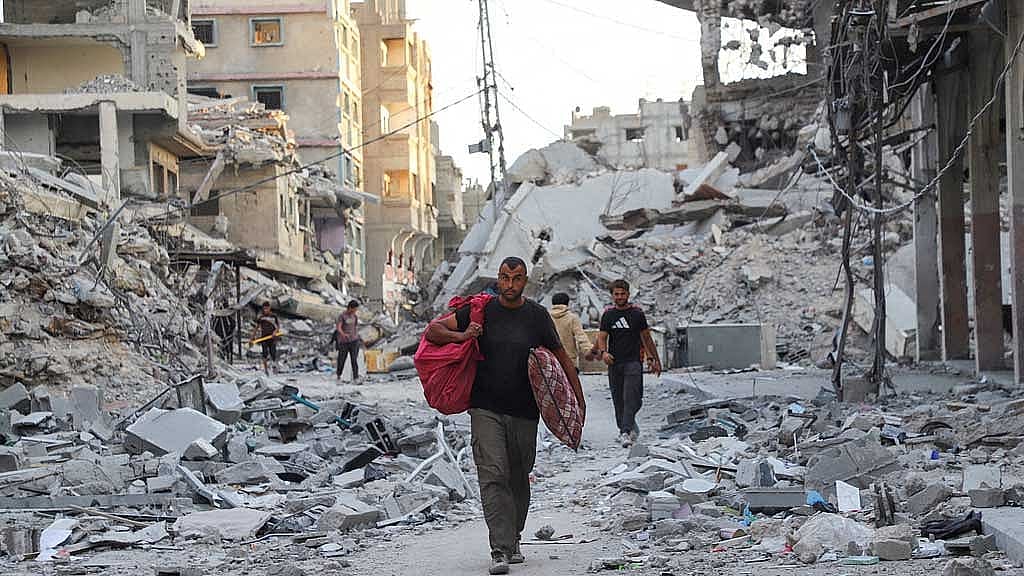
The Palestinian enclave of Gaza continues to be regarded as one of the deadliest places in the world for civilians.
After a short-lived ceasefire collapsed early in 2025, intense fighting resumed in the territory, triggering a severe humanitarian crisis.
Rising tensions between Israel and Iran, as well as between Israel and Lebanon’s Hezbollah, have put the wider region at risk of a major escalation.
In mid-January, Israel and the Palestinian militant group Hamas approved a ceasefire agreement aimed at ending the war, exchanging Israeli hostages and Palestinian prisoners, and allowing international aid into Gaza. The ceasefire took effect on Jan 19.
However, the truce collapsed on March 18 when Israel unexpectedly resumed attacks on Gaza.
On Feb 4, US President Donald Trump announced that the United States would take control of Gaza under an agreement with Israel, with US forces tasked with rebuilding the war-ravaged territory.
Despite the ceasefire, Israel carried out heavy bombardments and attacks across Gaza on Mar 18, killing at least 591 people, including children, effectively ending the January truce.
On Apr 3, after Israeli Prime Minister Benjamin Netanyahu landed in Budapest on an official visit, Hungary announced its withdrawal from the International Criminal Court, a move widely seen as defying the ICC arrest warrant issued against Netanyahu over alleged war crimes.
On Aug 22, the United Nations’ food security watchdog said famine conditions had been confirmed in Gaza City, with hunger reaching the highest and most dangerous level—Phase 5. The Integrated Food Security Phase Classification (IPC) said more than 500,000 people were facing “starvation, extreme deprivation and death.”
On Sept 9, Israel carried out an attack targeting Hamas leaders in Qatar’s capital, Doha.
Later that month, a United Nations commission of inquiry concluded that Israel had committed acts of genocide against Palestinians in Gaza.
On Sept 21, Britain, Canada and Australia recognised Palestine as a sovereign state. France followed a day later.
On Oct 1, Israel intercepted the “Global Sumud Flotilla,” a maritime convoy carrying humanitarian aid for Gaza, in international waters and detained 443 activists from 47 countries.
On Oct 9, Israel and Hamas accepted the first phase of a 20-point Gaza peace plan proposed by President Trump, opening the way for a ceasefire after nearly two years of fighting.
A formal ceasefire began on Oct 10. Under the agreement, Hamas released 20 Israeli hostages alive on Oct 13, while Israel freed 250 convicted Palestinian prisoners and an additional 1,700 Palestinians detained during the Gaza war.
Although the Trump-brokered ceasefire has since held, Israel has continued killing Palestinians in Gaza, leaving lingering uncertainty and concern over the durability of the truce.
UKRAINE WAR
The war in Ukraine entered its fourth year in 2025, with reports indicating that civilian casualties in the first ten months of the year exceeded the total recorded in all of 2024.
The situation deteriorated further following renewed large-scale attacks on energy infrastructure. US President Donald Trump has pursued his own diplomatic approach to ending the war, expressing optimism about the prospects for a settlement.
On Feb 18, Russian President Vladimir Putin said Russia and the United States had agreed to formally restore diplomatic relations, following a four-hour summit between the two sides in Saudi Arabia.
On Feb 28, Trump and Vice President JD Vance met Ukrainian President Volodymyr Zelensky in the Oval Office. During the meeting, Trump and Vance sharply criticised Zelensky, questioned why the United States should continue supporting Ukraine in its war against Russia, and urged an end to the conflict. The exchange heightened diplomatic tensions between Washington and Kyiv.
The following week, on Mar 3, the Trump administration suspended military assistance to Ukraine. On Apr 30, the United States and Ukraine signed a minerals agreement, granting Washington access to Ukraine’s energy and mineral resources in exchange for continued US investment in defence and reconstruction.
On Jun 1, Ukraine launched a major drone attack dubbed “Operation Spiderweb” against Russian military bases, damaging more than 40 aircraft belonging to Russia’s air force.
On Aug 15, Trump and Putin met in Anchorage, Alaska, for a summit focused on ways to end the war in Ukraine.
As part of its efforts to halt the conflict, Washington has repeatedly pressured Kyiv while at times appearing to side with Putin, a stance that coincided with an intensification of Russian attacks on Ukraine.
However, amid Trump’s sustained diplomatic push, the United States later proposed a mutual defence commitment to Ukraine similar to pledges given to NATO members. Ukraine, in turn, stepped back from its demand for immediate NATO membership.
Officials in the Trump administration believe that a final agreement would see Russia accept Western security guarantees for Ukraine as well as Kyiv’s eventual accession to the European Union.
But in his opening remarks at a year-end news conference on Dec 19, Putin offered no compromise on Russia’s stated conditions for ending the war, leaving a negotiated settlement elusive.
Long-running tensions also triggered several brief conflicts around the middle of the year, including clashes between India and Pakistan, Iran and Israel, and Cambodia and Thailand, some of which later resumed toward the end of the year.
INDIA-PAKISTAN CONFLICT
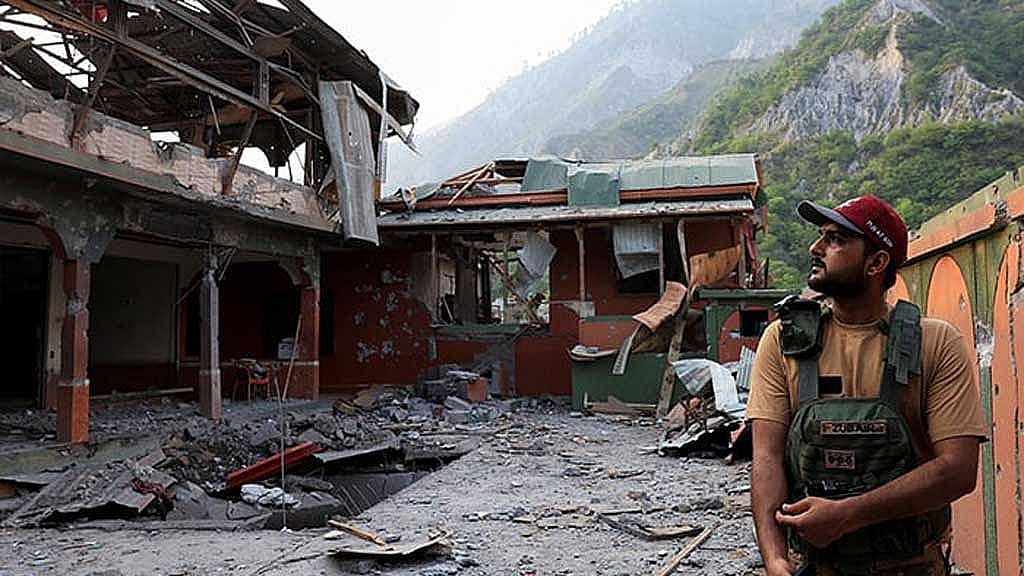
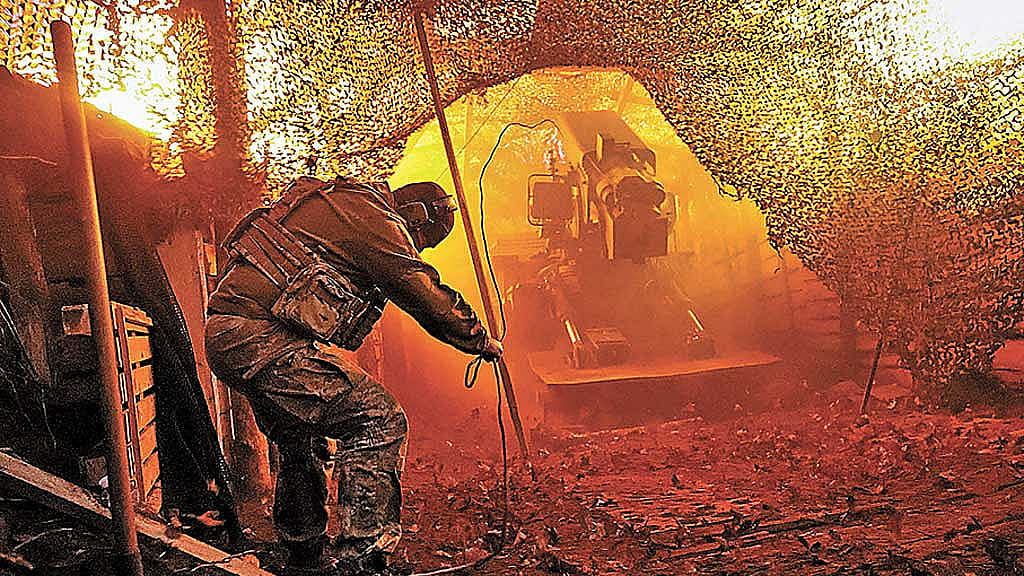
Tensions between nuclear-armed neighbours India and Pakistan remain at a dangerous level. A major escalation between the two countries in May heightened fears of an all-out war.
The fighting was triggered by a militant attack in Jammu and Kashmir, after which India carried out a series of missile strikes inside Pakistani territory. On the night of May 6, India said it struck nine targets in Pakistan over a 25-minute period, describing them as “terrorist hideouts.”
Pakistan responded with artillery fire and other military action. The escalation followed an attack in Pahalgam, in Indian-administered Kashmir, in which 26 people were killed, pushing both nuclear-armed neighbours to the brink of wider conflict.
Pakistan said it shot down five Indian fighter jets during aerial combat, including three French-made Rafales. New Delhi said it had downed “some” Pakistani aircraft.
Islamabad denied losing any aircraft but said several of its air bases were damaged.
As the conflict threatened to spiral, the two sides agreed to a ceasefire.
US President Donald Trump unexpectedly announced the ceasefire on social media, saying both countries had agreed to an immediate and full halt to hostilities following overnight talks involving US representatives.
Before the strikes, India had unilaterally suspended the Simla Agreement and the Indus Waters Treaty.
Facing the risk of a wider war, India and Pakistan formally agreed to a ceasefire on May 10.
ISRAEL-IRAN CONFLICT
On Jun 13, Israel launched large-scale strikes targeting dozens of Iranian nuclear facilities, ballistic missile production sites and senior military commanders.
Among those killed was Hossein Salami, the head of Iran’s Islamic Revolutionary Guard Corps, along with several other senior commanders. Later the same day, Iran fired “hundreds” of long-range missiles at Israel, saying it had struck Israeli military-industrial centres involved in the production of missiles and other weapons.
Deadly missile exchanges between the two countries continued through the following day, causing widespread damage on both sides and forcing civilians to seek shelter in underground bunkers.
Iran said it had not experienced such a large-scale attack in a single day since the Iran-Iraq war of the 1980s.
As the exchange of strikes continued, the United States entered the conflict late on Jun 22, launching bunker-buster bomb attacks from B-52 bombers on Iran’s nuclear facilities at Fordow, Natanz and Isfahan.
In response, Iran fired missiles at US military bases in Qatar and Iraq on Jun 23. Iran and Israel agreed to a ceasefire on Jun 24. Earlier, President Donald Trump said in a social media post that Iran would formally initiate the ceasefire.
VIOLENCE IN SYRIA
Following the collapse of President Bashar al-Assad’s government in late 2024, Syria has faced a political vacuum, raising the risk of renewed instability and a worsening humanitarian crisis.
Analysts say growing competition among major powers—particularly US-China rivalry and tensions between NATO and Russia—has played a significant role in fuelling the violence.
Climate change, resource scarcity, the spread of armed groups and the flow of illicit weapons have further complicated the conflict.
On Jul 13, clashes broke out in several areas of southern Syria between armed Druze groups and Bedouin factions.
Amid the unrest, a deadly attack targeting US forces in Syria in December killed two American soldiers and a US civilian interpreter. President Trump warned the Islamic State militant group (IS) following the attack.
The US military later carried out strikes against IS targets across Syria’s vast Badia desert, including areas in Homs, Deir al-Zor and Raqqa provinces.
Syria’s foreign ministry reiterated its commitment to continuing the fight against IS.
THAILAND-CAMBODIA BORDER CLASHES
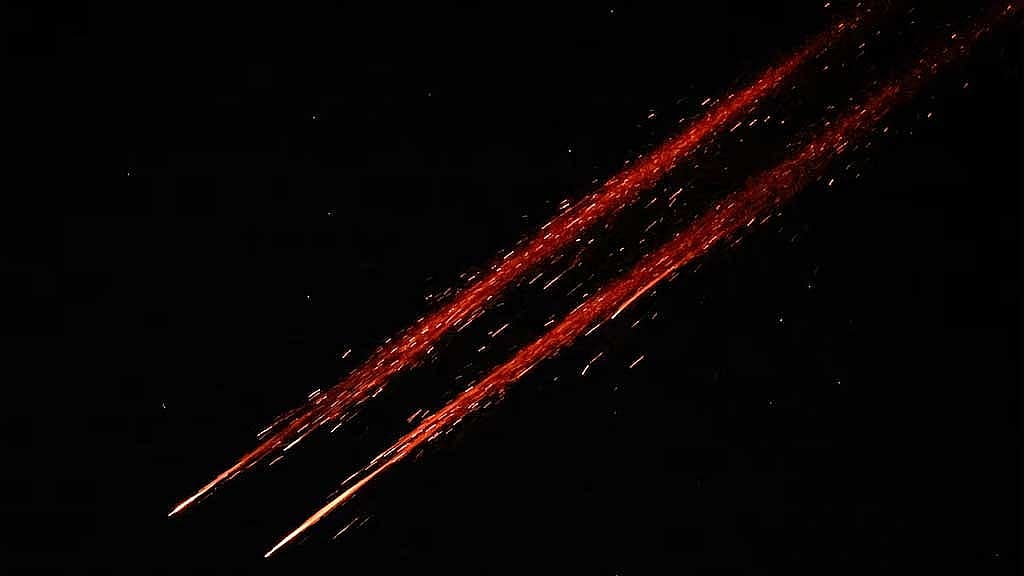
Armed clashes broke out between Thailand and Cambodia on Jul 24 after a long-running border dispute escalated, killing at least 39 people and displacing more than 100,000 over four days of fighting.
US President Donald Trump later brokered a ceasefire agreement with support from Malaysia. The deal was signed in October, but Thailand suspended the agreement within two weeks. Fighting resumed again in December.
The renewed clashes killed at least 36 people on both sides and displaced large numbers of civilians. Thai Foreign Minister Sihasak Phuangketkeow said the ceasefire “is not working” and placed responsibility on Cambodia.
As the year drew to a close, the future course of the conflict remained unclear.
CONFLICT IN MYANMAR
Conflict and humanitarian suffering in Myanmar deepened following the military coup in 2021, with the country regarded in 2025 as one of the world’s most severe crisis zones.
Although the junta lost significant territory to resistance forces earlier in the year, government troops regained momentum toward the end of 2025. In December, the military authorities announced plans to hold elections, accompanied by widespread arrests and repression.
The junta used violence and intimidation to force voter participation, the United Nations Human Rights Council said.
UN High Commissioner for Human Rights Volker Turk said the election period was marked by clear patterns of violence and repression, leaving no environment for the free exercise of rights to expression, association or peaceful assembly.
ARMENIA-AZERBAIJAN
Armenia and Azerbaijan have been locked in a dispute over the Nagorno-Karabakh region for nearly four decades. In March, both sides said they wanted to end the long-running conflict.
On Aug 8, Armenia and Azerbaijan signed a peace agreement at the White House under US mediation, formally ending the 37-year-old Nagorno-Karabakh conflict.
US President Donald Trump said at the time that Armenia and Azerbaijan were committed to lasting peace after decades of hostility. However, key details and obligations under the agreement remained unclear between the two long-time adversaries.
PAKISTAN-AFGHANISTAN BORDER CLASHES
An attack by unidentified militants on a Pakistani military post near the Afghan border early on Mar 16 killed seven soldiers, prompting Pakistani air strikes inside Afghanistan on Mar 18 that killed 45 people.
Afghanistan’s Taliban-led security forces responded by attacking Pakistani troops with heavy weapons. In October, the two countries again became embroiled in major border clashes.
On Oct 12, Kabul said Afghan and Pakistani forces exchanged overnight fire along the border, during which Afghan forces killed 58 Pakistani soldiers.
Afghanistan’s defence ministry said the attack was retaliation for Pakistani air strikes carried out the previous week. The following day, forces from both sides engaged in heavy fighting along the border.
As the clashes threatened to widen, Saudi Arabia, Qatar and Turkey mediated a ceasefire, though no peace agreement was reached.
Since the Taliban returned to power last year, Afghanistan’s eastern border with Pakistan has remained a major source of tension. Pakistani officials say militants based in Afghanistan have stepped up attacks inside Pakistan, a charge Afghan officials deny.
DEADLY CONFLICT IN SUDAN
Sudan’s civil war entered its third year in April 2025, pitting the Sudanese Armed Forces (SAF) against the paramilitary Rapid Support Forces (RSF) in a struggle for power.
The conflict has become the world’s largest displacement crisis, forcing millions from their homes and leaving tens of millions in urgent need of humanitarian aid. Human rights groups have warned of the risk of genocide in some areas.
On Oct 26, a mass killing took place in the war-hit city of Al Fashir, where the RSF allegedly executed around 2,500 or more civilians.
Al Fashir had been the last major stronghold of Sudan’s national army. Its fall effectively placed most of the Darfur region under RSF control. Rights groups say the killings occurred after RSF forces seized the city.
In December, six Bangladeshi peacekeepers were killed and eight wounded when militants attacked a United Nations peacekeeping base in the Abyei area of Sudan’s volatile Kordofan region.
CONGO CONFLICT
Fighting in eastern Democratic Republic of Congo (DRC) intensified sharply this year, with the M23 rebel group capturing several major towns. Many civilians bear lasting injuries from the violence carried out by the Rwanda-backed M23.
Earlier, M23 launched rapid offensives aimed at seizing two key provincial capitals, triggering fierce clashes with Congolese armed forces. The fighting spread across a wider area and, within weeks, thousands were killed or wounded. The cities of Goma and Bukavu eventually fell under M23 control.
Although Rwanda and the DRC signed a peace agreement under US mediation in Washington on Dec 4, fighting has continued in the region.
Humanitarian agencies warn the situation is deteriorating rapidly and could spill over into neighbouring countries.
ARMED INSURGENCY IN SAHEL
Armed conflict has gripped West Africa’s Sahel region since the Arab Spring of 2011, with Mali, Niger and Burkina Faso at the centre of what has become known as the Sahel war.
The insurgency intensified this year, as jihadist groups expanded their influence, worsening regional security and triggering refugee flows into neighbouring states.
Al Qaeda’s West Africa affiliate, Jama’at Nusrat al-Islam wal-Muslimin (JNIM), sharply increased its operations across the central Sahel. Attacks surged over several weeks in November, including assaults on military convoys.
US–VENEZUELA TENSIONS
On Sept 2, the US military destroyed a civilian vessel in international waters of the Caribbean Sea near Venezuela’s coast, marking the launch of what the Trump administration described as an anti-narcotics operation against Venezuela.
Since then, US forces have carried out at least 26 strikes on suspected drug-smuggling vessels in the Caribbean and eastern Pacific, killing nearly 100 people.
Ahead of the operation, the United States deployed dozens of warships, advanced fighter jets, nuclear-powered submarines and thousands of troops to the region, later reinforced by the country’s largest aircraft carrier.
Observers say the scale of the military buildup far exceeds what would be required for counter-narcotics operations, raising concerns that Washington’s real objective is to remove Venezuelan President Nicolas Maduro by force.
As US military preparations around Venezuela intensified, fears of war grew. Trump has accused Maduro of links to drug trafficking and criminal networks, allegations the Venezuelan leader has denied.
TENSIONS WITH ALLIES, IMMIGRATION TURMOIL
US President Donald Trump sparked controversy this year by expressing interest in acquiring Greenland and the Panama Canal, raising tensions with allies.
Despite Denmark’s NATO membership, Trump did not rule out military action to seize Greenland, an autonomous Danish territory. Denmark and Greenland strongly rejected the remarks. In December, Trump further inflamed tensions by appointing a special envoy on Greenland.
Trump has also repeatedly suggested making Canada the 51st US state, straining relations with Ottawa. His comments, including referring to former Prime Minister Justin Trudeau as a “governor,” contributed to diplomatic friction.
On Ukraine, Trump adopted a markedly softer stance toward Russia than his predecessor Joe Biden, alarming European Union leaders.
As Trump pushed his “America First” agenda, long-standing US allies drifted away while rivals became more assertive. European allies moved this year to reduce dependence on US weapons by increasing investment in their own defence industries.
Trump’s hardline immigration policies triggered widespread criticism and unrest at home and abroad. Images of undocumented migrants deported in shackles drew international condemnation.
Mass arrests of undocumented migrants sparked protests across the United States. In June, clashes erupted between demonstrators and federal immigration agents in the Paramount area of Los Angeles, where security forces in riot gear used tear gas to restore order.
Trump has defended the crackdown, claiming that no undocumented migrants have entered the United States during his second term.
The administration also suspended US foreign aid this year, worsening humanitarian conditions in several countries. On Jan 21, the day he was sworn in for a second term, Trump signed an executive order shutting down the US Agency for International Development (USAID).
The move disrupted programmes supporting global health, food security, education and democratic development, contributing directly to famine-like conditions in places such as Sudan and Gaza, aid groups said.
Trump also froze $2.2 billion in funding to Harvard University, prompting the institution to file a lawsuit. Critics say the moves have upended long-established systems across US governance and foreign policy.
OTHER SIGNIFICANT DEVELOPMENTS
Several events made headlines this year as global firsts. For the first time, a commercial lunar lander successfully touched down on the Moon.
In religion, the Church of England appointed its first female spiritual leader in 1,400 years, with Dame Sarah Mullally becoming Archbishop of Canterbury and head of the global Anglican Communion. The Roman Catholic Church also made history by electing its first pope from the United States.
Across the world, several countries elected new leaders, some for the first time choosing female heads of government. In others, presidents were arrested and convicted, while political movements, coups and uprisings led to the removal of prime ministers and presidents.
As in previous years, a number of prominent figures died, including Pope Francis, actor Robert Redford and primatologist Jane Goodall. Several aviation accidents were also reported, including the crash of Air India Flight 171 in Ahmedabad.
Political attacks, militant violence and major accidents occurred in multiple countries. Natural disasters — including earthquakes, cyclones, wildfires and floods — again caused widespread suffering. World leaders also gathered this year at the COP30 summit to seek ways to tackle climate change.
NEW LEADERS, ELECTIONS, COUPS AND ARRESTS
Donald Trump became only the second US president to return to office after losing power for four years. He was also the oldest candidate ever elected president of the United States.
Following Trump’s inauguration in January, rebel leader Ahmed al-Sharaa was appointed Syria’s new president on Jan 29, after the fall of former president Bashar al-Assad left the post vacant.
In Canada’s Apr 28 federal election, former Bank of Canada governor Mark Carney was elected prime minister. His Liberal Party won a fourth consecutive term but was forced to form a minority government. Justin Trudeau had stepped down in March.
In early May, Australia’s Labor Party leader Anthony Albanese won re-election, increasing his party’s parliamentary majority. On May 6, Germany’s Christian Democrats won the federal election, paving the way for Friedrich Merz to become chancellor.
Political turmoil intensified in Thailand between July and August. On Aug 30, the Constitutional Court removed Prime Minister Paetongtarn Shinawatra from office over “ethical misconduct” linked to a leaked phone call with former Cambodian leader Hun Sen.
On Oct 21, Japan’s parliament confirmed Sanae Takaichi as the country’s first female prime minister after her party secured a key coalition agreement.
Guinea-Bissau’s Nov 23 general election was followed by a military coup that ousted President Umaro Sissoco Embalo a day before official results were announced.
In Indonesia, student-led protests erupted nationwide on Feb 17 against legislation expanding the military’s role in civilian governance.
The Kurdistan Workers’ Party (PKK), a Kurdish militant and political organisation, announced its dissolution on May 12 after declaring a ceasefire with Turkey and abandoning armed struggle.
On Sept 8, widespread, Gen-Z-led protests swept Nepal, forcing Prime Minister KP Sharma Oli to resign the following day. At least 22 people were killed and hundreds injured in the unrest. On Sept 12, former chief justice Sushila Karki was appointed interim prime minister following an online vote.
In October, sustained youth-led protests in Madagascar led to the ouster of President Andry Rajoelina. The military then seized power, installing officer Michael Randrianrina as president.
South Korea’s President Yoon Suk Yeol was removed from office through impeachment and arrested on Jan 15 after a previous arrest attempt failed.
Former Philippine president Rodrigo Duterte was arrested on Mar 11 under an International Criminal Court warrant over alleged crimes against humanity.
On Sept 11, Brazil’s federal court sentenced former president Jair Bolsonaro to 27 years in prison for his role in a failed coup attempt in 2022.
FIRST AMERICAN POPE ELECTED: LEO XIV
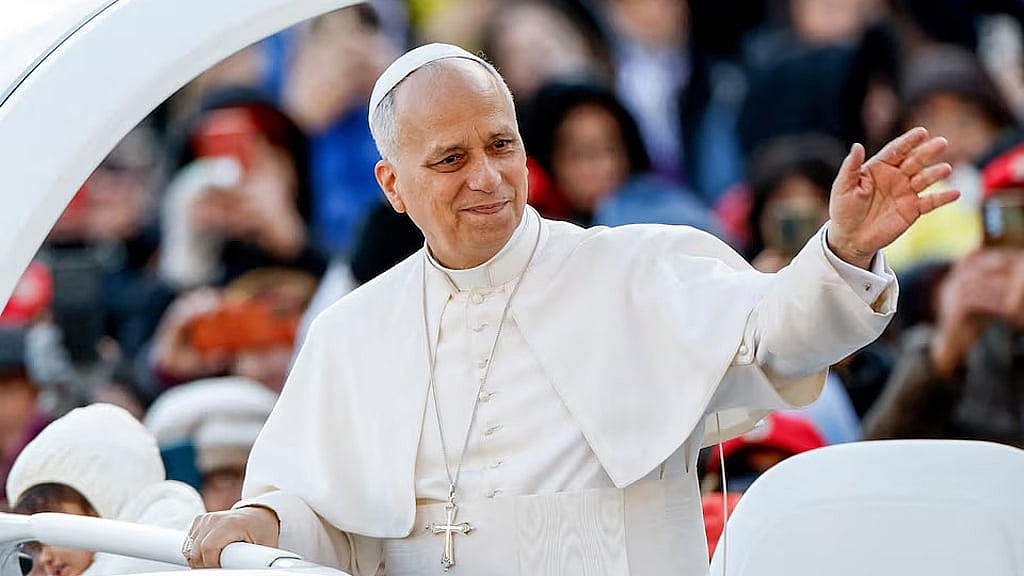
Following the death of Pope Francis on Apr 21 at the age of 88 at his Vatican residence, the process to elect a new pope began. On May 8, white smoke rising from the chimney of the Sistine Chapel signalled that a new pontiff had been chosen.
Shortly afterwards, the Vatican announced that US Cardinal Robert Francis Prevost had been elected leader of the world’s 1.4 billion Catholics, taking the name Pope Leo XIV. He became the first American cardinal to be elected pope.
POLITICAL TERRORIST AND OTHER ATTACKS
The year began with deadly attacks on Jan 1 in New Orleans in the US state of Louisiana and in the Montenegrin city of Cetinje.
In New Orleans, a vehicle was driven into a crowd before gunfire erupted, killing 50 people, including the attacker, and wounding 57 others. In Cetinje, a mass shooting killed 13 people and injured three.
On Feb 4, a gunman opened fire at Campus Risbergska, an adult education centre in the Swedish city of Orebro, killing at least 11 people and wounding 15. Authorities described it as the deadliest mass shooting in Sweden’s history.
On Mar 11, separatist militants from the Balochistan Liberation Army blew up railway tracks and hijacked the Jaffar Express train travelling from Peshawar to Quetta, taking about 450 passengers — including security personnel and civilians — hostage.
On Apr 22, militants linked to a group known as The Resistance Front attacked tourists in the Baisaran Valley near Pahalgam in Indian-administered Jammu and Kashmir, killing 26 people and injuring at least 20.
On Apr 26, a vehicle was driven into crowds at the annual Lapu Lapu Day festival in Vancouver, Canada, killing at least 11 people and injuring 20 others.
In early June, a gunman opened fire at a school in Graz, Austria, killing 10 people and wounding around 30.
On Sept 10, Charlie Kirk, a prominent far-right activist and close ally of US President Donald Trump, was shot dead during an event at a university campus in Utah, sparking widespread reaction across the United States.
Two days later, more than 120 people were killed in Rio de Janeiro during a police operation dubbed “Operation Containment” targeting the criminal group Comando Vermelho. Authorities said it was the deadliest police operation in Brazil’s history.
On Dec 6, gunmen opened fire at an illegal tavern in South Africa, killing 11 people, including three children, and wounding 14 others.
Later in the year, another mass shooting occurred at Sydney’s Bondi Beach. On Dec 14, during a Hanukkah celebration, a 50-year-old man and his 24-year-old son carried out a coordinated attack, killing 15 people and injuring nearly 40.
Police shot and killed the father, identified as Sajid Akram, at the scene, while his son, Navid Akram, was seriously wounded. Authorities said it was Australia’s deadliest mass shooting in nearly three decades.
MAJOR ACCIDENTS IN 2025
People across the world were hit by disasters and accidents throughout the year, beginning as early as January.
On Jan 21, a fire swept through a hotel at the Kartalkaya ski resort in Turkey, killing 78 people. Eight days later, on Jan 29, a US Army Black Hawk helicopter collided with a PSA Airlines passenger jet, sending both aircraft into the Potomac River in Washington, DC. All 67 people on board were killed, including three crew members on the helicopter and 64 passengers and crew on the aircraft.
On Mar 16, a fire at a nightclub in the town of Kocani in North Macedonia killed at least 59 people and injured 155 others.
On Apr 8, the roof of a nightclub in Santo Domingo, capital of the Dominican Republic, collapsed, killing at least 231 people, including renowned popular singer Rubby Perez.
On Apr 26, a powerful explosion at the Shahid Rajaee port in Iran’s Bandar Abbas region killed at least 70 people and injured more than 1,000 others.
On Jun 12, an Air India Boeing 787 aircraft bound for London crashed shortly after takeoff in Ahmedabad in India’s Gujarat state. The crash killed all 229 passengers and 12 crew members on board, as well as 19 people on the ground who were travelling in a student bus. One passenger survived.
On Jul 21, a Bangladesh Air Force Chengdu J-7 (F-7 BGI) training jet crashed onto Milestone School and College in Dhaka’s Uttara area, killing 31 people, including the pilot.
Three days later, on Jul 24, an Angara Airlines Antonov An-24 aircraft operating Flight 2311 crashed in eastern Siberia, killing all 48 people on board.
On Aug 19, at least 79 people were killed in Afghanistan’s Herat province when a bus carrying refugees returning from Iran collided with a truck and a motorcycle.
On Sept 3, Lisbon’s historic Gloria Funicular cable car derailed and slammed into a nearby building, killing 16 people and injuring 21 others.
On Oct 19, thieves carried out a daring robbery at Paris’s Louvre Museum, smashing an upper-floor window with a crane and fleeing by motorcycle with priceless items from the Galerie d’Apollon, which houses the former French royal family’s jewels.
On Nov 4, a UPS Airlines cargo flight bound for Hawaii crashed shortly after takeoff from Louisville Muhammad Ali International Airport in the US state of Kentucky, killing three crew members and 11 people on the ground.
On Nov 26, a massive fire tore through the Wang Fuk Court apartment complex in Hong Kong, killing at least 160 people and leaving more than 150 missing.
On Dec 6, a fire at a nightclub in Arpora in India’s Goa state killed at least 25 people and injured more than 50 others.
In November, a fire also broke out at a pavilion at the United Nations COP30 climate summit in Brazil, near the entrance to the venue in the Amazonian city of Belem. Part of the fabric roof of the tented structure was destroyed. Firefighters brought the blaze under control and no casualties were reported.
NATURAL DISASTERS: EARTHQUAKES, CYCLONES, WILDFIRES AND FLOODS
The year saw a series of major natural disasters worldwide, including powerful earthquakes, devastating cyclones, severe floods and destructive wildfires.
Early in the year, on Jan 7, a 7.1-magnitude earthquake struck China’s Tibet region, killing at least 126 people and injuring 338 others.
Around the same time, one of the most destructive wildfires in US history swept through the greater Los Angeles area. Fuelled by prolonged drought and strong winds, the blaze spread rapidly, destroying more than 13,000 homes, including large parts of the upscale Beverly Hills and West Hollywood neighbourhoods along Sunset Boulevard. At least 29 people were killed and more than 180,000 were forced to evacuate.
Two months later, South Korea experienced the deadliest wildfires in its modern history. Beginning around Mar 21, the fires burned more than 87,000 hectares in South Gyeongsang province and killed at least 32 people.
On Mar 28, a powerful 7.7-magnitude earthquake struck central Myanmar, killing 5,413 people and injuring another 11,402.
Between Jul 4 and Jul 7, severe flooding in central Texas in the United States killed at least 135 people, with more than 100 others reported missing.
On Jul 30, a massive 8.8-magnitude earthquake struck off the coast of Russia’s far-eastern Kamchatka Peninsula, prompting tsunami warnings in Japan and Hawaii.
A month later, on Aug 30, reports said between 370 and 1,000 people were killed in a landslide triggered by heavy rain in the village of Tarasin in Sudan’s central Darfur Marrah mountains.
The following day, Aug 31, a 6.0-magnitude earthquake hit eastern Afghanistan, killing about 2,200 people and injuring more than 3,500. One month later, on Sept 30, a 6.9-magnitude earthquake struck Cebu island in the Philippines, killing 71 people and injuring 559 others.
On Oct 28, Hurricane Melissa, a Category 5 storm with sustained winds of up to 295 km per hour, hit Jamaica.
On Nov 3, another strong earthquake struck Afghanistan, shaking Balkh and Samangan provinces and killing 31 people while injuring 956 others.
On Nov 4, Typhoon Kalmaegi caused widespread destruction across the Philippines, Vietnam and Thailand, killing 288 people. In the same month, a rare cyclone that formed over the Malacca Strait killed at least 1,167 people in Thailand, Indonesia and Malaysia, with 521 reported missing.
On Nov 28, Cyclone Ditwah struck Sri Lanka, triggering heavy rainfall, floods and landslides that killed at least 611 people in Sri Lanka and southern India, while 214 others were reported missing.
Toward the end of the year, on Dec 8, a 7.6-magnitude earthquake off Japan’s Pacific coast triggered a tsunami measuring up to 70 centimetres in height.
COP30 CLIMATE SUMMIT
The 30th United Nations climate change conference, known as COP30, was held from Nov 10 to Nov 21 in the Amazon city of Belem, Brazil.
Marking 10 years since the Paris Agreement, the summit focused on progress toward climate targets, reducing the use of fossil fuels, climate finance and adaptation. Discussions were marked by sharp divisions, particularly over climate funding and the pace of phasing down fossil fuel use.
The conference took place against a backdrop of record global temperatures, mounting environmental disasters and growing inequality in efforts to cut carbon emissions. Holding the summit in Belem was intended to underscore the importance of protecting the Amazon rainforest.
The absence of the US federal government drew criticism during the talks. After days of negotiations, disagreements and criticism, the summit concluded with a final agreement.
However, one of the biggest disappointments was the failure to include a clear roadmap to phase down fossil fuel use, despite calls from more than 80 countries for such a commitment. Critics said the omission undermined efforts to limit global warming to 1.5 degrees Celsius.
While progress on fossil fuels was limited, the final outcome urged developed countries to at least triple climate finance for developing nations most vulnerable to climate change impacts. The agreement also called on all parties to work together to keep global warming within the 1.5 degrees Celsius threshold.