Published : 17 Apr 2026, 03:51 AM
Updated : 21 Aug 2026, 03:36 PM


An international team of astronomers has produced a precise measurement of the universe’s current expansion rate, strengthening evidence around one of modern cosmology’s major unresolved questions.
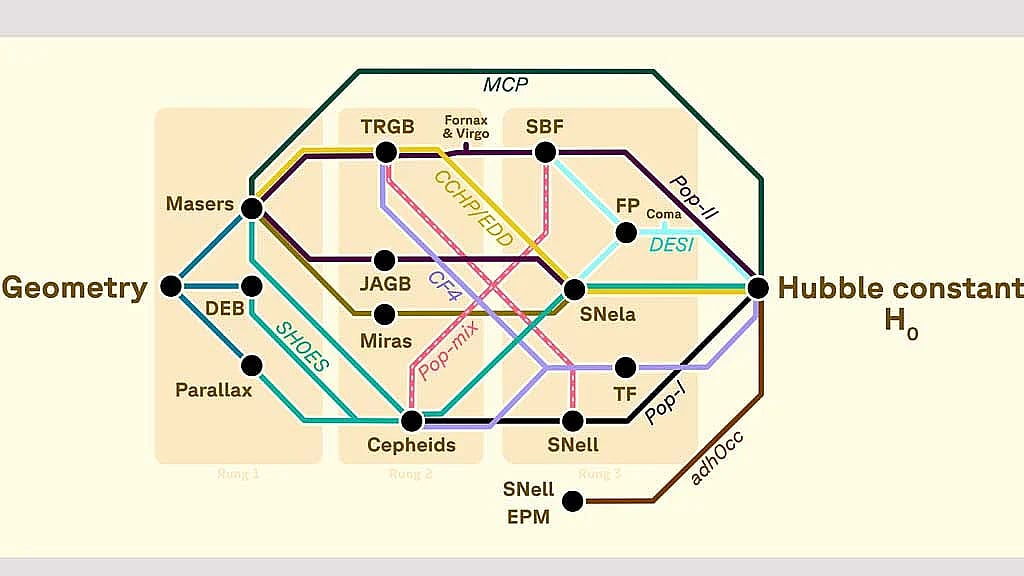
Led by the H0 Distance Network (H0DN) Collaboration, the study combines different independent measurement techniques into a single framework to report a current expansion rate of 73.50 kilometres per second per megaparsec, with an uncertainty of ±0.81, according to a statement by Independent University, Bangladesh (IUB).
Associate Professor of Physical Sciences Syed Ashraf Uddin, also a member of the core group of the Center for Astronomy, Space Science and Astrophysics (CASSA) at IUB, contributed to the study as part of the global H0DN collaboration, the statement said.
The study, titled “The Local Distance Network: A community consensus report on the measurement of the Hubble constant at ∼1% precision”, has been published in Astronomy & Astrophysics.
He has been involved in advanced research on measuring the universe’s expansion rate for years, the statement adds.
Astronomy & Astrophysics is a top international peer-reviewed journal that publishes original research in cosmology, stellar physics, and planetary science.
Published by EDP Sciences and supported by European research institutions, it is widely recognised as a major journal in the field, with strict review standards and a broad scientific scope.
The findings are significant in the long-standing “Hubble tension”, an increasing mismatch between measurements of the universe’s current expansion rate and estimates derived from early observations, particularly the Cosmic Microwave Background.
“For years, scientists have debated whether the gap is caused by hidden errors in measurement techniques or reflects limitations in existing theory.
“The new study shows multiple independent methods converging on the same higher value, making it harder to explain the discrepancy through a single flawed approach and strengthening the possibility of deeper, unresolved physics,” Ashraf was quoted as saying by the statement.
The statement said the team adopted a “distance network” approach instead of relying on a single cosmic distance ladder.
It said the method links different ways of measuring cosmic distances, including variable stars, supernova explosions and galaxy properties, into one unified system.
By accounting for overlaps and shared uncertainties, researchers were able to cross-check results and produce a more consistent estimate.
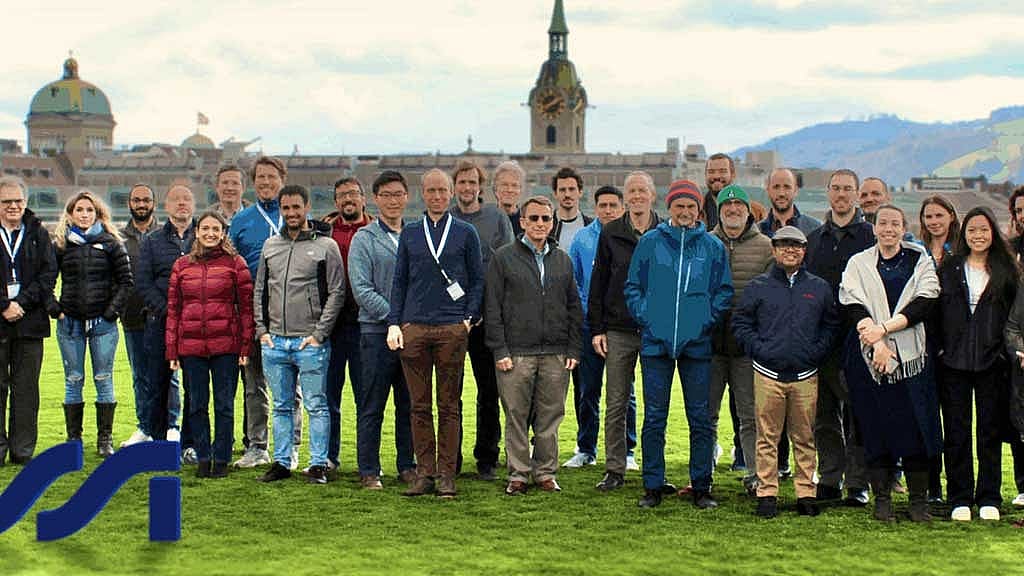
The collaboration brought together almost 40 researchers from different methodological backgrounds, including scientists who previously worked in separate teams using distinct techniques to measure the expansion rate, which ensured that no single approach dominated the result and that the final outcome reflected a broader, community-driven consensus.
Measuring the expansion of the universe has traditionally relied on different independent techniques – some use pulsating stars to measure distances to nearby galaxies, others depend on exploding stars as standard markers across cosmic scales, while other methods use galaxy properties.
Ashraf said, “Differences in calibration, data quality and underlying assumptions have led to slightly different results over time.
“The new study addresses these variations by combining all major methods in a consistent framework and showing that, when treated together, they produce a stable and mutually consistent result.
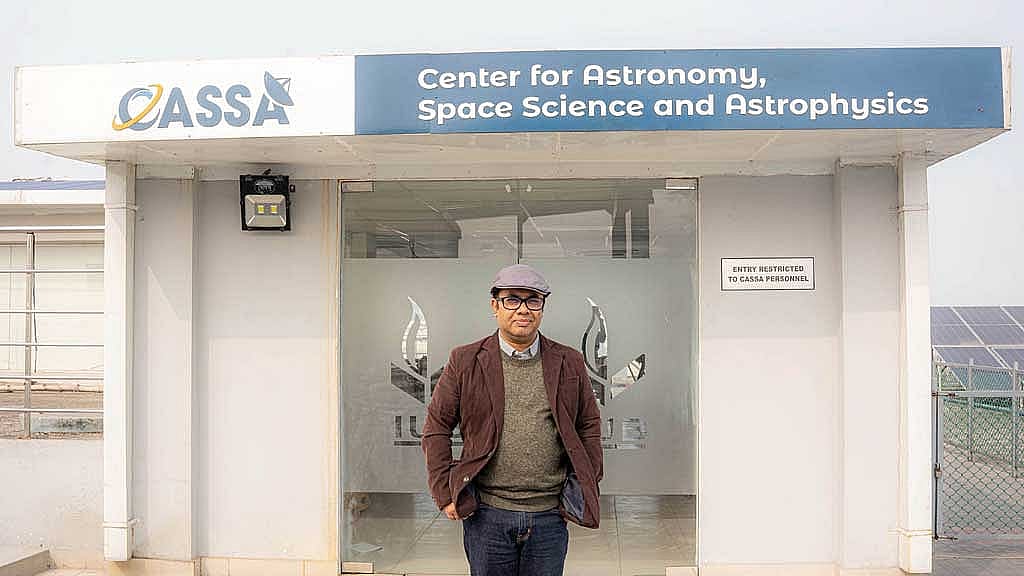
“This work is important because it shows that the higher expansion rate we observe locally is not dependent on any single method,” the statement quoted him, adding: “When multiple independent approaches point to the same result, it strengthens our confidence that the discrepancy we see is real and not simply a measurement issue.”
He further said the study sets a clearer base for further research.
“By building a transparent and flexible framework, we are enabling the scientific community to test new data and refine the measurement further, which is essential for understanding whether new physics may be required.”
Khan Muhammad Bin Asad, assistant professor of Physical Sciences and Director of CASSA, said the university’s involvement shows its engagement with global scientific research.
“Through CASSA, we have been working for several years to connect researchers in Bangladesh with the international astronomy and astrophysics community, while also creating opportunities for students and young researchers to participate in cutting-edge work."