Published : 21 Feb 2026, 08:16 AM
Updated : 21 Aug 2026, 03:23 PM


Jamaat-e-Islami chief Shafiqur Rahman has said his first-ever visit to the Central Shaheed Minar was carried out in his official capacity as Leader of the Opposition, rejecting suggestions that the gesture marked a shift in the party’s ideological position.
Speaking to reporters shortly after laying a floral wreath at the monument in the early hours of International Mother Language Day, he said the visit was a constitutional and ceremonial responsibility.
“As part of state protocol, this is my duty,” he said. “As the Leader of the Opposition, I am required to be here with my colleagues. That is why I have come.”
Saturday marked the first time a Jamaat chief personally paid tribute at the Shaheed Minar by placing flowers in honour of the Language Movement martyrs.
While the party’s student wing, Islami Chhatra Shibir, has held programmes on Feb 21 in the past, Jamaat leaders have historically stayed away from the monument.
Shafiqur’s visit came after tributes were paid by the president, the prime minister and the chiefs of the armed forces.
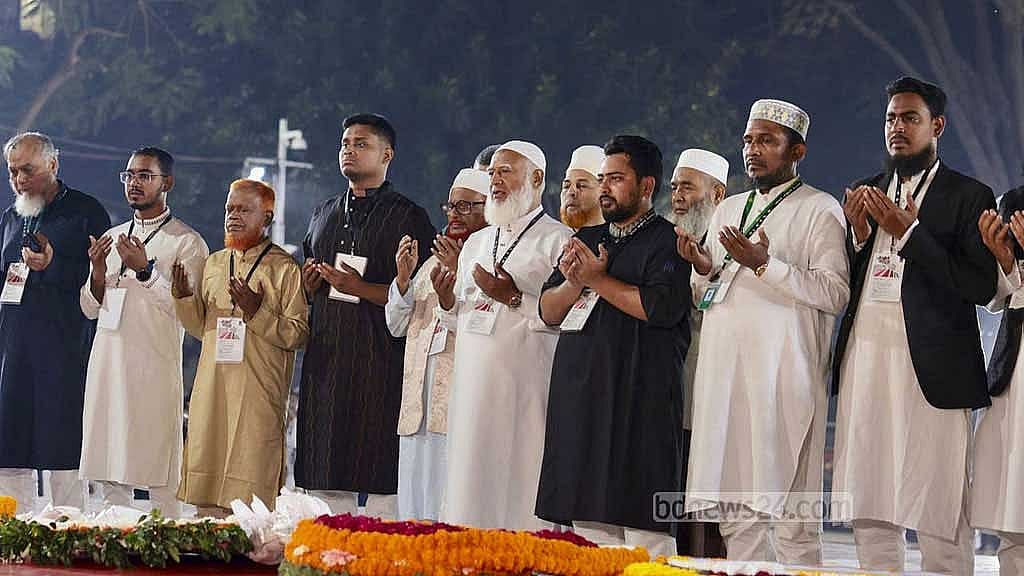
He led a delegation of lawmakers from the Jamaat-led 11-party alliance, including Opposition Chief Whip Nahid Islam and MPs ATM Azharul Islam, Hasnat Abdullah, and Akhtar Hossain.
Tensions briefly surfaced during the media interaction when a journalist asked whether Jamaat still viewed the act of placing flowers at the Shaheed Minar as religiously impermissible.
Visibly irritated, Shafiqur rebuked the question. “Why would you ask such a question on such a sacred day? It is better not to ask questions like this,” he said.
The opposition leader went on to say that Jamaat honours the martyrs of all democratic struggles, including the movements of 1947 and 1952, the 1971 Liberation War and the 1990 Mass Uprising.
He also paid tribute to those killed during the July Uprising, specifically naming Sharif Osman bin Hadi.
“The aspirations for which they sacrificed their lives remain unfulfilled,” Shafiqur said, adding that the struggle would continue until Bangladesh is transformed into what he described as a “humane state” free from corruption and criminality.
After the briefing, Shafiqur and his colleagues went to the Azimpur graveyard to offer prayers at the graves of Language Movement martyrs.