Home
+
Published : 30 Dec 2025, 02:23 PM
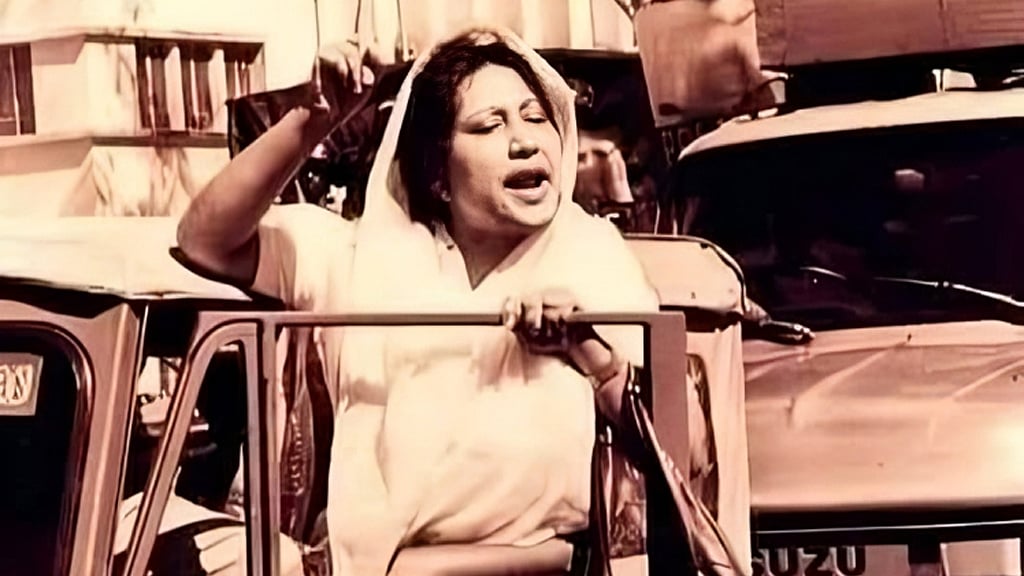
Khaleda Zia, one of the two women who were plunged into politics and who most profoundly shaped Bangladesh’s post-1975 politics, has now taken her final leave, marking the end of a turbulent and transformative chapter in the nation’s political history.
She began as a quiet girl from Dinajpur, with neither ambition nor appetite for power. Politics was a world far from her reach. But history had other plans. By the time she died, she had gone on to lead the Bangladesh Nationalist Party (BNP) for over 40 years in the 54-year old nation. She stood at the heart of the 1990 uprising that brought down military rule, and served three times as prime minister of a nation she helped reshape.
The “uncompromising leader” of the anti-autocracy movement spent much of her life in fierce agitation and unwavering defiance. She was arrested, jailed, and repeatedly targeted. A woman whose political journey was forged not by choice but by tragedy, persistence, and sheer force of will, she never lost a parliamentary election she contested.
Political writer and historian Mohiuddin Ahmed notes that while the late president Ziaur Rahman founded the BNP “from within the corridors of power”, he did not have long to shape it. It was his wife, Khaleda, who carried the BNP forward and built it into a political party in the fullest sense.
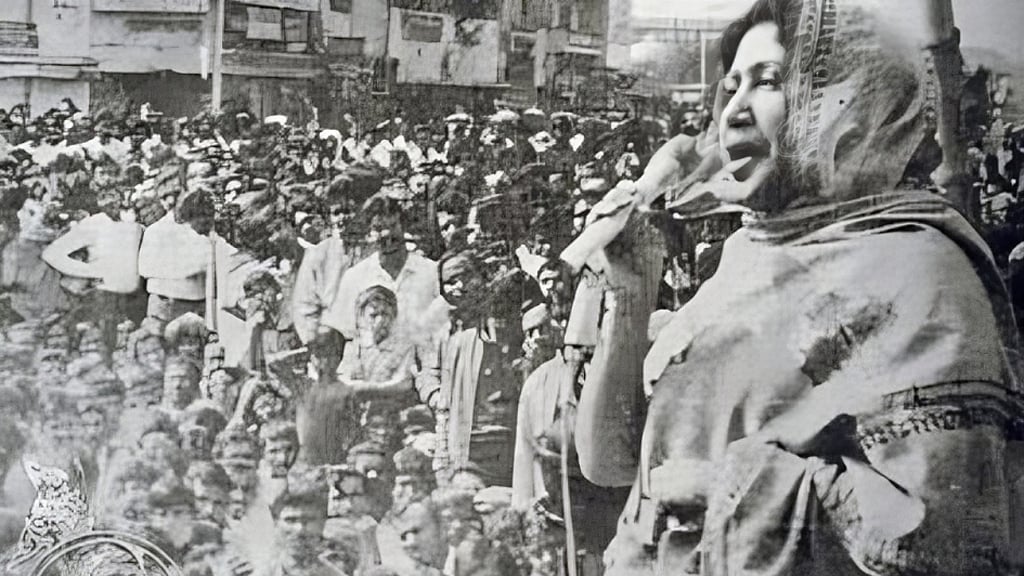
FROM THE QUIET HOME TO THE STORM OUTSIDE
When Zia was assassinated in 1981, Khaleda Zia was a private, soft-spoken homemaker living a sheltered life in Dhaka Cantonment — a young mother of two sons, Tarique Rahman (Pino) and Arafat Rahman (Koko).
As journalist Shafik Rehman wrote in "Sangrami Netri Khaleda Zia", she kept her distance from politics and rarely appeared at public events. Even after the 1975 political upheaval that brought Zia to power, she had been a “shy housewife” who preferred the company of her sons to the spotlight as the First Lady.
But grief can be a summons. After Zia’s death, BNP fractured, faltered, and feared its future. Vice President Justice Abdus Sattar became acting president and BNP chief. But the 1982 military coup by General Hussain Muhammad Ershad toppled Sattar, who gradually lost relevance within the party.
Pressure grew inside the BNP to draw the widowed Khaleda into politics. Party elders came to her doorstep, urging her, pleading with her, to become the unifying figure they desperately needed.
Khaleda resisted at first. Her family opposed the idea. The public life awaiting her promised scrutiny, risk and sacrifice. But the widow who once avoided public events stepped into the political battleground because, as party leaders said, there was no other choice if the BNP was to survive.
And survive it did, because she agreed to lead.
After Sattar stepped aside, she was made the BNP’s acting chairperson on Jan 12, 1984, and formally elected chairperson on May 1 the same year.
Since its founding, Khandaker Mosharraf Hossain has been with the BNP and is now a senior member of the party’s Standing Committee. “Her journey from housewife to ‘Madam’ at the helm,” he recalls, “was a turning point for BNP’s politics. Once she took charge, she was able to turn BNP into a truly popular party.”
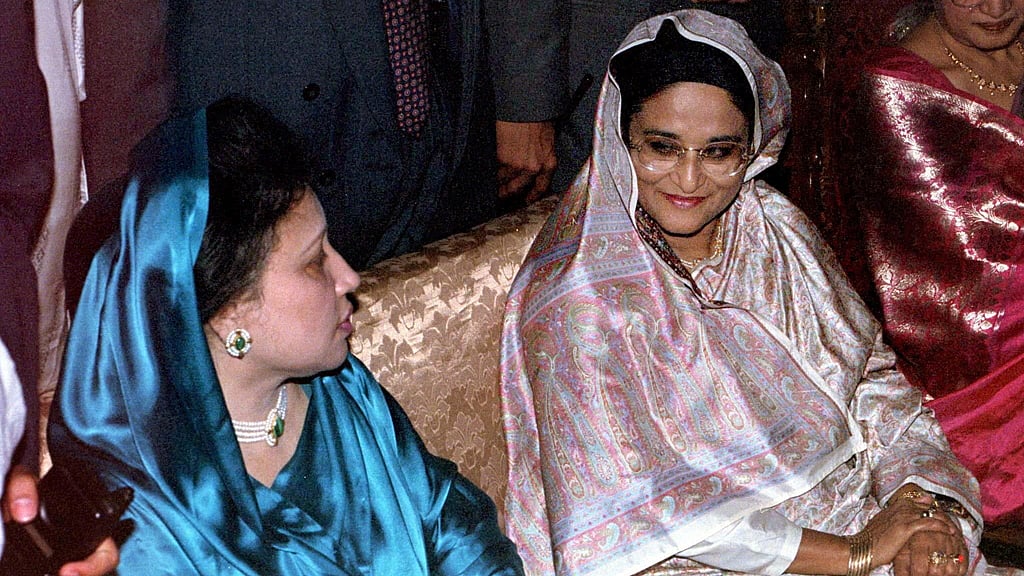
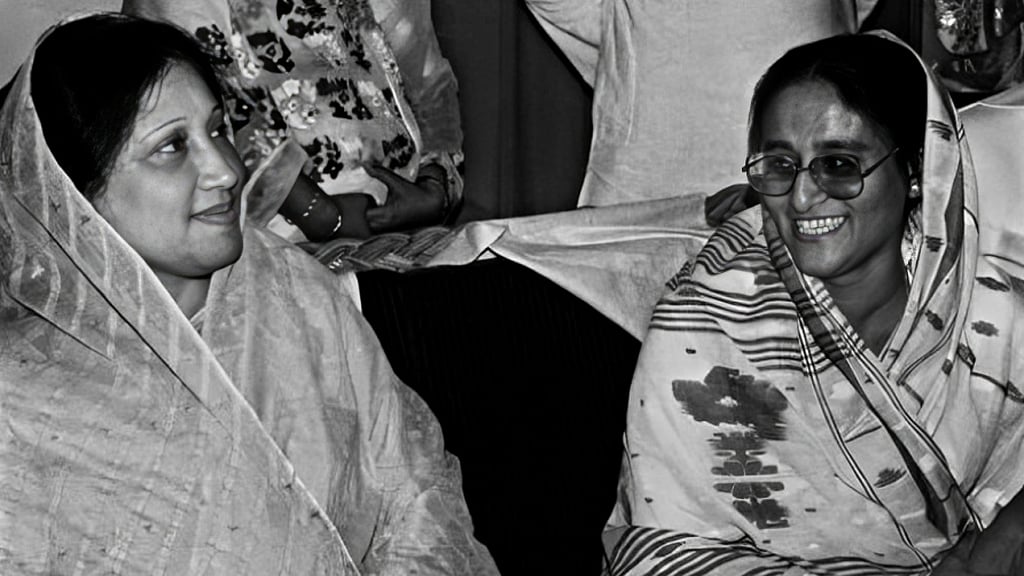
In the years that followed, she would become, in the parlance of foreign media, one of Bangladesh’s “two Begums”: the pair of women -- Sheikh Hasina being the other one -- whose see-saw rivalry came to define an era.
Her supporters will remember her as the ‘uncompromising’ leader of their cause. The history books will also record ‘Hawa Bhaban’ and her links with Jamaat-e-Islami among the more contentious chapters of her legacy.
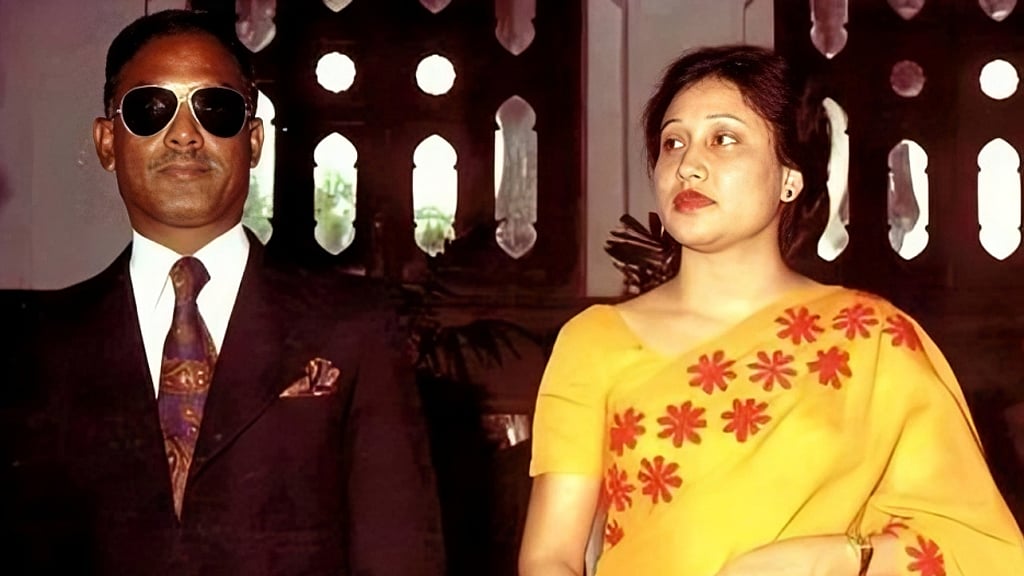
THE MAKING OF THE ‘UNCOMPROMISING LEADER’
Accounts of how Khaleda Zia, who led her party until her last breath, came to be known as the “uncompromising leader” are found in the writings of Shafik Rehman.
In 1983, under her leadership, the BNP formed a Seven-Party Alliance and launched an anti-Ershad movement. For the next nine years, Khaleda did not come to any compromise with the Ershad regime.
Even when other major political parties reached understandings with him, she did not bend; not even when other opposition parties softened. It was in those nine years that the BNP’s rank and file gave her the title that would follow her for the rest of her life: “the uncompromising leader”.
Shafik Rehman writes, “The Ershad government then used various restrictive laws to limit Khaleda Zia’s movements. She did not lose heart. She continued to give courageous leadership to the movement to overthrow Ershad.
“With the cooperation of other major political parties, including the Awami League, General Ershad tried to give his rule a civilian and democratic appearance by holding a series of elections. But Khaleda boycotted every election under his rule. Over Ershad’s nine years in power, she was arrested three times. It brought him no benefit.”
Eventually, the Awami League also joined the “Remove Ershad” movement. Faced with fierce protests across the country, the military ruler finally fell on Dec 6, 1990.
Her first parliamentary election campaign in 1991 was also the first time she ever cast a vote. She won all five seats she contested in that landmark balloting and her party emerged as the largest. That year she became Bangladesh’s first female prime minister — and only the second in the Muslim world.
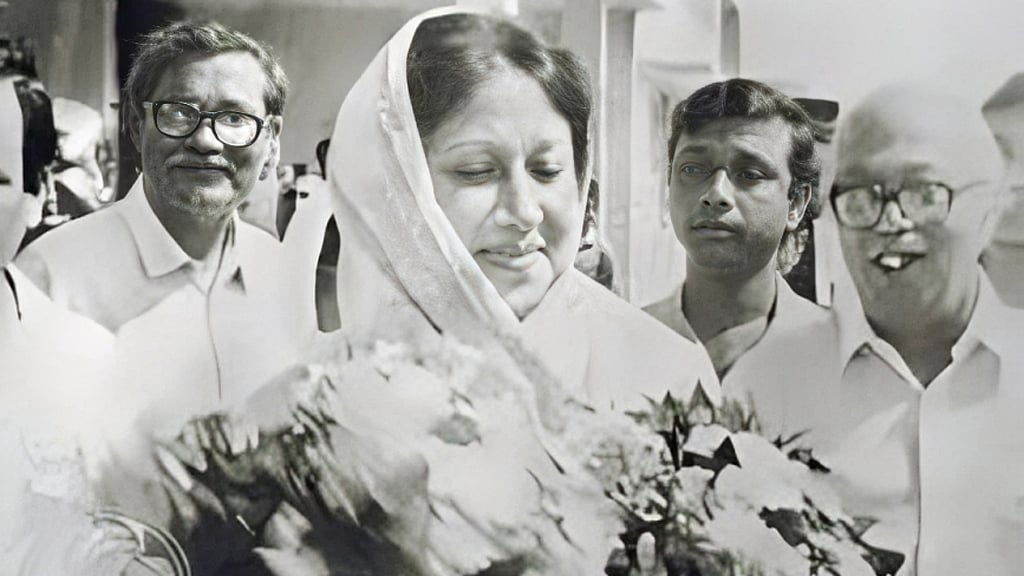
“PUTUL's HUMBLE BEGINNINGS”
Though her political career was forged in Dhaka, Khaleda Zia’s family story stretched from Feni to Jalpaiguri and then to Dinajpur. Her father, Iskandar Majumdar, came from Fulgazi in Feni. In 1919, he left for Jalpaiguri, where he stayed with his sister, completed his matriculation and later joined the tea trade. He married there in 1937, and the family remained in Jalpaiguri until the Partition of 1947.
According to BNP’s website, Khaleda Zia was born on Aug 15, 1946 in Dinajpur district — though her date of birth has long been the subject of political debate. In the pre-Partition administrative map, Jalpaiguri fell within the greater Dinajpur region, a detail her party cites in support of its account.
In 1947, her family finally moved to Dinajpur town in what became East Pakistan, settling there permanently. Khaleda first attended a missionary school before enrolling at Dinajpur Government Girls’ High School.
She was born Khaleda Khanam, nicknamed Putul. In 1960, she married Captain Ziaur Rahman of the Pakistan Army’s East Bengal Regiment. Zia served as commander of Sector 1 during the Liberation War and "Z force" and was later awarded the Bir Uttam gallantry title. Through a series of tumultuous events, he would go on to become president of Bangladesh.
Khaleda was the third among five children of Iskandar Majumdar and Tayeba Majumdar. Two siblings, Khurshid Jahan Haque and Sayeed Iskandar, are no more. Selina Islam and Shamim Iskandar survive her.
POLITICAL PEDIGREE
After Zia's assassination, the BNP fell into disarray and its were left largely directionless. Questions swirled over who would lead the party and what its future would be, as senior figures hesitated and internal rifts deepened.
Vice President Justice Sattar, then 78 years old and widely seen in political circles as a “weak-hearted man”, commanded limited confidence even within the party, when he took over as acting president.
As chronicled by the late BNP stalwart Moudud Ahmed in his memoir, the ruling and military establishment feared Khaleda more than anyone else, believing that she would have been the strongest contender if she ever ran for president.
Ershad, the then army chief, however, preferred Sattar as president. With support from one faction of the BNP, Sattar’s nomination was finalised.
Khaleda, meanwhile, was not yet mentally prepared to join politics. Her family did not want her to enter the fray. But BNP leaders, anxious to keep the party intact, pushed her forward as a kind of “compromise formula” to hold the organisation together.
By 1982, she had become a primary member of BNP. Her political journey began symbolically on Nov 7 that year, when she paid homage at Zia’s grave and soon began appearing at state events.
The party’s younger leaders wanted her at the helm but the older guard preferred President Sattar. Both Sattar and Khaleda ended up submitting nominations for the chairperson’s post.
BNP’s own account recalls "the awkwardness that followed".
"Justice Sattar went to [Khaleda Zia’s] residence twice. There, she conveyed to him the views and expectations of the younger leadership. Justice Sattar offered her the post of vice president of both the party and the country. Khaleda declined for personal reasons and ultimately withdrew her candidacy."
When Ershad overthrew Sattar on Mar 24, 1982, the political equation changed again. Ageing, ill and increasingly inactive, Sattar faded from view as Khaleda’s influence over party affairs grew.
In March 1983, she became senior vice-chairperson. Early the next month, she addressed an extended BNP council meeting. Amid ongoing factional tension, she was made acting chairperson. On May 10, 1984, she was formally elected party chairperson, the position she would hold for the next four decades.
Holding a divided party together was one of her first great tests. Khandaker Mosharraf Hossain later reflected: “If [she] had not taken the helm then, BNP would almost certainly have plunged into a deep crisis.”
PATH TO THE PINNACLE
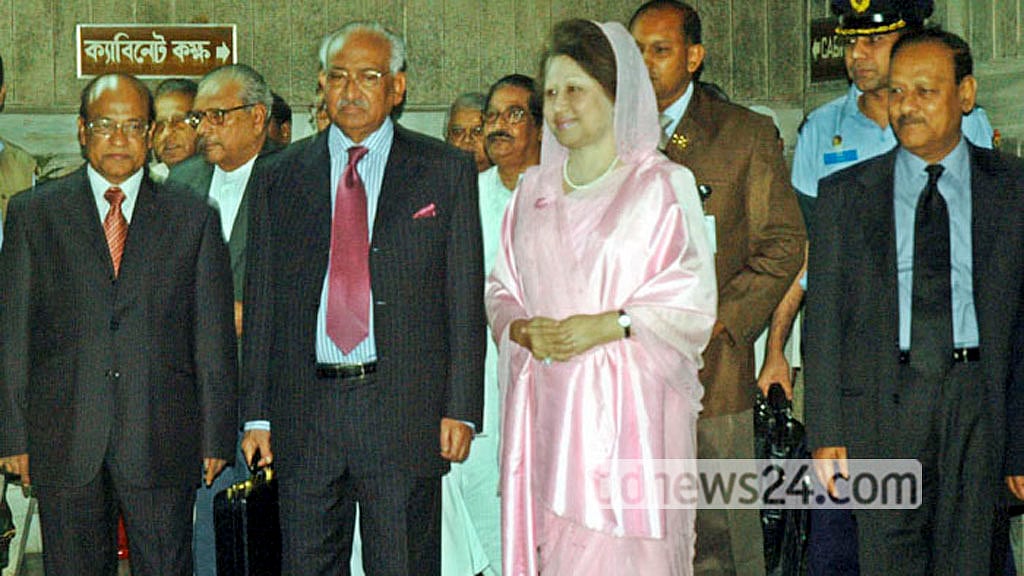
Khaleda’s mass appeal surged during the anti-Ershad movement. In 1991, after democracy was restored, she formed a government within 10 years of formally entering politics.
She served two full terms as prime minister, 1991–1996 and 2001–2006, and briefly in February 1996 in a boycotted election. That short-lived government lasted less than a month.
Under intense street protests and international pressure, the sixth parliament passed a constitutional amendment introducing the caretaker government system. Khaleda resigned, and fresh elections were held in June 1996, bringing the Awami League to power. For the first time, Khaleda became leader of the opposition.
Before the eighth parliamentary election in 2001, BNP formed a Four-Party Alliance with Jamaat-e-Islami, the Islami Oikya Jote and the Bangladesh Jatiya Party. The alliance swept to power in October 2001 and Khaleda returned as prime minister.
Amid fierce agitation by the opposition, the parliament’s term ended on Oct 28, 2006. In a rapidly escalating crisis, an army-installed caretaker government assumed power on Jan 11, 2007 and postponed elections.
Under emergency rule that year, Khaleda was arrested along with her son Tarique. She was held in a building near the Parliament complex declared a sub-jail. About a year later, she was released. Tarique was also freed and left for London, where he has remained ever since.
Her arch rival, Awami League leader Sheikh Hasina, was also detained during that period. With both women in custody, commentators spoke of a “Minus Two” formula -- an attempt to remove both leaders from politics.
After their release, Hasina went abroad for medical treatment, but Khaleda declined a similar opportunity and chose to remain in the country.
She told reporters then: “I have no address abroad. This is my address. This country, its soil and its people, are everything to me. I will not leave.”
Her words gave heart to party activists, but politically it did not prevent defeat. Under her leadership, the BNP won just 30 seats in the 2008 general election. The Awami League returned to power with a landslide.
BNP never made it back to government after that crushing reversal.
A MIXED RECORD IN POWER
In a 2019 interview with BBC Bangla, US-based academic Dr Saeed Iftekhar Ahmed offered a nuanced assessment of her years in office.
He argued that during Khaleda’s first term, corruption had not yet spread widely and she played an important role in advancing women’s rights.
“Bangladesh is an extremely conservative state,” he said. “In that conservative context she became the first woman prime minister. She broke through the traditional barriers surrounding women. I have always believed she played a major role in the forward march of Bangladeshi women.”
During the 1991-96 period, employment expanded, particularly in the garment sector, where women’s participation grew markedly. Her government concluded the Ganges water-sharing treaty with India. Bangladesh also signed an agreement with Myanmar on repatriating Rohingya refugees, though that deal never truly moved forward.
But Dr Iftekhar Ahmed believes the BNP drifted away from a more progressive course after 2001.
“She seemed increasingly willing to compromise with religion-based political parties,” he said. “Excessive contact and compromise with fundamentalist groups left her isolated from influential international quarters, both in the East and the West.”
After the 2001 election, BNP quickly came under fire over violence against religious minorities. Law and order deteriorated and militant groups gained ground. Khaleda authorised a joint force operation known as ‘Operation Clean Heart’, which was dogged by serious allegations of human rights abuses.
In those five years, corruption spread widely. Hawa Bhaban, the alternative power centre associated with her elder son Tarique, became synonymous with graft. Two leaders from Jamaat-e-Islami entered her cabinet. They were later sentenced to death for 1971 war crimes during the Awami League’s tenure.
The grenade attack of Aug 21, 2004, in which Sheikh Hasina narrowly escaped assassination during an Awami League rally, left a lasting stain on BNP’s legacy.
Journalist Mahfuz Ullah, who wrote a biography of Khaleda, believed that while she showed charisma as a political leader, she paid dearly for serious misjudgements.
In comments to BBC Bangla in 2019, he argued that she should have dissolved parliament and called early elections when the Awami League first demanded a caretaker government in 1996, and that her 2001-06 government suffered from serious weaknesses.
“Certain unscrupulous people infiltrated the system and did things for which the blame eventually fell on her,” he said. “Had she been able to steer the government more firmly towards good governance, many later events might not have unfolded the way they did.”
Political analyst Mohiuddin Ahmed also believes the Aug 21 grenade attack had a profoundly negative impact on BNP’s public standing.
FAILED MOVEMENTS, PRISON
During the coalition government, Khaleda’s relations with several senior BNP leaders deteriorated. President AQM Badruddoza Chowdhury resigned under strain. Oli Ahmed, one of those who had initially helped bring her into politics, left the party. On the eve of the army-run caretaker government, she expelled secretary general Abdul Mannan Bhuiyan.
In 2010, she was evicted from her home on Shaheed Mainul Road in Dhaka Cantonment. After the BNP boycotted the Jan 5, 2014 election, the party stayed out of parliament. The streets became its only platform.
For years, Khaleda’s party tried and failed to dislodge the Awami League from power through agitation. In early 2015, a three-month blockade and lockdown campaign saw petrol-bomb attacks and arson sweep the country. The government squarely blamed the BNP for the deadly firebombing.
That same year, her younger son Arafat Rahman Coco died — a devastating personal blow. Tarique could not return to Bangladesh. Khaleda endured that hostile period largely alone.
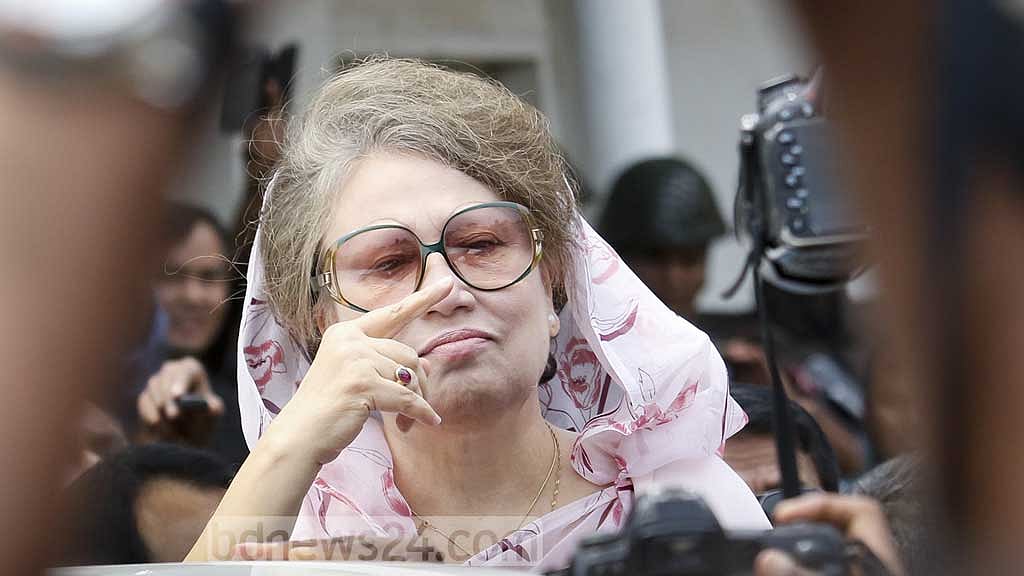
Under mounting political and legal pressure, she faced a barrage of corruption cases. On Feb 8, 2018, a court convicted her in the Zia Orphanage Trust case and sent her to prison. She was later sentenced in the Zia Charitable Trust case as well.
With its leader in jail and under intense pressure, the BNP appointed the London-based Tarique acting chairman, while Khaleda’s repeated pleas for treatment abroad were rejected.
Even so, BNP joined the 2018 general election under the banner of a new alliance, the Jatiya Oikya Front. It won just five seats in a vote widely questioned by the opposition and the international community.
During the coronavirus pandemic, on Mar 25, 2020, the Awami League government suddenly suspended her sentence by executive order and released her on conditions. She was required to stay at her home in Gulshan and barred from leaving the country.
Even after her release, she lived almost like a prisoner: cut off from politics, often in hospital, rarely seen in public.
NO RETURN TO THE FRONT LINE
The July 2024 Uprising that toppled the Awami League government changed her legal status but not her physical condition. She was freed by presidential order on Aug 7 that year, and her two corruption convictions were later quashed by the High Court, wiping away the stigma of criminal conviction.
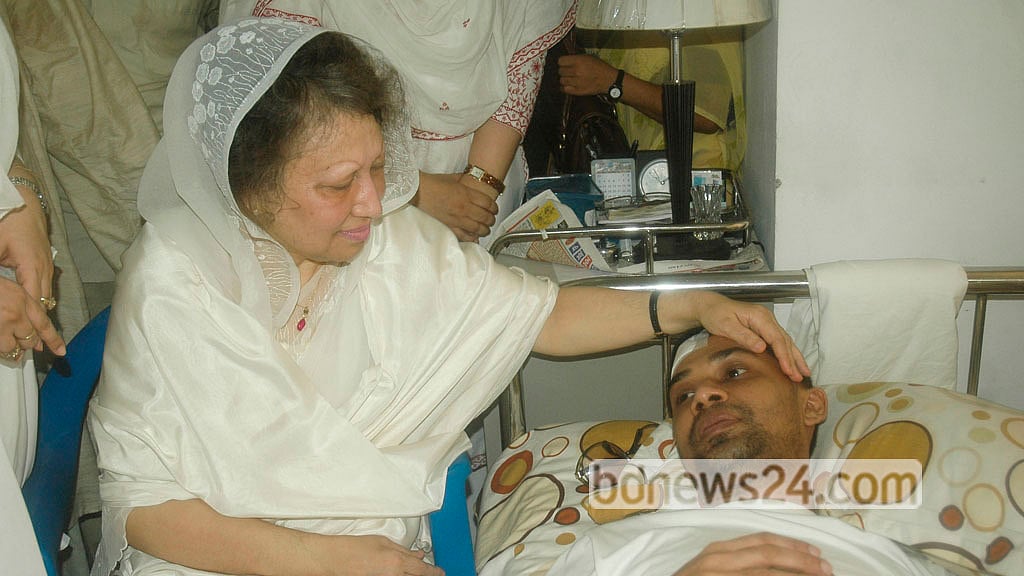
But illness had by then taken a heavy toll. Even with her freedom restored, she did not attend any BNP programmes in person.
In January this year, she travelled to London for medical treatment and saw Tarique for the first time in many years.
Her final public appearance came on Nov 21, at the Armed Forces Day ceremony at Senakunja. A few days later, news of her death emerged.
BNP Secretary General Mirza Fakhrul Islam Alamgir, her long-time lieutenant, summarised her life in the language of devotion.
“She was the mother of our democracy, the heartbeat of our nationalist movement. Begum Khaleda Zia fought for democracy all her life, endured brutal repression and imprisonment, but never stepped away from the democratic journey, never compromised.
“For that, we take such pride in her. For that, democrats can hold their heads high.”
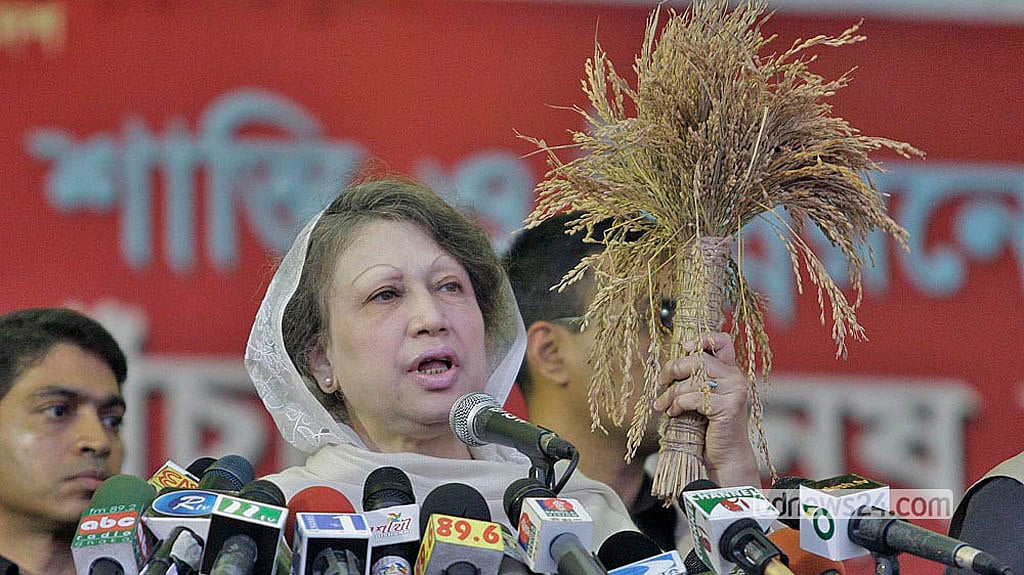
HISTORY WILL REMEMBER
To Dhaka University political scientist Professor Kazi Mohammad Mahbobor Rahman, Khaleda Zia’s journey from ordinary housewife to the summit of politics turned her into "a symbol of democratic struggle" in almost every major political movement in the country.
“A combative character like Khaleda Zia’s is rare,” he says. “Not just in Bangladesh, but in South Asia and across much of the developing world.”
In his assessment, she took “epoch-making” decisions as head of government.
“After coming to power in 1991, she played a leading role in women’s education. To strengthen the economy, she introduced VAT, which was an important reform. She restored parliamentary democracy and gave it a firmer footing. She also laid the constitutional foundation for the caretaker government system.”
Senior journalist Muzzammil Husain Monju notes that Khaleda quite literally ‘made history’ by remaining BNP chairperson for 41 of the party’s 47 years, becoming Bangladesh’s first woman prime minister and, after Benazir Bhutto, the second woman prime minister in the Muslim world.
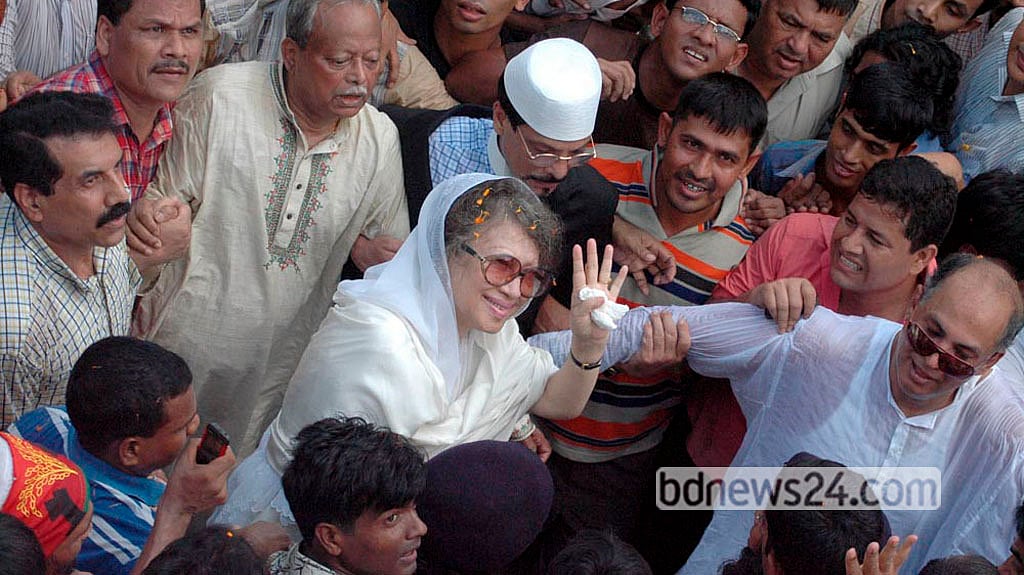
“She is most praised for standing firm and uncompromising in toppling General Ershad’s military dictatorship,” he says, “and for her personal courtesy and restraint as a politician. She rarely engaged in personal attacks.”
But, he adds, her record also contains darker entries that history will not forget: international surveys naming Bangladesh the world’s most corrupt country four times during her rule; altering the retirement age of judges to influence the election-time caretaker government, plunging the country into turmoil; allowing parallel governance to flourish at Hawa Bhaban under her son, enabling unprecedented corruption; and celebrating multiple birthdays for political effect.
“These will remain recorded and remembered,” he says, “as the negative examples alongside her achievements.”
Beyond the tributes and the criticisms lies a deeper truth.
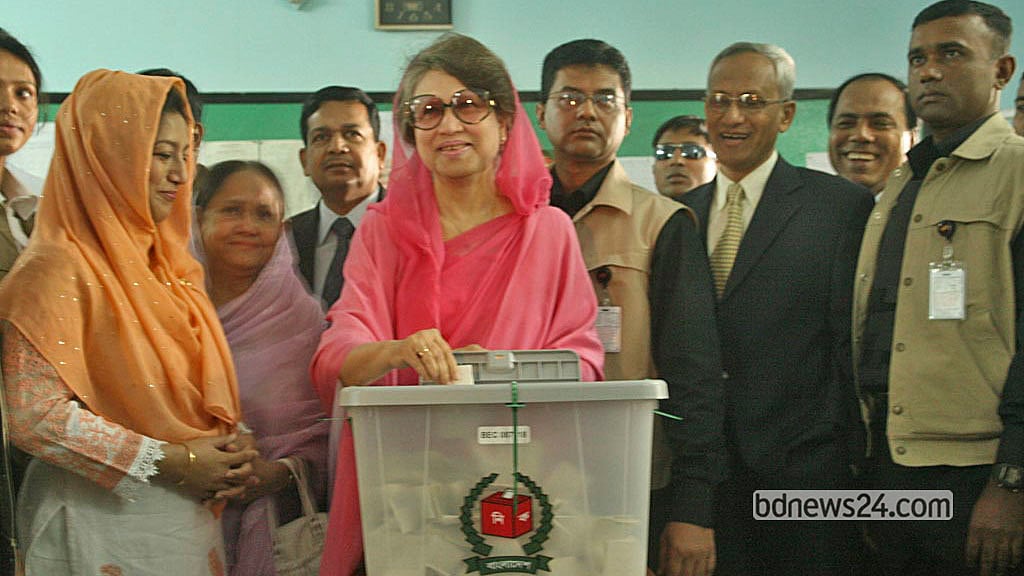
Khaleda Zia’s life story mirrors Bangladesh’s own — turbulent, resilient, contradictory, and marked by battles for legitimacy and hope.
To some, she will remain a champion of democracy. To others, a flawed leader who lost the way.
But to history, she will forever be the woman who, from a quiet household in Dinajpur, climbed the summit of power and stayed there longer than anyone ever expected.
She leaves behind a country she fought for, a party she rebuilt from near-ruin, and a legacy shaped by both courage and contradiction — a legacy that will be debated, reinterpreted, and remembered for generations.