Published : 25 Sep 2025, 08:15 AM
Updated : 28 Aug 2026, 01:27 AM


Talks of a merger between the youth-led Gono Odhikar Parishad and the National Citizen Party gained traction due to their similar ideological outlooks and political agendas. But alternative options are now being floated, triggering the question: has the merger already stalled?
Discussions with several top NCP leaders suggest that the main sticking point is leadership. The two parties have failed to settle how positions would be divided within a united organisation, leaving the merger in limbo.
Asked about the situation, Ariful Islam Adeeb, senior joint convener of NCP, told bdnews24.com: “The issue of merging is still at the discussion stage. The two parties are also considering whether there might be alternative ways of working together.”
The prospect of a merger first emerged in the media last week.
Talks began after Gono Odhikar President Nurul Haque Nur, a former DUCSU vice-president, was injured in a baton charge by police, which prompted leaders of both groups to explore unification.
At least 15 senior representatives from the two parties have since held several rounds of discussions.

NCP Convener Nahid Islam, Chief Coordinator Nasiruddin Patwary, and Gono Odhikar General Secretary Md Rashed Khan have all publicly expressed support for merger.
But after further deliberations, a number of senior leaders from both camps now believe merging is far more difficult than initially thought. As a fallback, they are considering building an alliance or launching joint issue-based movements instead.
Md Abu Hanif, a member of Gono Odhikar’s High Council and media coordinator, told bdnews24.com: “There are many similarities between NCP and Gono Odhikar in both ideology and programmes. On issues such as proportional representation in parliament, elections under the July Charter, and banning the Jatiya Party, our positions are the same. That is why the merger was raised in the first place.
“But unification is a complex process, so we are also considering alternatives. We are discussing how we might move forward together in future -- whether through a merger, an alliance, or issue-based movements.”
QUOTA MOVEMENT AND THEIR RISE
The roots of both groups trace back to the 2018 quota reform movement, when Nur’s Student Rights Council led mass protests. Some of those leaders renewed the same demand last year, which ultimately fed into an unprecedented uprising in Bangladesh.
In the 2019 Dhaka University Central Students’ Union (DUCSU) election, Nur was elected vice-president. Akhter Hossen, now a member secretary of the NCP, won the post of welfare secretary. NCP Convener Nahid and Joint Member Secretary Akram Hossain also contested that election from the same panel, for cultural and literature secretary, respectively.
Over time, these young activists split, many having been at the forefront of anti-Narendra Modi and other anti-India protests.
Under Akhter’s leadership, one faction of students first organised under the banner Chhatra Shakti, later rebranding as the Anti-discrimination Student Movement.
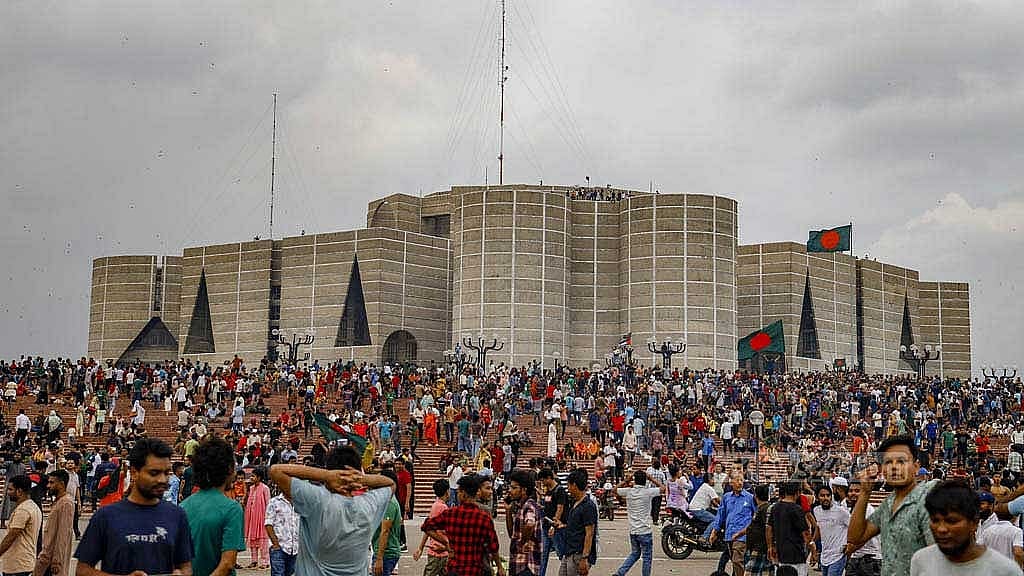
In continuity, these young leaders spearheaded the July Uprising that toppled Sheikh Hasina’s government.
From the womb of the Uprising, on Feb 28 this year, their new political vehicle, the NCP, was born. Insiders say the party is set to receive Election Commission registration later this month.
Nur, once the top face of the Student Rights Council, had already launched his own party, Gono Odhikar Parishad, in 2021.
After standing alongside the Uprising, Gono Odhikar was registered by the Election Commission with the “truck” symbol on Aug 31 last year, two weeks after the interim government was sworn in.
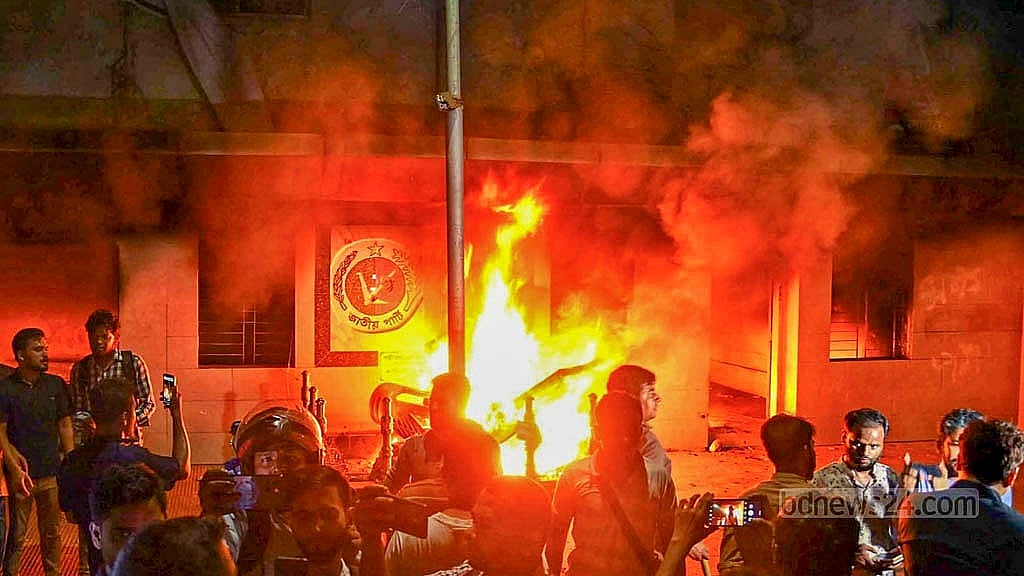
In October last year, branding the Jatiya Party as an “ally” of the ousted Awami League, Gono Odhikar activists attacked and set fire to its headquarters.
Since then, the party has demanded a ban on the Jatiya Party and other components of the 14-Party alliance. In recent months, it has staged multiple protests and clashed with police over this demand.
In May, a sit-in at the chief advisor’s official residence Jamuna, led by NCP’s chief coordinator for the southern region Hasnat Abdullah, triggered a temporary ban on Awami League activities.
On broader reform of the state, too, the two parties’ positions remain closely aligned.
NCP's Nasiruddin has said the party is working to establish a new political bloc outside the BNP and Jamaat-e-Islami-led sphere.
Amid such developments, talk of a possible merger between the NCP and Gono Odhikar has taken centre stage.
Asked about this, Gono Odhikar’s Rashed told bdnews24.com: “We have held meetings at the highest level. Leaders from both parties have expressed a positive attitude towards unification. There is ideological common ground and a mutual understanding.”
In the 2019 DUCSU elections, current NCP leader Nasiruddin had contested for welfare secretary from the left-progressive alliance panel.
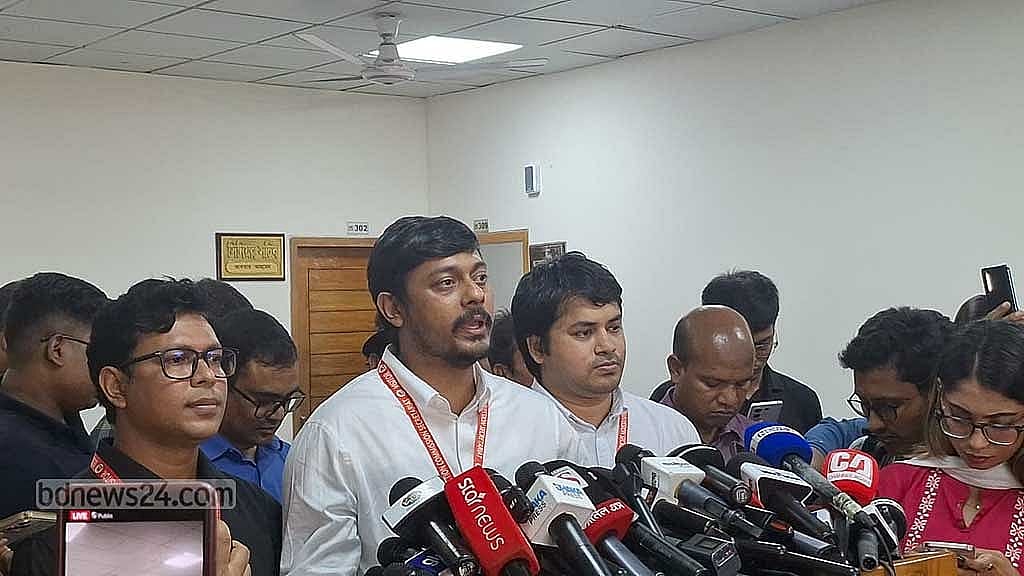
On Monday, when he went to the Election Commission, reporters asked him whether Gono Odhikar was merging with the NCP.
Nasiruddin replied: “Yes, talks are ongoing, we have agreed. The mechanism is a matter of policy. We have clarified the ideological questions. This is not about bargaining for seats or positions; it's an ideological struggle.”
SO WHAT'S HOLDING THEM BACK?
After initially forming a 217-member central convening committee, NCP quickly expanded, opening branches for workers, lawyers, professionals, youth, and expatriates.
Gono Odhikar’s central committee now numbers over 250.
The NCP’s organisational structure includes a 10-member Political Council comprising Nahid Islam, Akhtar Hossain, Sarjis Alam, Hasnat Abdullah, Nasiruddin, Samantha Sharmin, Tasnim Jara, Nahida Sarwar Niva, and Abdul Hannan Masud.
It also has a 51-member executive council.
Several NCP executive council members told bdnews24.com they were considering leaving some of the top positions open for Gono Odhikar leaders.
But Gono Odhikar has already developed multiple layers of leadership. Integrating these into the NCP framework would create a highly complicated situation. For this reason, many leaders in both camps now see joint movements as more feasible than outright merger.
On Sunday, Gono Odhikar’s Rashed said: “Just three days ago, at least 15 top leaders from both sides sat together. We are continuing our discussions.”
But by Tuesday, several senior NCP leaders said merger talks had “all but stalled”. They added that there was a growing demand to explore alternative ways of working together politically.
Read More: