Published : 15 Sep 2025, 03:12 PM
Updated : 28 Aug 2026, 01:27 AM


Islami Chhatra Shibir’s stunning wins in recent student union elections at Dhaka and Jahangirnagar universities have sparked alarm and introspection across Bangladesh’s political landscape.
For the first time in nearly three decades, the Jamaat-e-Islami-backed student wing has asserted dominance in both Dhaka University Central Students' Union (DUCSU) and Jahangirnagar University Central Students' Union (JUCSU).
The scale of the win has pushed political leaders to reassess the ground reality, especially with the general election looming.
bdnews24.com spoke to six political figures, including two former DUCSU leaders and representatives from four major parties, to understand how they interpret this shift.
While some see the Shibir sweep as a warning shot with implications for national elections, others suspect a deeper political strategy or "masterplan" may be unfolding. Still others urge caution, calling for a data-based assessment before jumping to conclusions.
A DIVIDED FIELD, A DISCIPLINED RIVAL
The leaders observed that parties who actively opposed the Awami League during its tenure, such as BNP’s student wing Jatiyatabadi Chhatra Dal, suffered heavy losses. They blamed internal feuds, weak strategies, and public perceptions of negative behaviour.
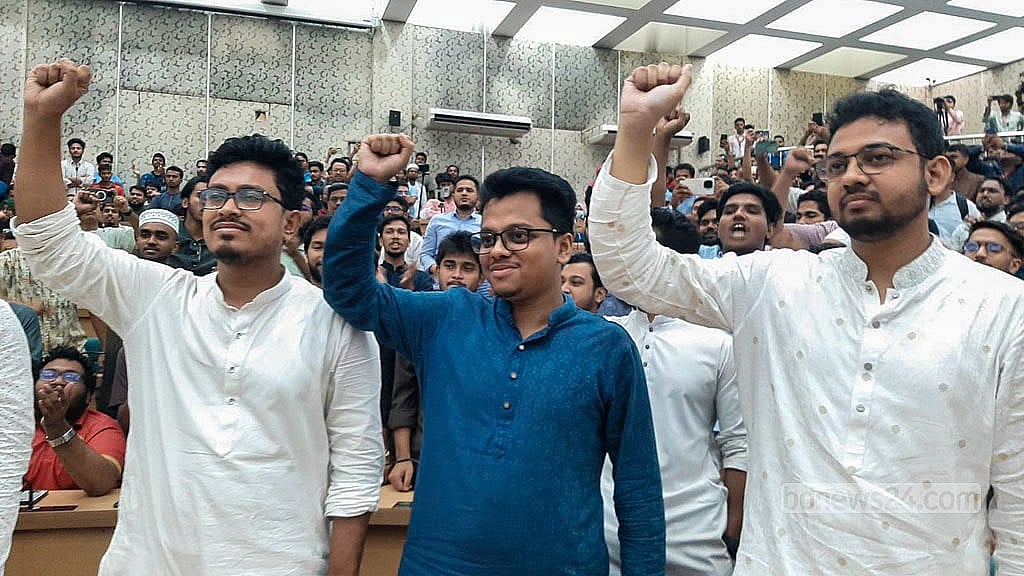
In contrast, Shibir was described as better organised, financially stronger, more disciplined, and effective in navigating campus politics—sometimes under the radar.
By infiltrating the now-banned Bangladesh Chhatra League and continuing activities while posing as general students within different organisations, Shibir has stayed ahead of others thanks to its strategy, discipline, and financial strength.
Some say Shibir's ability to blend in as non-partisan actors and exploit gaps left by rivals gave them a decisive edge.
There were also claims of election irregularities and strategic interference by the state, the university administration, and student groups like Chhatra League. Two election commissioners and three election officials resigned during the JUCSU polls, and five student panels, including Chhatra Dal’s, boycotted the vote citing fraud.
In DUCSU, Shibir’s “United Student Alliance” won 23 out of 28 positions, including key leadership posts of VP, GS, and AGS. While Chhatra Dal came in second in the central vote count, they failed to make a mark in most hall union elections.
WHAT CAUSED CHHATRA DAL's DEBACLE?
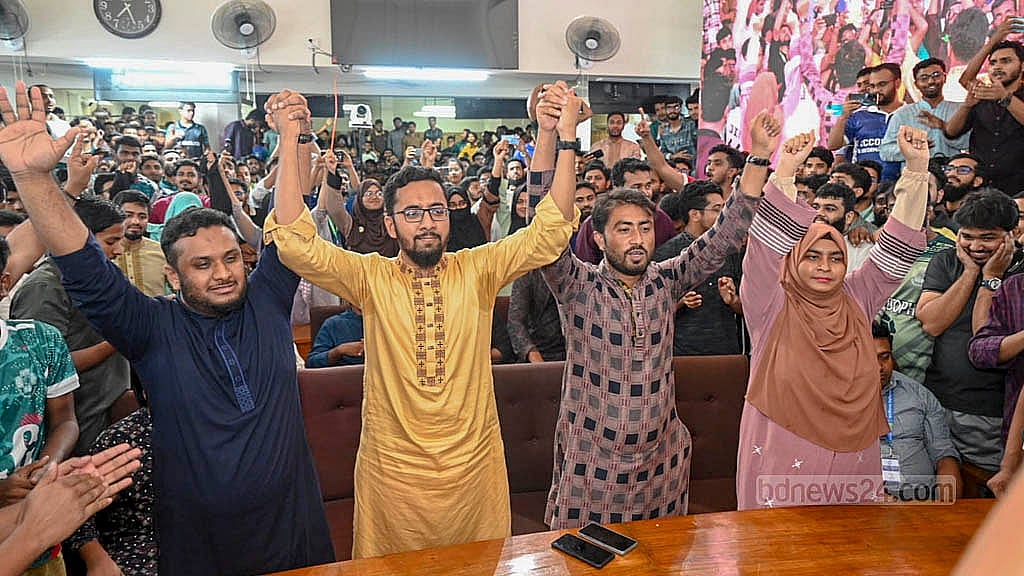
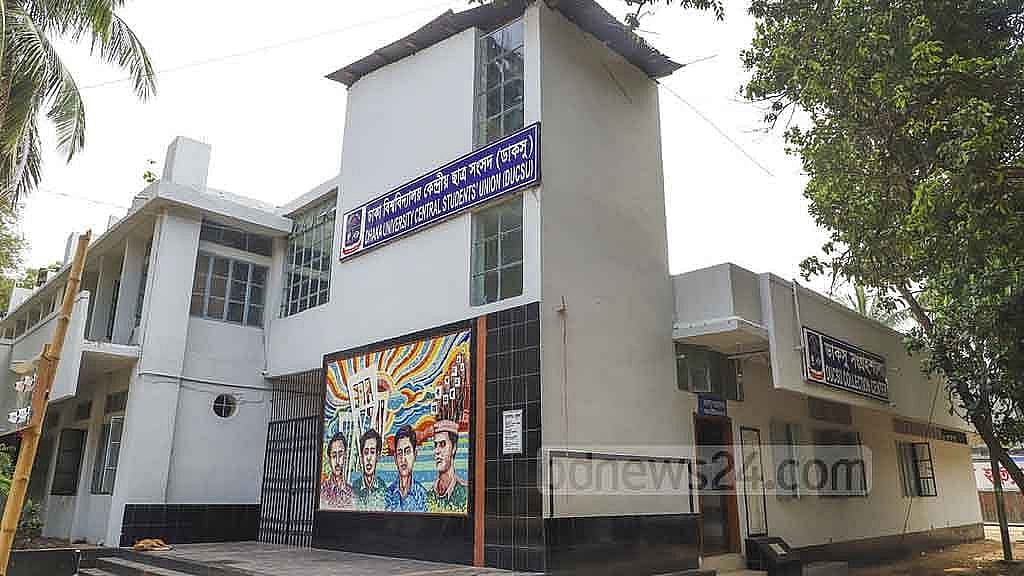
After six years, the results of the DUCSU election were announced last Wednesday morning, following the vote held on Sept 9. Shibir’s “United Students' Alliance” secured a sweeping victory, winning nine out of the 12 key secretarial posts — including VP and GS — and a total of 23 out of 28 seats overall.
Although there were counter-allegations, gatherings of political activists at the entrances, and protests over alleged “vote rigging” that stirred some tension, the polls were largely peaceful, with 78 percent of the 40,000 registered voters casting ballots.
In the central union tally, Chhatra Dal emerged as the second-largest bloc, though it failed to gain ground in the hall unions, losing everywhere except Jagannath Hall.
Meanwhile, "Bangladesh Ganatantrik Chhatra Sangsad", or Bangladesh Democratic Students’ Union, born out of the Anti-discrimination Movement, won the VP post in two halls, the GS post in six halls, and the AGS post in three halls.
From the Chhatra Odhikar Parishad, only one candidate secured a GS position in Salimullah Hall. Among the left-leaning groups, just one candidate won a member post in the DUCSU.
The results of the JUCSU election, held on Thursday, were announced 48 hours later on Saturday evening. The "Integrated Students’ Alliance" panel, backed by Shibir, won 15 of the 19 secretarial posts. Of the remaining four, three, including VP, went to independents, while one was won by a candidate from the Bangladesh Democratic Students’ Union (BGCS).
In total, Shibir’s panel ran away with 20 of the 25 posts.
Just a few hours after polling began, allegations surfaced that the vote-counting machines (OMR), CCTV cameras, and ballot supplies had been procured from institutions linked to Jamaat.
This was followed by further claims of irregularities and rigging. Five panels, including the Chhatra Dal-backed alliance, boycotted the polls. Two election commissioners and three polling officials resigned in protest.
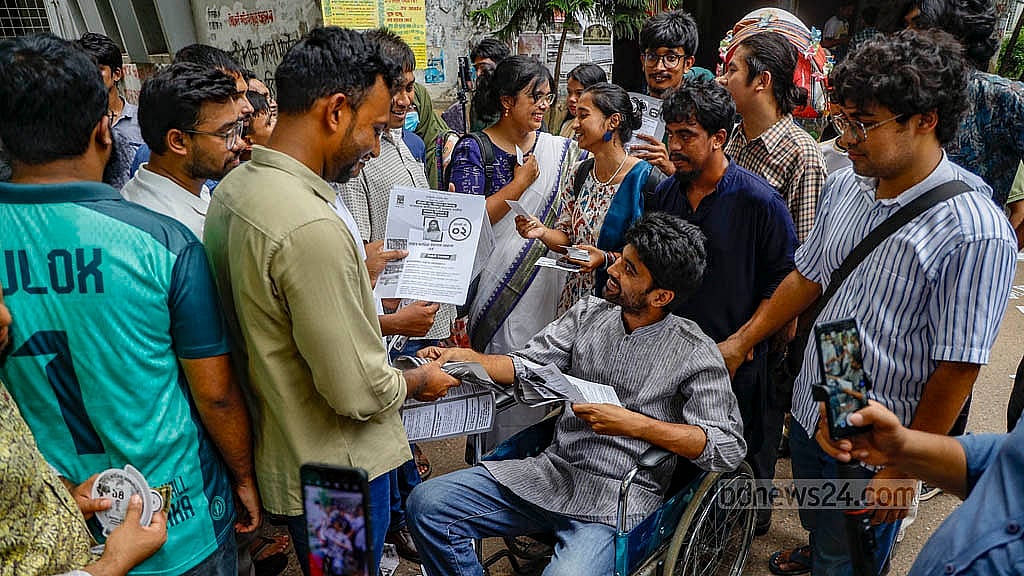
The outcome left Chhatra Dal in an even worse position: in most contests, their candidates finished in fourth place.
Former DUCSU AGS Nazimuddin Alam, now a BNP leader, acknowledged that Chhatra Dal’s image has been tainted by past violent incidents and the actions of a few rogue activists.
"Even though the organisation has many positives, the public often focuses only on the negatives," he said. He also cited the influence of social media in amplifying unfavourable narratives.
Nazimuddin argued that the fall of the Awami League government through a people’s uprising should have created an opening for opposition student groups. Instead, he alleged, the ruling party resorted to conspiracies and vote manipulation. He claimed many ballots for Shibir were cast by Awami League sympathisers. “Everybody knows it,” he insisted.
Despite no major incidents on campus, Nazimuddin suggested that off-campus violence associated with Chhatra Dal hurt their reputation among students.
He admitted factionalism within Chhatra Dal had further weakened their performance.
Mushtuq Husain, former DUCSU general secretary (1989–90) and Bangladesh JaSoD leader, said students today remain loyal to the spirit of the July Uprising—one that rejected party colours and demanded democratic change.
"They looked for fresh alternatives and didn’t see Chhatra Dal rising to the moment," he said.
Despite not being involved in campus violence, Chhatra Dal’s off-campus actions, in his view, mirrored the worst traits of past ruling parties—intimidation, extortion, and mob-style politics.
"The students didn’t want a repeat of Chhatra League’s past,” he said. “Shibir emerged as a fallback option, even for those who didn’t ideologically support them.”
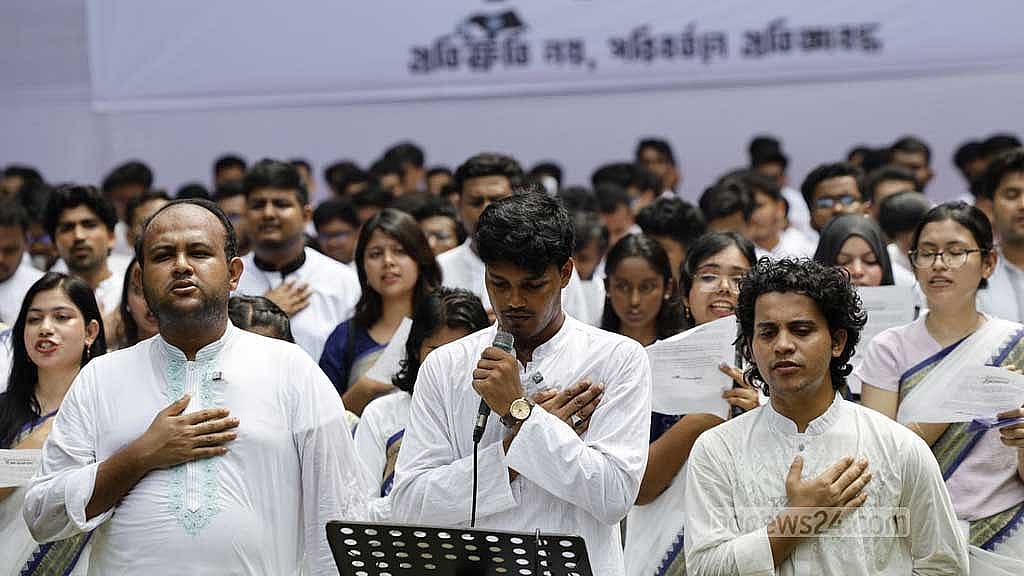
‘FORCES OF DARKNESS’ IN ‘UNDEMOCRATIC’ TIME
From the 1960s onward, left-wing and progressive politics have always been at the forefront of Dhaka University.
Similarly, Jahangirnagar University has always been a hub for progress, free thought and culture because of its geographical location, scenic nature, and academic excellence.
Despite this, left-leaning student organisations failed to make any impact in the ballot boxes at these two leading universities.
Ruhin Hossain Prince, general secretary of the Communist Party of Bangladesh (CPB), said they haven't yet been able to conduct a "full evaluation" of why they lost.
He mentioned that a data-driven assessment is needed, but offered his initial observation: "For a long time, there was no political environment in Bangladesh. Even a year after the mass uprising, there's no political atmosphere here.
“When there's an undemocratic environment, these 'forces of darkness' -- who practice religion-based politics and have immense wealth -- get an opportunity to grow. The success of the Islami Chhatra Shibir is proof of that."
Prince believes it is important to evaluate why students didn't resist this, blaming the previous Awami League regime for these circumstances.
The Left Democratic Alliance leader said, "The Awami League, which was in power before, did not act 'appropriately' in the name of the Liberation War and independence. This might have led the new generation to believe that the Liberation War and independence are synonymous with corruption, looting, and seizing power by force. As a result, this may have biased many young people. We have to consider these things when charting our future course."
WHY DID AWAMI LEAGUE-ERA PUBLIC FACES LOSE?
The 2018 quota reform movement was one of the major protests during the Awami League's rule. The activists of that movement were subjected to attacks and imprisonment for the entire duration of the previous regime.
Nurul Haque Nur, who emerged from that movement, even became the DUCSU VP.
However, Bin Yamin Mollah, the central president of his party Gono Odhikar Parishad’s student wing Chhatra Odhikar Parishad, lost in the DUCSU election, despite serving seven months in prison during the Awami League's tenure.
Similarly, other prominent faces of the 2024 mass movement also lost badly.
Gono Odhikar Parishad General Secretary Rashed Khan sees "planned politics" behind this. He believes that some of their members running on other panels outside the BGCS coalition were part of this "planned politics”.
Without naming the Shibir, he said: "As a journalist, if you look into who is behind the NCP's general secretary candidate, who selected him? Secondly, some of these AGS candidates were made to run on different panels. If you observe this, you'll get the real information.
“They basically did this to create a lack of confidence in the leading faces of the movement. I believe this was a deliberate political move."
Rashed, who was the GS candidate for the Nur-Rashed panel in the 2019 DUCSU election, also highlighted the advantage Islami Chhatra Shibir had from not being in the public eye.
"Another thing is that Chhatra Dal, Chhatra Odhikar Parishad, and even Abdul Kader (the ‘proclaimer of the nine-point demands’ in the July movement who lost the DUCSU VP position) couldn't stay on campus. Nahid Islam and others couldn't stay either because they have been struggling with us since 2018.
“Only Shibir was on campus by joining organisations like Badhan (a voluntary blood donors’ organisation) and the journalist associations, as well as social and cultural groups. Because of this, Shibir had a connection with the students, and no one knew they were part of Shibir."
He also pointed out that Shibir's strong financial structure allows it to operate a "welfare mechanism”.
Rashed highlighted how Shibir conducted its activities as general students and as "seniors" in social organisations at Dhaka University. "During Ramadan, Shibir provided Iftar and Sehri to students in their rooms," he said. "Another thing is that most students at Dhaka University are from low-to middle-income families. Jamaat and Shibir have institutions that provide regular scholarships for them."
He observed that Shibir runs coaching centres and other welfare-oriented programmes.
NCP Senior Joint Convenor Ariful Islam Adeeb also pointed out Shibir's strong economic structure and observed the weaknesses of the NCP-supported BAGCHAS panel.
According to Adeeb, since the main leaders of the movement to oust Sheikh Hasina have moved into national politics, the student council elections featured relatively new leadership, who had several delicacies.
However, he believes the organisation did well in the hall council elections because they were able to overcome those intricacies.
He thinks that as a force of the July Uprising, BGCS did not perform badly at all. He claims that the panel secured the "second position" in both DUCSU and JUCSU polls.
In DUCSU, they won nearly six VP, GS, or AGS positions from multiple halls. "Also, the VP who won at JUCSU is also a former coordinator of the Students Against Discrimination movement.
"WHAT IS JAMAAT SAYING?
Jamaat Central Executive Committee member Matiur Rahman Akanda said, "It is very clear that the country's youth have taken a stand against injustice, falsehood, lies, and anti-democracy. The youth, who ousted the dictator through protests, elected their representatives through voting, and this is a reflection of their mindset.
“Those they elected believe in Islamic ideals, morality, and values. So, it is natural for this force to lead Bangladesh in the future."
As the student wing of Jamaat, Shibir also practices a similar form of politics. They have a strict stance on practising purdah and Islamic customs. However, during the university elections, their panel candidates were seen campaigning with women and taking pictures together, which sends a message to general students that Shibir is moving away from its traditional politics.
When asked if this was a deviation from Shibir's ideals, Matiur said: "Chhatra Shibir has 'never deviated' from its fundamentals. It has been able to present its views and behaviour, and the students have accepted it."
WHAT IS THE MESSAGE FOR POLITICS?
There is public discussion about what impact the victory of Islami Chhatra Shibir in the two universities could have on politics and the next general election.
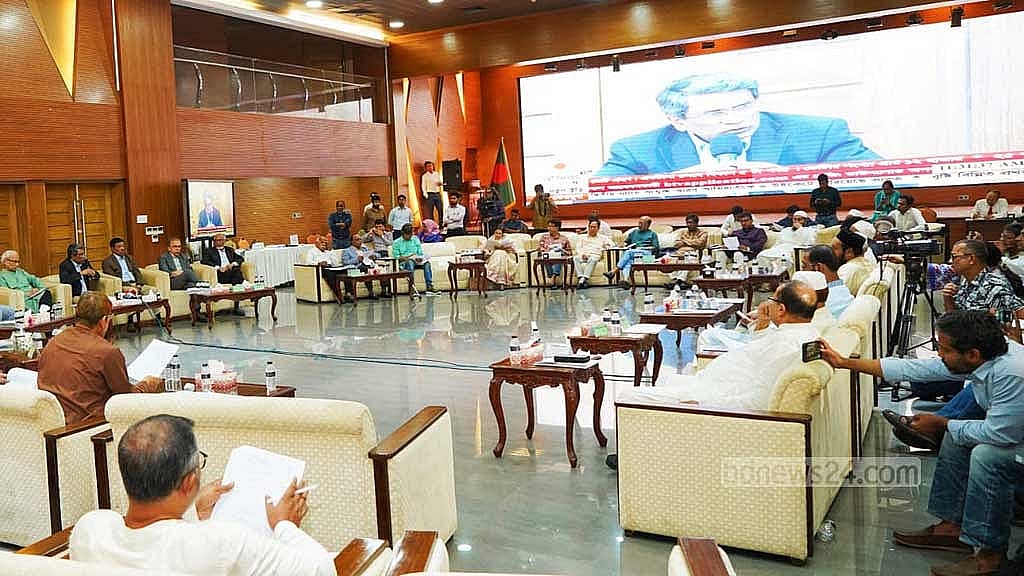
On Sunday, at a discussion in Dhaka, BNP Senior Joint Secretary General Ruhul Kabir Rizvi questioned whether the victory of one organisation in DUCSU and JUCSU is part of a master plan.
He also questioned whether a deep-seated conspiracy is being hatched by the state and university authorities to target nationalist forces. "We have driven out the Awami League, now they want to target us (the BNP)... this 'master plan' has people worried today."
Jamaat leader Matiur said, "Both Dhaka University and Jahangirnagar University have a large number of students. They have given a forecast of an evolution through their votes. Its impact will fall on the people as a whole and on the elections."
However, BNP leader Nazimuddin Alam believes that if the BNP learns from these elections and its leader Tarique Rahman takes a firm organisational stance, this crisis will be resolved before the national elections.
He said, "The BNP is learning a lot from these DUCSU and JUCSU elections. And Tarique Rahman is understanding a lot about what the people want now. He has to take an even stricter organisational stance."
NCP leader Adeeb said, "The NCP did not just emerge from a mass uprising; rather, it is the result of the need for a new political force that has been brewing over the last 10-15 years. So, it's likely that the political reality created over the past 10-15 years will move forward through the NCP, with some ups and downs."
Bangladesh JaSoD leader Mushtuq said: "This has a political significance. Because the Awami League, in the name of the Liberation War and the struggle for independence, especially in the last 15 years -- and particularly the last 10 years after 2014 -- brought the country to a completely autocratic system. As a result, they caused harm.
“The spirit of the Liberation War, and even the 'Joy Bangla' slogan, has at times become a symbol of oppression. Consequently, students have temporarily accepted people with the opposite ideology, even if they are Shibir, overlooking their past and thinking, 'Let them win.'"
Mushtuq, however, said that for future politics, students will see if Shibir tries to impose its ideology upon them.
"Now they (the students) will see if they (Shibir) want to impose their Islamic ideology and politics on the students. If something goes against reality, it will quickly alienate them. For example, when photos of their leaders who took a stance against the Liberation War were put up at TSC, there was a protest."
CPB leader Prince said, "If this kind of 'undemocratic environment' persists, it will be 'very difficult' for any democratic or progressive force to come forward. We have to 'fight' to establish democracy and to bring back a democratic political atmosphere in all places."