Published : 13 Mar 2026, 06:21 AM
Updated : 21 Aug 2026, 03:28 PM


Bangladesh’s 13th Parliament has opened amid a storm of protest and political intrigue, with a dramatic walkout by opposition lawmakers and a condolence motion listing convicted 1971 war criminals.
Hafiz Uddin Ahmad, a seven-term BNP MP and veteran freedom fighter, was elected speaker, while Kayser Kamal was chosen as his deputy on Thursday.
To accommodate their new roles, Hafiz stepped down as liberation war affairs minister and Kayser as state minister for land.
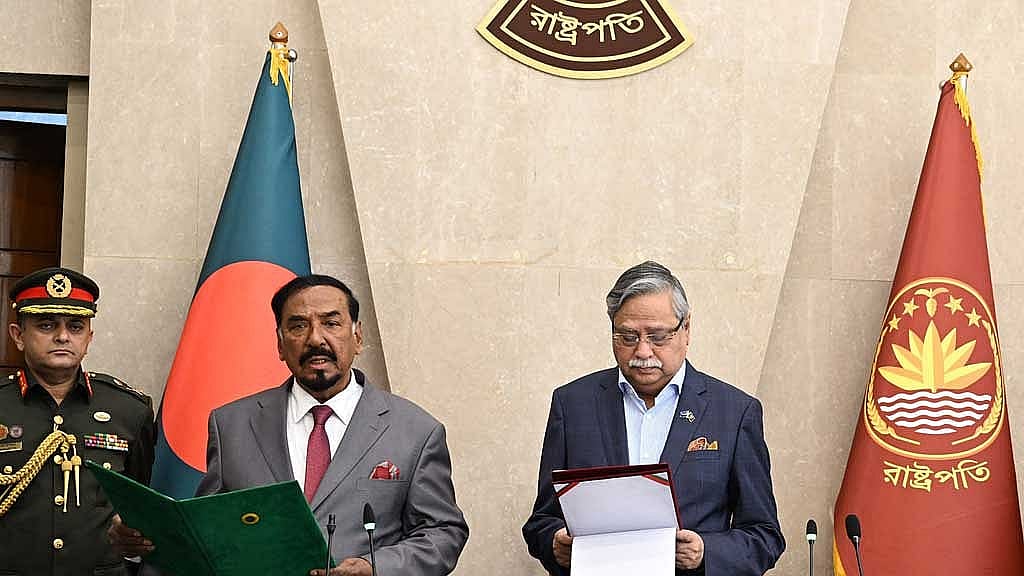
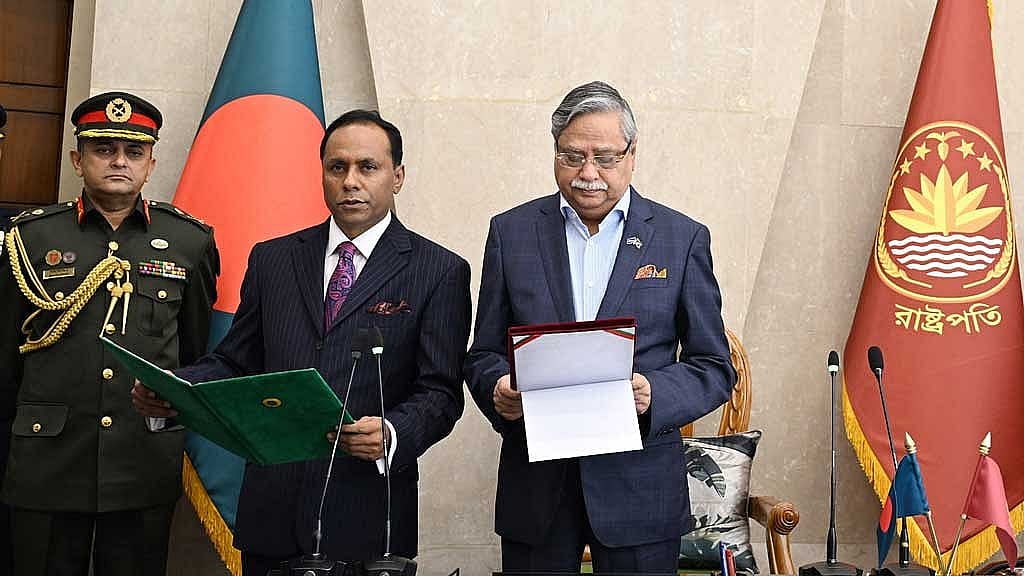
In a swift cabinet reshuffle, BNP’s Ahmed Azam Khan was sworn in by President Mohammed Sahabuddin at the parliament complex to fill the ministerial vacancy.
Following convention, the House adopted a condolence motion on the first day remembering distinguished national and international figures, former presidents and former MPs, as well as those killed in the July Uprising and victims of the Milestone School and College aircraft crash.
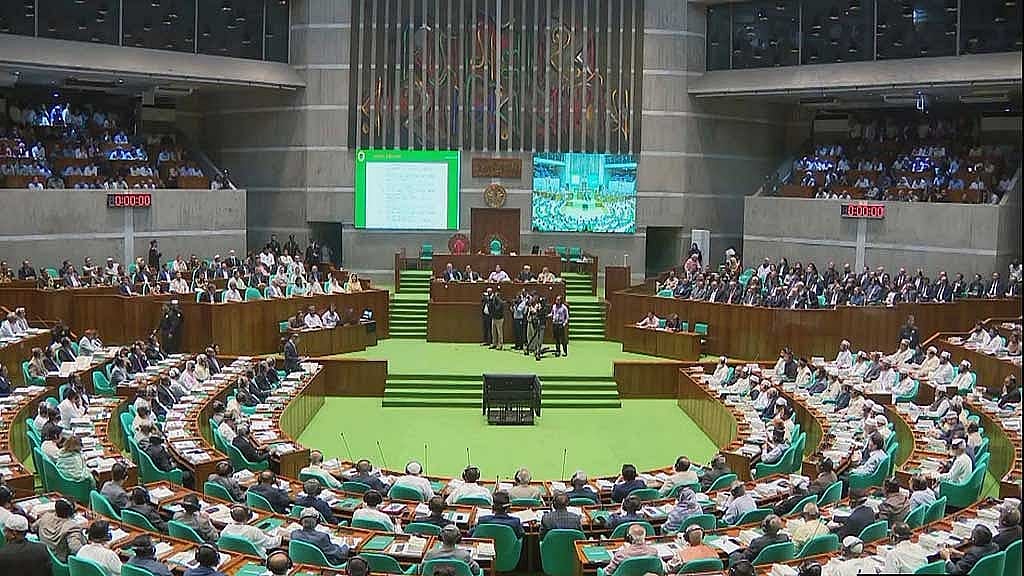
However, eyebrows were raised as the names of six Jamaat-e-Islami leaders and one BNP leader -- all convicted of war crimes during the 1971 Liberation War -- were included in the motion.
Political analyst Prof Sabbir Ahmed of Dhaka University suggested the move indicated a “strategic consensus” between the ruling BNP and Jamaat.
The proceedings took a dramatic turn during President Shahabuddin’s address when Jamaat-led opposition MPs staged a loud protest and walked out.
Prof Sabbir noted that while the walkout was anticipated, it reflects a longstanding practice in Bangladeshi politics.
Earlier, Law Minister Md Asaduzzaman placed 133 ordinances issued during the interim government before the House for parliamentary approval.
The session also completed formalities such as the nomination of the panel of chairmen before being adjourned.
Senior MP Chairs Debut as PM Tarique Takes Seat
The first session commenced at 11:05am with a recitation from the Quran, ending a 20-month hiatus following the 2024 mass uprising.
Moments earlier, at 10:55 am, Prime Minister and Leader of the House Tarique Rahman entered the chamber to a standing ovation and thunderous desk-thumping from both treasury and opposition benches. It marked a historic moment as he took the seat of the Leader of the House on his very first day as a Member of Parliament.
In the absence of the 12th Parliament’s Speaker, Shirin Sharmin Chaudhury—who has remained out of the public eye since the regime change—and with Deputy Speaker Shamsul Hoque Tuku in custody facing murder charges, the house operated under a unique procedural arrangement.
Veteran MP Khandaker Mosharraf Hossain presided over the session with the unanimous backing of other MPs.
His name was proposed by the prime minister and seconded by BNP Secretary General Mirza Fakhrul Islam Alamgir and Jamaat leader Syed Abdullah Muhammad Taher, receiving full support from the floor.
Speaker, Deputy Speaker Elected
Mosharraf said that he received only one nomination for the election of the speaker of parliament - BNP National Standing Committee Member MP maj (retd) Hafiz Uddin Ahmad.
Mosharraf added that Hafiz is willing to fulfill this responsibility.
He called on Barguna MP Nurul Islam to present the motion and it went forward. MP Rakibul Islam seconded the motion.
The motion was tabled and passed.
Then came the turn of the deputy speaker election.
Mosharraf said that he had also received only a single nomination for the post - MP and State Minister for Lands Kayser Kamal.
The session president said that Kayser agreed to take on the responsibility.
He called on MP Ruhul Quddus Talukder to move the motion, which he did. MP Ashrafuddin supported the motion.
It was then tabled and passed.
President Shahabuddin then administered the oath of office to the newly elected speaker and deputy speaker at the President's Office in the Parliament Building.
While the July National Charter stipulated that the deputy speaker be chosen from the opposition, the ruling BNP’s offer for the post was declined by Jamaat, the main opposition party.
Jamaat chief Shafiqur had said on Wednesday that the opposition would only accept the role once the July Charter is implemented in its entirety.
A five-member Presidium has also been nominated to conduct parliamentary sessions in the absence of the speaker and deputy speaker.
Speaker Hafiz Uddin announced the list in parliament.
They includes Mirza Abbas Uddin Ahmed, MP for Dhaka-8; Goyeswar Chandra Roy, MP for Dhaka-2; Abdul Moyeen Khan, MP for Narsingdi-1; Mohammad Monirul Haque Chowdhury, MP for Cumilla-6; and ATM Azharul Islam, MP for Rangpur-2.
Convicted War Criminals Included in Obituary Motion
After the election of the speaker, the House adopted an obituary motion for several high-profile figures, including former prime minister Khaleda Zia, martyrs of the July Uprising, and victims of the Milestone School and College plane crash.
In a move that sparked immediate debate, the names of several top Jamaat leaders and a senior BNP figure -- all convicted of war crimes during the 1971 Liberation War -- were added to the motion.
Speaker Hafiz Uddin Ahmad announced the inclusion of Jamaat’s Motiur Rahman Nizami, Ali Ahsan Muhammad Mujahid, Abdul Quader Mollah, Mohammad Kamaruzzaman, Mir Quasem Ali, and Delwar Hossain Sayedee.
The name of BNP’s former MP and Standing Committee member Salauddin Quader Chowdhury was also incorporated.
Nizami and Mujahid served as ministers in the BNP–Jamaat alliance government during the 2001–2006 term, while Sayedee was a member of parliament.
All seven individuals were convicted of crimes against humanity, including genocide, rape, and torture, by the International Crimes Tribunal during the previous Awami League administration. Sayedee, sentenced to life imprisonment, died in custody, while the other six were executed between 2012 and 2016.
Former Jamaat nayeb-e-ameer AKM Yusuf was also accused of war crimes, but died in jail before the trial concluded.
The condolence motion was adopted by parliament following a series of discussions on the life of Khaleda and the sacrifices of the martyred July Uprising fighters.
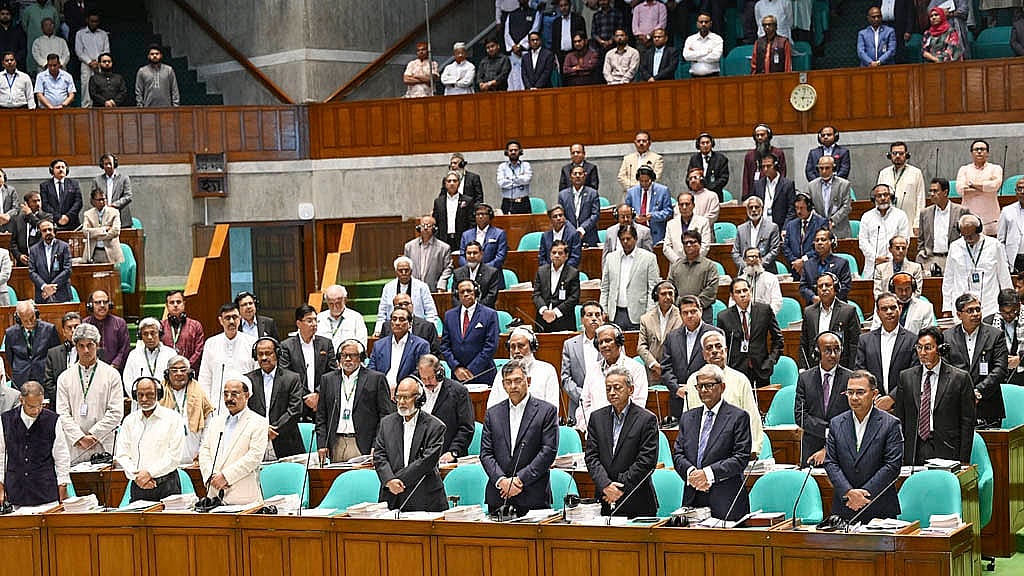
Before that, a minute of silence was observed in honour of the dead.
Religious Affairs Minister Kazi Shah Mofazzal Hossain Kaikobad prayed for the forgiveness of their souls.
Opposition Walks Out as President Begins Address
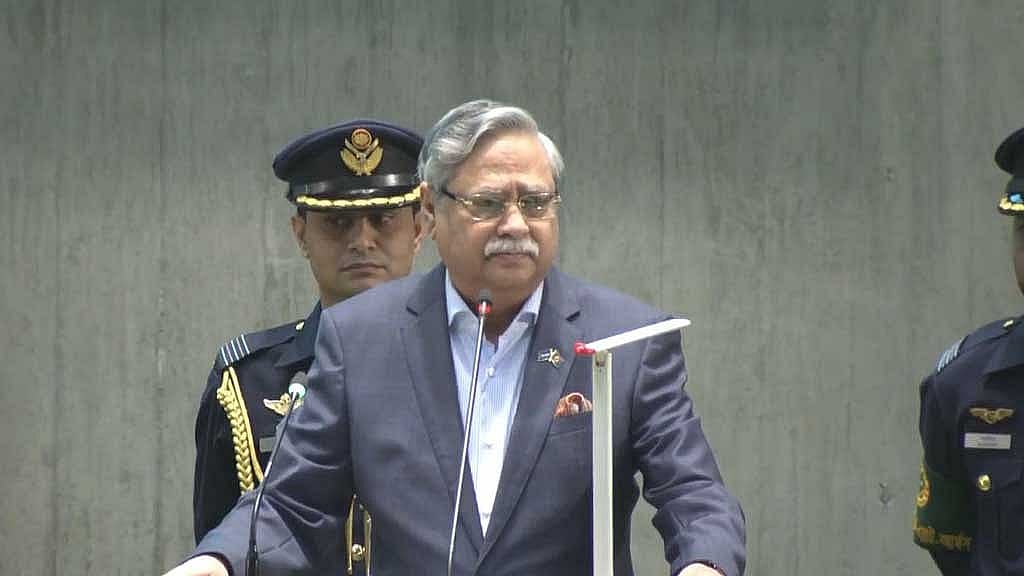
Jamaat and the NCP staged a walkout during President Shahabuddin’s inaugural speech.
While tradition dictates the president addresses the first session, the opposition had demanded that Shahabuddin, who assumed office during the Awami League administration, be barred from speaking.
The ruling BNP did not support this demand.
As the president’s arrival was announced at 3:30pm, opposition MPs rose from their seats, displaying red cards bearing the words “No betrayal of July”.
Following parliamentary convention, the leader of the house and members of the ruling party stood up to greet the president as he entered the chamber. However, some opposition MPs remained seated as part of their protest.
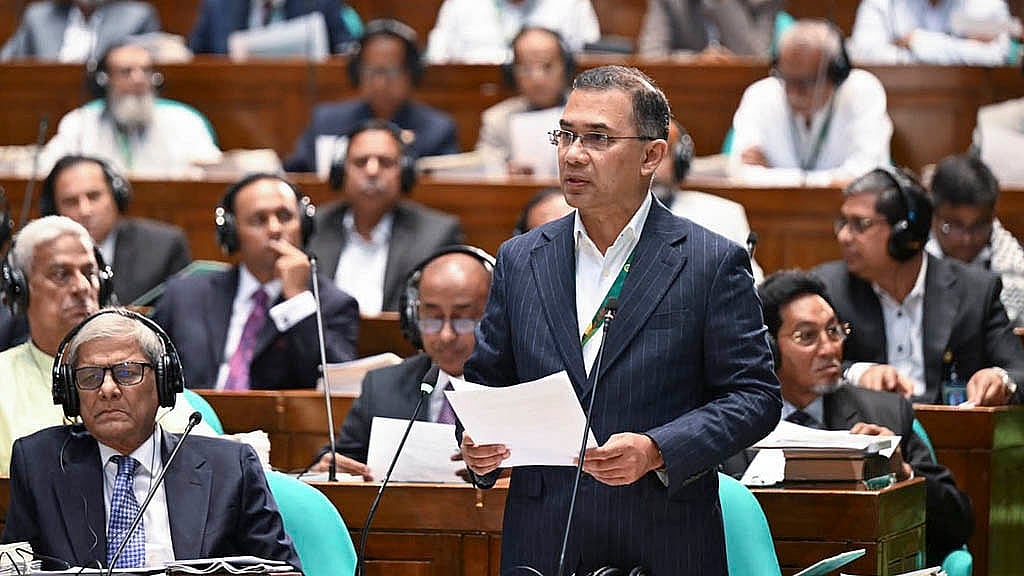
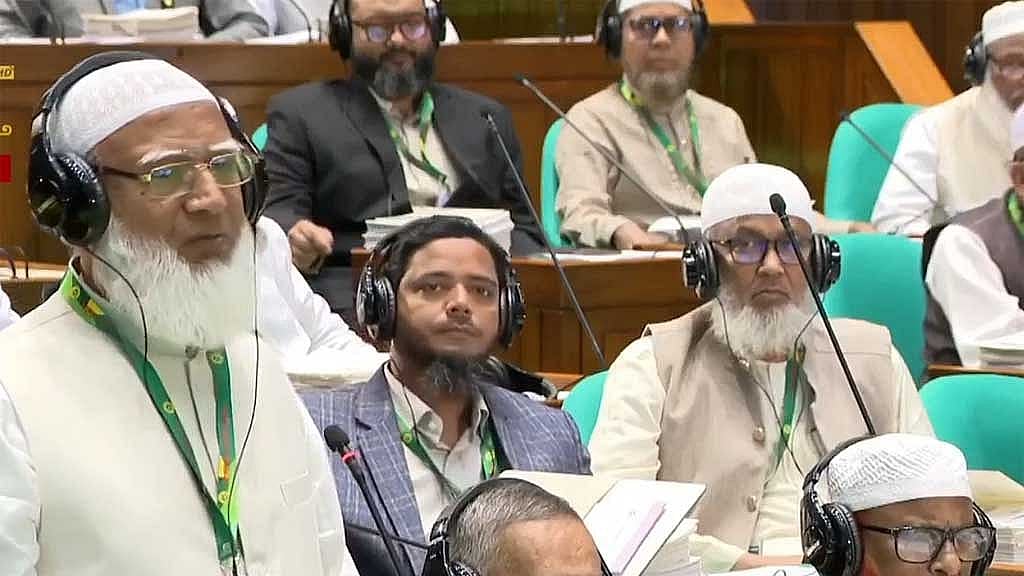
When the national anthem began to play on the bugle, minister Mirza Fakhrul Islam Alamgir and officials of parliament requested members to stand to show their respect for the anthem. While some MPs stood up, several others remained seated. Opposition members, however, paused their protest and stood silently during the anthem.
As the president began delivering his address, opposition MPs began protesting loudly. At one stage, they walked out of the chamber while chanting slogans.
President Adopts BNP Rhetoric, Labels Former Regime ‘Fascist’
In a striking reversal of political tone, President Shahabuddin delivered an inaugural speech to the 13th Parliament that mirrored the narrative of the ruling BNP, marking a sharp departure from his tenure under the previous administration.
The speech was thick with political irony. Shahabuddin, who was appointed by the Awami League, began by paying tribute to the millions of martyrs and freedom fighters of 1971, specifically naming Ziaur Rahman as the "proclaimer of independence" -- a title the BNP holds sacred but the Awami League has historically rejected.
The president repeatedly characterised the ousted Awami League government as "fascist" and heavily criticised its record on corruption.
He even offered a defence of the 2001–2006 BNP-Jamaat term, arguing that the "corruption champion" stigma attached to Bangladesh at the time was a legacy inherited from the preceding 2001 Awami League government.
"The government led by Begum Khaleda Zia took strict measures to suppress corruption and enacted the Anti-Corruption Commission Act, 2004," Shahabuddin said.
He outlined the new government's priorities, placing the rule of law and anti-corruption measures at the top of the agenda.
The president concluded his address with "Bangladesh Zindabad", a slogan synonymous with the BNP.
He used the "Joy Bangla" salutation throughout his tenure under the previous regime.
Although he continued to serve as president during the 18 months of the interim government, he was not given the opportunity to speak at any state function.
After the new BNP government took oath following its election victory, Shahabuddin spoke at an official event for the first time on Mar 6.
At that event marking National Jute Day at the Bangladesh Shilpakala Academy premises, the president ended his speech with the BNP slogan “Bangladesh Zindabad”, which also sparked criticism of the president.
As the commander-in-chief of the Armed Forces, the president’s role is largely ceremonial.
Under parliamentary tradition, the president’s speech is drafted and approved by the Cabinet, meaning it reflects the executive’s policy and vision rather than the president's personal philosophy.
133 Interim Ordinances Tabled For Approval
Law Minister Md Asaduzzaman tabled 133 ordinances issued during the interim government’s 18-month tenure for parliamentary approval.
The ordinances were enacted under Article 93(1) of the Constitution while the legislature was dissolved.
To remain legally valid, constitutional law requires these to be placed before the new parliament’s first session and passed within 30 days.
Following the tabling, Chief Whip Nurul Islam Moni proposed forming a 14-member special committee, led by Barishal-3 MP Zainul Abedin, to scrutinise the bills.
The Parliament Secretariat has released the full list of the 133 ordinances.
Speaker Talks Tough on Rules in Debut Session
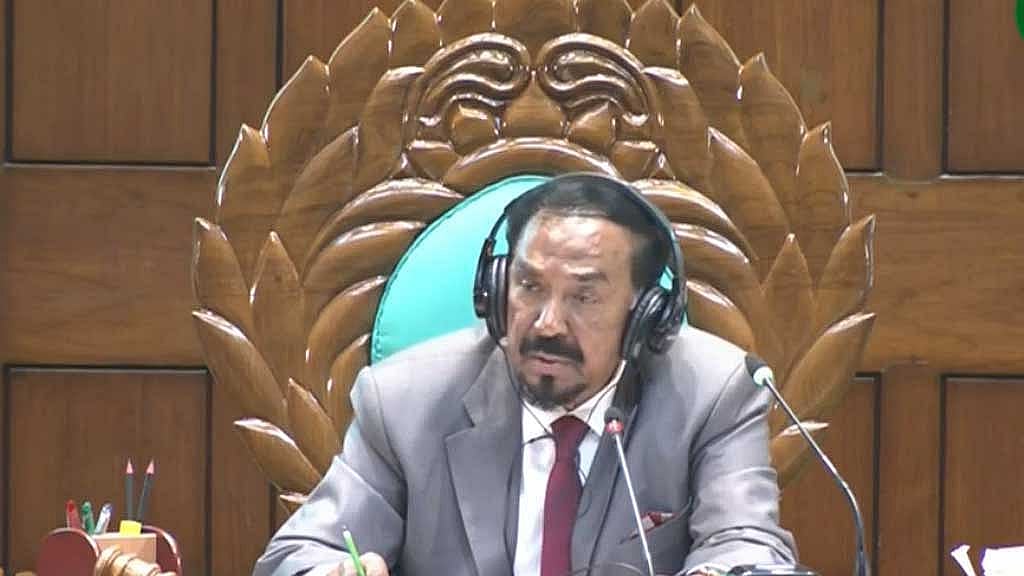
The session resumed after the prayer break under the chairmanship of newly elected Speaker Hafiz, who declared, “Bangladesh comes first -- let this be our motto”.
A veteran freedom fighter, Hafiz paid tribute to the martyrs of the 1971 Liberation War and the July Uprising.
He also informed the House of his resignation from the BNP Standing Committee to maintain neutrality.
Despite an early technical glitch that forced him to use a handheld microphone, the speaker maintained a firm grip on the proceedings.
Facing an opposition walkout and heated debates on his first day, Hafiz repeatedly urged members to observe parliamentary decorum.
When State Minister for Planning Zonayed Saki continued speaking beyond his allotted time, the speaker issued a sharp reminder.
“The Rules of Procedure are like the Bible for every MP. Please read them carefully, especially the new members,” he remarked.
He also reminded MPs of basic etiquette: “When the speaker addresses a member, that member must resume their seat. This is the parliamentary custom.”
When opposition members protested President Shahabuddin’s arrival, the speaker intervened, noting that the president’s address is a constitutional mandate and a core parliamentary tradition.
The session was adjourned until 11:00am on Mar 15.
‘No Surprises’
Analysing the debut session of the new parliament, DU Prof Sabbir described the proceedings as "business as usual".
The analyst pointed to a perceived lack of experience in presiding over the House compared with previous BNP tenures.
“While the current speaker is politically seasoned, there is a visible gap in parliamentary management experience. During the BNP’s earlier years, we saw speakers like Sheikh Razzaque Ali, who managed the chamber with immense skill,” he said.
Sabbir viewed the inclusion of convicted war criminals in the obituary motion as a "negotiated settlement" between the BNP and Jamaat.
“Both parties advanced their own political agendas through compromise. The BNP likely couldn't accommodate Jamaat’s request initially but gave in following persistent pressure,” he observed.
He also found the opposition walkout during the president’s speech predictable, noting that the decision to boycott had been made a day earlier.
“The session reflected national political tensions but offered no real surprises. To make the parliament truly effective, the ruling party must use parliamentary processes to resolve the ongoing political crisis, particularly by advancing the goals of the July Charter,” the analyst concluded.