Published : 30 Dec 2025, 07:53 AM
Updated : 21 Aug 2026, 02:56 PM


The first act of the decisive post-July Uprising parliamentary election has unfolded with almost festival-like energy.
Across the nation, candidates have filed their nomination papers, and the halls of the Election Commission resonated with anticipation, debate, and the charged energy of campaigners imbued with hope.
Over 2,500 aspirants are now officially in the race, averaging more than eight contenders for every seat -- a crowded field for the Feb 12 polls that promises a campaign unlike any in recent memory.
For the first time in three decades, the Awami League -- the country’s long-dominant political force -- will be absent from the ballot. Ousted in last year’s upheaval and barred from political activity, the party leaves a yawning void, reshaping alliances and redrawing the electoral map.
In its absence, rival coalitions led by the Bangladesh Nationalist Party (BNP) and the Jamaat-e-Islami are staking their claims, while smaller parties scramble to carve out influence, their hopes mingled with caution and resolve.
Two of the Awami League’s allies in the former 14-party alliance -- the Jatiya Samajtantrik Dal (JaSaD) and the Workers Party -- have also announced a boycott.
The streets around nomination offices have been alive with supporters and officials, the air thick with anticipation, debate, and the careful choreography of a democratic ritual. For many, it feels less like a procedural filing and more like the opening act of a drama whose outcome will define Bangladesh’s political landscape for years to come.
But beneath the excitement lie questions of security, fairness, and political balance.
Yet the Election Commission has expressed satisfaction with the process so far, noting that “most parties” are participating, including the BNP, Jamaat-e-Islami, the National Citizen Party (NCP) and the Jatiya Party, and that the overall environment has remained calm.
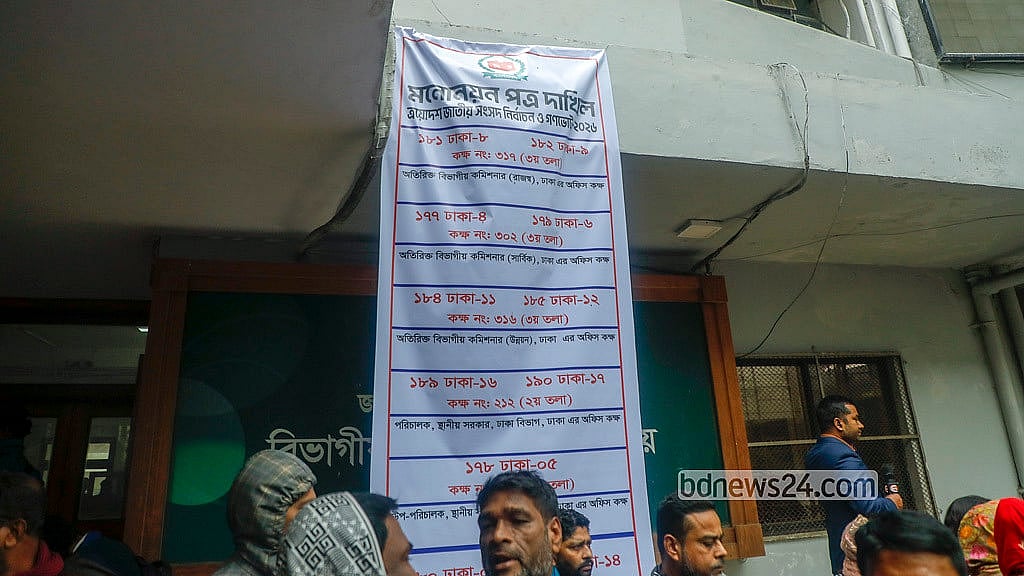
Speaking on Monday evening after the close of nomination submissions, Election Commissioner Abdur Rahmanel Masud said the process had been unusually smooth.
“The overall situation is good. There was no trouble anywhere, and no complaints of violations of the electoral code of conduct,” he said. “Usually there are minor clashes, scuffles, or showdowns. This time, we did not see any of that.”
He ruled out extending the nomination deadline, describing the level of interest as encouraging.
“Many candidates came forward, many parties were involved. That is a good sign for the election,” he said, adding that the commission expected parties to maintain the same discipline through polling day and cooperate fully with election authorities.
OVER 8 NOMINATIONS PER SEAT
Election analyst Abdul Alim cautioned that sustaining the current calm would be crucial in the weeks ahead. With nomination scrutiny, appeals, and campaigning still to come, some parties have already raised concerns about the lack of a level playing field.
“The parties need to be taken into confidence, and the field must be made as even as possible,” he said.
Alim does not foresee the “election train” being derailed if the environment holds, but he warned that attempts to disrupt the process cannot be ruled out.
“There is no guarantee that no one will try,” he said, urging vigilance from law enforcement and restraint from political actors. “There is no alternative to an election.”
According to ASM Humayun Kabir, convenor of the Election Commission Secretariat’s central coordination committee and director general of the NID wing, 3,407 nomination forms were collected nationwide, with 2,582 ultimately submitted.
Dhaka Division led with 444 submissions across 41 constituencies, followed by Mymensingh with 311 across 38 seats, and Cumilla with 365 across 35 seats -- averaging more than eight nominations per constituency.
The commission has not yet provided a consolidated figure on how many of the 59 registered parties are contesting or how many candidates are independent.
Although crowded, the total number of nominations is lower than in the past two elections: 2,741 candidates in the 2024 parliamentary elections amid a BNP boycott, and 3,065 in 2018 when 39 parties participated.
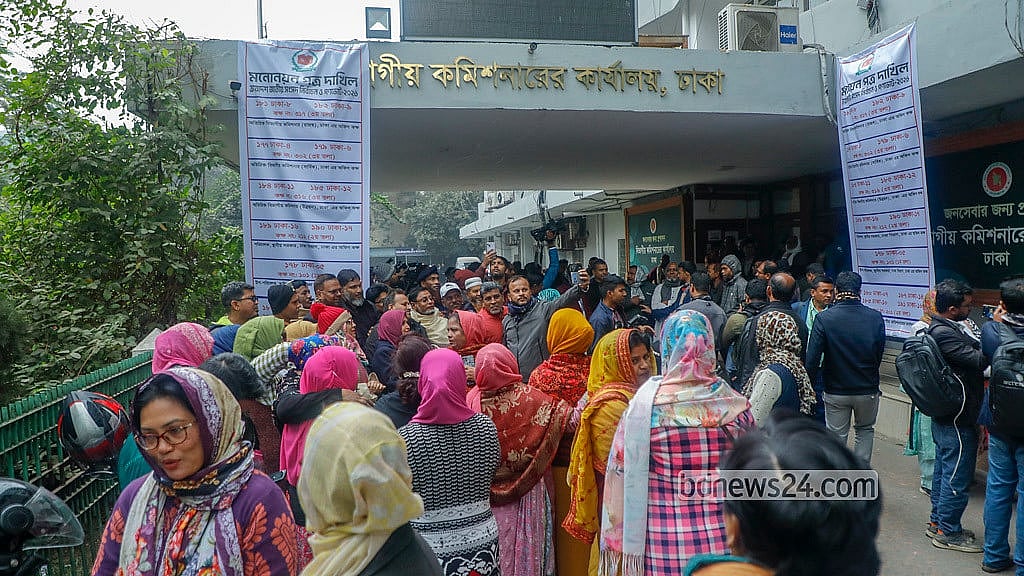
Nominations closed on Monday, with scrutiny scheduled for Dec 30 to Jan 4, appeals from Jan 5-9, and disposal by Jan 18. Candidates may withdraw by Jan 20, and polling is set for Feb 12, 2026, from 7:30am to 4:30pm.
Election law permits candidates to contest in up to three seats and submit multiple nomination papers in the same constituency; one paper will be validated if requirements are met.
BNP Chairperson Khaleda Zia has filed in Bogura-3, Feni-1, and Dinajpur-3, with alternate candidates named due to her health.
Following amendments to the Representation of the People Order (RPO), uncontested elections are no longer possible; even single-candidate seats will include a “No” vote. The commission retains the power to cancel polling at any centre or constituency if needed.
Election Commissioner Md Anwarul Islam Sarker said complaints so far were “not serious enough to merit action” but stressed that violations would not be tolerated.
“Everything must be rule-based. Anyone who steps outside the law will not be spared,” he said. “This election is heading towards strong competition. No irregularity will be indulged, and any attempt to exert influence will invite trouble.”
COALITION ARITHMETIC: A SHIFTING FIELD
For decades, contests were defined by a familiar binary: Awami League versus the BNP, or the alliances they led. That pattern fractured during the Awami League’s 15 years in power, when the BNP and like-minded parties boycotted the 2014 and 2024 parliamentary elections, leaving both polls largely uncontested.
This year, the landscape has shifted again. Ousted in the July Uprising last year, the Awami League remains barred from political activities, its registration suspended, with its allies absent. Yet the resulting vacuum has not produced a one-sided contest.
A new political alignment has emerged. The Jamaat-e-Islami has become a major pole, while the BNP has reconstructed its electoral machinery through a web of understandings. Both are contesting independently, each at the centre of a loose “accommodation alliance” drawing in parties large and small.
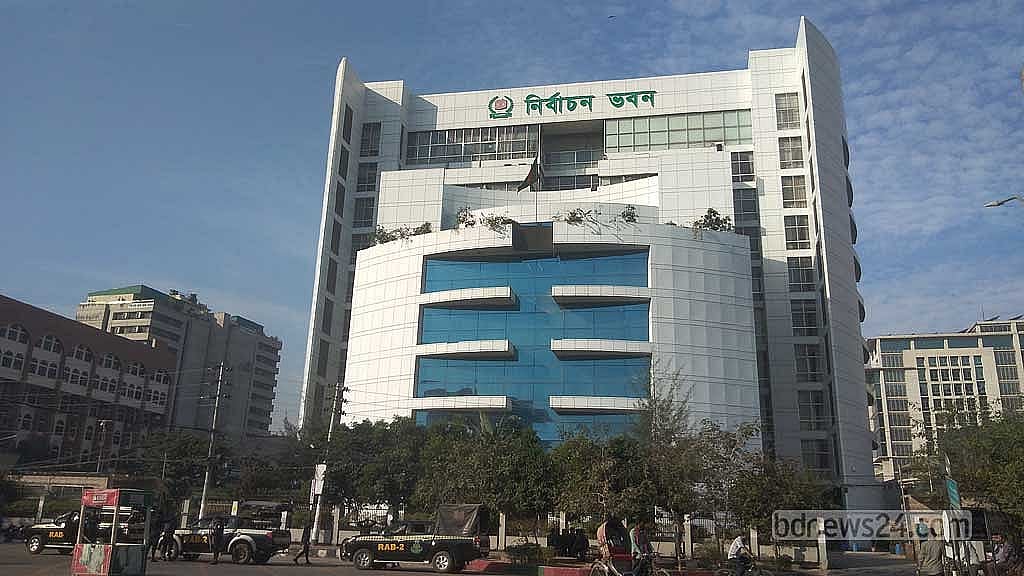
The BNP’s coalition encompasses Jamiat Ulama-e-Islam Bangladesh, Nagorik Oikya, Bangladesh Jatiya Party (Kazi Zafar), Islami Oikya Jote, Ganosamhati Andolon, Revolutionary Workers Party, National People’s Party, and Gono Odhikar Parishad.
It has also absorbed figures from outside its formal ranks, including Shahadat Hossain Salim of the Liberal Democratic Party (LDP), Syed Ehsanul Huda, Bobby Hajjaj of National Democratic Movement, and Redwan Ahmed of the LCP, all contesting under the BNP symbol.
The Jamaat-e-Islami, meanwhile, spent months mobilising with seven religion-based parties: Islami Andolan Bangladesh, Khelafat Majlis, Bangladesh Khelafat Majlis, Bangladesh Khelafat Andolon, Jatiya Ganotantrik Party (JAGPA), Bangladesh Nezame Islam Party, and Bangladesh Development Party.
In recent weeks, the alliance expanded as the youth-led NCP, Oli Ahmed’s LDP, and AB Party joined.
The late move cost the NCP: several leaders quit, some ran as independents, others collected papers only to abstain. Former advisor Asif Mahmud Shojib Bhuyain joined the NCP but will not stand, and Mahfuj Alam did not participate.
Political analyst Prof Asif Mohammad Shahan notes that while nominations were filed peacefully, “I am a little anxious about the message candidates will bring once campaigning begins.”
He warns that without a focus on policy and governance, the contest risks sliding into “abuse and antagonism” rather than celebration. He does not expect the Jatiya Party to emerge as a decisive challenger, adding that surveys suggest Awami League voters are likely to choose between the BNP and Jamaat rather than swing en masse to the Jatiya Party.
ELECTIONS IN NUMBERS
The numbers underline how unusual this election cycle is. In the boycotted parliamentary polls on Jan 7, 2024, 28 parties -- including the Awami League and Jatiya Party -- took part, while 14 parties stayed out.
A total of 2,741 nominations were filed by party and independent candidates. In 2018, 39 registered parties contested; 2,567 party nominations and 498 independent papers were submitted, leaving 1,861 candidates in the field.
The 2014 election saw just 12 parties, with 153 seats decided uncontested.
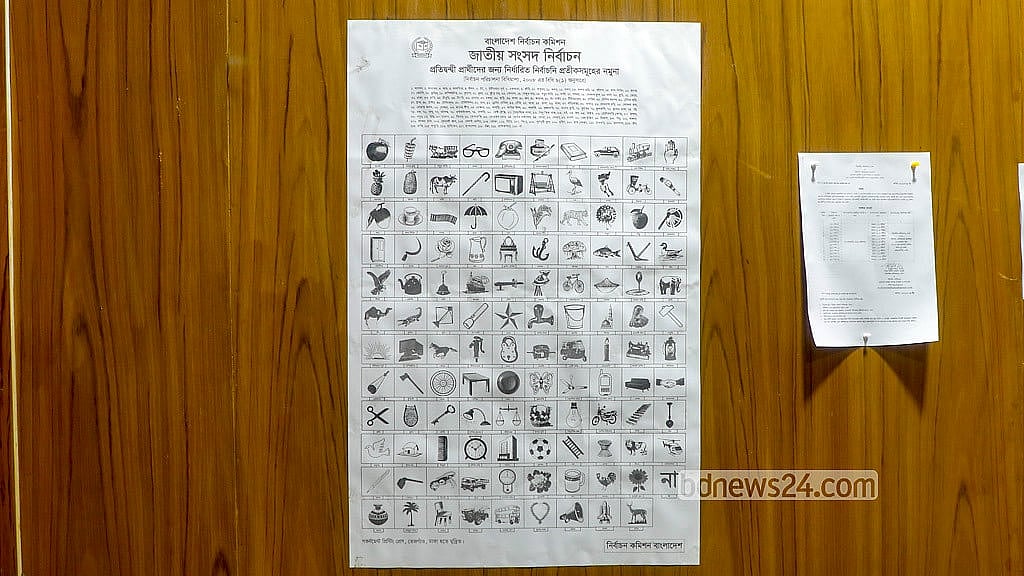
By contrast, earlier polls -- from 1991 through 2001 and back to the first election in 1973 -- regularly drew between 1,000 and nearly 2,800 candidates across dozens of parties.
THE SHARED DEMAND: LEVEL PLAYING FIELD
By Monday evening, nominations had been filed nationwide.
In Dhaka-17, the BNP’s acting chief Tarique Rahman’s papers were submitted to the divisional commissioner and returning officer. His agent Abdus Salam said the party sought public prayers and expressed confidence that Tarique could lead the country out of crisis if elected. Tarique had previously been a voter in the constituency, he noted, and agreed to contest at the urging of residents.
Elsewhere, BNP Secretary General Mirza Fakhrul Islam Alamgir, filing in Thakurgaon-1, declared that citizens had regained their voting rights after a long hiatus.
Jamaat-e-Islami chief Shafiqur Rahman entered the race in Dhaka-15, with party leaders calling for a “free, fair and acceptable” election and insisting that the government and the EC ensure a level playing field.
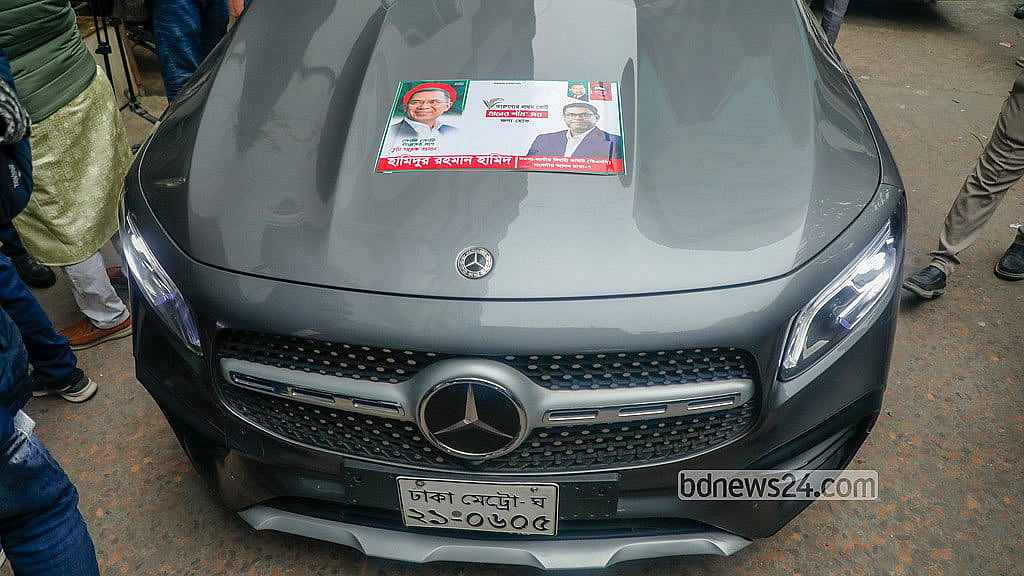
That refrain echoed across parties large and small. Candidates spoke of security anxieties, unequal enforcement of rules and the need for visible neutrality from the authorities.
Nomination day passed in a buoyant mood, though not without breaches of conduct as supporters gathered in numbers beyond what regulations allow.
Even so, as the paperwork closes and campaigning looms, the central question remains unresolved: whether the promise of equal opportunity can be translated from demand into practice.