Home
+
Published : 07 Apr 2026, 12:54 PM
The ceiling fan hummed above them, its slow, circular insistence filling the silence that no one wanted to break. A silence that seemed ominously pregnant with uncertainties…!
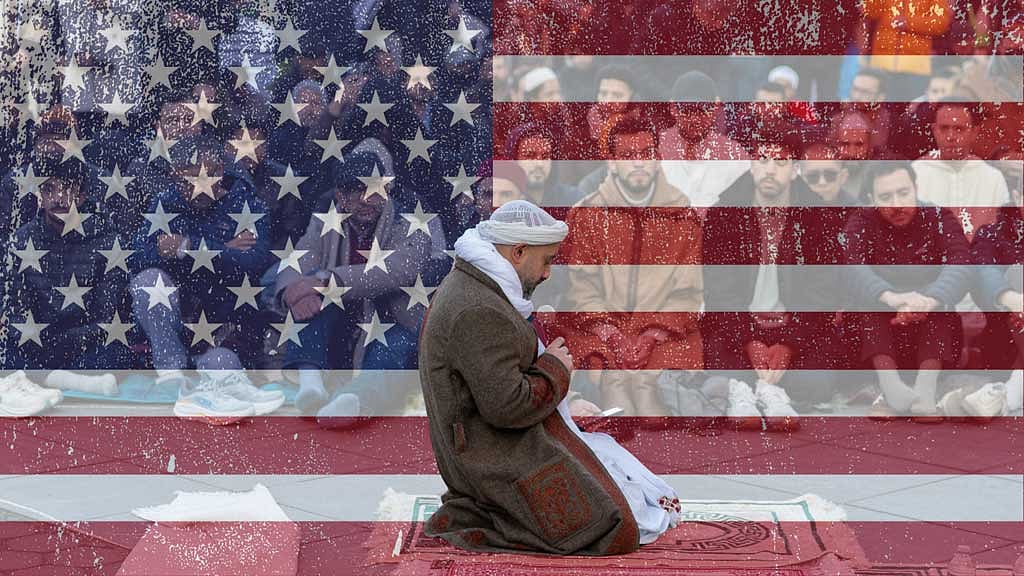
Abdul Karim sat cross-legged on his worn prayer mat in the corner of the room, his tasbih beads mechanically slipping through his fingers one by one. His lips moved in quiet and habitual remembrance, but his mind was elsewhere—tangled in a decision he had once believed he would never even consider.
He had always been a principled man. A religious man. The kind who measured life not in opportunities seized, but in boundaries respected, and above all in humble adherence to the Commandments he had learned and absorbed in his mind. His children had grown up on stories of integrity, patience, hard work and trust in Allah’s plan.
And yet, here he was…standing at the fork that put him on a dilemma that challenged his lifelong practices.
His daughter, Ayesha, had just graduated as a doctor—first in the family, first among relatives, a child who bestowed a quiet pride he never openly displayed but carried deep within his chest. She was intelligent, composed, and soft-spoken. The kind of daughter people praised as “a blessing.” Above all, she shared his own faith in the religious tenets with the same insights and trust as his, and stood impermeable to the swirling currents of hedonistic modernity in imitation of the West.
But she had slipped into something unexpected…perhaps not uncommon for her age, but unexpected of her, perhaps even to her.
She had fallen in love.
The young man’s name was Rahim. Not wealthy, not well-connected, but sharp-minded and deeply responsible. He had once been a top student himself, but life had intervened. His father’s failing health had forced him to pause his own ambitions. Instead of pursuing higher studies, he worked tirelessly to support a household of nine—his parents and seven siblings.
Abdul Karim had known.
Not because Ayesha confessed—she never had—but because fathers notice what others miss. The slight change in her tone when a name was mentioned. The careful avoidance. The quiet sadness that lingered longer than it should.
He had watched. And he had remained silent.
Because love, he believed, was not enough.
“Abba,” his eldest son, Imran, had said one evening, sitting across from him with an urgency that felt almost foreign. “This is an opportunity we won’t get again.”
The proposal had come through a distant relative. A man settled in the United States. A permanent resident. Financially stable. Respectable.
But the proposal came with a condition.
Ayesha would marry the man.
And in exchange, Imran would marry the groom’s sister—also a US citizen.
Two marriages. One agreement. One future.
A future where, eventually, the entire family could emigrate.
It had sounded… practical.
Abdul Karim had recoiled at first. It felt transactional. Cold. Almost like bargaining lives for opportunity. He had spent nights in prayer, asking for clarity, for guidance, for a way out of this moral fog.
But then came the quiet pressures.
Bills that never seemed to end. The younger children’s education. The uncertainty of tomorrow. The unspoken fear: What if this was their only chance?
And then, the hardest truth of all—Rahim.
A good boy, yes. But burdened. Tied down. Years away from stability, if he ever reached it.
“Can he give her a secure life?” Abdul Karim had asked himself over and over.
The answer was always uncertain.
So when the proposal returned, more formal this time, with assurances and timelines and promises of sponsorship, something in him began to bend.
Not break.
But bend.
Ayesha had been told.
She hadn’t cried. Not immediately. She had simply listened, her hands folded tightly in her lap, her face unreadable.
“I don’t want this, Abba,” she had said quietly that night.
And Abdul Karim had felt something tear inside him.
Days passed.
The house became a place of suspended breath. Conversations were shorter. Meals quieter. Even the younger children sensed something shifting.
Then one morning, unexpectedly, Ayesha spoke.
“I’ll do it.”
Her mother looked up first. “What?”
“I’ll marry him,” Ayesha repeated, her voice steady now. “It’s okay.”
Abdul Karim stared at her. “Are you sure?”
She nodded.
She didn’t explain.
No one asked.
But something in her had changed—something that looked like acceptance from a distance, but up close felt more like surrender.
The weddings were arranged quickly.
Two ceremonies. Two families bound together not by affection, but by agreement. Guests came, smiled, congratulated. The words “lucky” and “blessed” floated through the air like confetti.
Ayesha wore her bridal red with grace. She smiled when required. She fulfilled every expectation.
And Rahim?
He never came.
No calls. No messages. Just absence.
Perhaps that was his dignity.
Or his defeat.
Years passed.
The promises were kept.
Imran moved to the United States first. Then, gradually, the paperwork for others followed. Abdul Karim himself would one day stand in an unfamiliar airport, clutching a passport that symbolised everything he had worked for.
Materially, the family had risen.
Better homes. Better opportunities. Security.
From the outside, it was a success story.
But inside?
It was quieter.
Heavier.
Imran’s marriage was strained—two people bound by agreement, struggling to build something that had no natural beginning.
Ayesha lived comfortably, her husband kind but distant, their conversations polite but hollow. They shared a life, but not a bond.
She continued her medical career. Patients trusted her. Colleagues respected her.
But sometimes, late at night, when the world slowed down enough for thoughts to return, she would sit by the window and let herself remember.
Not dramatically.
Not with tears.
Just a quiet wondering.
What if she had waited?
What if she had trusted that patience would have opened another door?
What if she had chosen uncertainty… but with someone who understood her without explanation?
She would think of Rahim—not as a lost love, but as a possibility never tested. A life that could have been difficult, yes. Unpredictable. Maybe even painful.
But real.
And then she would look around at everything she had gained—and feel the strange weight of it.
Because nothing was missing.
And yet, something was.
Abdul Karim aged faster than he expected.
He prayed more.
Spoke less.
Sometimes he would watch his children—settled, secure, scattered across a land he once only heard about—and wonder if he had done the right thing.
He had fulfilled his duty.
Provided.
Protected.
Planned.
But deep down, in the quiet spaces between prayer and sleep, a question lingered:
Had he mistaken opportunity for blessing?
The ceiling fan, wherever they were now, still hummed.
And life went on.
Complete.
Successful.
And quietly, persistently, incomplete.
Dr Farooq Sheikh is an academic with an interest in a diversity of disciplines in the sciences, humanities, and social sciences and taught for three decades at US universities; he was a tenured faculty at SUNY Geneseo.