Published : 06 Feb 2026, 08:22 AM
Updated : 21 Aug 2026, 03:07 PM


Sylhet’s election is unfolding without spectacle. Campaigns move through tea stalls and narrow roads, marked less by slogans than by calculation. Beneath the calm, rival camps measure their ground while an undecided, largely quiet electorate watches.
As daylight breaks over tea gardens and riverbanks, the election campaign sets off without the familiar din of three-way competition. In the absence of the Awami League, the parliamentary race has narrowed -- but not necessarily simplified.
Activists of the Bangladesh Nationalist Party (BNP) say they consider four of Sylhet district’s six seats to be “relatively safe”. One seat, they admit, will see a fierce fight with the Jamaat-e-Islami -- a constituency where Jamaat has previously tasted victory.
That memory dates back to 2001, when Jamaat leader Farid Uddin Chowdhury won Sylhet-5 as part of a BNP-led alliance.
Two decades later, the same seat has become the epicentre of the BNP’s most visible internal rebellion.
Mamunur Rashid -- a BNP “rebel” candidate -- has built a strong position there. He, along with nine leaders aligned with him, has already been expelled from the party.
Still, leaders of both the BNP and Jamaat insist they are contesting every seat with the aim of winning.
Local political observers, however, point to a decisive but largely invisible factor: silent voters.
In an election without the Awami League, they argue, quiet participation could prove more influential than loud rallies.
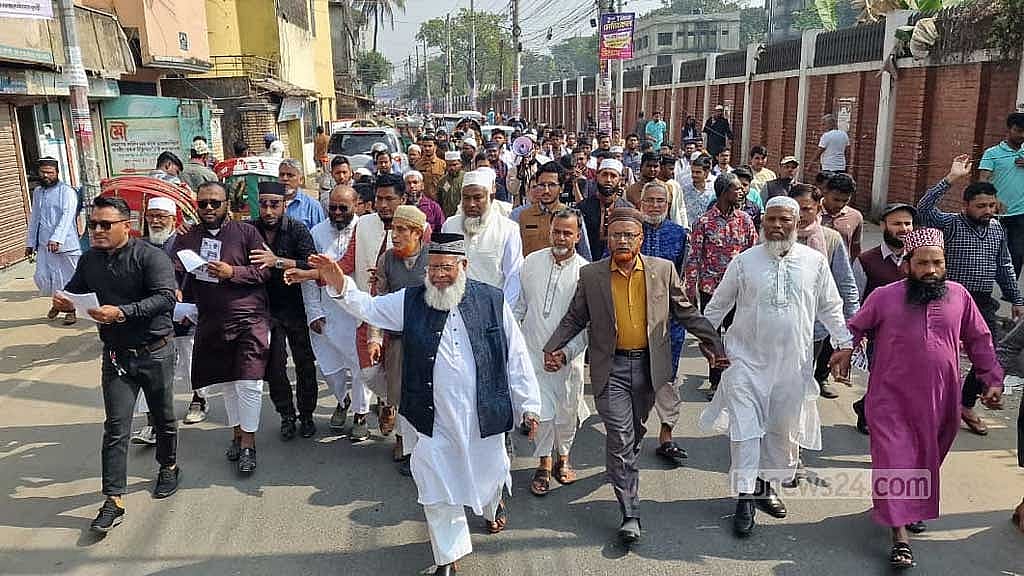
On the ground, the campaign space is dominated almost entirely by BNP and Jamaat activists. Since the political shift of Aug 5, both parties have moved freely through neighbourhoods with rallies, meetings and door-to-door outreach.
Some BNP leaders who were denied nominations initially stayed away from campaigning; a few have since returned to the field, while others remain absent.
Jamaat has faced its own organisational strain following seat-sharing arrangements within its alliance.
A SEAT OF MYTH AND PRESTIGE
Sylhet-1 -- encompassing the city corporation and Sadar Upazila -- carries a political mystique unmatched elsewhere in the region. For decades, a local “myth” has endured: the party that wins Sylhet-1 goes on to form the government.
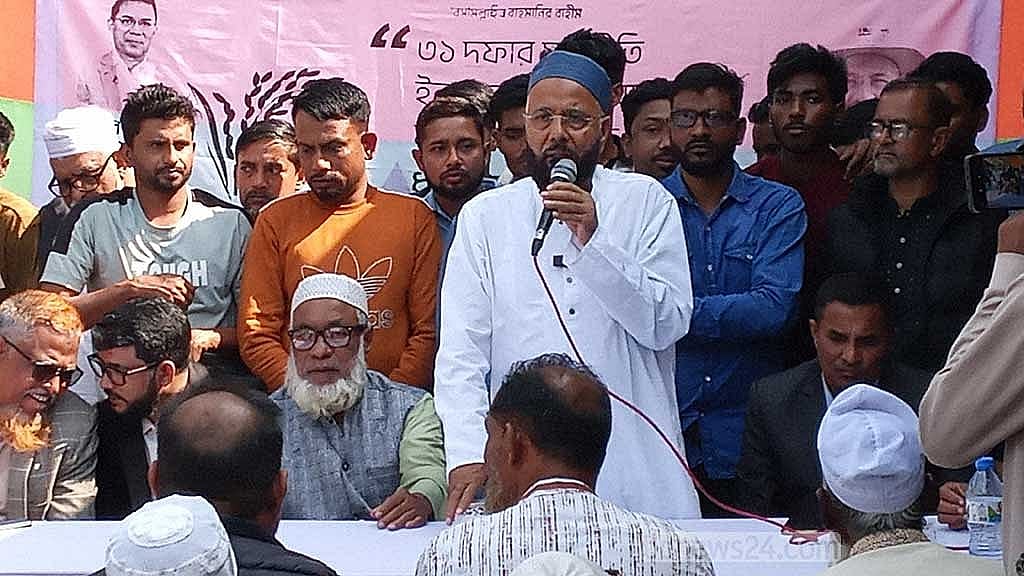
Although eight candidates are in the race, the real fight is between BNP’s Khandaker Abdul Muktadir with the “Sheaf of Paddy” symbol and Jamaat’s Habibur Rahman with “Weighing Scale”.
Muktadir, known for a clean political image, has campaigned here for years and is seen as marginally ahead. Yet Habibur Rahman -- a businessman and seasoned organiser -- remains firmly in contention.
Muktadir’s political lineage runs deep. His father Khandaker Abdul Malik was among the founders of the BNP in Sylhet and served multiple terms in parliament. Muktadir himself ran in 2018 under the Jatiya Oikya Front banner.
Habibur, a central Majlish-e-Shura member and Sylhet district chief of Jamaat, faces no internal dissent.
He began his political journey with Islami Chhatra Shibir, joined Jamaat in 1982, and has served in multiple senior roles. He previously ran from Sylhet-6.
LUNA AND THE WEIGHT OF MEMORY
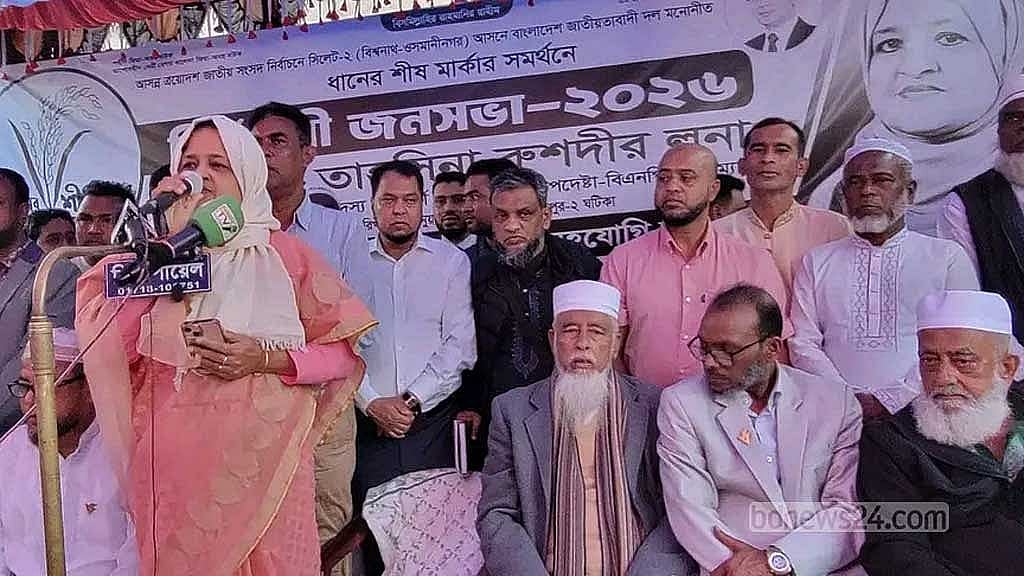
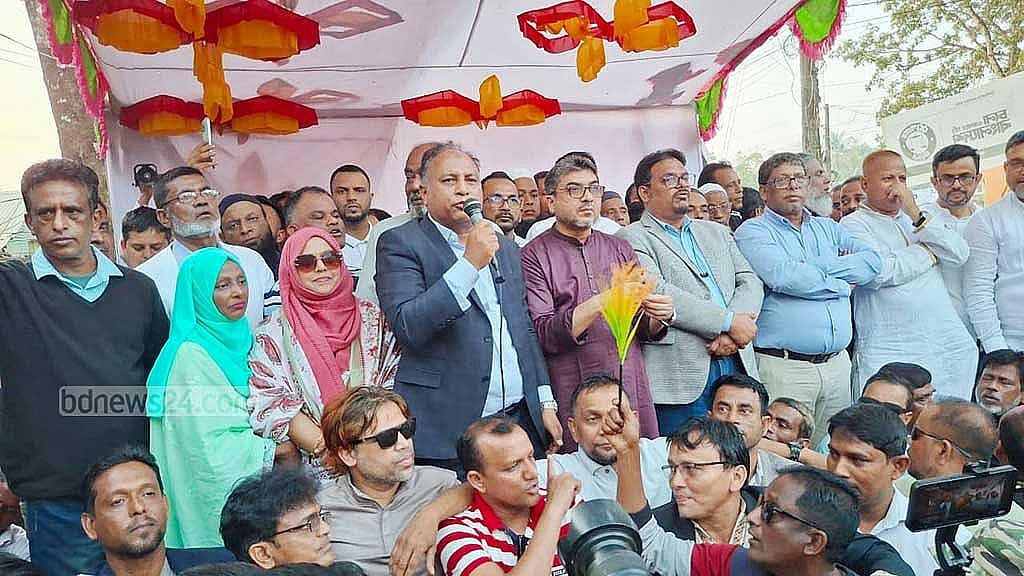
Sylhet-2 -- comprising Bishwanath and Osmaninagar -- is inseparable from the legacy of BNP leader M Illias Ali. After his disappearance, his wife Tahsina Rushdir Luna entered politics and now carries the Sheaf of Paddy symbol.
Voters believe her main challenge comes from Muhammad Muntasir Ali of Khelafat Majlis, running under the “Wall Clock” symbol as part of the 11-party alliance.
Luna’s popularity, they say, is rooted in Ilias’s memory. Her campaign highlights development initiatives undertaken during his tenure.
Initially, Humayun Kabir -- a foreign affairs advisor to BNP chief Tarique Rahman -- was also active here, triggering clashes between rival BNP factions. The tension subsided after Humayun was appointed joint secretary-general (foreign affairs).
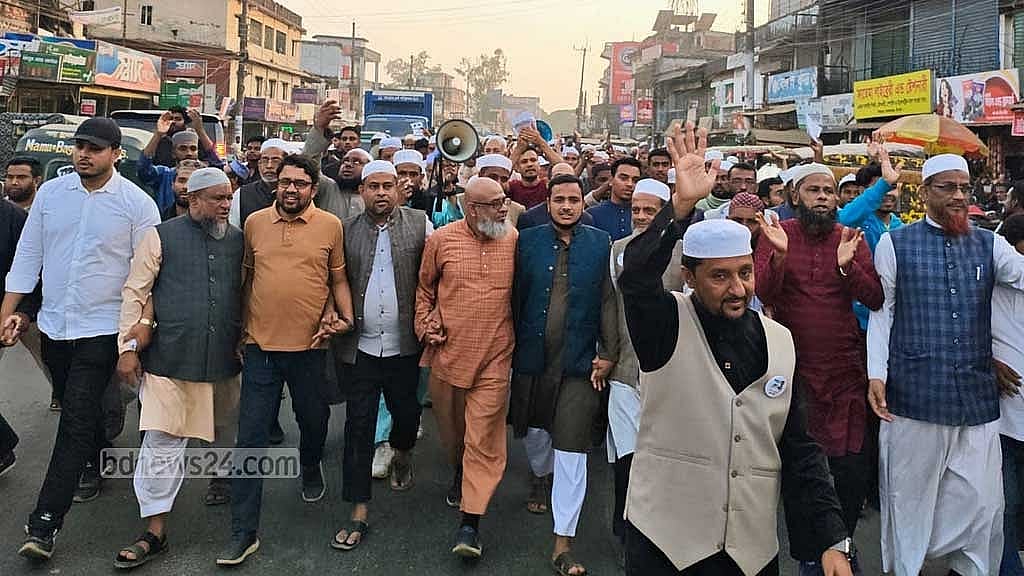
Supporters say Luna has since been “free of complications”.
ALLIANCES AND ARITHMETIC
In Sylhet-3, BNP’s MA Malique faces a contest from Musleh Uddin Raju of Bangladesh Khelafat Majlis. While Malique’s position appears strong, Raju draws advantage from his identity as the son of renowned Islamic scholar Nur Uddin Gohorpuri.
Jamaat’s candidate Lokman Ahmed withdrew following alliance decisions -- a move voters say altered the nature of the race.
MAYOR VERSUS CHAIRMAN
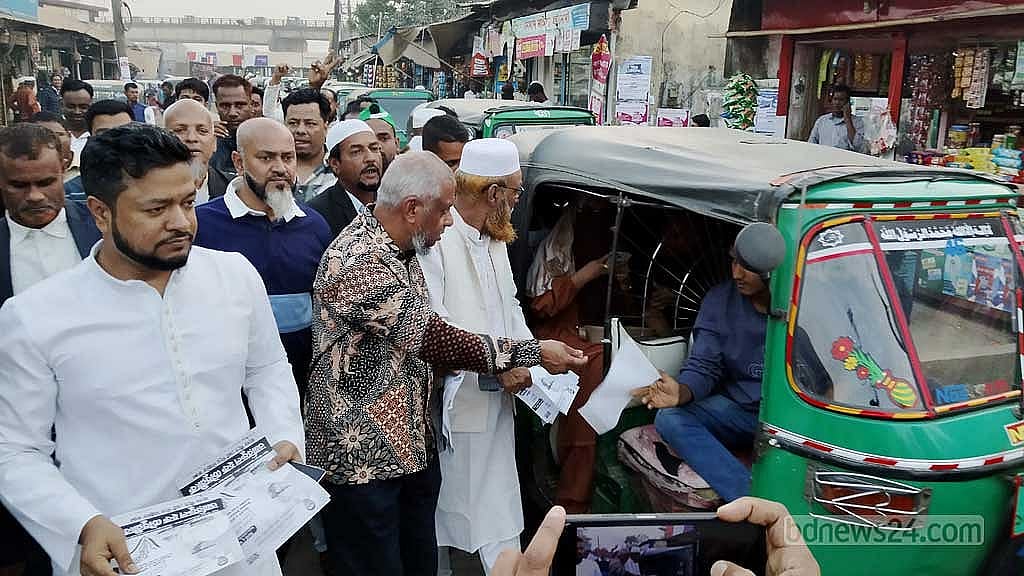
Sylhet-4 has emerged as a high-profile contest between BNP advisory council member and two-time former mayor Ariful Haque Chowdhury and Jamaat’s Zainal Abedin, a two-time former Upazila chairman.
Jamaat has branded Ariful an “outsider”; his supporters counter that national elections are decided by development, not geography.
Jamaat has never won this seat. Ariful is widely known as an “election magician”.
THE ‘FULTOLI HUJUR’ FACTOR
Sylhet-5 remains volatile. Independent candidate Mamunur -- popularly known as “CUCSU Mamun” -- is seen as a potential game-changer. The BNP has ceded the seat to Jamiat Ulema-e-Islam, while Jamaat’s alliance candidate is Abdul Hasan.
Voters point to the enduring influence of Fultoli Hujur and his organisation Anjumane Al Islah as a decisive force -- one that could tilt the balance once again.
REBELLION: BNP’S PRESSURE POINT
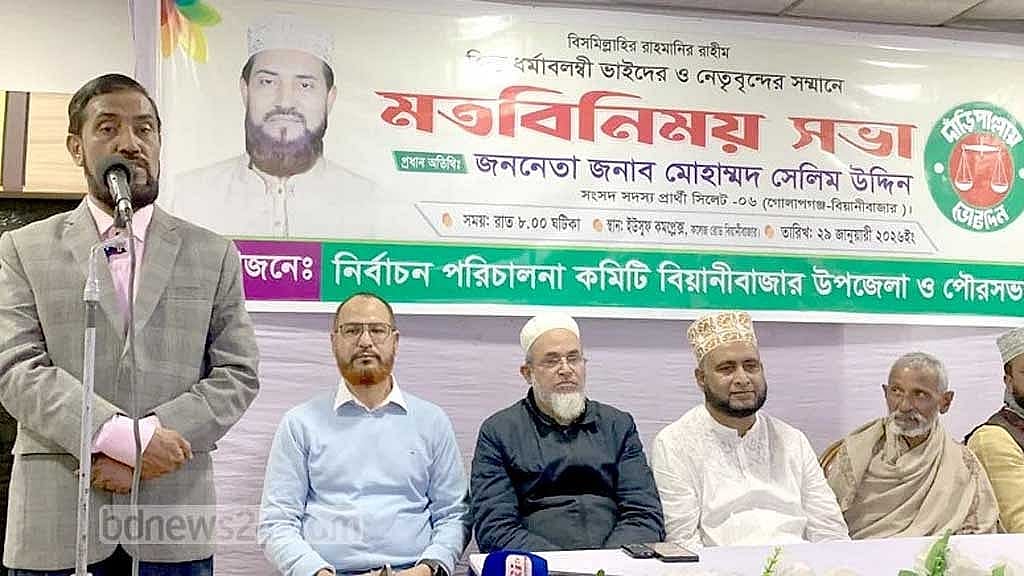
In Sylhet-6, BNP candidate Emran Ahmed Chowdhury faces Jamaat’s Selim Uddin and Jamiat “rebel” Fakhrul Islam.
BNP leaders privately acknowledge factionalism as their biggest vulnerability here. Jamaat’s organisational unity, by contrast, has strengthened Selim Uddin’s position.
WHAT THE LEADERS SAY
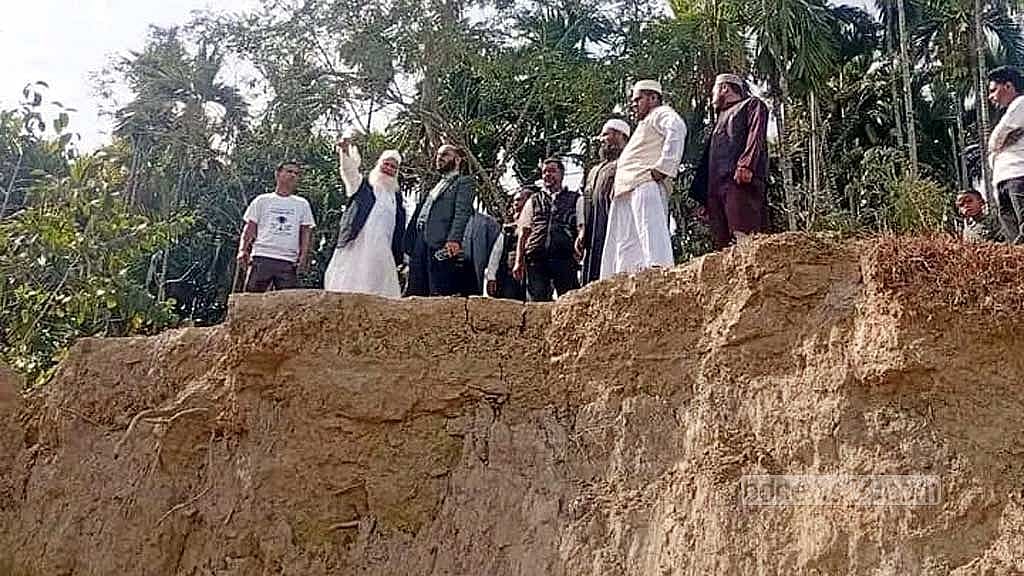
Sylhet BNP President Abdul Qaiyum Chowdhury said, “Party leaders and activists are working together to ensure BNP candidates’ victory. We had some minor issues, which have been resolved. Those who go against party decisions will face action.
“We are hopeful the BNP and alliance candidates will win all seats with a strong mandate.”
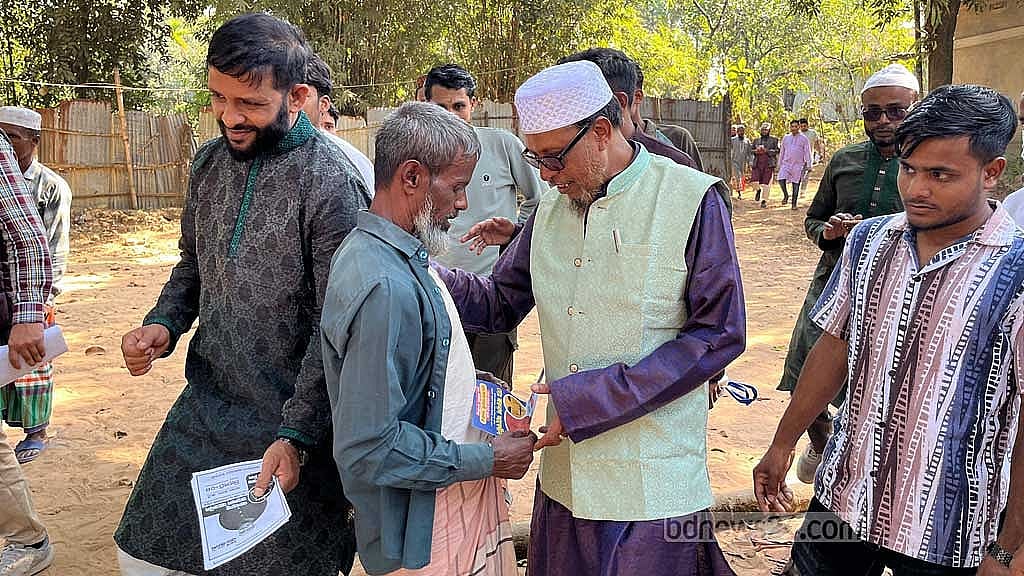
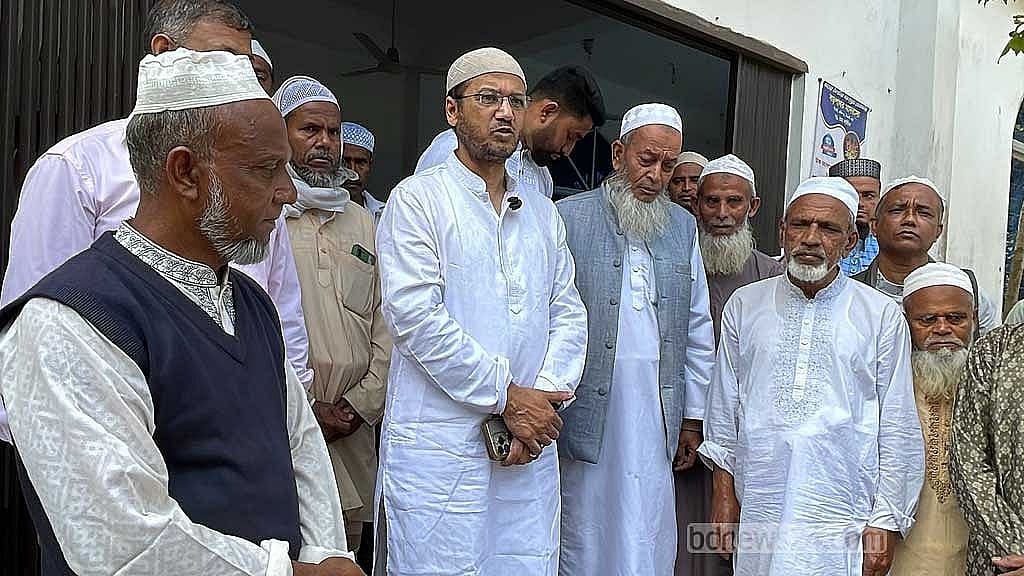
Jamaat Central Executive member and Sylhet city chief Muhammad Fakhrul Islam said: “We are seeing that people want change. They no longer want the old arrangement -- especially young voters, who are determined that the past should not return.”
In Sylhet, as quiet voters weigh their choices, the contests remain poised, unpredictable, and charged with the legacy of rebellion and allegiance alike.