bdnews24.com
Home +
  • Bangladesh
  • Politics
  • Campus
  • Education
  • Media
  • Environment
  • Health
  • Fashion
  • People
  • Automobile
  • Aviation
  • World
  • Science
Sport +
  • Sport
  • Cricket
World +
  • Middle East
  • Europe
  • Neighbours
Business & Economy +
  • Business
  • Economy
Features +
  • Opinion
  • Technology
  • Lifestyle
  • Entertainment
  • Hello
  • Stripe
Others +
  • Photos
  • Tube
  • Mobile

June 14, 2026

  • Bangladesh
  • Sport
  • Technology
  • Opinion
  • Politics
bdnews24.com
বাংলা
  • National Election 2026
  • World
  • Opinion
  • Entertainment
  • Lifestyle
  • Economy
  • Business
  • Cricket
  • Recent
bdnews24.com
Home
  • Bangladesh
  • Politics
  • Campus
  • Education
  • Media
  • Environment
  • Health
  • Fashion
  • People
  • Automobile
  • Aviation
  • World
  • Science
Sport
  • Sport
  • Cricket
World
  • Middle East
  • Europe
  • Neighbours
Business &
Economy
  • Business
  • Economy
  • Budget 2025-26
Features
  • Opinion
  • Technology
  • Lifestyle
  • Entertainment
  • Hello
  • Stripe
Others
  • Photos
  • Tube
  • Mobile
  • Media
  • Image

A village dyed in batik

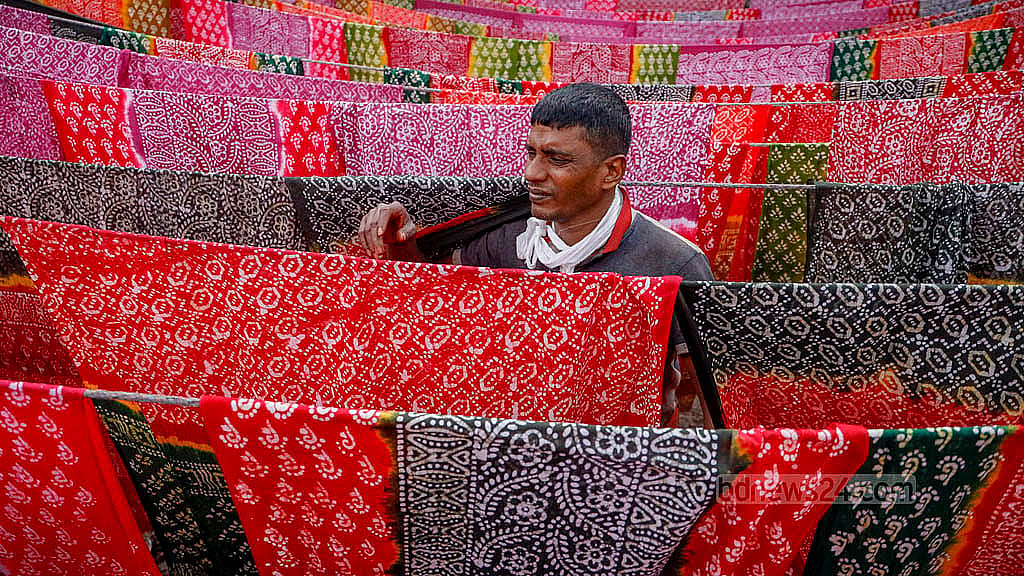
Plain white fabric is transformed into vibrant batik cloth through an array of colours and intricate designs. In Banti village in Narayanganj's Araihazar Upazila, most residents are involved daily in batik printing. Strong market demand, low investment costs and steady profits have encouraged many locals to take up the craft.


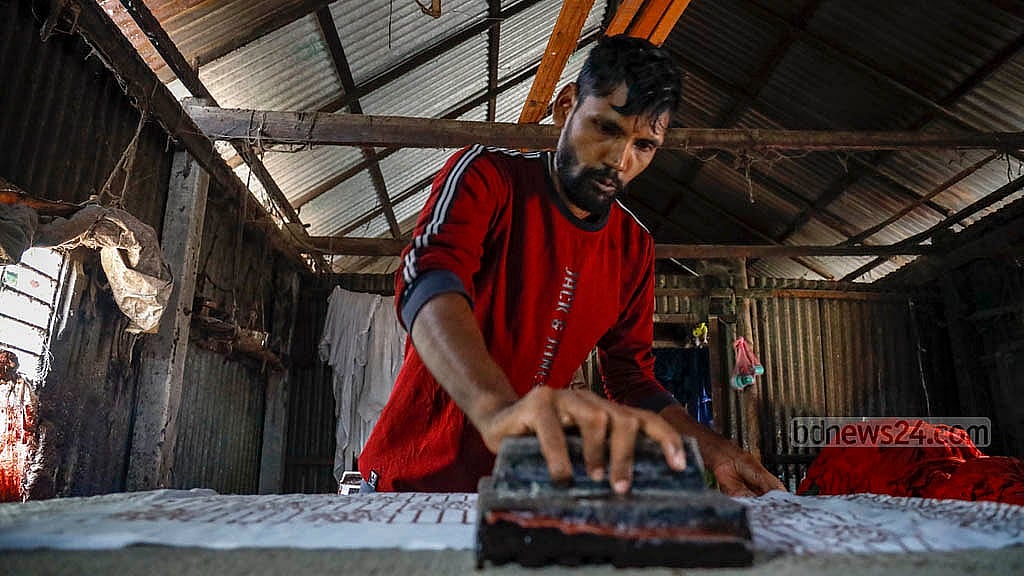
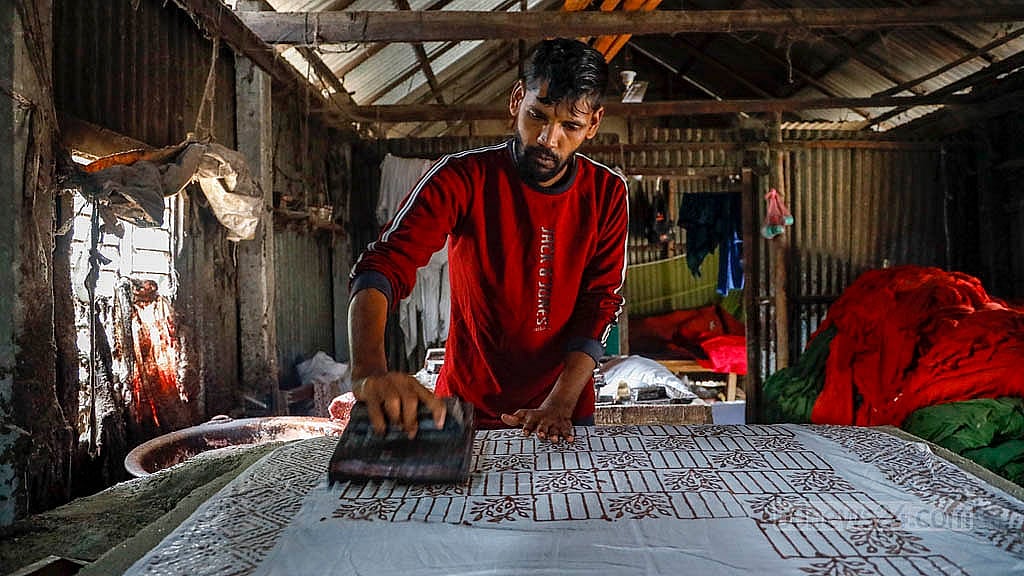
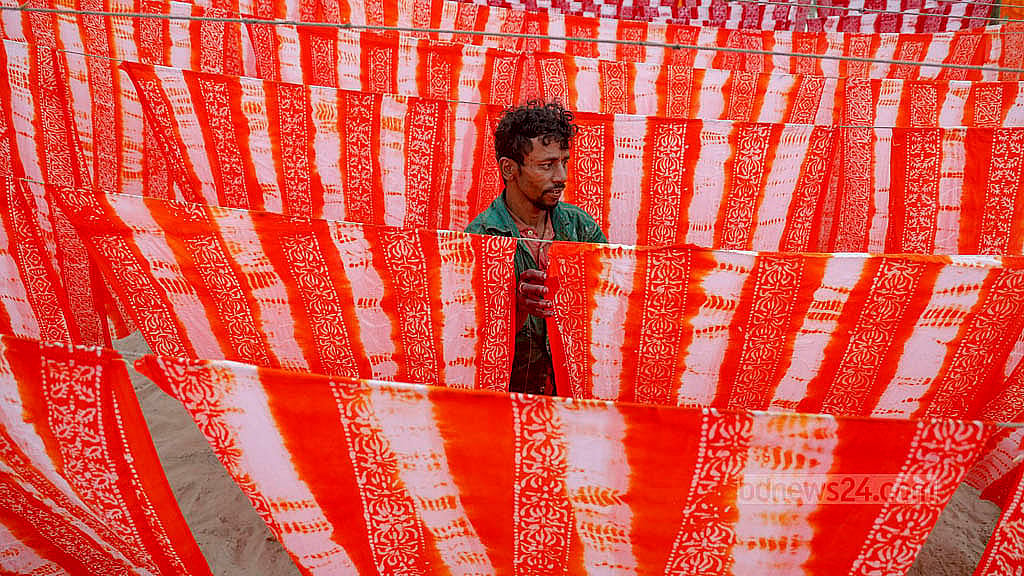
In batik printing, artisans sometimes use a single colour and at other times apply multiple colours. Wax prints are used as moulds before the dyeing process begins. Photo: Mahmud Zaman Ovi
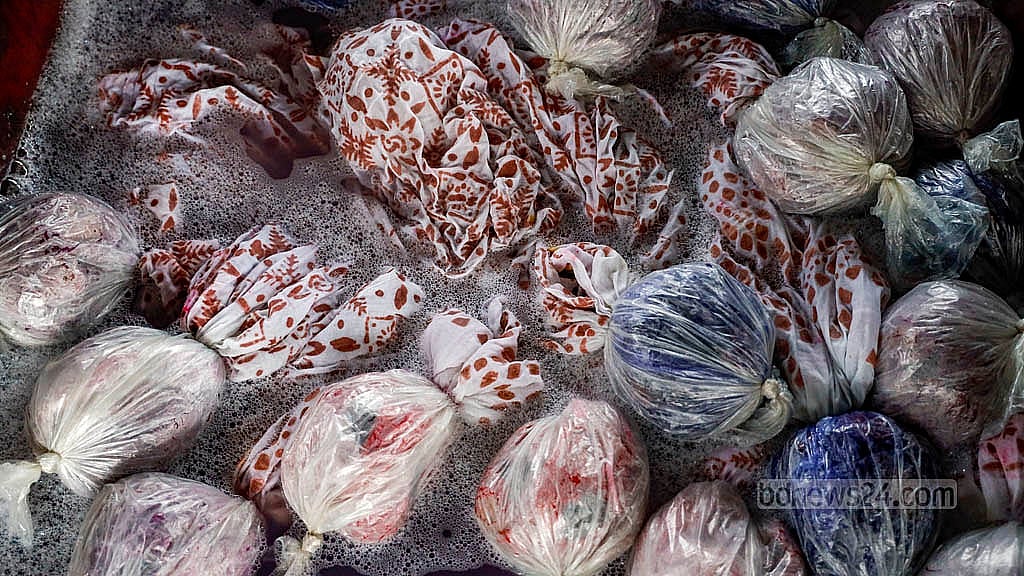
To apply several colours to the fabric, artisans wrap different sections with polythene. This technique helps create colourful and decorative patterns. Photo: Mahmud Zaman Ovi
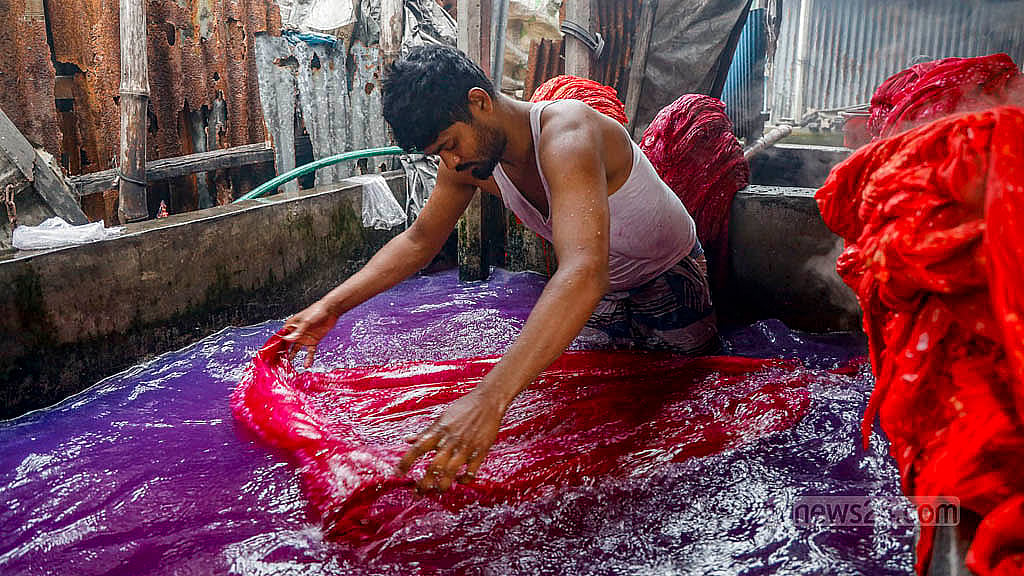
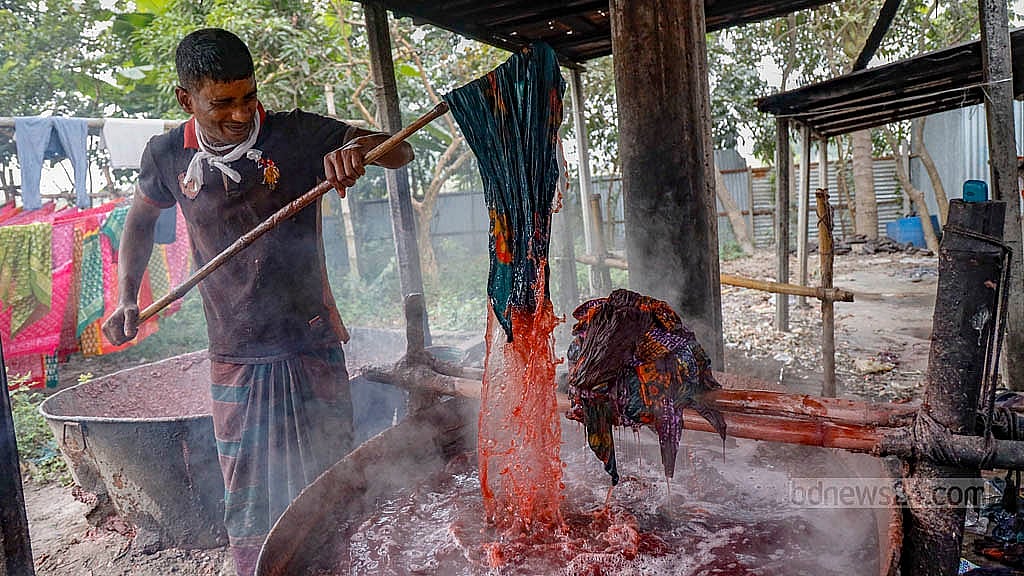
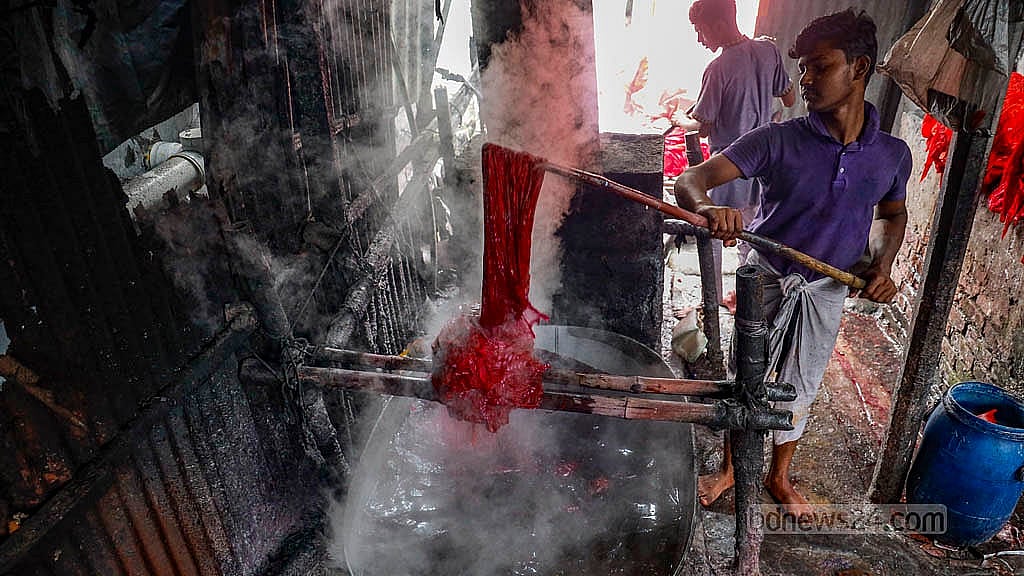
Through repeated dyeing and printing, plain white cotton cloth is transformed into batik fabric. To prevent colours from bleeding, the cloth is washed before being boiled in dye. Photo: Mahmud Zaman Ovi
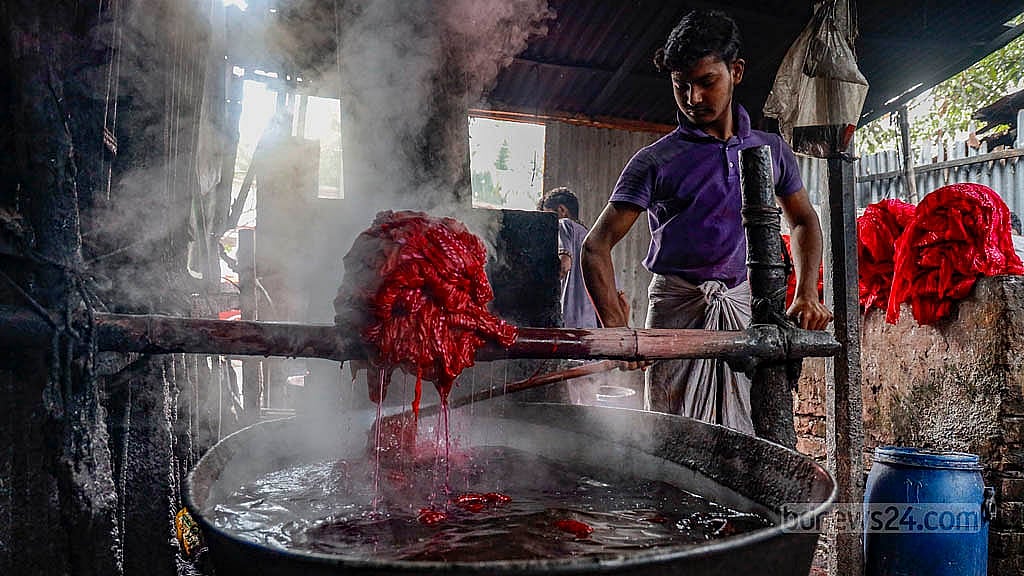
The fabric is boiled in water for five to ten minutes to fix the colours. Almost every household in Banti village in Narayanganj's Araihazar is involved in batik production. Photo: Mahmud Zaman Ovi
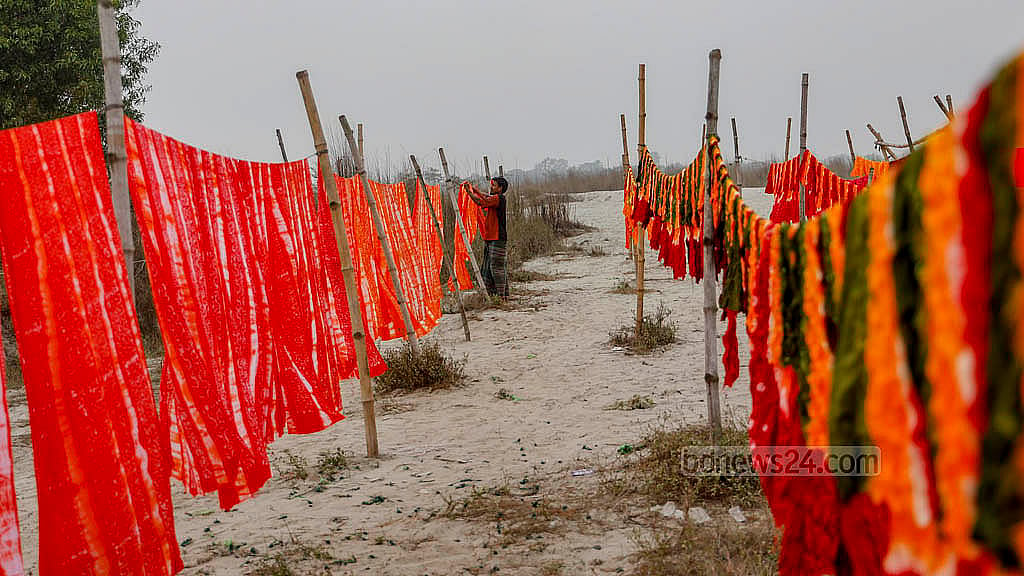
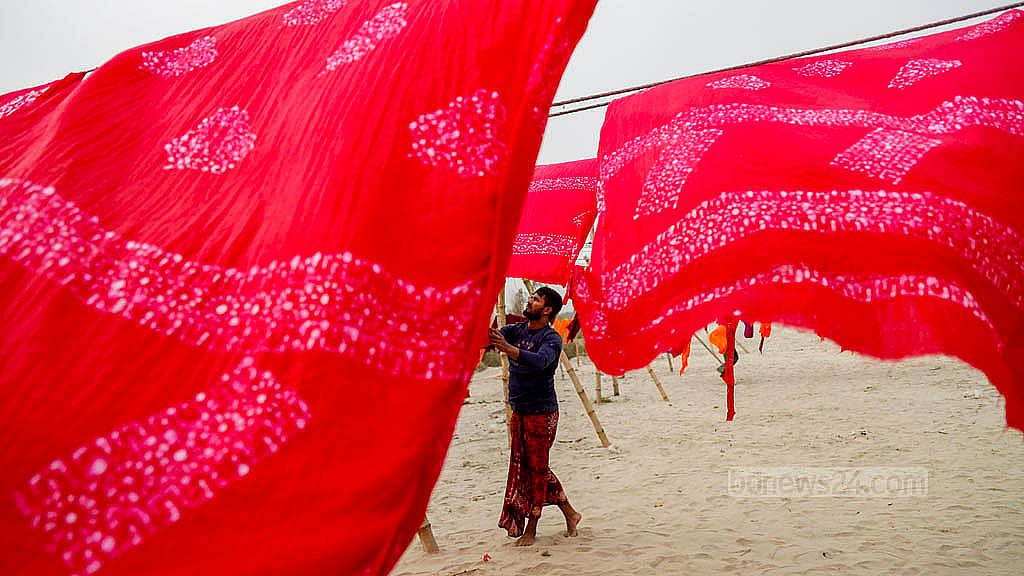
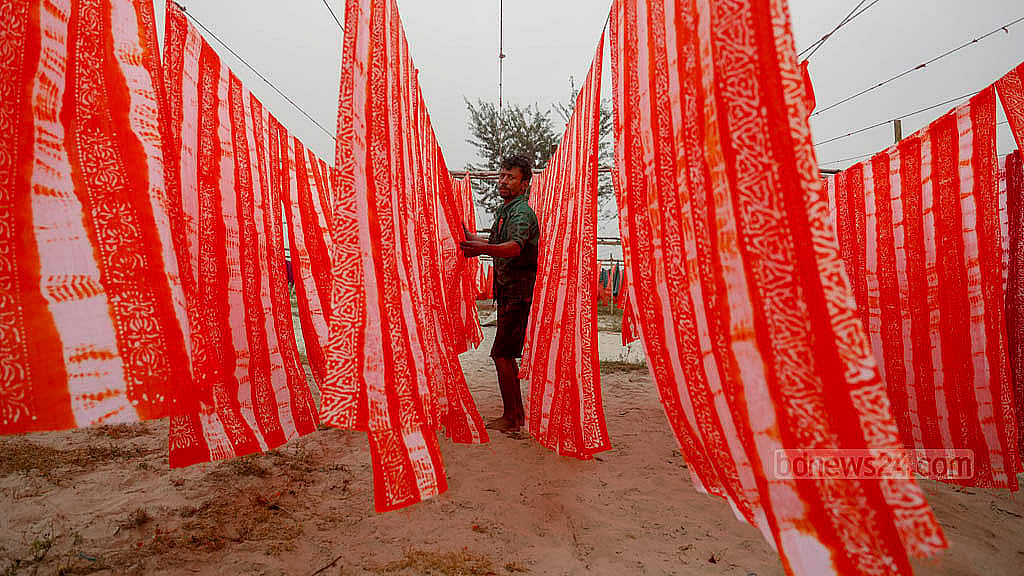
After printing, the batik fabrics are spread out to dry under the sun in open fields. Photo: Mahmud Zaman Ovi
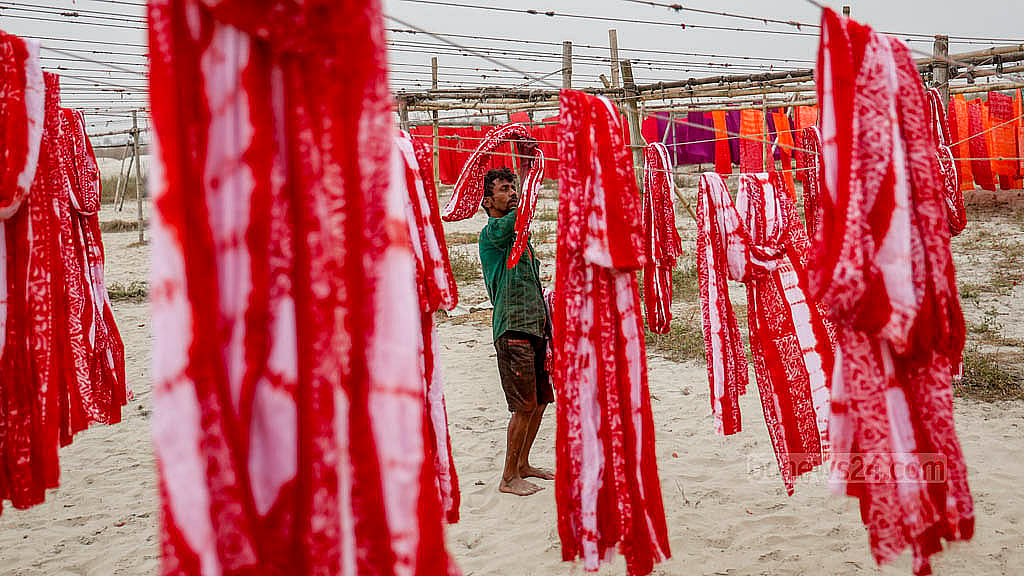
A worker dries freshly dyed batik fabric in an open area of Banti village in Narayanganj's Araihazar. Weak winter sunlight has made the drying process more difficult. Photo: Mahmud Zaman Ovi
Another worker dries batik fabric in a field in Banti village. As demand for cotton garments drops in winter, production levels here are now lower than at other times of the year. Photo: Mahmud Zaman Ovi
Dyed batik fabric is used to make women’s three-piece outfits, as well as bed linen, pillowcases, curtains and other household items in Narayanganj's Banti village. Photo: Mahmud Zaman Ovi

bdnews24.com

Published : 06 Jan 2026, 07:07 PM

Updated : 06 Jan 2026, 07:07 PM

  • dyeing process

  • dyeing factory

  • clothing industry

Read More
Bangladesh moves to bring back Benazir
Turkey have time to bounce back: coach
Nayeem returning to pitch after ‘police assault’
Popovic puts faith in youth to upset Turkey
Read More
Opinion

Towheed Feroze

WC 2026: Three cheers for the Asian sides!

WC 2026: Three cheers for the Asian sides!

Anika Tahsin

Misunderstood truths about studying English

Misunderstood truths about studying English

Arshi Fatiha Quazi

When hospitals become death chambers

When hospitals become death chambers

Jon Sindreu

How a housing pivot could rescue Starmer

How a housing pivot could rescue Starmer
Read More
Editor-in-Chief and Publisher: Toufique Imrose Khalidi
News
  • Home
  • Bangladesh
  • Business
  • Politics
  • Economy
  • World
  • Technology
  • Science
  • Environment
  • Health
Op/Ed
  • 1971
  • Achievement
  • CHT
  • Corruption
  • Culture
  • Democracy
Social
  • Facebook
  • Twitter
  • Instagram
  • Youtube
  • WhatsApp
Features
  • Tech
  • Lifestyle
  • Entertainment
Others
  • Stripe
  • Hello
  • Mobile
Sport
  • Sport
  • Cricket
Follow us
  • Disclaimer & Privacy Policy
  • About Us
  • Contact Us

Copyright © 2026, bdnews24