Published : 22 Apr 2026, 07:09 AM
Updated : 21 Aug 2026, 03:37 PM


Supply Gaps, Deadly Toll
Diagnosis in gridlock: With thousands of daily admissions, the nation relies on a single functional public lab. Capped at 120 tests per day and limited by kit shortages, the diagnostic response has been severely constrained.
The needle deficit: A drive to immunise 17 million children faces a massive supply gap. Only 45,000 mixing syringes are available for 20 million doses.
A fatal surge: At least 223 children have died since mid-March. Experts blame this spike on a “chronic absence of urgency” and historical gaps in vaccination coverage that allowed the disease to spiral.
Accountability in limbo: A political blame game has stalled the emergency response. Critics warn that centralised infrastructure and the failure to declare a public health emergency have left the most vulnerable at risk.
What began as a seasonal outbreak has, in the view of public health experts in Bangladesh, evolved into something far more revealing -- a portrait of a health system strained by shortages, delays and what they describe as a chronic absence of urgency.
As infections surge, experts say the crisis is compounded by a cascade of systemic failures -- in vaccines, syringes, diagnostic kits, laboratory capacity, and public awareness.
They argue that these overlapping gaps have allowed measles to escalate into epidemic proportions.
While the government acknowledges deficiencies, officials have largely attributed responsibility to previous administrations.
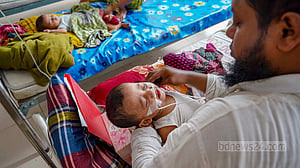
According to the Directorate General of Health Services (DGHS), at least 223 children have died with measles or measles-like symptoms between Mar 15 and Tuesday morning.
Nearly 25,000 children have been hospitalised with similar symptoms.
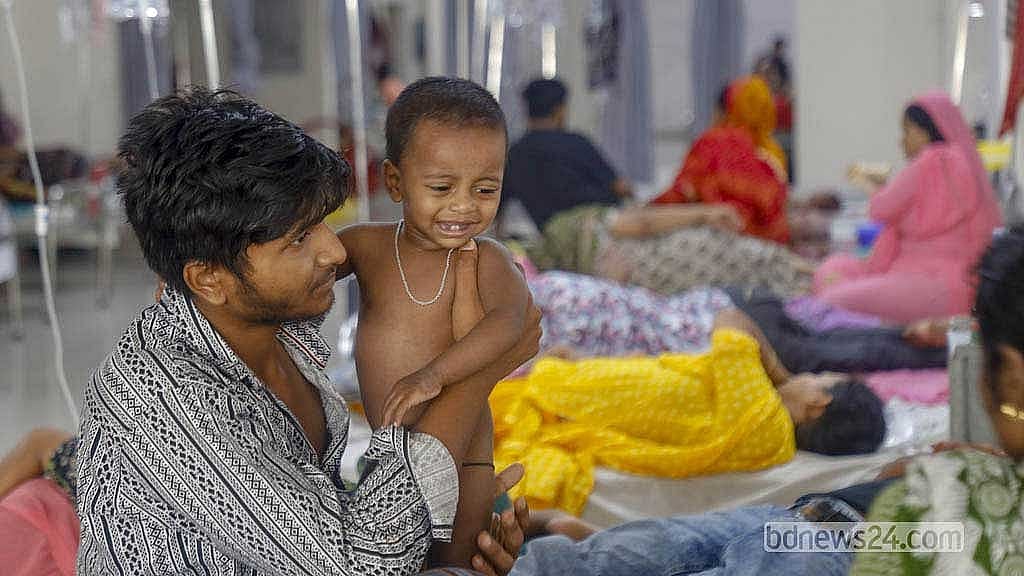
Data analysis suggests an average of nearly 2,000 new child admissions per day.
Yet Bangladesh has the capacity to test measles samples in only one public laboratory -- the Institute of Public Health in Mohakhali.
Although icddr,b and a laboratory in Chattogram exist, testing there has reportedly been suspended due to complications.
A paediatrician at Bangladesh Shishu Hospital and Institute, speaking anonymously, described a bottleneck system: “All samples come to one place. There is capacity to test no more than 120 samples a day.”
He added, “Infrastructure should have expanded with national capacity. Instead, the health sector has been kept centralised.”
Testing Gaps and Delayed Supplies
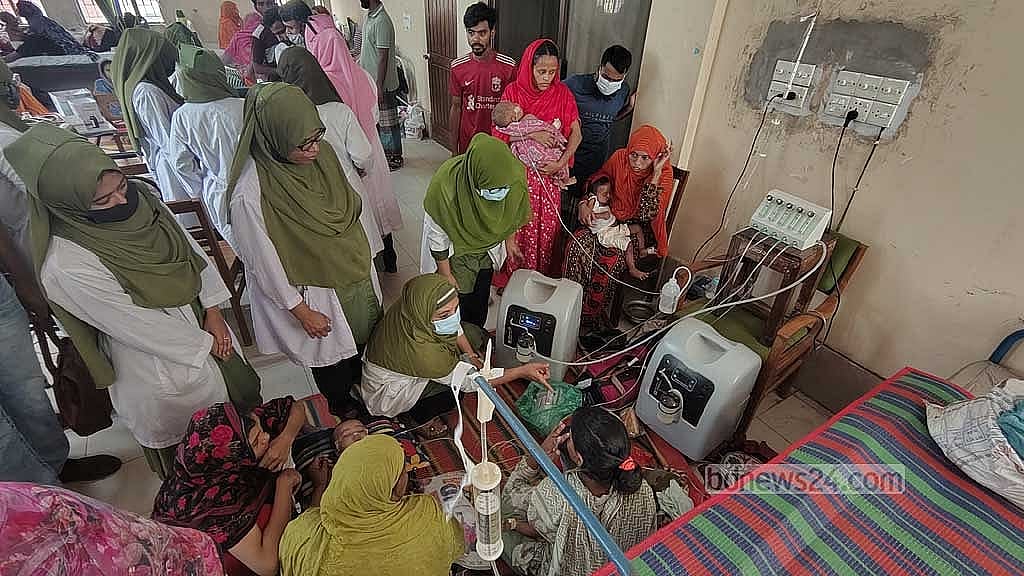
Officials at the Institute of Public Health say WHO supplies all testing kits, each capable of processing 90 samples. On Sunday, only three kits were available.
The institute’s Director Mominur Rahman said 60 kits had been requested in February, which arrived only recently, with another 100 expected next week.
He said demand had surged unexpectedly: “In previous years, we needed at most 20 kits. Based on that, we stocked accordingly. But anticipating the situation, we requested 60 kits in February.”
Vaccination Under Scrutiny
Many experts trace the outbreak to gaps in immunisation coverage.
Public health specialist Mushtuq Husain said, “The primary cause may be vaccination gaps. Many children who should have developed immunity may not have received the vaccine.”
He also pointed to institutional shortcomings, criticising the interim administration led by Muhammad Yunus for delays and inefficiency.
At a briefing on Saturday, he said: “Deaths could have been prevented with timely action. Procurement delays, bureaucratic inertia and institutional neglect under the interim government brought about this epidemic.”
He argued for emergency measures, including a public health emergency and activation of a “standing order on public health emergencies” to bypass bureaucratic delays.
National Professor AK Azad Khan, recipient of the Independence Day Award, stressed domestic vaccine production, warning against dependency on external supply chains.
Vaccination Drive Amid Shortages
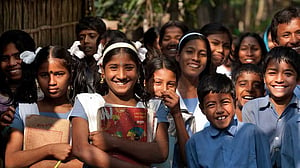
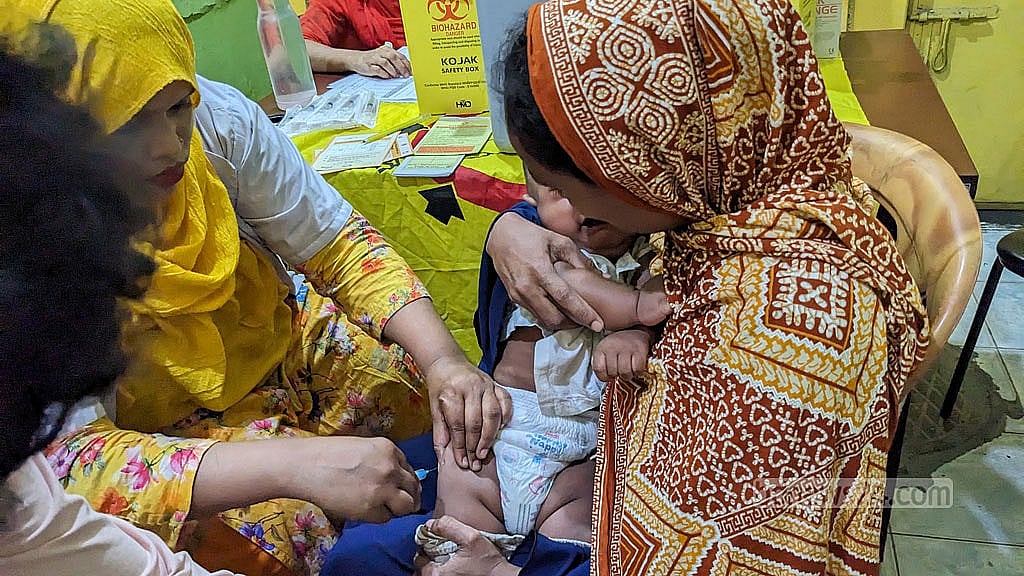
A nationwide campaign began on Monday, aiming to vaccinate 17 million children over three weeks. However, officials admit shortages of syringes persist despite vaccine availability.
Expanded Programme on Immunization (EPI) officials said they have only around 45,000 mixing syringes for nearly 20 million doses.
Each vaccine vial requires a 5ml syringe for preparation and a 0.5ml syringe for administration, meaning about 2 million mixing syringes are needed.
A former EPI deputy director said, “Vaccines are available, but syringes are not. Several shipments are expected in the coming months.”
EPI Assistant Director Hasanul Mahmud said the campaign continues within available resources.
Politics and Accountability
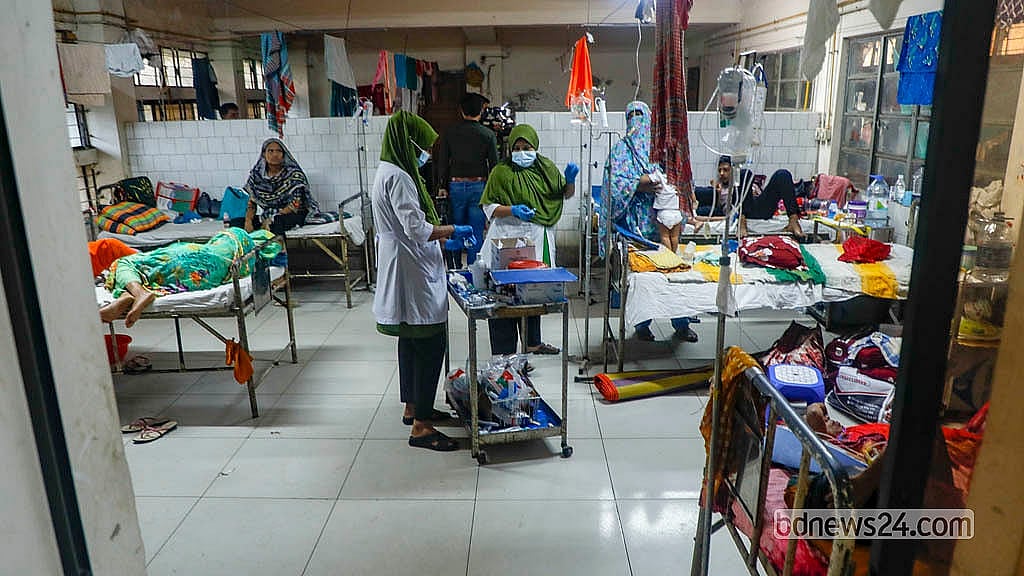
Since a political transition in February, measles cases have surged, with reports of deaths across the country.
The government has blamed previous administrations, with both ministers and the prime minister criticising earlier policies.
Health Minister Sardar Sakhawat Husain Bakul alleged that no measles vaccination had been carried out for eight years.
Public health expert Prof Be-Nazir Ahmed, however, said responsibility is more complex.
“An emergency should have been declared. Awareness campaigns should have been launched. That did not happen. There was a lack of seriousness,” he said.
He added that suspension of key health initiatives had weakened the system further, disrupting immunisation, essential medicines and frontline staffing -- leaving public health exposed at a critical moment.
For many specialists, the outbreak now serves as a stark reminder that without sustained investment, decentralised capacity and timely intervention, even preventable diseases can resurface with devastating force.