Home
+
Published : 13 Aug 2024, 06:01 PM
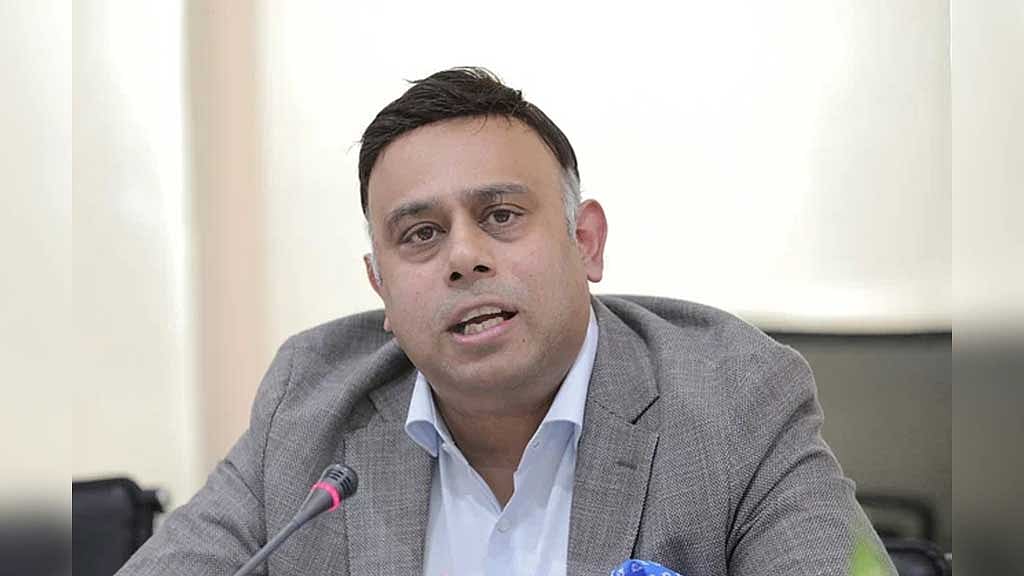
The interim government has appointed M Masrur Reaz as the chairman of the Securities and Exchange Commission.
On Monday, Farida Yasmin, the deputy secretary of the Financial Institutions Department of the finance ministry, sent the notification of appointment to Masrur, confirming his 4-year tenure as the chairman of the SEC.
Masrur, the chairman of private research organisation Policy Exchange, has previously worked for the International Finance Corporation or IFC, a member of the World Bank Group. He led the IFC when the organisation partnered with the government to sponsor the Investment Advisory Council.
He is currently working on research on macroeconomics.
Lately, Masrur has been developing and publishing the PMI index every month in collaboration with the Metropolitan Chamber of Commerce and Industry, or MCCI, to give a sense about the productivity of Bangladesh’s economy.
He is the son of journalist late Reaz Uddin Ahmed.
After the fall of Sheikh Hasina’s government amid mass protests, Shibli Rubayat Ul Islam resigned from his position as the chairman of the SEC on Aug 10 after serving for more than four years.
Masrur served as a senior economist and programme manager at the World Bank Group, or WBG, from November 2010 to March 2020.
During his tenure, he led the private sector development dialogue in Bangladesh, coordinating programmes under the Trade & Competitiveness Global Practice from July 2014 to December 2017, and later under the Finance, Competitiveness, and Innovation Global Practice in 2018.
He also managed competitiveness initiatives in East Asia and South Asia from the WBG’s Singapore hub office between January 2019 and March 2020.
Before joining the World Bank, Masrur was an advisor at the UK government’s now-defunct Department for International Development, or DfID, Bangladesh from February 2007 to October 2010, where he managed a £100 million programme focused on economic growth and private sector development.
His work at DfID, which is now replaced by FCDO (Foreign, Commonwealth & Development Office), included leading initiatives in investment climate, SME development, and financial sector reform.