Aminur Rahman Rasel
bdnews24.com Correspondent
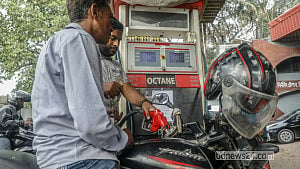
Dhaka, Dec 15 (bdnews24.com) – With much of rural Bangladesh cut off from 'modern' fuel such as piped natural gas and LPG, people in a vast section of the country still depend on age-old means to fire their stoves. Typically, cow dung, kerosene, straws and firewood serve the need till date.
The problem is, they are not only an economic misfit for their small kitchen budgets but are also a burden for the environment.
So in comes biogas -- a clean, green fuel that does not cost much in the long run.
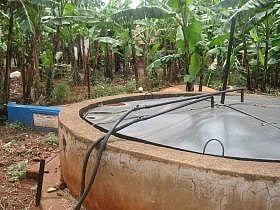
According to experts, biogas is catching up as a substitute fuel, slowly but surely, and some 20,000 biogas plants have been set up across the country till date. Its use is also rising in rural areas since villagers have started seeking substitutes for the increasingly expensive kerosene, firewood and straw.
Simple biogas plants in homestead are now not only supplying fuel for cooking but also lighting up homes in areas lacking access to the national grid, say experts.
Amid such a scenario, the Infrastructure Development Company Limited (IDCL) has taken up the challenge to further boost its use. The state-owned company will organise a programme to celebrate 'Biogas Week' from Dec 17 to 23.
Being held for the third year running, the event is meant to raise awareness about biogas.
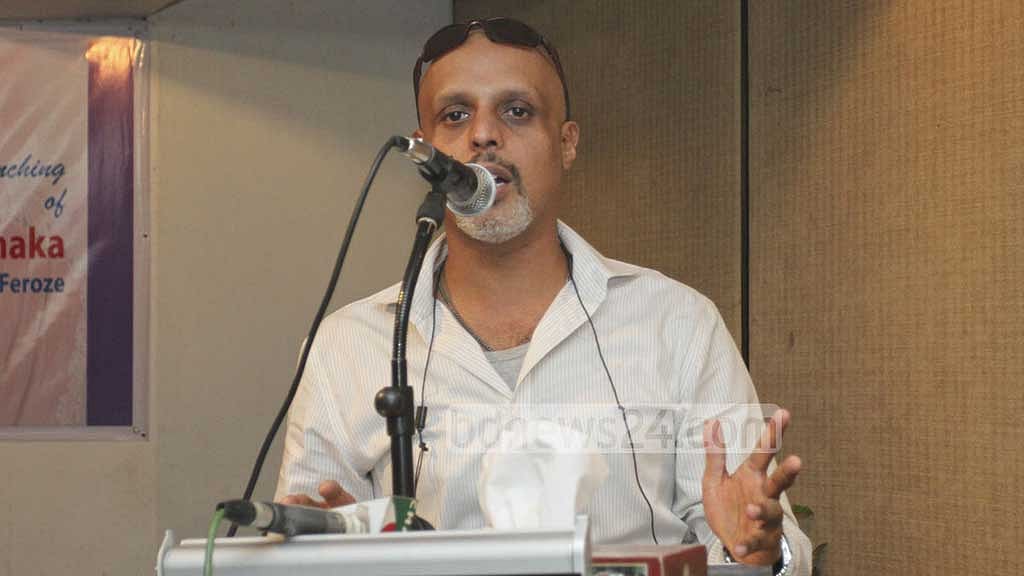
IDCL executive director and chief executive officer Islam Sharif told bdnews24.com on Thursday that biogas plants were being set up in many areas of the country under the National Home-economics Biogas and Compost-Manure Project.
He said as part of a six-year project, which started in April 2006, plans are afoot to build 37,269 plants by December 2012. Around 20,000 plants have so far been set up till Dec 15, with the rest planned within the next year.
At present, 30 non-government organisations (NGOs) are working with IDCL to set up and popularise biogas across the country. International NGO, SNV-Netherlands Development Organisation and the German government's development agency KFW are jointly financing the project.
FOCUSING ON CLEAN FUEL
IDCL first observed 'Biogas Week' in 2009, focusing on this clean source of fuel, using rallies and folk music to motivate people to adopt the technology. The week-long event will be observed through different programmes this year, too, Sharif said.
Biogas is produced from composting organic waste and the excrement within.
According to Sharif, only 3 percent of the population, primarily based in urban locales, uses natural gas for cooking that is delivered by pipeline. But 70 percent of people in villages do not have access to piped gas.
While most people in rural areas use firewood, dry leaves and cow dung as fuel, these source of fuel damage the environment, cause deforestation, or loss of fertility in nearby land, Sharif said.
Rooting for the eco-friendly biogas, he said: "Cow dung and excrement were considered a nuisance and waste once. But now, with the development of technology, that waste is being transformed into an asset."
BENEFITS OF BIOGAS
While biogas made from cow dung and chicken excrement can be used as fuel, Sharif said even the compost-manure from biogas plants can be used as environment-friendly organic fertiliser. "Considering these advantages, we are working to make biogas more popular," the IDCL chief said.
Nazmul Haque Faisal, senior programme manager of IDCL, told bdnews24.com that a typical biogas plant can be used for more than 30 years and requires only 200 square feet area. The plant requires cow dung and chicken excrement to produce energy.
He said a homestead biogas plant costs between Tk 25,000 and Tk 30,000 and IDCL provides Tk 9,000 as a start-up subsidy. With progress, IDCL lends around Tk 14,000 to Tk 16,000 and the plant owner has to amass the rest of the money.
"Biogas residue is a high category compost-manure. Cultivable land and fish-growing ponds can benefit with this manure," Nazmul said.
bdnews24.com/arr/skb/std/2223h