Published : 04 Dec 2025, 08:35 AM
Updated : 28 Aug 2026, 01:30 AM


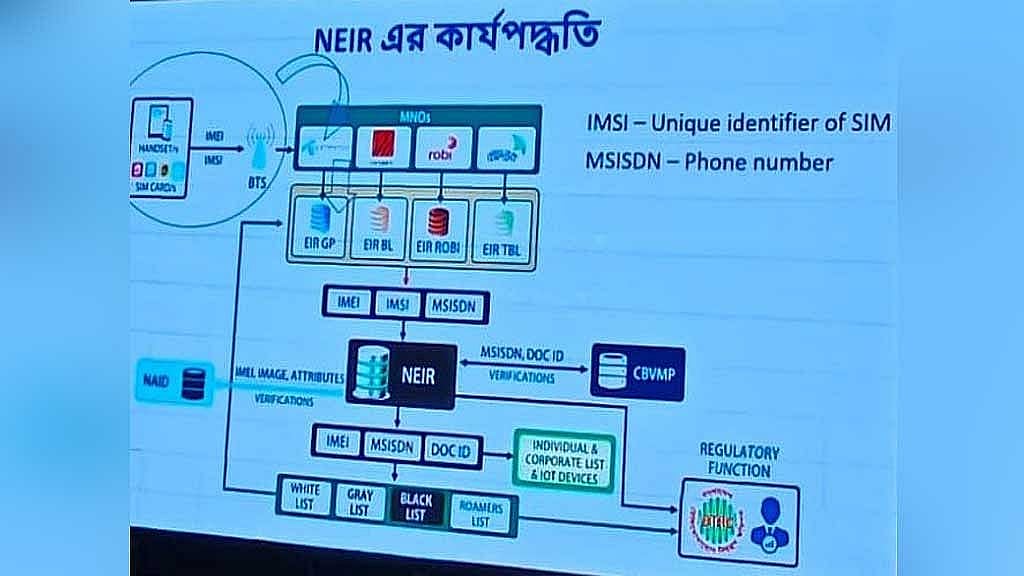
With 12 days to go before the National Equipment Identification Registrar (NEIR) comes into force, major players in Dhaka’s grey market remain without an agreement with the interim government.
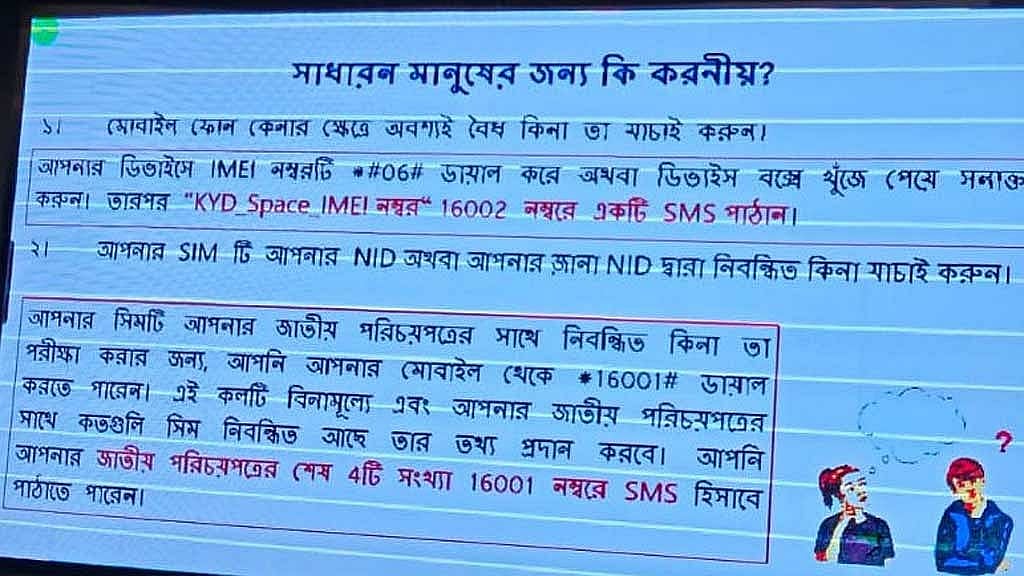
The system, set to start on Dec 16, will require all mobile devices to be registered to access networks legally.
The government is considering lowering import duties, though rates are yet to be finalised.
Grey-market traders say they have received no communication, despite holding billions of taka in unsold handsets.
Several thousand traders are anxious over the devices’ future.
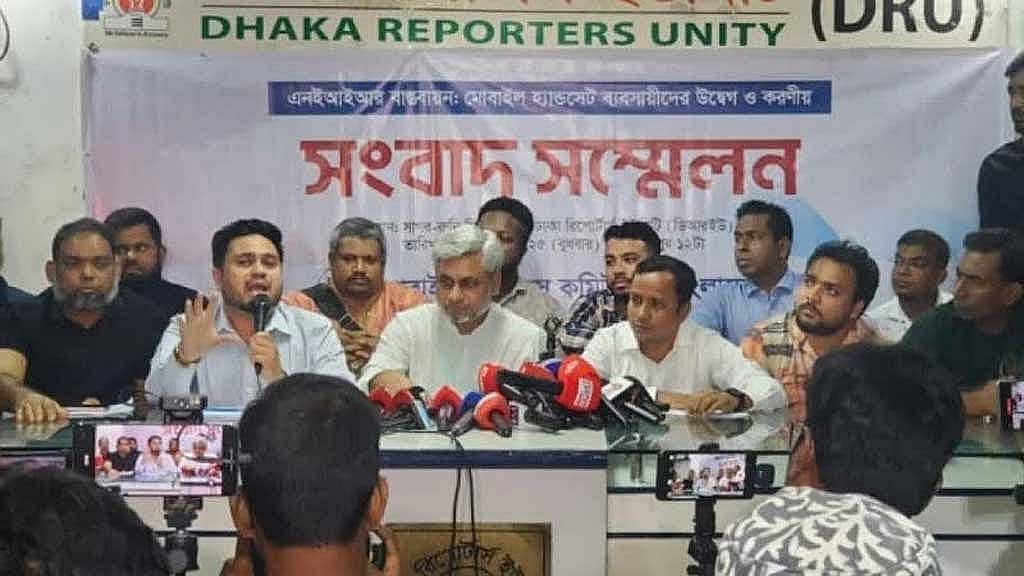
The NEIR poses a threat to handsets brought in via duty evasion, which dominate the grey market.
Official estimates put the grey market’s share at over 60 percent, though traders claim it is more than 90 percent.
Since the arrival of smartphones over the past decade, this market has grown into a multi-thousand-crore-taka business, with well-furnished showrooms across major Dhaka outlets.
A previous attempt to launch NEIR under the Awami League government was abandoned by the telecom regulator BTRC.
Once again, the grey market has mobilised against the government’s decision.
Traders argue the move benefits only a few, threatening the livelihoods of hundreds of thousands in the grey market.
They also warn that halting supply of popular handsets could push up prices and create monopolies in the market.
This time, the BTRC has partnered with domestic mobile manufacturers to implement NEIR.
A total of 17 companies now produce phones locally, and the government has taken funds from them to support this phase of NEIR.
The government and domestic producers say they will ensure grey-market traders can import mobiles legally and provide a process to legitimise phones already in the market.
Traders, however, remain sceptical of the authorities and local manufacturers, continuing protests and public campaigns against the plan.
On Wednesday, the Ministry of Posts and Telecommunications issued a statement saying that on Dec 1, a meeting was held at the office of the ICT advisor, with representatives from the NBR, the commerce ministry, the Posts and Telecom Division, and the BTRC, to discuss reducing duties for legal mobile imports.
The meeting also approved reductions in VAT and taxes on domestic phone production, it added.
The ministry said import duties on legally imported smartphones will be reduced “significantly”.
Currently, the duty on legal imports stands at around 61 percent.
It added that if import duties are lowered, VAT and taxes on phones produced in Bangladesh’s 13–14 factories must also be reduced, or foreign investment in these companies will be severely affected.
The BTRC and NBR have held multiple joint discussions with the commerce ministry to coordinate import and local production duties and have started acting swiftly.
The ministry expressed confidence that the outcome of these discussions would benefit the country’s device industry.
Traders, however, remain unconvinced. They have already held press conferences, multiple human chains, and road blockades.
One of their leaders and a spokesperson were picked up at midnight by individuals identifying themselves as Detective Branch officers, although they were later released.
Mohammad Aslam, president of the unofficial Mobile Business Community (MBCB), told bdnews24.com on Wednesday: “We are not being informed about what is happening. We are not called anywhere. No one has sat with us.”
Although the government has said arrangements will be made to legalise unsold handsets already in the market, no such action has started yet, Aslam said.
“No discussions have taken place. No roadmap has been given. And there are only 12 days left,” he added.
The telecommunications ministry said handsets imported illegally but with IMEI numbers will be registered with the BTRC and legitimised at a “reduced” duty before Dec 16. Discussions with NBR are ongoing.
Cloned phones and refurbished handsets, however, will not be eligible for this facility.
Traders pointed out that many phones produced so far share the same IMEI number, which is why they are considered cloned phones.
The BTRC confirmed that millions of phones have been produced using one IMEI number, such as sequences of 15 ones or 15 nines. The government does not intend to regularise these.
According to traders, a large number of cloned phones are already circulating in the market.
Unless their future is clarified, they will not accept the situation, and many small retailers will suffer financially.
Grey-market leader Aslam said, “Our market share is 90 percent. The product we have been selling for years is now being labelled illegal. We wanted to do business after paying tax and VAT.
“There are 1 to 1.5 million traders depend on this sector. Our products reach across the country. Now the government has made this decision without hearing us,” he added.