Published : 15 Jun 2026, 05:27 AM
Updated : 08 Sep 2026, 11:24 AM


• CSRM denies any syndicate role in rebar price increases
• Weak demand leaves little scope for market manipulation
• Dollar volatility and high interest rates have hit steelmakers hard
• High production costs are limiting export opportunities
• Skilled manpower shortages remain a major industry challenge
The surge in the price of mild steel (MS) rods over the last few years is driven by global macroeconomic headwinds and rising overheads rather than domestic market manipulation, a top industry leader has argued.
Md Shahjahan, the managing director of Chakda Steel and Re-Rolling Mills (Pvt) Ltd, strongly rejected public perceptions of a trade cartel or corporate syndicate operating within the construction material sector.
Speaking at Chinwag with the Chiefs, a regular interview programme broadcast across bdnews24.com's YouTube channel and Facebook page, the industrialist outlined the critical crises and opportunities within the domestic steel industry.
He highlighted a sharp mismatch between high production capacities and tepid market demand, a lack of export channels, and a severe shortage of skilled heavy-industrial labour in Bangladesh.
Weak Demand Rules Out Syndicate
Shahjahan, who also serves as an advisor to the Bangladesh Steel Manufacturers Association (BSMA), noted that public assumptions regarding a handful of traders colluding to artificially manipulate prices are entirely unfounded.
He argued that the market's current supply surplus leaves no room for such manipulation.
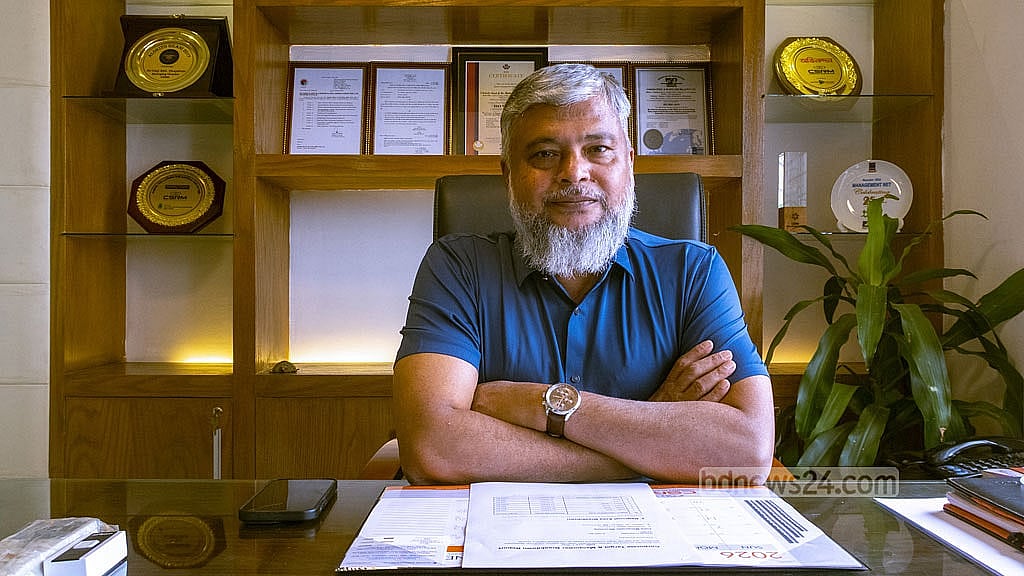
"Our production capacities heavily outweigh the active market demand. Ultimately, no manufacturer wants to hoard inventory because storing finished goods raises holding costs. We have to maintain stock using expensive bank finance, so our priority is to clear shipments rapidly. Therefore, the question of a syndicate simply does not arise," Shahjahan said.
He added: "When does a syndicate form? It happens when suppliers collectively choose to freeze supply to maintain a specific high price point. But our demand has not reached that threshold. If demand exceeded our production capacity, only then would syndication become an issue. We are nowhere near that scenario now, and there is no possibility of it happening anytime soon."
Steel Industry Under Pressure
The BSMA advisor emphasised that steel manufacturers are currently weathering a severe downturn due to an accumulation of adverse economic factors.
These include soaring global raw material costs, spiked import expenditures, high bank lending rates, the depreciation of the Bangladeshi Taka against the US Dollar, and increased power and fuel tariffs, all compounding the sluggish domestic demand.
He pointed out that sudden, steep increases in foreign exchange rates and local borrowing costs have placed the entire sector under extreme financial risk.
"Back when the US Dollar was valued at BDT 86, many manufacturers opted for UPAS (Usance Payable at Sight) letters of credit to finance raw material imports, as these allow importers a six-month window to clear liabilities after shipment arrival," Shahjahan explained.
"Even when domestic lending rates hovered around 13 percent, UPAS LCs offered lower overall banking charges, making it a popular choice across the industry.
“However, by the time these payments matured, the US Dollar rate shot up to BDT 123. We ended up making significant losses instead of profits. This created a major shock across the industry.”
He added that rising dollar costs have significantly increased investment requirements and the cost of funds.
"We cannot secure the same volume of raw materials at BDT 123 that we used to buy at BDT 86. Compounding this, we face shortfalls in the necessary institutional backstops from several commercial banks. Taking everything into account, we are not in a good financial shape," he said.
He said the biggest challenge is reviving demand and stabilising financing conditions.
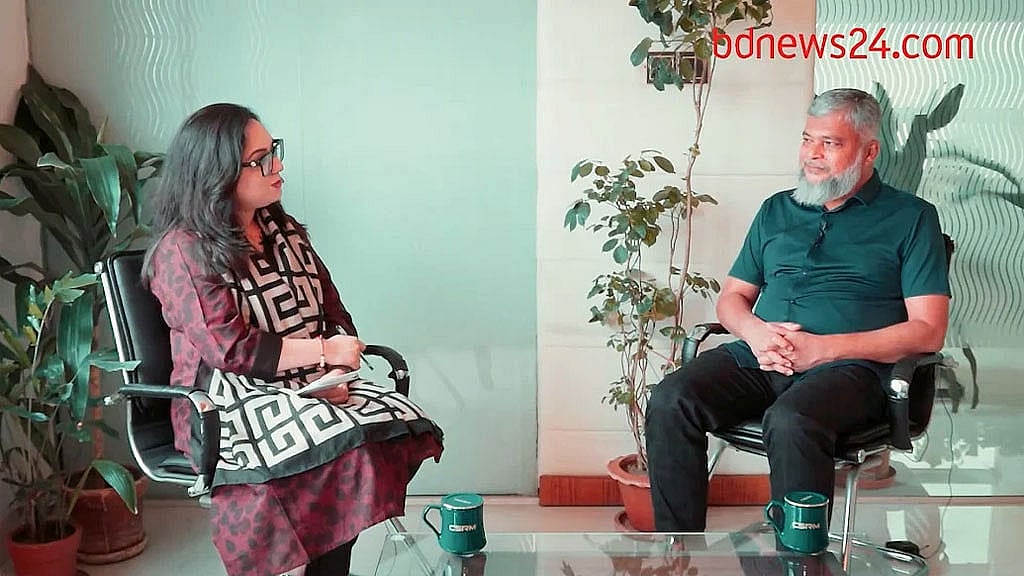
“If demand is not created and overall government projects are not activated, it will pose a major risk for the industry.”
Export Prospects Hampered by High Production Costs
Shahjahan said the domestic market is unable to absorb existing production capacity, while high manufacturing costs are preventing Bangladeshi steelmakers from competing in export markets.
“Exporting rebar remains difficult for us because we import our raw materials. Electricity and gas costs are high, and we are not receiving reliable supplies, which further increases production costs.
“Banking charges are also high. Overall, our cost structure is higher on every front. Overseas buyers will only purchase at competitive prices, and we are not yet in a position to offer that.”
He said prospects for rebar exports remain limited at present due to elevated production costs.
“Perhaps that could change in the near future. If the government introduces support measures or incentives for steel manufacturers, exporting rebar may become viable.”
Skilled Workforce Shortage Challenges Industry
A shortage of skilled manpower remains a major challenge for Bangladesh’s steel industry, according to Shahjahan.
“Too few skilled workers are being developed for heavy industries. We are simply not getting the workforce we need.
“Many engineering graduates, including those from BUET (Bangladesh University of Engineering and Technology) and other institutions, prefer desk jobs. They do not want field assignments.”
He said the nature of engineering work requires substantial field experience, but many graduates seek office-based careers instead.
“There is a tendency among young graduates to look for comfortable office jobs with air conditioning and desk-based responsibilities. As a result, development of the sector is being affected.
“Many of the brightest graduates also leave the country. However, those who choose to remain in Bangladesh still have significant opportunities to build successful careers in the steel industry.”
Commitment, Consistency Drive CSRM's Growth
Shahjahan believes CSRM’s success has been built on offering quality products at competitive prices while consistently honouring commitments to customers.
“We do not only want to be the best in quality. We want to be the best in every aspect. That is why we are committed to better steel.
“Our goal is to offer the best quality, the best value, timely delivery and the highest level of commitment.”
He argued that quality alone is not enough if customers cannot afford the product.
“You may produce the best product, but if the price is beyond the customer’s reach, it cannot truly be considered the best.
“Likewise, if you commit to supplying a customer with a certain quantity of rebar at an agreed price and then fail to deliver because market prices have risen, that is not the best either.”
He said CSRM has maintained its commitments even during periods of sharp price volatility.
“There have been occasions when prices increased by Tk 10,000 per tonne almost overnight because of surging raw material costs. Even then, we honoured our commitments. That is one of the reasons we have earned a leading position in the industry.”
Shahjahan said the company also operates its own transport services to ensure timely delivery to customers.
He noted that CSRM rebar has been used in some of Bangladesh’s most significant infrastructure projects, including the Jamuna Bridge, the Rooppur Nuclear Power Plant, government office complexes in Agargaon and flyovers across the country.
The company’s name Chakda Steel and Re-rolling Mills (CSRM) was derived from Chakda, the area in Narayanganj’s Fatullah where Shahjahan spent his childhood.