Published : 16 Jan 2026, 07:43 AM
Updated : 21 Aug 2026, 03:01 PM


Finance and faith have collided in a decision that will reverberate through the country’s banking sector.
Depositors of five Islamic banks, recently merged into a single state-backed entity, will receive no profit on their savings for the past two years.
Bangladesh Bank has justified this unprecedented move on the grounds that the banks are in loss, and under Shariah principles, losses preclude any profit.
Yet the timing and methodology have raised eyebrows.
Just a year ago, four of the five banks had reported profits for 2023, distributing dividends to investors and crediting profit shares to depositors’ accounts.
Taxes were deducted at source, all according to standard banking practice. Now, those gains are being retroactively erased.
Profits earned, received, and recorded are now being considered part of a “haircut”, an accounting adjustment rooted in international resolution rules and Shariah guidance.
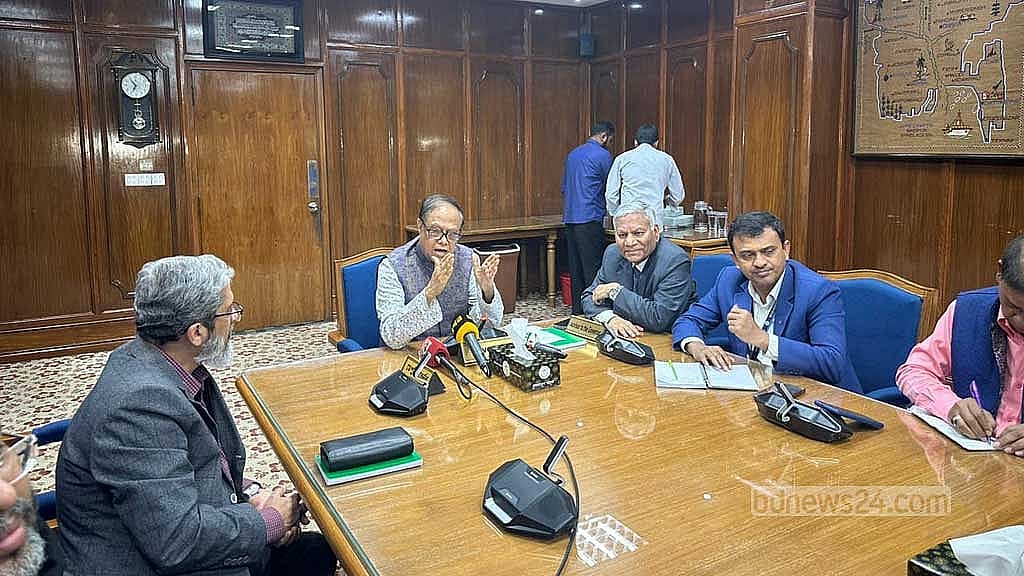
“The banks were already in loss,” Bangladesh Bank Governor Ahsan H Mansur said at a briefing. “Our Shariah Council has told us, when there is loss, no profit of any kind can be given.”
The decision affects millions. Bangladesh Bank reports that the five banks currently hold deposits from 7.5 million customers, amounting to Tk 1.42 trillion.
Against this, they have extended Tk 1.93 trillion in loans, most of which have become non-performing.
‘HAIRCUT’ IMPOSED ON DEPOSITORS
On Wednesday evening, Bangladesh Bank formally communicated the new ruling to the administrators of the five merged banks: EXIM Bank, First Security Islami Bank, Global Islami Bank, Union Bank, and Social Islami Bank.
The letters instructed that deposit balances as of Dec 28, 2025, be recalculated, with no profit or return to be considered for the period Jan 1, 2024 to Dec 28, 2025.
“A haircut will be applied, and the final balances of depositors will be determined accordingly,” the letters stated.
Bangladesh Bank’s spokesperson explained the rationale: the decision follows Shariah principles of profit-and-loss sharing.
Since the banks are Islamic, profits and losses are equally shared with depositors.
“The AQR report shows the banks are actually in loss,” Executive Director Arief Hossain Khan told bdnews24.com. “All of them are Shariah-based, so profit cannot be paid.”
FROM CRISIS TO MERGER
The banks, already reeling from financial turbulence, were merged into a single entity with government backing.
On Dec 1, Bangladesh Bank issued a final licence to the new Sammilito Islami Bank. The state injected Tk 200 billion into a total paid-up capital of Tk 350 billion.
The Bank Resolution Scheme, effective Jan 5, 2025, allowed the merger to take effect.
Employees of the five banks, except those facing legal cases, were absorbed into the new entity. Withdrawal limits were imposed initially at Tk 200,000, followed by Tk 100,000 per month for three months.
Borrowing limits were set at up to 20 percent against old deposits and up to 80 percent against new deposits.
DECISIONS SHAPED BY ASSET QUALITY REVIEW
The move followed the political upheaval after the student-led mass uprising of 2024. The interim government appointed Ahsan as governor of Bangladesh Bank.
The regulator froze preparation of the 2024 annual reports of the five banks and appointed independent auditors. International audit firms were engaged to carry out Asset Quality Reviews (AQRs), assessing the value of bank assets ahead of the merger.
The AQR revealed significant losses across all five banks. Bangladesh Bank confirmed that this assessment was pivotal to the decision to deny profit to depositors.
“The banks have incurred losses, so they cannot distribute profit,” said spokesperson Arief.
PROFITS IN 2023, LOSSES THEREAFTER
Although losses were revealed for 2024 and 2025, four of the five banks -- except Union Bank -- had earned profits in 2023. Social Islami Bank, EXIM Bank, and First Security Islami Bank had distributed 10 percent dividends to investors by August 2024. Union Bank remained profitable until June 2024, reporting EPS of Tk 6.40.
However, subsequent quarters, coupled with board changes and government intervention, saw the banks plunge into loss. Global Islami Bank, profitable in 2023, cancelled its dividend distribution in 2024. Union Bank’s 2023 audited results remain under High Court-mandated re-audit.
Economists question the fairness of showing profit one year and losses the next to justify withholding profit.
Associate Professor Al Amin of Dhaka University’s accounting and information systems said, “The profit that has already been withdrawn cannot be brought back. Investors’ shares have effectively been wiped out; they no longer exist.”
Prof Abu Ahmed, chairman of the Investment Corporation of Bangladesh, added: “This is not fair judgment. Depositors should speak up.”
HOW BANKS TREATED INVESTORS IN 2023
• Social Islami Bank: Declared 5 percent cash and 5 percent bonus shares for 2023, distributed by Aug 1, 2024.
• EXIM Bank: Declared 10 percent cash dividends for 2023, credited to investors’ bank accounts on Aug 11, 2024.
• First Security Islami Bank: Declared 5 percent cash and 5 percent bonus shares for 2023, completed distribution by Jul 31, 2024.
• Global Islami Bank: Declared 5 percent cash and 5 percent bonus shares for 2023, approved by BSEC but AGM delayed until Aug 19, 2025, when the proposal was cancelled.
The bank’s Company Secretary Manjur Hossain told bdnews24.com: “At that time [2023], the company was profitable. By the AGM year [2025], the bank went into running loss. Investors argued for cancellation, and the meeting decided to withdraw the dividend proposal.”
CLAWING BACK PROFITS
Bangladesh Bank will now reclaim profits already paid to depositors. Lending rates had been capped at 9 percent in 2023; depositors earned 5–7 percent. After the cap was lifted in 2024, rates ranged from 7–9 percent.
Bangladesh Bank said approximately 7.5 million depositors hold Tk 1.42 trillion. Against this, loans of Tk 1.93 trillion are largely non-performing.
“The AQR has determined the extent of losses. Recovery will be taken from those depositors who still have money in the banks,” said Arief.
Governor Ahsan said: “The banks were already in loss. We are recognising that reality. A huge scale of fraud occurred. Those responsible are being identified and will be brought under the law.”
He added that auditors responsible for fake audits have been reported to the ministry. Forensic audits are ongoing and will take another three months.
EXIM Bank was previously linked to former Bangladesh Association of Banks chairman Nazrul Islam Mazumder; the other four were controlled by Chattogram-based S Alam Group’s Saiful Alam.
For depositors, the message is clear: previous profits have been effectively nullified, and faith in the system has been shaken.
Economists warn that while the Shariah principle may be legally defensible, the retrospective withdrawal of profits undermines fairness and transparency in Bangladesh’s Islamic banking sector.