Published : 23 Dec 2025, 07:08 AM
Updated : 21 Aug 2026, 02:55 PM


Across Dhaka this winter, the gas grid has drawn an invisible line.
On one side, factory floors hum uninterrupted, their boilers fed by steady pressure. On the other, kitchens flicker with weak flames, leaving some citizens waiting through long mornings for gas to return.
In the residential areas, some speak of low pressure, while others -- sometimes just streets away -- report little trouble at all.
The contrast lays bare a system under strain, where declining local output and expanding imports have reshaped who feels relief -- and who does not.
According to Petrobangla, the state-run oil, gas and mineral corporation, Bangladesh’s daily gas demand stands at about 3.8 billion cubic metres.
Supply, however, cannot be raised beyond roughly 2.5 billion cubic metres a day. Domestic production has fallen by at least 200 million cubic metres compared with a year ago, forcing the government to rely increasingly on costly imports from the global market.
Conversations with consumers over several days this week reveal a patchwork reality: relief for industry, uncertainty for homes.
KITCHENS WITHOUT FIRE
Every winter, gas pressure drops -- sometimes vanishing altogether -- in different localities of Dhaka, such as Banasree. This year, residents say supply has not fully shut down, but pressure remains weak for much of the day.
Nigar Sultana, who lives in Banasree’s G Block, described a daily routine shaped by the clock rather than choice.
“For the past month since winter began, the gas goes off after 7am,” she told bdnews24.com. “Pressure improves again after 2pm. In between, the flame barely flickers -- you can’t even fry an egg.”
Not everyone shares the same experience. Arifa Bari, a resident of Eskaton, said she has felt no shortage this winter.
“I haven’t noticed any problem at all,” she said. “Gas pressure is good day and night. Winter hasn’t been very harsh either, which may be a factor.”
Even as temperatures in northern Bangladesh have dipped to 10°C, Dhaka has remained relatively mild. On Thursday, the capital’s minimum temperature did not fall below 18°C, despite the Bengali calendar marking the third day of Poush.
At Old Dhaka’s Sutrapur, Farzana Afroz said gas supply has remained stable in her home. Still, she hears frequent complaints from neighbours whose daytime pressure has dropped sharply.
INDUSTRY BREATHES EASIER
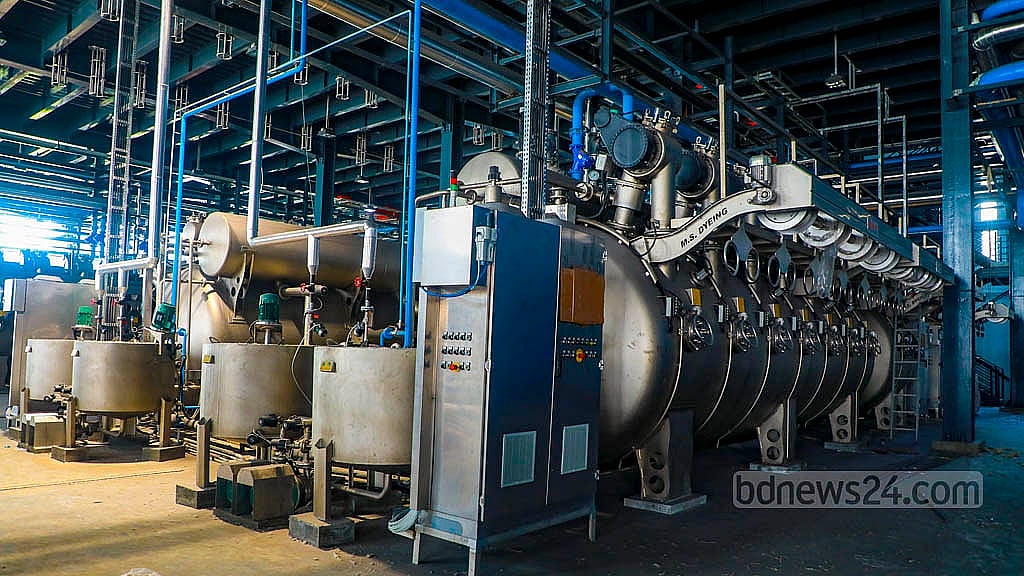
Compared with households, industrial consumers are experiencing a noticeably calmer winter. Factory owners say complaints about gas shortages have been rare.
Mohammad Hatem, president of the Bangladesh Knitwear Manufacturers and Exporters Association (BKMEA), said conditions are better than in recent years.
“The gas supply to factories is better than it has been for several years,” he said. “I haven’t heard of any factory facing a complete outage. The government is trying, and we are benefiting from that.”
He noted that pressure, once stuck at 3–4PSI and at times falling close to zero, now remains between 7 and 8PSI around the clock.
Shawkat Aziz Russell, president of the Bangladesh Textile Mills Association (BTMA), offered another explanation.
“Many factories have shut down recently,” he said. “As a result, overall gas demand has fallen. Usually pressure drops in winter, but this year we haven’t heard those complaints from factories.”
FALLING PRODUCTION, RISING IMPORTS
Petrobangla’s regular reports show that in December 2024, domestic gas fields produced around 1.9 billion cubic metres daily. By December 2025, output had slipped to about 1.65 billion cubic metres.
Despite repairs to several ageing wells and the discovery of new ones, many fields have either closed or seen declining production.
Last Wednesday, Petrobangla supplied roughly 2.54 billion cubic metres nationwide -- down from 2.7 billion cubic metres a year earlier. Imported liquefied natural gas (LNG) now contributes an average of 800 million cubic metres a day to the national grid.
Petrobangla Director (Operations and Mines) Md Rafiqul Islam said the system is operating under constant strain.
“We are managing the gas situation with difficulty,” he said. “Imports are necessary to meet the excess demand.”
He added that the Jamuna Fertiliser factory has recently resumed operations, but lower gas demand from power plants during winter has allowed supply to be maintained for other users.
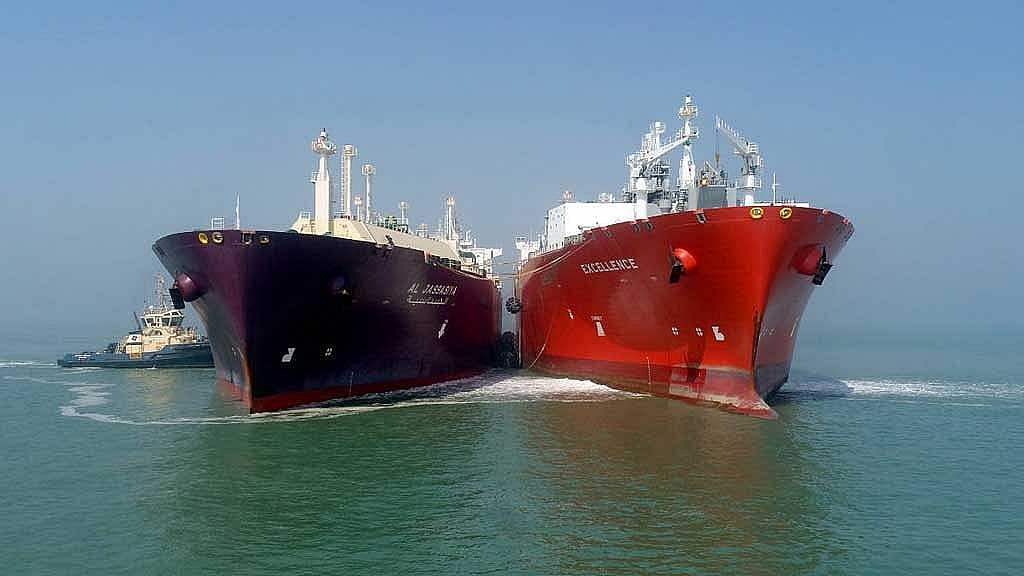
To secure imports, the government has built two floating LNG terminals in deep-sea waters. Under long-term contracts, Bangladesh imports 56 LNG cargoes annually, alongside regular purchases from the spot market.
This year, spot market imports have nearly doubled. The government bought 109 LNG cargoes in total, up from 88 last year. Spot purchases rose from 30 cargoes to 53.
“Domestic production is declining, so imports have to increase,” Rafiqul Islam said. “At the same time, drilling continues -- all five BAPEX rigs are currently active.”