Advisory: with photo
Eds: The story has been recast and edited to ensure more clarity.
Biplob Rahman
BDNEWS writer
Dhaka, Mar 6 (BDNEWS) – Those were the most difficult times. But some brave Dhaka radio officials risked their lives to make it possible.
The historic March 7, 1971 speech delivered by Bangabandhu Sheikh Mujibur Rahman at the Race Course was broadcast in defiance of the Pakistani military junta thanks to the bravery of these officials.
The contents of the fiery speech thus reached every nook and corner of the country, and the non-cooperation campaign launched by the leader of the Bengalis began to make its impact.
It added the much-needed fuel to the fire, already ignited in the minds of the masses.
At radio’s Shahbagh station, it wasn’t an easy ride for the employees. At the very last moment, the military authorities had slapped a ban on the planned broadcast. The employees instantly enforced a strike, compelling the men in uniform to retreat.
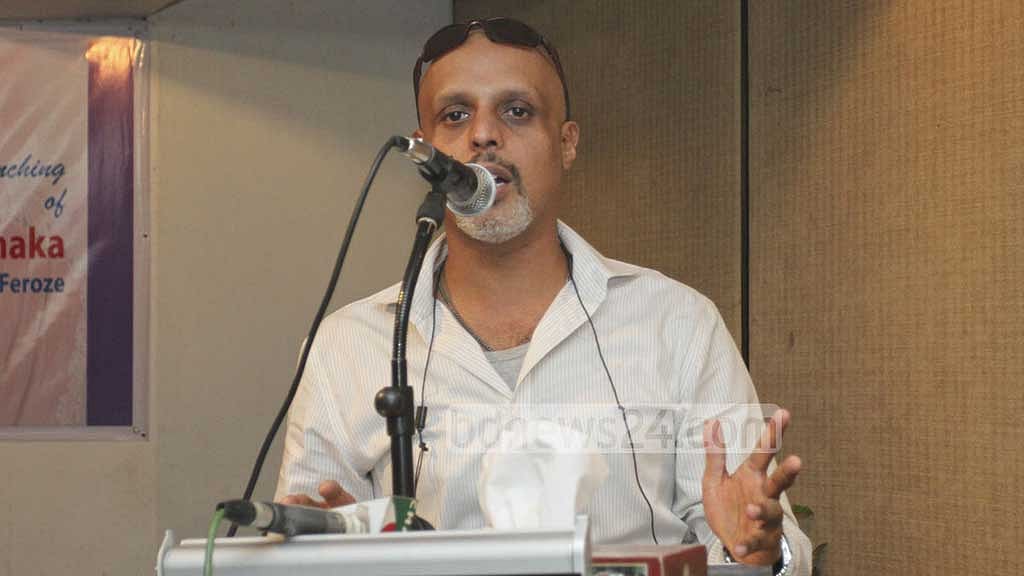
Ashfaqur Rahman Khan, one of those at the then Dhaka station of Radio Pakistan, shared his memories of those events with BDNEWS. He later joined the Swadhin Bangla Betar Kendra, dubbed the second front of the Liberation War.
“I was then only 28, had just joined the Dhaka station as programme organiser. Early March in 1971, Pakistani military took control of the radio centre. Maj Siddique Salek of the Military Intelligent Agency used to supervise all the radio programmes on a regular basis. He also instructed which programme would go on air. Amid all these odds, we aired the news of the movement, demonstrations, slogans and played gono sangeet, patriotic songs and dramas.”
“We worked under the leadership of the regional director, Ashfaquzzaman Khan, who secretly informed us that we are going to broadcast the speech of Bangabandhu defying the ban. We were so excited! On the 6th night, engineers of the radio set up telephone and necessary equipment on the dais at the Race Course.
“The Bangabandhu was supposed to address at 2:00pm on March 7. After 12:00 noon, we started announcing that Dhaka radio would broadcast the speech of the Bangabandhu live,” Rahman recalled.
Bangabandhu was on the dais at 2:20pm. At the same time, Maj Siddique Salek sent a message to radio office that ‘nothing of Sheikh Mujib will go on air until further order’.
“Soon after the message, we at radio instantly stopped working in protest against the order. We all went to the Race Course to listen to the Bangabandhu. There was a powerful radio transmitter in Savar. We also asked the radio workers there to go into hiding so that no programme could be broadcast. And there were no programmes aired on radio.
“In the evening (of March 7), we had in a secret meeting at a house on Elephant Road. Later in the evening, our leader regional director Ashfaquzzaman Khan came with the news that the military had agreed to let us broadcast the speech on condition that we all would have to return to work.
“At 7.00 the next morning, we went back to work. On the 8th of March, the record of the historic speech -- Ebarer Sangram, Shwadhinatar Sangram ... (our struggle this time is the struggle for freedom, our struggle this time is the struggle for independence .......) -- was played.”
BDNEWS / 1759 hrs