Published : 20 Dec 2025, 12:27 AM
Updated : 21 Aug 2026, 02:54 PM


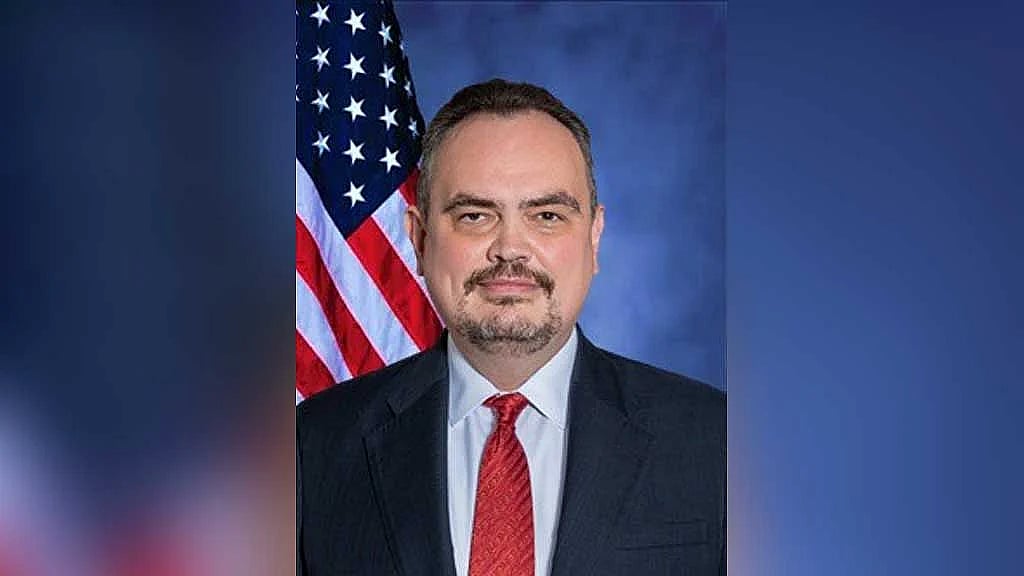
The US Senate has confirmed career diplomat Brent Christensen as the country's next ambassador to Bangladesh.
“I am honoured to be confirmed by the United States Senate and deeply grateful to President Trump for the opportunity to serve as the next United States Ambassador to Bangladesh,” Christensen wrote on LinkedIn on Friday.
Christensen, a senior Foreign Service officer, takes up the post at a time when relations between Washington and Dhaka are being recalibrated, particularly over trade and tariffs.
He is no stranger to Bangladesh, having previously served as counsellor for political and economic affairs at the US Embassy in Dhaka between 2019 and 2021. Earlier in his career, he was also Bangladesh country officer at the US State Department.
Until his confirmation, Christensen had been serving as the senior official performing the duties of under-secretary for Arms Control and International Security, a role he assumed in January this year after being appointed by President Donald Trump.
Over more than two decades in the US Foreign Service, Christensen has held a range of senior posts in Washington and overseas. These include serving as foreign policy advisor to the commander of US Strategic Command, where he worked on the international dimensions of America’s global strategic deterrence mission.
His previous assignments have also included roles at the US embassies in Manila, San Salvador, Riyadh and Ho Chi Minh City, as well as positions dealing with North Korea policy and arms transfers.
Christensen holds a Master of Science in National Security Strategy from the US National War College, a Master’s degree in statistics from Texas A&M University, and a Bachelor’s degree in economics and managerial studies from Rice University. He speaks Spanish, German and Vietnamese, and has studied several other languages.
His appointment comes amid ongoing negotiations between Bangladesh and the United States over trade. Under President Trump, Washington has introduced a new tariff framework that initially raised duties on Bangladeshi goods to 37 percent, before lowering the rate to 20 percent following talks in August. Dhaka has been seeking a further reduction as part of broader discussions aimed at narrowing the trade gap.